Navigating Vietnam (베트남 / 越南 / ベトナム)’s labyrinthine alleys, or "hem", requires more than just a smartphone map. Sometimes, the blue dot on your screen gets confused by the density of the urban sprawl, and that is when you need to rely on the people around you. While many younger residents in cities like Saigon or Hanoi speak decent English, knowing a few key phrases will save you time and earn you a smile.
The Golden Rule of Asking
Before you open your mouth, remember that Vietnamese is a tonal language. You will likely mispronounce things, and that is perfectly fine. The key is confidence and body language. If you are looking for a specific place, have the address written down on a piece of paper or pulled up on your phone. Pointing at a map while saying the phrase is 90% of the communication.
Essential Phrases
1. Xin loi, cho toi hoi... (Excuse me, may I ask...)
This is your opening move. It is polite and signals that you are about to ask for help. Pronunciation: Sin loy, chaw toy hoy...
2. ...o dau? (...where is...?)
This is the most versatile tool in your kit. You simply place the destination before this phrase. Example: "Cho Ben Thanh o dau?" (Where is Ben Thanh Market?) Pronunciation: ...aw dow?
3. Di duong nao? (Which way should I go?)
Use this when you are standing at a confusing intersection. It is less about a specific destination and more about orientation. Pronunciation: Zee zwong now?
4. Co gan day khong? (Is it nearby?)
Useful for gauging whether you should walk or grab a taxi. If they say "xa" (far), you know to call a ride. If they say "gan" (near), you are likely within a few hundred meters. Pronunciation: Kaw gun zay khong?
5. Cam on! (Thank you!)
Always end your interaction with this. It is the most important word in the language. Pronunciation: Kum un!

Photo by Markus Winkler on Pexels
Understanding the Answers
When you ask "o dau", the response will likely be a gesture. Don't expect a detailed sentence. Watch for these directional cues:
- Thang: Straight ahead.
- Re phai: Turn right.
- Re trai: Turn left.
- Quay lai: Turn around/go back.
If someone says "di thang", they mean keep going in the direction you are currently facing. If they point and say "o kia", it means "over there."
Cultural Context: The "Hem" Factor
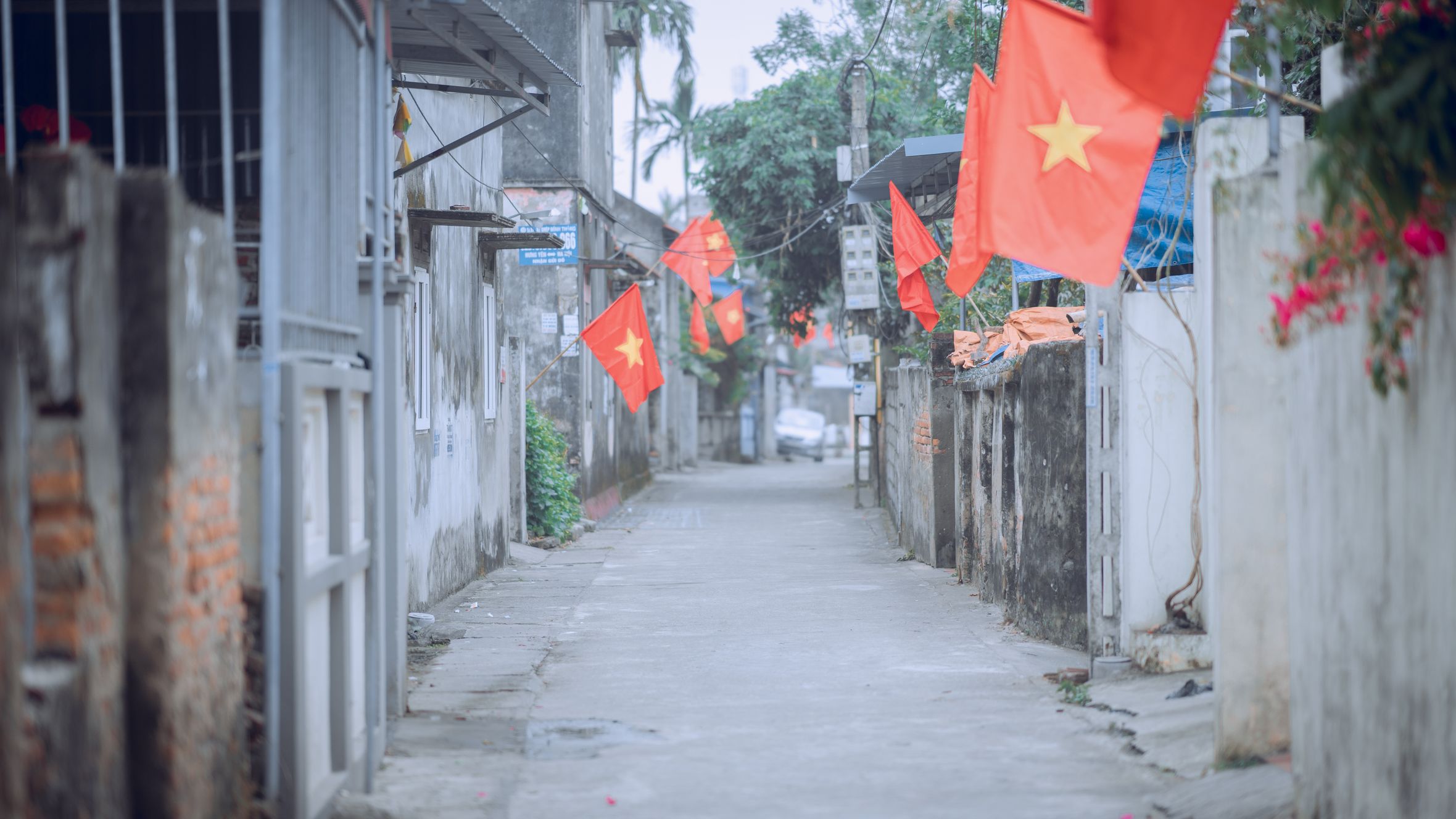
In cities like Saigon (사이공 / 西贡 / サイゴン), addresses are often confusing because they are tucked deep inside "hem" (alleys). A street address might say 123/45/6, which means you are looking for house number 6, in alley 45, off the main street 123.
If you are truly lost in an alley, look for a local coffee shop or a street food vendor. These are the neighborhood hubs. If you ask a vendor selling "banh mi" or "pho" for directions, they are usually the best people to help because they know every house and business within a three-block radius.
Photo by Markus Winkler on Pexels
A Note on Technology
While these phrases are helpful, keep a translation app on your phone as a backup. If you are in a remote area like Ha Giang or deep in the Mekong Delta, the local dialect might be thicker, and your "book-learned" Vietnamese might not land perfectly. In those cases, showing a photo of your destination or a screenshot of the location on a map is the universal language.
Final Note
Don't be afraid to sound silly. The effort to speak the local language is almost always met with patience and kindness. Keep your phrases short, your tone friendly, and always keep a smile ready.
Last updated · May 30, 2026 · independently researched, never sponsored.