
Skip the city center, stay in the valleys
Ninh Binh (닌빈 / 宁平 / ニンビン) city itself is unremarkable—a standard northern provincial town with nothing to detain you. The real landscape, and the reason to come, spreads across three limestone-valley clusters 20–40 km south. Each has a distinct character, price range, and type of traveler it attracts.
Tam Coc — backpacker hub, riverside restaurants
Tam Coc is the established tourist zone. The village sits on the Ngo Dong River, hemmed by dramatic karst peaks, and has the most guesthouses, restaurants, and tour operators per capita.
Vibe: Young, social, breakfast-and-plan-your-day energy. You'll share tables, swap route tips, find organized bike and boat tours easily. English spoken widely.
Accommodation: 150,000–2 million VND per night ($6–85). Most hostels and budget hotels cluster along the main river path—Tam Coc Riverside Guesthouse, Old Quarter View, Tam Coc Central. Mid-range: Tam Coc Garden Homestay (around 800,000 VND for a double with breakfast), Tam Coc Paradise (1.2 million VND). Few luxury options, and they feel out of place.
Boats and bikes: Tam Coc is the boat-tour capital. The standard 2-hour "Tam Coc Three Grottoes" trip ("ba hang dong") departs from dozens of dock points; price is roughly 200,000 VND per person, negotiable off-season. Bike rentals flood the streets (50,000 VND/day). The route to Mua Cave (Hang Mua) is a steep 500-step scramble with views over the valley—crowded but iconic.
Food: Pho, "banh mi", "com tam" served by riverside shacks; nothing exceptional but reliable. Fresh spring rolls and beer at every corner.
Downsides: Peak season (Oct–Mar) is loud and congested. Boat prices are inflated. Tourist infrastructure can feel plastic.
Best for: Budget travelers, first-timers, solo backpackers who want company, anyone on a tight timeline.
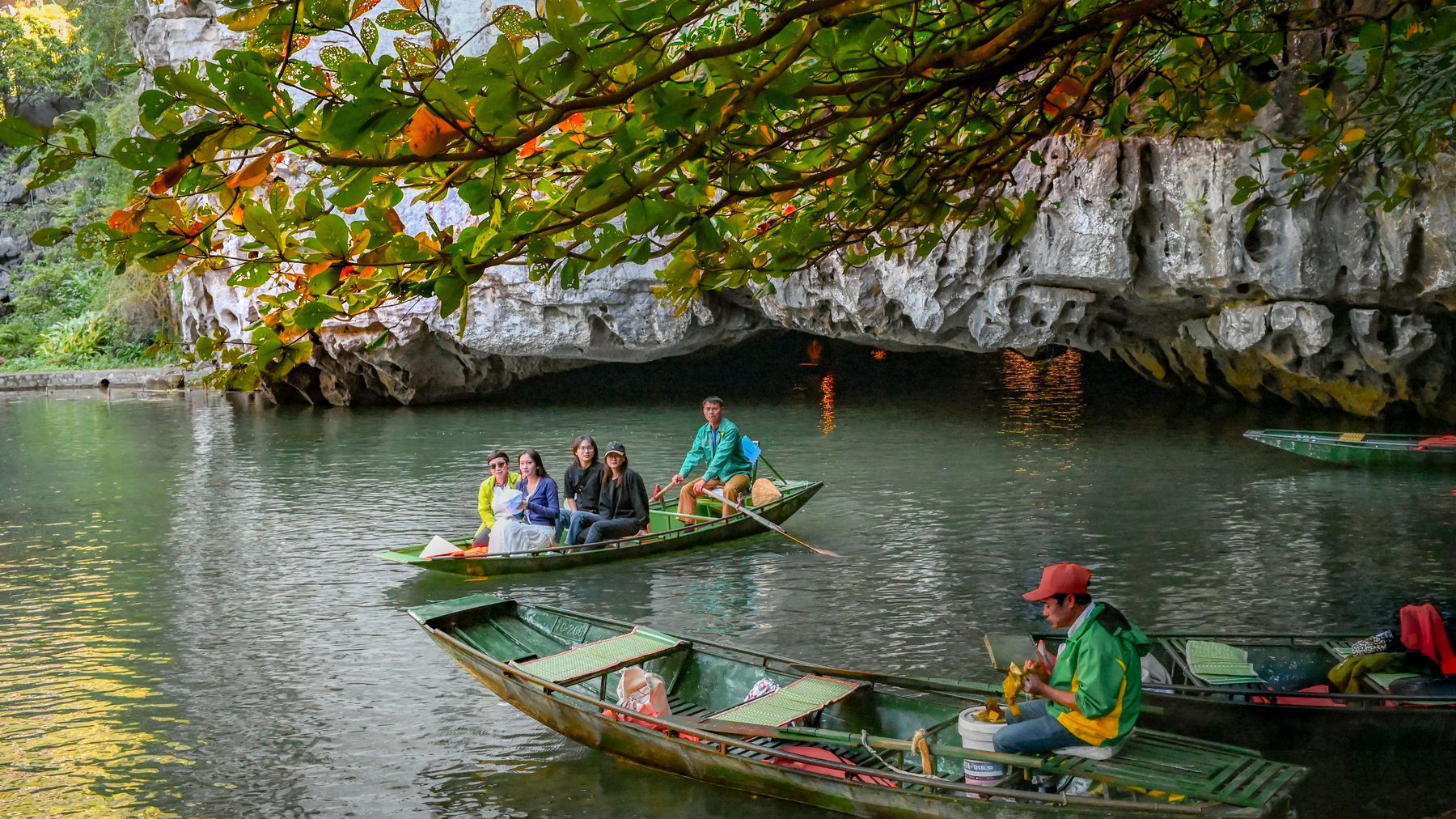
Photo by Nguyen Ngoc Tien on Pexels
Trang An — quieter, newer, cave-hopping focus
Trang An is about 8 km northwest, a newer tourist district built around the Trang An Scenic Area—a UNESCO-listed boating zone with 13 cave entrances and less trampling than Tam Coc.
Vibe: Calmer, slightly more upmarket. Fewer young backpackers; more families and couples. English is spoken but less omnipresent.
Accommodation: 250,000–3 million VND per night ($10–128). Resorts and homestays dominate—Trang An Family Homestay, Trang An View Bungalow (700,000–1.2 million VND), Ninh Binh Hidden Charm Resort (1.8–2.5 million VND). Options lean toward mid-range and comfort; fewer rock-bottom dorms.
Boats and logistics: The Trang An Scenic Area itself has organized boat tours (300,000 VND per person, 1.5–3 hours depending on route). The caves are less famous, less crowded, and the karst landscape slightly wilder. No steep cave climbs required—tours wind through water-level grottos. You can also rent bikes and explore villages around Trang An.
Food: Smaller restaurant scene than Tam Coc, but higher average quality. Expect riverside "[bun cha](/posts/bun-cha-hanoi (하노이 / 河内 / ハノイ)-grilled-pork-noodles)" and local fish dishes.
Downsides: Fewer tour operators means less urgency to compete on price. The Scenic Area entrance fee (200,000 VND) is non-negotiable. Fewer English speakers in guesthouses.
Best for: Couples, small groups, anyone who wants natural beauty without tourist overload, travelers with a few extra days.

Photo by Hồng Quang Official on Pexels
Cuc Phuong National Park — forest, eco-lodges, wildlife
Cuc Phuong sprawls 25 km southwest, a 22,500-hectare protected forest with hiking, rare-primate rescue centers, and a completely different landscape from the karst valleys.
Vibe: Quiet, nature-focused, occasional research-station feel. Vehicles and crowds rare. You need a bike or scooter to move around; walking alone at night isn't advised.
Accommodation: 300,000–3 million VND per night ($13–128). Bungalows cluster near the park entrance (Cuc Phuong Park Bungalows, 700,000–1.2 million VND), or scattered deeper in the forest (Cuc Phuong Homestay, Cuc Phuong Eco-lodge). Many have basic amenities; electricity or Wi-Fi shouldn't be assumed.
Activities: Guided jungle hikes (150,000–300,000 VND/half-day), visit to the Primate Rescue Center (75,000 VND entry), cave exploration (Grotto of Mysteries, "Hang Co Tinh Nguyen"), night wildlife-spotting walks. Birdwatching is exceptional; the park is a wetland hotspot.
Food: Limited restaurant infrastructure. Most lodges offer basic meals (breakfast 80,000–150,000 VND, lunch 150,000–250,000 VND). Bring snacks.
Downsides: Isolation is real. Mobile signal is patchy; Internet spotty. No nightlife, tourist restaurants, or last-minute tour booking. Rain shuts down some trails. You need your own transport or a lodge-arranged guide.
Best for: Nature enthusiasts, hikers, birdwatchers, anyone escaping tourist circuits, families with kids interested in wildlife.
Frequently Asked Questions
How far are the main Ninh Binh valleys from the city center?
The three main areas — Tam Coc, Trang An, and Cuc Phuong — sit 20–40 km south of Ninh Binh city, which has no notable attractions of its own. Tam Coc and Trang An are roughly 8 km apart from each other. Most travelers skip the city entirely and head straight to one of these valley clusters, where guesthouses and tours are concentrated.
What does a boat tour cost in Tam Coc versus Trang An?
At Tam Coc, the standard 2-hour Three Grottoes trip runs around 200,000 VND per person and is negotiable in the off-season. At Trang An, organized tours through the UNESCO-listed Scenic Area cost 300,000 VND per person and last 1.5–3 hours depending on route. Trang An also charges a separate 200,000 VND entrance fee that is non-negotiable, making it slightly more expensive overall.
When is peak season in Ninh Binh and how does it affect Tam Coc?
Peak season runs October through March, when Tam Coc becomes loud and congested. Boat prices inflate and the area feels heavily touristed. Trang An, about 8 km away, stays calmer year-round with fewer visitors and a slightly wilder karst landscape. Travelers who find Tam Coc overcrowded during peak months often prefer basing themselves in Trang An, where the resort and homestay scene caters to families and couples.
Practical notes
Ninh Binh's proximity means you can base yourself in one zone and day-trip to others (Tam Coc to Trang An is 30–40 min by scooter; Tam Coc to Cuc Phuong is 45 min). Most visitors stick to Tam Coc for its logistics and choice, but if the thought of a boisterous backpacker village sounds exhausting, Trang An is a quick escape—and Cuc Phuong is a different world entirely. Book ahead in October and March; April–September is quiet and cheaper, though hotter and more humid.
Last updated · May 26, 2026 · independently researched, never sponsored.



