Saigon is sprawling. Where you land matters — not just for price, but for how you actually spend your days. The three main visitor zones are District 1 (tourist-dense, pricey), District 3 (residential, cheaper, less English), and District 7 (new construction, expat-facing, quiet). Each has a real reason to exist.
District 1: Tourist center, backpacker energy
District 1 is where most first-time visitors end up, and for obvious reasons. "Ben Thanh Market" is here — the colonial-era covered market that's technically a landmark but honestly feels like a souvenir gauntlet these days. "Pham Ngu Lao" Street is the backpacker spine: loud, busy, neon-signed guesthouses and bars where you'll meet other travelers instantly. If you want to meet people or don't want to think about logistics, this works.
The trade-off is noise and price. A basic fan room in a Pham Ngu Lao guesthouse runs 150,000–250,000 VND (~$6–10 USD). AC adds another 100,000 VND. Mid-range hotels (two stars, decent breakfast, clean sheets) sit at 400,000–800,000 VND (~$16–32). Anything nicer — proper three-star, pool, gym — jumps to 1.2–3 million VND (~$50–120). The absolute upscale (Caravelle, Park Hyatt tier) is 2–5 million VND and up (~$80–200+).
Why stay here? If you're eating street food on Nguyen Hue Street, hitting the War Remnants Museum, or just want to walk everywhere without a map app, District 1 is efficient. The downside is you'll hear motorbikes and drunk Australians until 2 a.m. and you'll pay a tourist premium for everything.
District 3: Residential, quieter, cheaper
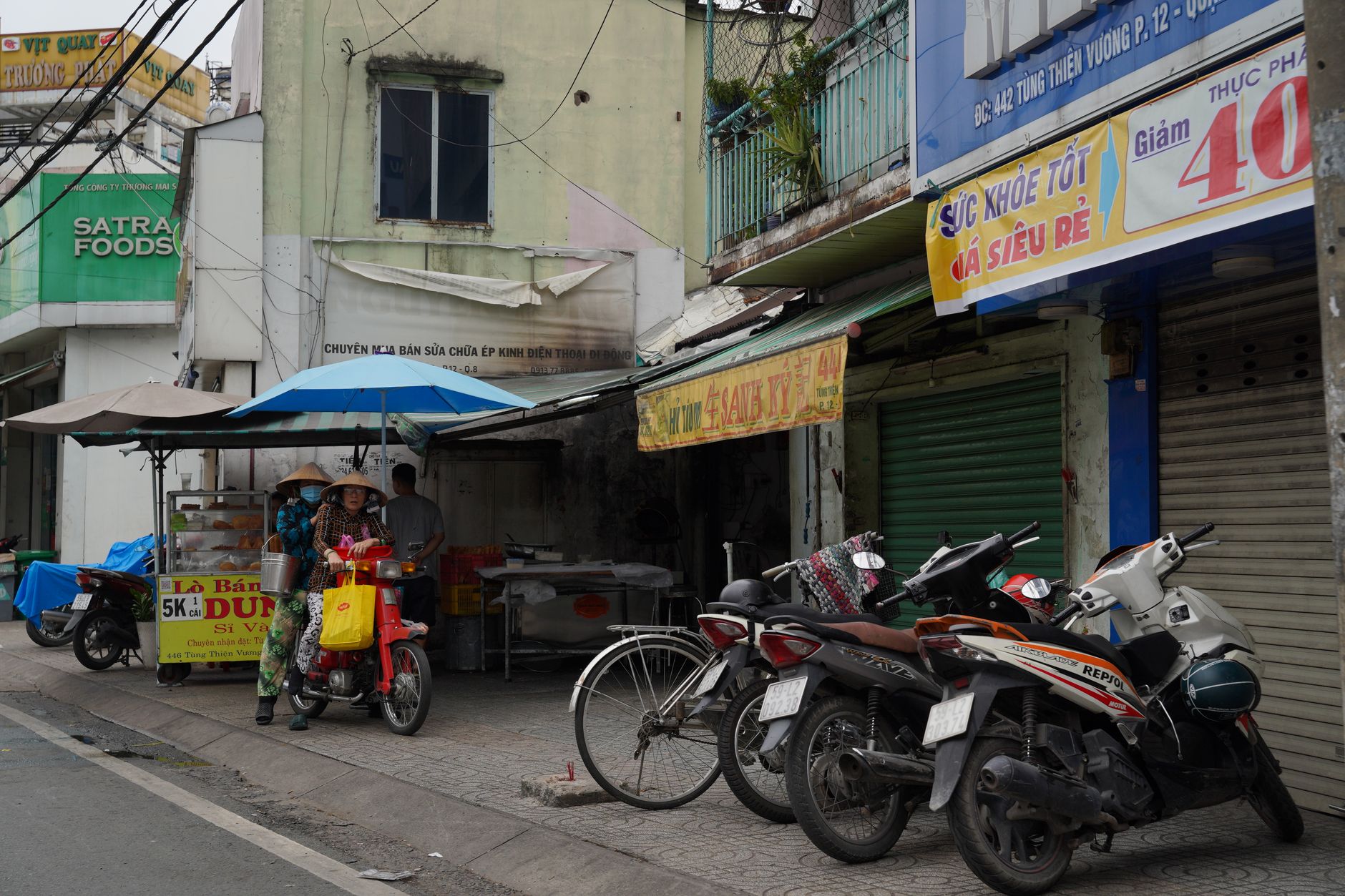
District 3 is where actual Saigonese live. There are fewer English menus, fewer touts, and way fewer other tourists. A guesthouse or small hotel here — same quality as Pham Ngu Lao — costs 120,000–200,000 VND (~$5–8). Mid-range drops to 300,000–600,000 VND (~$12–24). You're not paying the "District 1 tourist tax."
The neighborhood feels lived-in. There are proper "com tam" breakfast spots (broken-rice places where locals eat before work), old-school pho stalls, and cafes where no one speaks English but the coffee is excellent. Streets are narrower, less chaotic than Ben Thanh area. You'll need Google Maps or decent navigation skills, and some vendors won't have English prices — but that's also where you find the actual rates, not tourist-markup rates.
Really, District 3 is the sweet spot if you speak basic Vietnamese or don't mind pointing at things. You get the "real Saigon (사이공 / 西贡 / サイゴン)" experience without the circus.

Photo by Nguyễn Trường on Pexels
District 7: Modern, expat zone, Phu My Hung
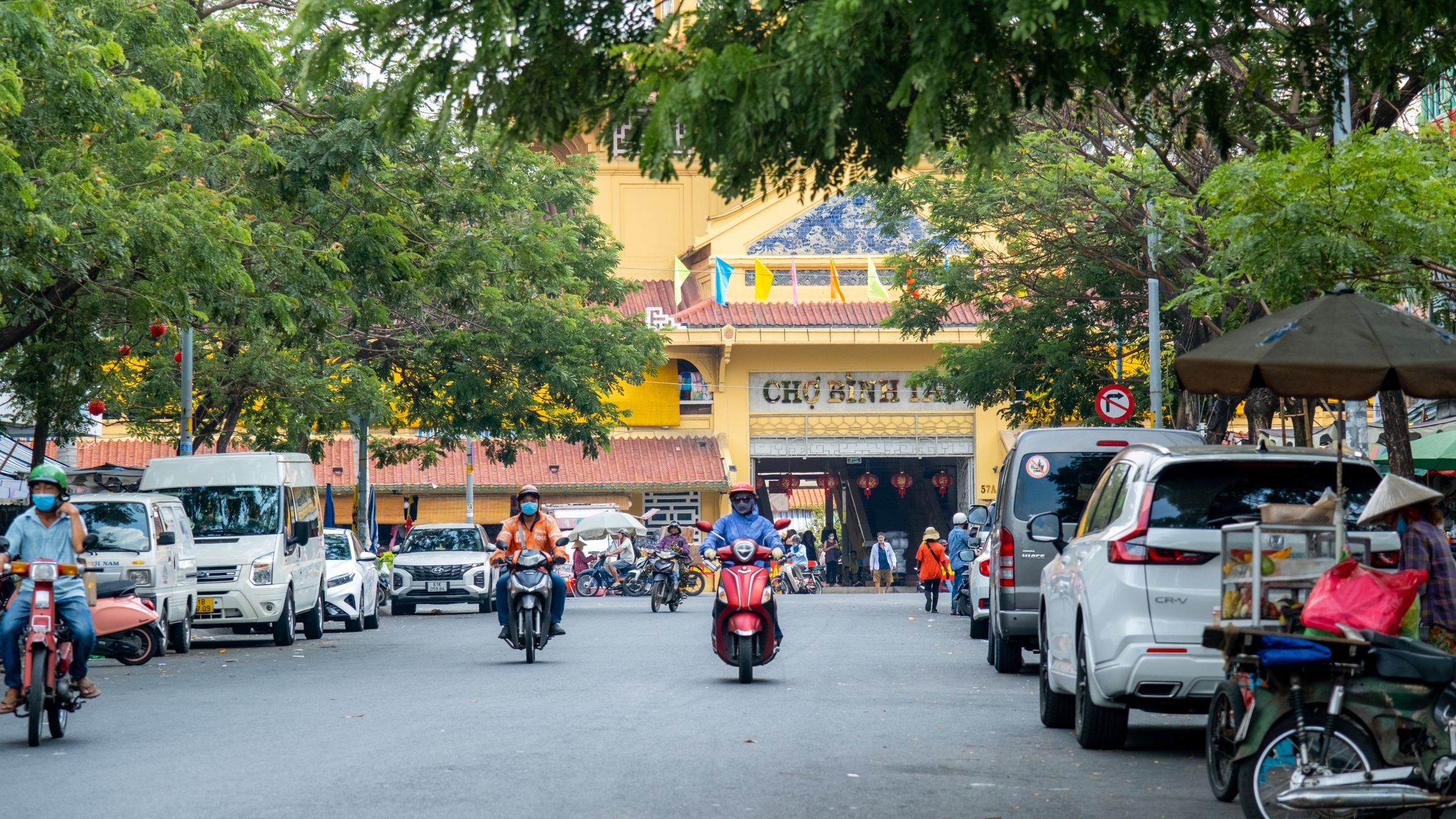
District 7, especially the planned Phu My Hung development, feels like it's in a different country. Wide, tree-lined streets. Shopping malls. Families on motorbikes instead of drunk backpacker groups. The architecture is new — glass towers, sky bridges, everything designed in the last 15–20 years.
Hotels here start around 600,000 VND (~$24) for a bare-bones room, but most options sit at 1–2 million VND (~$40–80). The upscale expat hotels (Estella, Masteri apartments, four-star chains) run 2–4 million VND (~$80–160). You get AC, gym, Western breakfast standards, and quiet nights.
Why come here? If you're working remotely, staying longer than a week, or traveling with family, District 7 has reliable services and doesn't feel like a tourist trap. The "Thao Dien" sub-area (near D1/D3 border) skews ultra-upscale: boutique hotels, wine bars, expat restaurants. Prices there are 2–5 million VND (~$80–200). It's not cheaper or more adventurous, but it's stable and comfortable.
The downside: you'll eat at imported-ingredient restaurants and shop at malls. You lose some of the grit and spontaneity of central Saigon. You're also quite far from backpacker bars and street-food clusters (though District 7 has its own restaurants, they're fancier and pricier).
The money breakdown
Budget (under $20/night): District 3 guesthouses, some Pham Ngu Lao fan rooms.
Mid-range ($20–60): District 1 mid-tier hotels, most of District 3 AC rooms, lower-end District 7 hotels.
Comfort+ ($60–150): Good District 1 three-star, upper District 7 apartments, Thao Dien boutique hotels.
Luxury ($150+): Park Hyatt, Caravelle, high-end District 7 serviced apartments.

Photo by Tuan Vy on Pexels
The real choice
District 1 is not overrated — it's just expensive and loud. Stay here if you want spontaneous friends and don't mind chaos.
District 3 is underrated. Quieter, cheaper, more authentic. You navigate a little harder, but you're eating where locals eat and paying local rates.
District 7 is for people who want hotel amenities and don't need the "experience." Nothing wrong with that.
If you're new to Saigon and have a week, spend three nights in District 1 to get your bearings and meet people, then move to District 3 for the rest. You'll spend less and eat better.
Frequently Asked Questions
What are the price differences between District 1 and District 3 hotels?
District 3 consistently runs cheaper than District 1 for equivalent quality. A guesthouse in District 3 costs 120,000-200,000 VND ($5-8), compared to 150,000-250,000 VND ($6-10) on Pham Ngu Lao in District 1. Mid-range hotels drop from 400,000-800,000 VND in District 1 to 300,000-600,000 VND in District 3. The difference is the tourist premium built into District 1 pricing.
Where should a first-time visitor stay to walk to major Saigon attractions?
District 1 is the most walkable base for first-time visitors. Ben Thanh Market, the War Remnants Museum, and Nguyen Hue Street are all accessible on foot without needing a map app. The trade-off is noise from motorbikes and nightlife until around 2 a.m., plus tourist-markup pricing on food and accommodation throughout the area.
When does staying in District 7 make more sense than District 1 or 3?
District 7 suits remote workers, families, or anyone staying longer than a week. The Phu My Hung development offers wide streets, shopping malls, and quiet nights. Hotels start at 600,000 VND ($24) but most sit at 1-2 million VND ($40-80). It lacks the street-food energy of Districts 1 and 3, but provides reliable services without the backpacker atmosphere.
Practical notes
District 1 is bikeable; taxis or "Grab" apps handle longer trips. District 3 benefits from a Grab account (or just asking your guesthouse to call a taxi). District 7 is car-dependent — use Grab or rent a motorbike. All three have ATMs and 7-Eleven. WiFi is standard everywhere.
Last updated · May 26, 2026 · independently researched, never sponsored.