The fee landscape
Vietnam (베트남 / 越南 / ベトナム) has no single ATM network. Each bank sets its own fee policy for foreign cardholders, and it varies wildly. The difference between a free withdrawal and a paid one is often just knowing which machines to use. Walk 200 meters down the same street in Hanoi's Old Quarter and you'll pass a Techcombank (free), a Vietcombank (50,000 VND fee), and a no-name booth inside a hotel lobby (potentially 80,000 VND or more). It pays — literally — to know the difference before you land.
One thing that surprises first-timers: Vietnam is still heavily cash-dependent outside major tourist zones. Street food stalls selling "pho" or "banh mi" in alley kitchens don't take Visa. Market vendors in Hoi An or the floating markets near Can Tho deal in dong only. Even mid-range restaurants in Da Lat or Hue sometimes lack card terminals. You will need cash more often than you expect, which makes your ATM strategy genuinely important.
Banks with no foreign-card fees
Techcombank is the standout. Their ATMs don't charge a fee for non-Vietnamese cards — no surcharge, no fine print. You pay only what your home bank charges (if anything). Techcombank has about 500 ATMs across the country, concentrated in Hanoi, Saigon, and Da Nang, but present in most mid-sized cities. In Hanoi, you'll find Techcombank machines along Cau Giay, Ba Dinh, and around the Hoan Kiem area. In Saigon, District 1 (near Ben Thanh Market), District 3, and Binh Thanh all have good coverage. In Da Nang, check along Bach Dang Street near the riverfront or around the Vincom Plaza area.
VPBank similarly doesn't levy a foreign-card fee. They have roughly 800 machines nationwide, slightly better distribution than Techcombank. Both banks are straightforward: use their ATM, no Vietnam-side charge. VPBank machines tend to show up in commercial areas and near shopping centers, so they're often easy to spot when walking through any city center. One practical note: VPBank machines occasionally default to a 2,000,000 VND max per transaction in some locations, lower than Techcombank's typical 5,000,000 VND cap. If the machine offers a choice, always select the highest amount to minimize the number of transactions.
Banks that charge 50,000 VND per withdrawal
Vietcombank and BIDV (Bank for Investment and Development of Vietnam) are state-owned banks with the widest ATM footprints — thousands of machines in every city and town. They both charge 50,000 VND (~USD 2) for each foreign-card withdrawal. It stings when you're pulling out 5 million dong and losing another 50k. If you're in a pinch and only these machines are nearby, the fee is unavoidable.
ACB (Asia Commercial Bank) and Agribank also typically charge around 50,000 VND.
To put the cost in perspective: 50,000 VND buys a solid bowl of "bun bo Hue" on the street or a plate of "com tam (껌땀 / 碎米饭 / コムタム)" (broken rice) with pork in Saigon. Over a two-week trip, if you hit fee-charging ATMs five or six times, that's 250,000–300,000 VND gone — enough for a couple of good meals or a half-day motorbike rental. It's not devastating, but it's avoidable.
One more bank worth mentioning: MB Bank (Military Bank). Their ATMs pop up frequently and the fee for foreign cards is also typically 50,000 VND. They have a strong presence in smaller cities and provincial capitals where Techcombank or VPBank might be harder to find.
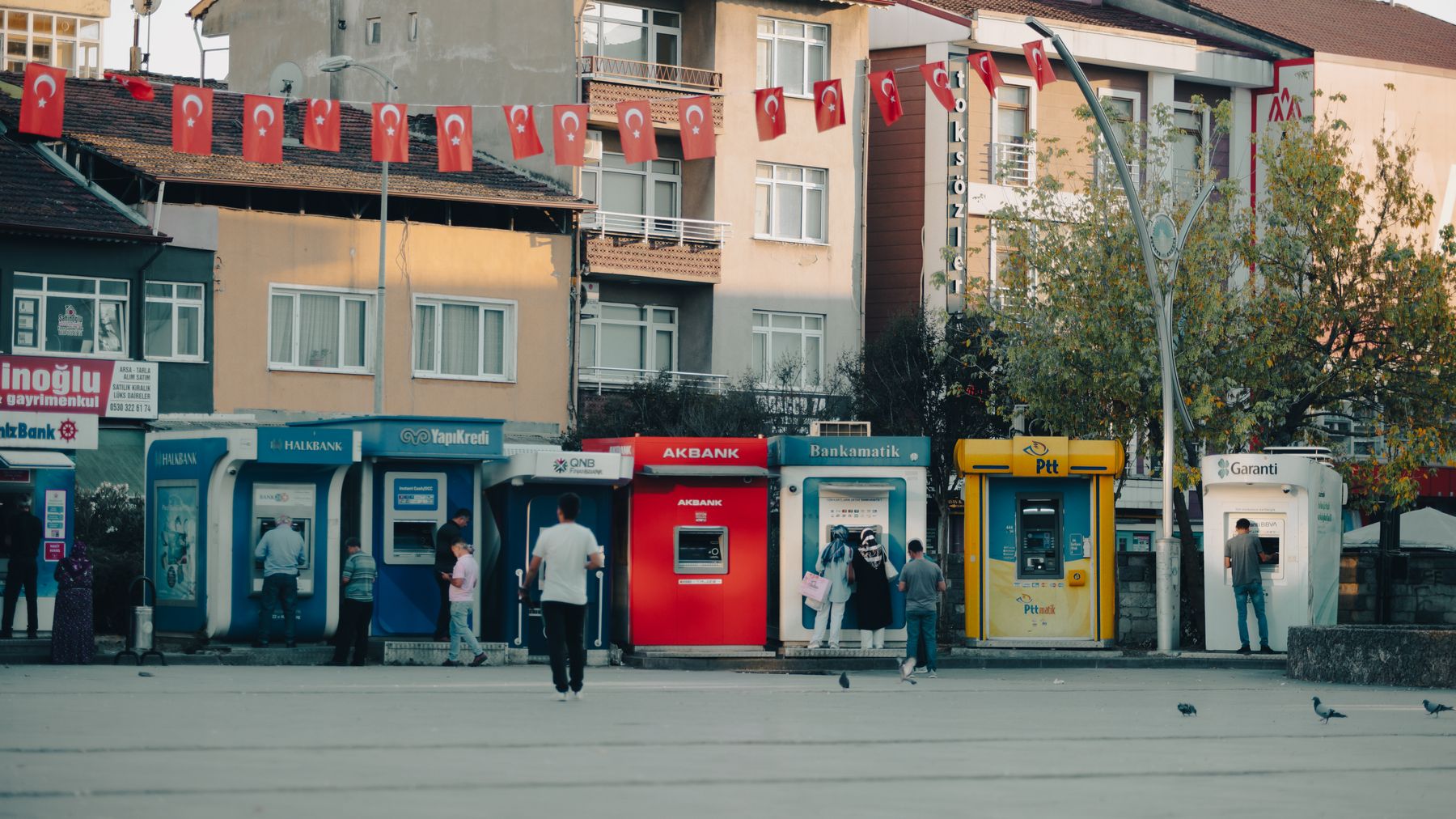
Photo by Nurullah Karaman on Pexels
Transaction and daily limits
Regardless of the bank, expect per-transaction limits of 3–5 million VND. Most machines won't let you pull more than 5 million in a single go. Daily limits vary: some cards allow 10–20 million VND per 24 hours, others as low as 5 million. This is set by your home bank, not the Vietnamese side.
If you need serious cash — say, 15 million VND for a long motorbike trip through the Ha Giang loop or a multi-day trek in Sapa — you'll need to spread it across multiple transactions or multiple ATMs. Plan accordingly. Withdraw the bulk of your cash in Hanoi or a larger town before heading into remote areas where ATMs thin out fast.
A few specifics on per-transaction caps by bank:
- Techcombank: usually 5,000,000 VND per transaction
- VPBank: 2,000,000–5,000,000 VND depending on the machine
- Vietcombank: 5,000,000 VND per transaction
- BIDV: 3,000,000–5,000,000 VND per transaction
- Agribank: 3,000,000 VND per transaction (some rural machines cap at 2,000,000)
These limits change without notice. If a machine offers you less than expected, try a different branch of the same bank before assuming your card is blocked.
Why your card gets declined
Declines happen constantly, especially on the first withdrawal in a new country. Common reasons:
- Your bank flagged it as suspicious. Foreign transaction, unfamiliar location, odd time of day — your home bank's fraud system doesn't recognize the pattern.
- Magnetic stripe or chip read failed. Older machines in provincial towns have finicky readers. Try a different ATM.
- Daily or monthly limit already hit. Check your account balance and transaction history at home before traveling.
- The machine is offline. Network hiccups, especially in remote areas.
- Wrong PIN entry. Some machines time out fast or the keypad is sluggish. Enter your PIN deliberately. Three wrong attempts and your card may be temporarily locked.
- Card type not supported. JCB cards work at most machines. UnionPay is hit-or-miss outside tourist areas. Amex works almost nowhere for ATM cash advances in Vietnam. Visa and Mastercard debit cards have the highest success rate.
Best practice: Call your bank before you leave home and notify them you'll be in Vietnam for X dates. Many banks now let you do this via their app, but a phone call is safer. Give them the dates and general regions where you'll be, coastal areas). This dramatically reduces declined transactions.

Photo by www.kaboompics.com on Pexels
Strategy for smooth withdrawals
-
Start at a Techcombank or VPBank ATM. Your first withdrawal saves you 50,000 VND and tests whether your card works at all. If it fails, you know you need to call home, not switch machines.
-
Withdraw larger amounts per transaction. If you can pull 5 million instead of 2 million, you reduce total fee exposure. That said, carrying large amounts of cash in Vietnam is risky — balance frequency with security.
-
Have a backup card. Bring two cards from different issuers or accounts. If one is declined or skimmed, you're not stranded. Credit and debit cards sometimes behave differently; try both.
-
In small towns, pre-plan cash. Rural areas and island destinations (Phu Quoc, Cat Ba) may have limited ATM networks. Withdraw in the nearest city beforehand.
-
Avoid tourist-area ATMs. Machines in airport terminals, hotel lobbies, and night markets often carry higher fees (60,000–100,000 VND) because they're run by third-party operators, not banks directly.
-
Decline the conversion offer. Many ATMs will ask if you want to be charged in your home currency instead of VND. This is called Dynamic Currency Conversion (DCC). Always choose VND. The ATM's exchange rate is terrible — typically 3–5% worse than your bank's rate. Hit "Without Conversion" or "VND" every time.
DCC: the hidden fee most travelers miss
Dynamic Currency Conversion deserves its own callout because it costs more than the ATM surcharge itself. Here's how it works: the machine detects your foreign card and offers to show the amount in USD, EUR, GBP, or whatever your home currency is. It looks convenient. The exchange rate displayed, however, is set by the ATM operator at a significant markup.
On a 5,000,000 VND withdrawal (~USD 200), choosing DCC can cost you an extra USD 6–10 compared to letting your home bank handle the conversion. Combined with a 50,000 VND ATM fee, you could lose USD 12+ on a single withdrawal. Multiply that across a trip and the math gets ugly.
The rule is simple: always pay in VND. Let your home bank or card network (Visa/Mastercard) handle the conversion. Their rates are nearly always better.
ATM safety
Skimming is real but not rampant. Techcombank and VPBank machines are newer and generally well-maintained. BIDV and Vietcombank machines in city centers are safe. Sketchy, isolated ATMs in barely-lit alleys — use common sense and avoid them.
Tap your card rather than insert it when possible. Most modern Vietnamese ATMs support tap. If a machine looks old, dirty, or has obvious physical damage, find another one.
A couple of extra precautions: cover the keypad with your hand when entering your PIN, even if nobody's nearby. If the card slot feels loose or you see anything unusual attached to the front panel, walk away. ATMs inside bank branches (especially during business hours, roughly 8:00–16:30 Monday to Friday) are the safest option because they're monitored by security cameras and staff.
Common mistakes foreigners make
- Not carrying enough cash outside cities. A day trip from Ninh Binh to Trang An or from Hue to the Tomb of Tu Duc might take you through areas with zero ATMs for 20+ km. Bring cash.
- Accepting DCC without reading the screen. The prompt is designed to look like the default option. Slow down and select VND.
- Only bringing one card. Cards get swallowed by machines, blocked by fraud alerts, or demagnetized. A backup from a different bank is essential.
- Withdrawing at the airport on arrival. Tan Son Nhat (Saigon) and Noi Bai (Hanoi) airports have ATMs, but they're often third-party machines with inflated fees. Withdraw the minimum you need for a taxi (about 250,000–400,000 VND to the city center) and find a Techcombank or VPBank once you're settled.
- Ignoring the receipt. Always take the receipt and check the amount withdrawn matches what you received. Occasionally machines dispense a different denomination bundle than expected — rare, but it happens.
- Assuming cards work everywhere. "Ca phe" shops in back alleys, "goi cuon" (spring roll) vendors on the sidewalk, "cha gio" stands at night markets — these are cash-only. Even in Ho Chi Minh City or central Hanoi, street food is a cash game.
Quick reference: Vietnam ATM cheat sheet
- Free ATMs (no foreign-card fee): Techcombank, VPBank
- 50,000 VND fee ATMs: Vietcombank, BIDV, ACB, Agribank, MB Bank
- Per-transaction limit: 2,000,000–5,000,000 VND (bank-dependent)
- Daily limit: set by your home bank, typically 10,000,000–20,000,000 VND equivalent
- Best card networks: Visa, Mastercard (debit preferred for lower fees)
- DCC trap: always select VND, never your home currency
- Airport ATMs: higher fees, use only for small amounts on arrival
- Bank branch hours: roughly 8:00–16:30 Mon–Fri, limited Sat, closed Sun
- Emergency cash alternative: Western Union has agents in most cities; gold shops in Ben Thanh Market area (Saigon) and Hanoi's Hang Bac Street exchange USD at decent rates, but compare carefully
- Useful Vietnamese phrase at a bank: "Toi muon rut tien" (I want to withdraw money)
Frequently Asked Questions
How do I find a free ATM for foreign cards in Vietnam?
Techcombank and VPBank do not charge a fee for foreign-card withdrawals — you pay only what your home bank charges. Techcombank has around 500 ATMs concentrated in Hanoi (Cau Giay, Ba Dinh, Hoan Kiem), Saigon (District 1 near Ben Thanh Market, District 3), and Da Nang (Bach Dang Street, Vincom Plaza area). VPBank has roughly 800 machines nationwide and is often found near shopping centers in city centers.
What ATM fee will I pay at Vietcombank or BIDV in Vietnam?
Both Vietcombank and BIDV charge 50,000 VND (about USD 2) per foreign-card withdrawal. ACB, Agribank, and MB Bank typically charge the same. Over a two-week trip with five or six fee-charging withdrawals, that totals 250,000-300,000 VND. These state-owned banks have the widest coverage across Vietnam, so the fee is sometimes unavoidable in smaller towns where Techcombank or VPBank machines are absent.
When do I actually need cash rather than a card in Vietnam?
Cash is essential outside major tourist zones. Street food vendors selling pho or banh mi in alley kitchens do not accept Visa. Market vendors in Hoi An and the floating markets near Can Tho deal in dong only. Even mid-range restaurants in Da Lat or Hue sometimes lack card terminals. Carrying sufficient dong matters most when traveling beyond city centers, where card acceptance drops significantly.
Practical notes
Foreign cards work reliably across Vietnam's banking system, but the 50,000 VND surcharge at major state banks adds up on longer trips. Prioritizing Techcombank or VPBank saves money and stress. Call your bank before departure, carry two cards, and withdraw strategically. You'll avoid most of the hassles travelers encounter.
If you're planning a route that hops between cities — say, Hanoi to Ha Long Bay, then down to Hue and Hoi An, finishing in Saigon — stock up on cash at each major stop. The stretches between cities are where ATMs disappear, and that's exactly when you'll want cash for roadside "banh cuon" or a "bia hoi" on a plastic stool.
Bottom line
Vietnam's ATM situation isn't complicated once you know the two or three banks that won't charge you. Stick with Techcombank or VPBank, decline DCC every time, and carry a backup card. The money you save on fees is better spent on a bowl of "bun cha" in Hanoi or a plate of "mi quang" in Da Nang — and that's the whole point of being here.
Last updated · May 29, 2026 · independently researched, never sponsored.