Overview
Central Vietnam (베트남 / 越南 / ベトナム) packs more historical and natural density than any other region in a short distance. This 7-day itinerary connects four key stops—Da Nang, Hue, Hoi An, and Phong Nha—in a logical loop that minimizes backtracking. You'll hit beaches, mountains, cave systems, imperial tombs, and lantern-lit Old Towns. Expect 4–5 hours of driving total across the week.
Best visited October to April (dry season; avoid monsoon and Tet).
Day 1 — Da Nang Arrival & Marble Mountains
Fly into Da Nang International Airport (code: DAD). The city is Vietnam's third-largest by population but feels smaller and more walkable than Hanoi or Saigon. Most travelers skip the urban center and head straight to the coast or nearby hills.
Check into a hotel in the My Khe Beach neighborhood (central, 5 km from airport, 15–20 min taxi or Grab ride; 150,000–200,000 VND). Afternoon: take a Grab to Marble Mountains (Ngu Hanh Son), a cluster of five limestone peaks 10 km south. Entry is 40,000 VND. Climb the 156 steps to Linh Ung Pagoda at the summit for views of My Khe Beach and the coast. Inside the peaks are caves with Buddhist shrines and, lower down, stalls selling marble carvings (very touristy, skip unless you want a souvenir). The walk takes 1–1.5 hours round trip. Return for sunset dinner at a beach-front restaurant on My Khe (grilled fish, squid, or prawns; 150,000–300,000 VND per plate).
Day 2 — Ba Na Hills
Da Nang's top attraction is Ba Na Hills, a mountain resort 40 km west with a cable car, French colonial villas, and the Golden Bridge—a pedestrian walkway suspended 1,400 m above the valley, held aloft by giant stone hands. It's Instagram-heavy and crowded, but the views are legitimately impressive if you go early.
Book a tour (most hotels arrange them; 900,000–1.2 million VND per person, includes transport and entrance) or rent a car and driver (600,000–800,000 VND for 8 hours). Drive departs 7:00–7:30 a.m. Arrive around 9:00 a.m., ride the cable car up (15 min), walk the Golden Bridge (30 min with photos), explore the French-colonial-style buildings and fake "alpine village," and grab lunch at one of the on-site restaurants (pricey; 200,000–400,000 VND for main dishes). Descend by 3:00 p.m., return to Da Nang (다낭 / 岘港 / ダナン) by 5:00 p.m. Evening free to rest or explore the small cafes and night market near your hotel.

Image by CEphoto, Uwe Aranas via Wikimedia Commons (CC BY-SA)
Day 3 — Da Nang to Hoi An (Scenic Route)
Drive from Da Nang to Hoi An (35 km, 45 min). If timing allows, take the coastal "Hai Van Pass" route (scenic but longer, 90 min) instead of the inland highway. Stop at Lang Co Beach if you have 30 min; it's a quiet crescent of sand north of the pass.
Arrive in Hoi An by midday. Check into a hotel in the Old Town (UNESCO-listed, walking distance to all key sites). Hoi An is tiny—about 1 km across—so central location matters most. Budget 800,000–2 million VND per night depending on comfort.
Afternoon: wander the Old Town on foot. The main sights are free to walk past but require a combined ticket (120,000 VND) to enter specific buildings—the Japanese Covered Bridge, Phung Hung House, Quan Thang House, temples, and assembly halls. Visit 2–3 before heading to Cam Thanh Coconut Forest (8 km, 20 min by bike or Grab) for a sunset boat ride through mangroves and fishing villages. Tours run 300,000–500,000 VND per person, 90 min. Return for dinner: try local "banh mi" and "cao lau" at street stalls (30,000–50,000 VND) or eat at a sit-down restaurant (150,000–300,000 VND).
Day 4 — Hoi An: Beach & Tailor
Hoi An has a beach 5 km east. Rent a motorbike (100,000–150,000 VND per day, need International Driving Permit or take Grab) and ride to Cua Dai Beach—wide, clean, and less crowded than My Khe. Swim and relax until early afternoon.
Return to Old Town. Book a same-day or next-day tailor fitting at one of the many shops lining the main streets (avoid the most-trafficked block near the bridge; prices are inflated). A silk dress or shirt takes 1–2 days; suits or ao dai (traditional Vietnamese tunic) take 3–4 days. Expect 200,000–600,000 VND for a simple garment, more for complex work.
Evening: walk the Old Town again (it looks completely different after dark, with silk lanterns lit overhead), eat dinner at a family-run restaurant, and try the local specialty "mi Quang"—turmeric noodles with pork, shrimp, and herbs (50,000–80,000 VND).
Day 5 — Hoi An to Hue (Imperial City)
Drive from Hoi An to Hue (120 km, 2.5–3 hours). The road is straight and flat. No scenic stops en route—push through.
Hue was Vietnam's capital from 1802 to 1945 and home to the Nguyen Dynasty. The city straddles the Perfume River; the Citadel (walled imperial compound) is on the north bank. Check into a hotel near the Citadel (600,000–1.5 million VND per night).
Afternoon: enter the Citadel (entrance on Thuan Thanh Street; 150,000 VND). Hire a local guide (200,000–300,000 VND for 2 hours) or join a group tour. Key sites inside: the Ngo Mon Gate (main entrance, photogenic), the Forbidden Purple City (royal residences, heavily bombed in the Vietnam War, now ruins but evocative), and the old palace grounds. The complex is vast—2–3 hours is realistic. Return to your hotel, rest, and have dinner in the backpacker quarter (Chu Van An Street) or along the river.

Image by CEphoto, Uwe Aranas via Wikimedia Commons (CC BY-SA)
Day 6 — Hue: Royal Tombs
Hue's royal tombs (of the Nguyen emperors) are scattered 5–15 km south of the Citadel. You can't reasonably visit all in one day; pick 2–3. Most popular are Tomb of Tu Duc (7 km, the most scenic and intact) and Tomb of Khai Dinh (10 km, ornate, French-influenced architecture).
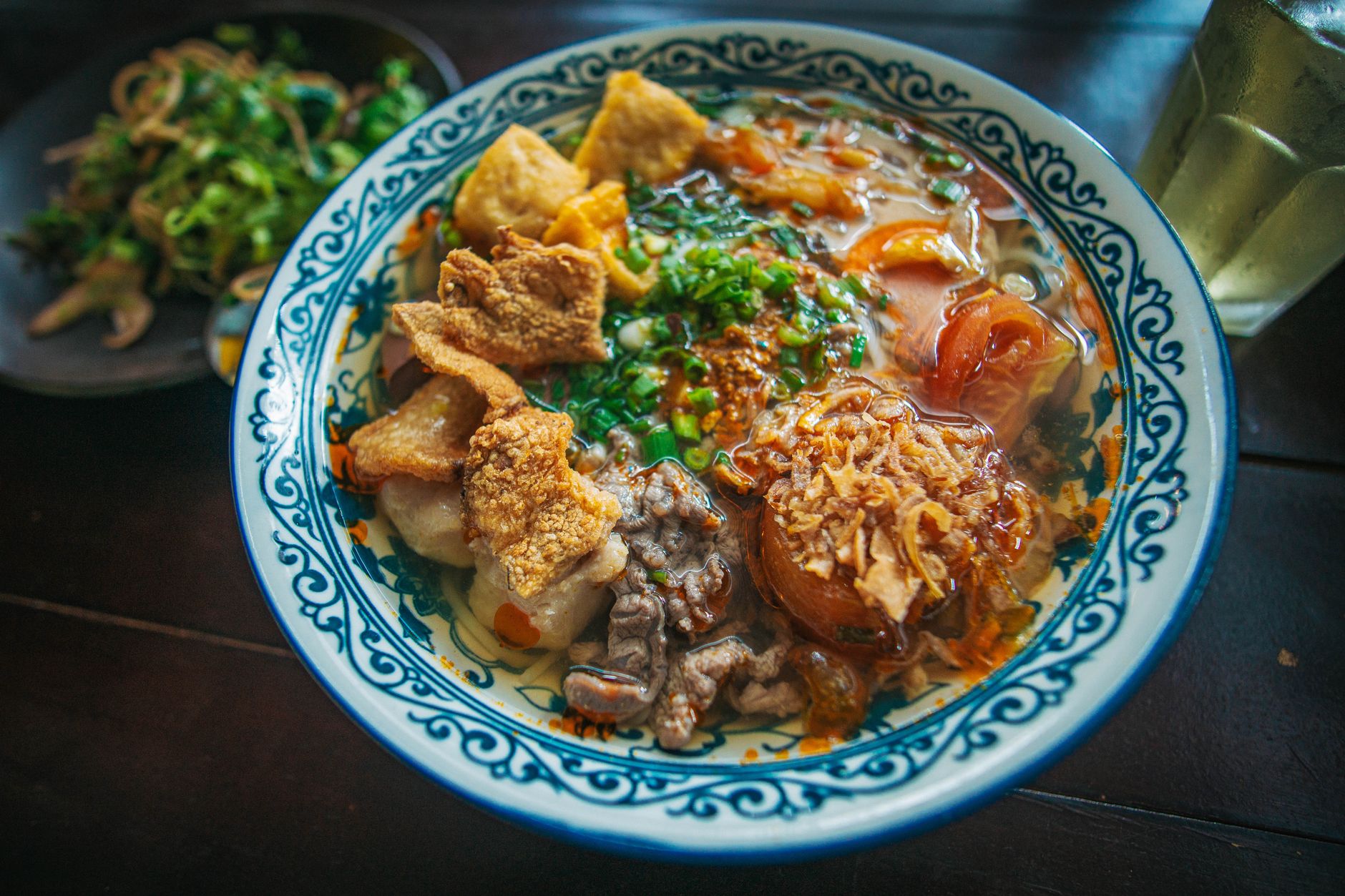
Book a car and driver (500,000–700,000 VND for half day, 3–4 hours) or join a guided tour (400,000–600,000 VND per person). Entry to each tomb is 100,000 VND. Tours usually combine 2–3 tombs plus a stop at a traditional silk-weaving or incense-making workshop (mostly for tourists, but atmospheric). Lunch at a local restaurant near the tombs ("bun bo Hue," a spicy beef noodle soup, is the local specialty; 50,000–80,000 VND).
Evening: walk the Perfume River promenade, drink Vietnamese coffee at a riverside cafe, or take a sunset boat tour (300,000–500,000 VND per person, 1–2 hours).
Day 7 — Hue to Phong Nha: Caves & Return
Drive from Hue to Phong Nha-Ke Bang National Park (90 km, 2–2.5 hours). The road cuts through jungle and limestone mountains—scenic but winding. Arrive by midday.
Phong Nha is a limestone karst valley in Quang Binh Province with the world's largest cave (Son Doong, multi-day expedition only) and several accessible day-visit caves. Most visitors do a combo: Paradise Cave (entrance hike + cave walk, 1.5 hours total, 250,000 VND), Phong Nha Cave (boat ride into flooded cave, 1 hour, 150,000 VND), and Dark Cave (zip-line + mud bath + cave swim, 2–3 hours, 500,000 VND). You can do all three in one long day with an early start.
Book a tour through your hotel or a local tour operator in advance (many tourists try to DIY and waste time; a guide costs 300,000–600,000 VND and includes transport between caves). Start at 7:00–7:30 a.m., finish by 4:00 p.m.
If time allows and you're not caved-out, visit Tien Son Cave (above the village, easy 20 min walk, free entry) for views of the valley.
That evening, you can either stay overnight in Phong Nha village (basic guesthouses, 300,000–600,000 VND per night, authentic vibe) or drive back to Hue (2.5 hours, arriving late, not ideal). Most travelers stay one night and fly out the next day from Hue (90 km south, 2.5-hour drive) or from Da Nang (200 km north, 4-hour drive).
Frequently Asked Questions
How much does it cost to visit Ba Na Hills from Da Nang?
A tour to Ba Na Hills from Da Nang runs 900,000–1,200,000 VND per person, typically including transport and entrance, with hotel pickup arranged. If you prefer flexibility, renting a car and driver costs 600,000–800,000 VND for 8 hours. On-site lunch adds 200,000–400,000 VND per main dish. The resort is 40 km west of Da Nang, and the drive takes roughly 90 minutes each way.
What is the best time of year to visit central Vietnam?
October to April is the dry season and the recommended window for this itinerary covering Da Nang, Hue, Hoi An, and Phong Nha. The article specifically advises avoiding the monsoon period and Tet (Lunar New Year). Traveling outside the dry season increases the risk of heavy rain disrupting outdoor activities like the Marble Mountains walk, the Hai Van Pass drive, and cave visits at Phong Nha.
When should a first-time visitor to Da Nang check into My Khe Beach?
My Khe Beach is the recommended base in Da Nang — it sits 5 km from Da Nang International Airport (DAD), reachable in 15–20 minutes by taxi or Grab for 150,000–200,000 VND. It keeps you close to Day 1 sights like Marble Mountains (10 km south, 40,000 VND entry) and beachfront restaurants serving grilled fish and squid for 150,000–300,000 VND per plate.
Practical Notes
Transport: rent a car and driver via your hotel or Turo-style app (700,000–1.2 million VND per day). Buses are cheaper but less flexible. Domestic flights or onwards) cost 300,000–700,000 VND and save a full day of driving if you're short on time.
Food: this region is strong for local dishes—banh mi, bun cha, and cao lau in Hoi An; bun bo Hue in Hue; grilled seafood in Da Nang. Eat at street stalls and family-run shops, not tourist restaurants, to save money and taste authenticity.
Budget: accommodation 600,000–2 million VND/night, food 100,000–300,000 VND/day, activities 1–2 million VND total (caves, tombs, tours). Plan 15–20 million VND (650–850 USD) per person for the week including transport, accommodation, food, and activities.
Last updated · May 29, 2026 · independently researched, never sponsored.