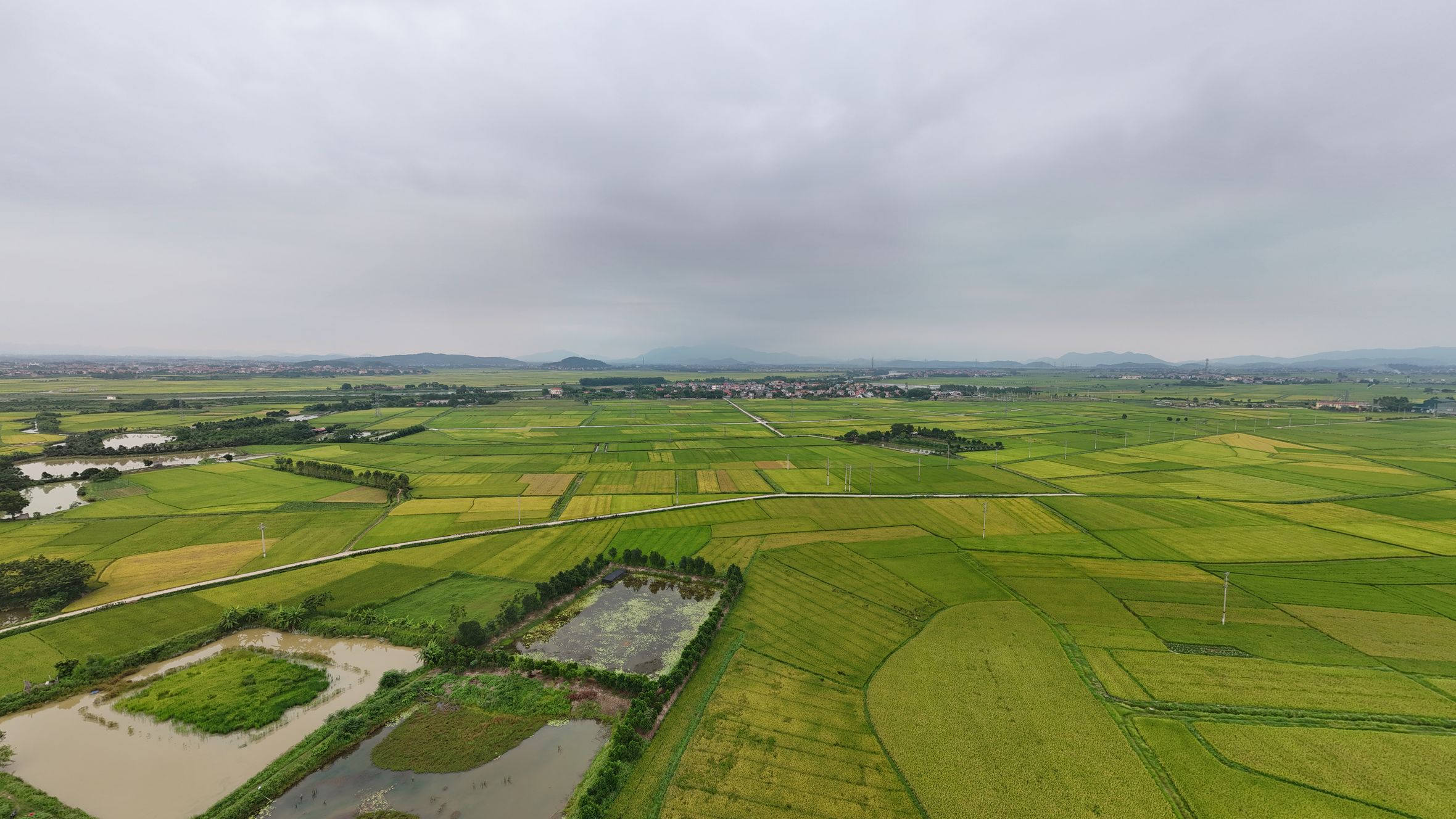
While most travelers in Hanoi immediately head south to Ninh Binh (닌빈 / 宁平 / ニンビン) or east to Ha Long Bay, the province of Bac Giang sits quietly to the north, largely ignored by the tourist buses. Just 50 kilometers from the capital, this region transitions rapidly from industrial outskirts into rugged highlands, ancient Buddhist sanctuaries, and crumbling clay-brick villages.
If you want to escape the souvenir stalls and megaphone-wielding tour guides, here are six raw, active, and cultural things to do in Bac Giang, along with a few off-the-beaten-path alternatives.
1. Camp on the Windswept Grasslands of Dong Cao
Located in Son Dong district, about 120 kilometers from Hanoi (하노이 / 河内 / ハノイ), Dong Cao is a high-altitude plateau characterized by rolling green pastures, massive weathered boulders, and herds of roaming cattle. It feels more like the highlands of Mongolia than typical northern Vietnamese jungle.
There are no hotels, paved parking lots, or ticket booths here. You ride your motorbike up the rocky dirt tracks, pitch a tent on the grassy ridge, and watch the sunset over the valley. You will need to pack in all your own water, food, and firewood from the small market at the base of the mountain in An Chau town.
2. Decode the Ancient Woodblocks at Vinh Nghiem Pagoda
Tucked away in Yen Dung district, Vinh Nghiem Pagoda is the cradle of Truc Lam Zen Buddhism, founded in the 13th century. While the wooden architecture and quiet courtyards are peaceful, the real treasure is kept in the temple's library.
Vinh Nghiem houses a collection of over 3,000 original wooden printing blocks carved in Han-Nom characters. These blocks, carved from pear wood, contain Buddhist sutras, medical texts, and monastic rules. Recognized by UNESCO, they represent a rare surviving library of medieval printing technology. You can often see monks carefully cleaning or cataloging these dark, ink-stained blocks in the side halls.
3. Trek the Primary Forests of Khe Ro
If you want real jungle hiking without the crowds of Sapa, head to the Khe Ro Ecological Tourist Area. Part of the Tay Yen Tu nature reserve, this is a protected primary forest home to rare flora, limestone peaks, and cold mountain streams.
The main trail follows a rocky riverbed, crossing suspension bridges and leading to deep, emerald-green swimming holes like Vung Tron. You can hire a local guide from the San Chi or Dao ethnic minority villages nearby to lead you deeper into the canopy, where the trails are unmarked and overgrown.

Photo by HONG SON on Pexels
4. Explore the Clay Alleys of Tho Ha Ancient Village
Tho Ha sits on a peninsula surrounded by the Cau River. To get there, you must take a small wooden ferry from the Bac Ninh side. Historically famous for its pottery, the village ran out of clay decades ago and pivoted to making "banh da ke" (large, crunchy rice crackers topped with sesame and coconut) and "my chu" (dry rice noodles).
Today, the village is a maze of narrow, high-walled alleys built from old pottery shards, broken urns, and dark red bricks. As you walk through, you will see thousands of bamboo frames covered in drying noodles and rice paper lining the streets, catching the sun. Stop by a local home to watch them grill the giant crackers over hot coals, and pair it with a glass of green tea.
5. Kayak the Flooded Valleys of Cam Son Lake
Spanning over 2,600 hectares near the border of Lang Son province, Cam Son Lake is a massive reservoir surrounded by steep clay hills and pine forests. During the rainy season, the water level rises, turning the valleys into a labyrinth of flooded inlets and green islands.
You can rent a simple wooden motorboat from the local fishermen at the dam, or bring your own inflatable kayak to explore the quiet coves. There are no luxury resorts here—just quiet water, the occasional fisherman casting nets, and small stilt-house hamlets belonging to the Nung and Tay communities.

Photo by Duc Nguyen on Pexels
6. Walk the Historic Ramparts of Xuong Giang Citadel
Located on the outskirts of Bac Giang city, Xuong Giang Citadel is a place of immense historical pride. This was the site of a decisive 15th-century battle where Vietnamese forces defeated the Ming dynasty army, ending decades of foreign occupation.
While much of the original earthen fortress has been lost to time, the site features a grand reconstructed temple complex, ancient stone foundations, and archaeological exhibits. It is a quiet, reflective spot to visit in the late afternoon before heading into the city center for a cold "bia hoi" or a cup of iced "vietnamese coffee".
Lesser-Known Alternatives
- Suoi Mo Waterfalls: Located in Luc Nam district, this site features three tiers of clear waterfalls tumbling over dark rocks. It is home to several ancient temples dedicated to the Mother Goddess religion.
- Dong Quan Ancient Tree: A massive, 1,000-year-old banyan tree located in Dong Quan village. Its sprawling roots and giant canopy cover an entire communal courtyard, serving as a quiet meeting spot for local elders.
Practical Notes
Bac Giang is easily reached by motorbike or local bus from Hanoi's My Dinh or Giap Bat stations in about 1.5 hours. While Bac Giang city has standard business hotels, the best experiences in the province require camping gear or staying in basic local guesthouses ("nha nghi") in the rural districts like Son Dong or Yen Dung. Keep some cash on hand, as card payments are rarely accepted outside the main city.
Last updated · May 30, 2026 · independently researched, never sponsored.