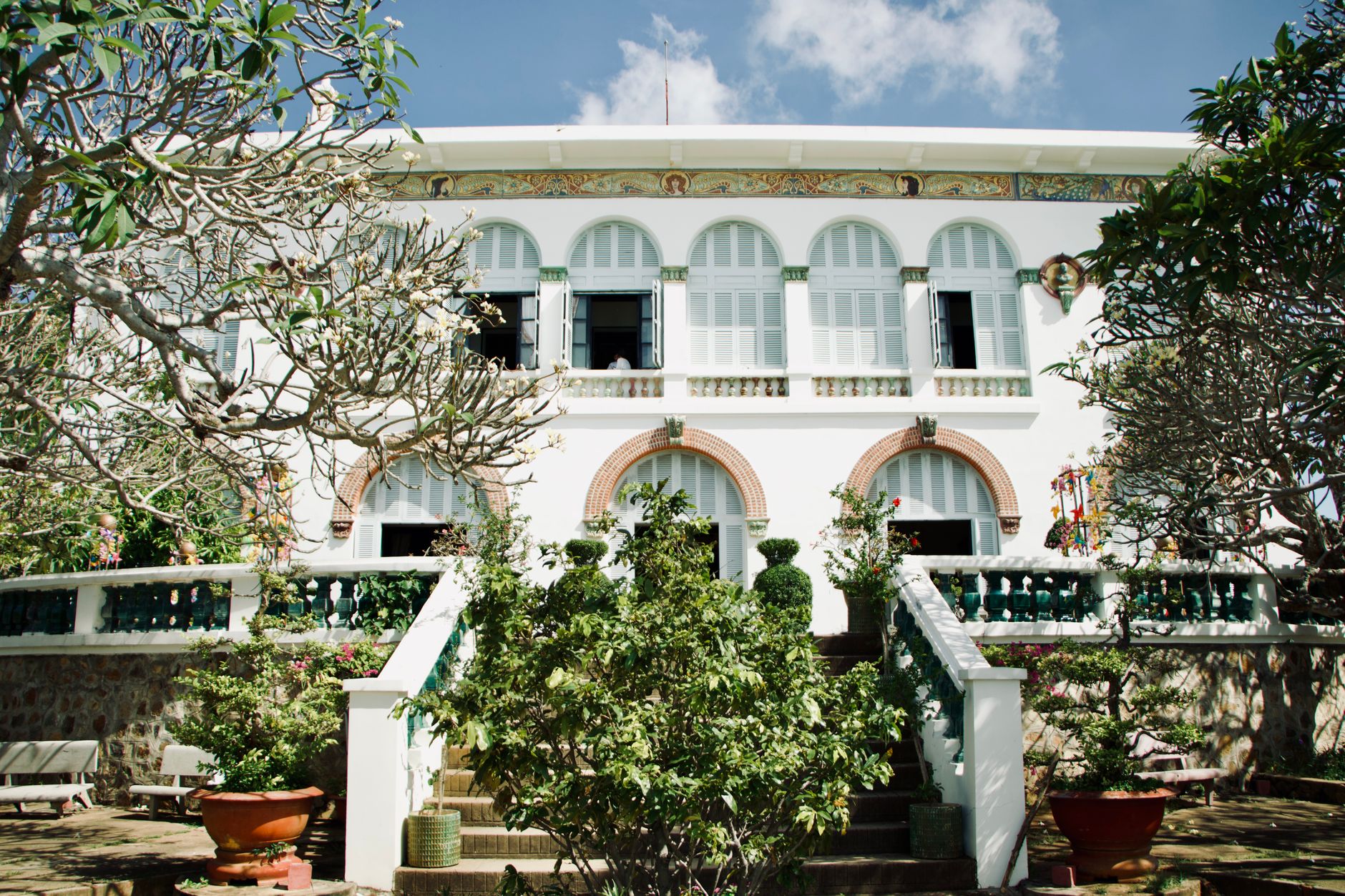
Sitting inside the former Long An Palace on the south bank of the Perfume River, Bao Tang Co Vat Cung Dinh Hue (Museum of Royal Antiquities) holds over 10,000 artifacts from the Nguyen Dynasty — the last imperial dynasty that ruled Vietnam (베트남 / 越南 / ベトナム) from 1802 to 1945. It's one of the more quietly rewarding stops in Hue, and most visitors walk right past it on their way to the Imperial Citadel across the road.
What it is and why it matters
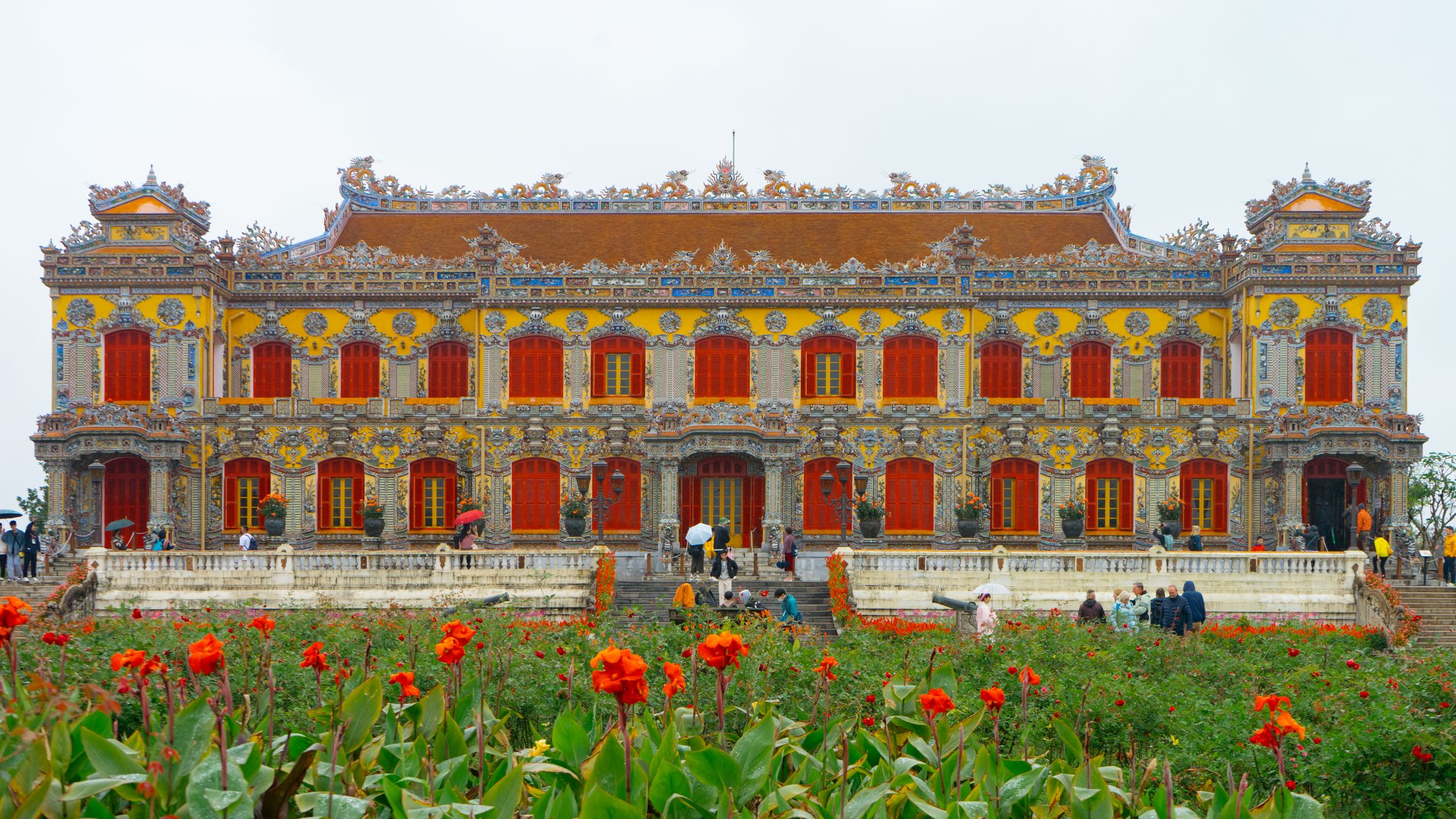
The museum occupies Long An Palace, built in 1845 under Emperor Thieu Tri. The wooden palace itself is arguably the star exhibit: triple-layered roofing, carved and gilded beams, and ironwood columns that have held up for nearly 180 years. Inside, the collection spans royal ceramics, bronze vessels, court furniture, "ao dai" worn by Nguyen-era royals, gold and silver betel sets, imperial seals, and palanquins. There's a strong ceramics section with pieces from the 17th through 19th centuries — some produced at royal kilns, others received as diplomatic gifts from China and Japan.
Most travelers come to Hue (후에 / 顺化 / フエ) for the Imperial Citadel, the royal tombs, and the pagodas. This museum fills in the texture that those sites hint at. You see how the court actually lived day to day — what they ate off, what they wore, what they carried.
Best time to visit
Hue's dry season runs roughly from March through August. April, May, and early June are the sweet spot — warm but not yet at peak summer heat, and well before the heavy rains that roll in from September through December. The museum is indoors, so rain isn't a dealbreaker, but the walk along Le Truc Street from the Citadel area is more pleasant when it's dry.
Visit in the morning, ideally before 10 AM. Tour groups tend to arrive between 10 and noon. Afternoons thin out again after 2 PM but can feel sluggish in summer heat.
How to get there
If you're already in Hue, the museum is at 3 Le Truc Street, about 500 meters south of the Citadel's Ngo Mon Gate. Walking from the Citadel takes five minutes. From the backpacker area around Pham Ngu Lao or Le Loi Street, it's a 10-minute walk or a 15,000–20,000 VND xe om (motorbike taxi) ride.
Coming from Da Nang, the train takes about 2.5 hours and costs 60,000–120,000 VND depending on seat class. The bus is slightly cheaper at around 80,000 VND but takes closer to 3 hours. From Hue's railway station, the museum is a 3 km ride — roughly 30,000–40,000 VND by Grab.
If you're traveling from Hoi An, most travelers take a direct bus (around 120,000 VND, 3–3.5 hours) or combine the trip with a stop at Hai Van Pass if riding by motorbike.

Photo by 🇻🇳🇻🇳 Việt Anh Nguyễn 🇻🇳🇻🇳 on Pexels
What to see inside
The palace architecture
Before you look at a single artifact, spend time with the building. Long An Palace is one of the best-preserved Nguyen-era wooden structures in Vietnam. The "nha rong" roof style, the lacquered panels inlaid with mother-of-pearl, and the poem boards composed by Emperor Thieu Tri himself carved into the crossbeams — these are worth a slow walk around the exterior and main hall.
The royal ceramics collection
The museum holds over 2,000 ceramic pieces. Look for the yellow-glazed wares reserved exclusively for imperial use — yellow being the emperor's color. There's a case of blue-and-white porcelain from the Minh Mang period (1820–1841) that shows how Vietnamese court taste diverged from Chinese styles while still drawing on the same traditions.
Court costumes and textiles
Several display cases hold embroidered "ao dai" and ceremonial robes from the Nguyen court. The dragon motifs, the five-clawed versus four-clawed distinctions marking rank — these details reward close attention. The textile collection is smaller than what you'd find at the National Museum of Vietnamese History in Hanoi, but it's more focused on the imperial household.
Bronze and metalwork
The bronze drums, ritual vessels, and a set of "cuu dinh" (nine dynastic urns) miniature replicas are displayed in a side gallery. The full-size urns stand in the Citadel courtyard, but seeing the detailed engravings up close in the museum's versions gives better context.
Royal daily life objects
Betel boxes, tea sets, writing instruments, opium pipes — the mundane objects of palace life are often more revealing than the grand ceremonial pieces. A mother-of-pearl inlaid wooden chest or an emperor's personal tea caddy says more about 19th-century Hue than another dragon throne.
Where to eat nearby
Hue is one of the best food cities in Vietnam, and you're well-positioned after the museum. Walk east along Le Truc toward Tran Hung Dao Street and you'll find several local spots serving "bun bo Hue" — the spicy, lemongrass-heavy beef noodle soup that defines the city. A bowl runs 30,000–45,000 VND at most street-side places.
For something lighter, look for "banh khoai" — Hue's answer to "banh xeo," a crispy stuffed crepe served with peanut dipping sauce rather than the fish-sauce based dip used in the south. Hanh Restaurant on Pho Duc Chinh Street, about a 10-minute walk from the museum, has been doing reliable banh khoai for years at around 25,000–35,000 VND per piece.
If you need a caffeine fix, any of the small cafes along Chi Lang Street pour solid Vietnamese coffee. Order a "ca phe sua da" and sit on the plastic chairs — this is Hue at its most everyday.
Where to stay
Budget guesthouses and hostels along Le Loi Street and Pham Ngu Lao Street start around 150,000–300,000 VND per night for a private room. Mid-range hotels with air conditioning, breakfast, and river views run 500,000–1,200,000 VND. For something more atmospheric, a handful of heritage-style boutique hotels near the Citadel area charge 1,500,000–3,000,000 VND — worth it if you want the old-Hue feel without backpacker noise.

Photo by lhthoai on Pexels
Practical tips
- Tickets: Entry to the museum is included in the Hue Monument Complex ticket (200,000 VND for foreigners), which also covers the Citadel, Tomb of Tu Duc, Tomb of Khai Dinh, and several other sites. Buy it at any of the major monument ticket offices. The combo ticket is valid for 2 days — plan accordingly.
- Time needed: 45 minutes to an hour is enough for most visitors. If you're genuinely interested in ceramics or Nguyen-era history, budget 90 minutes.
- Photography: Allowed without flash. Tripods are technically not permitted inside.
- Guides: The signage is in Vietnamese and English but fairly minimal. A local guide (bookable at the Citadel entrance for around 200,000–300,000 VND) can add context, though the museum is small enough to navigate solo.
Common mistakes to avoid
Don't skip this museum because you've already "done" the Citadel. The Citadel gives you the architecture and the scale; the museum gives you the objects and the detail. They complement each other.
Don't visit during the lunch break — the museum closes from 11:30 AM to 1:30 PM. Showing up at noon means standing outside in the heat.
Don't confuse this museum with the Ho Chi Minh Museum on the other side of the river, which is a different kind of visit entirely. Bao Tang Co Vat Cung Dinh Hue is the one on Le Truc, inside the old palace.
Practical notes
Pair this with a morning at the Citadel and an afternoon visiting the Tomb of Tu Duc or Tomb of Khai Dinh — that's a full day of Nguyen-era history without rushing. Hue rewards patience over speed, and this museum is a good example of that principle.
Last updated · May 29, 2026 · independently researched, never sponsored.