What Bao Ninh actually is
Bao Ninh is a narrow peninsula that curls along the coast just east of Dong Hoi, separated from the city center by the Nhat Le River. The beach runs roughly 10 km from the river mouth northward, backed by casuarina trees and low dunes. For years it was mostly a fishing village — prawn ponds, nets drying in the wind, not much else. That's changed. A handful of resorts have gone up on the southern end near the bridge, but the further north you walk, the emptier it gets.
During the American War, this stretch of coast took heavy bombing as part of the wider campaign across the region. You can still spot old concrete remnants half-buried in sand if you wander off the main paths. Today it's a peaceful, workaday place where tourism and fishing coexist without much friction.
Why travelers go
Most people passing through this part of central Vietnam (베트남 / 越南 / ベトナム) are headed to Phong Nha for the caves. Bao Ninh is the beach detour — a day or two of doing very little after crawling through underground rivers. The appeal is simple: a wide, clean beach with warm water, minimal hawkers, and enough seafood restaurants to keep you fed without hunting for options.
It's not a party beach. There are no beach clubs, no banana boats, no fire shows. If that sounds boring to you, skip it. If you've just spent three days in humid caves and want to lie flat on sand with a cold beer, Bao Ninh does the job well.
Best time to visit
The sweet spot is April through August. April and May are warm (30-34°C) with calm seas and relatively low humidity. June through August is hotter and busier with domestic tourists, especially around weekends, but the water is at its best for swimming.
Avoid October through December. This is peak monsoon season along the central coast — heavy rain, rough surf, grey skies. Some smaller guesthouses close entirely. January to March is dry but cooler and windy, fine for walking the beach but not ideal for swimming.
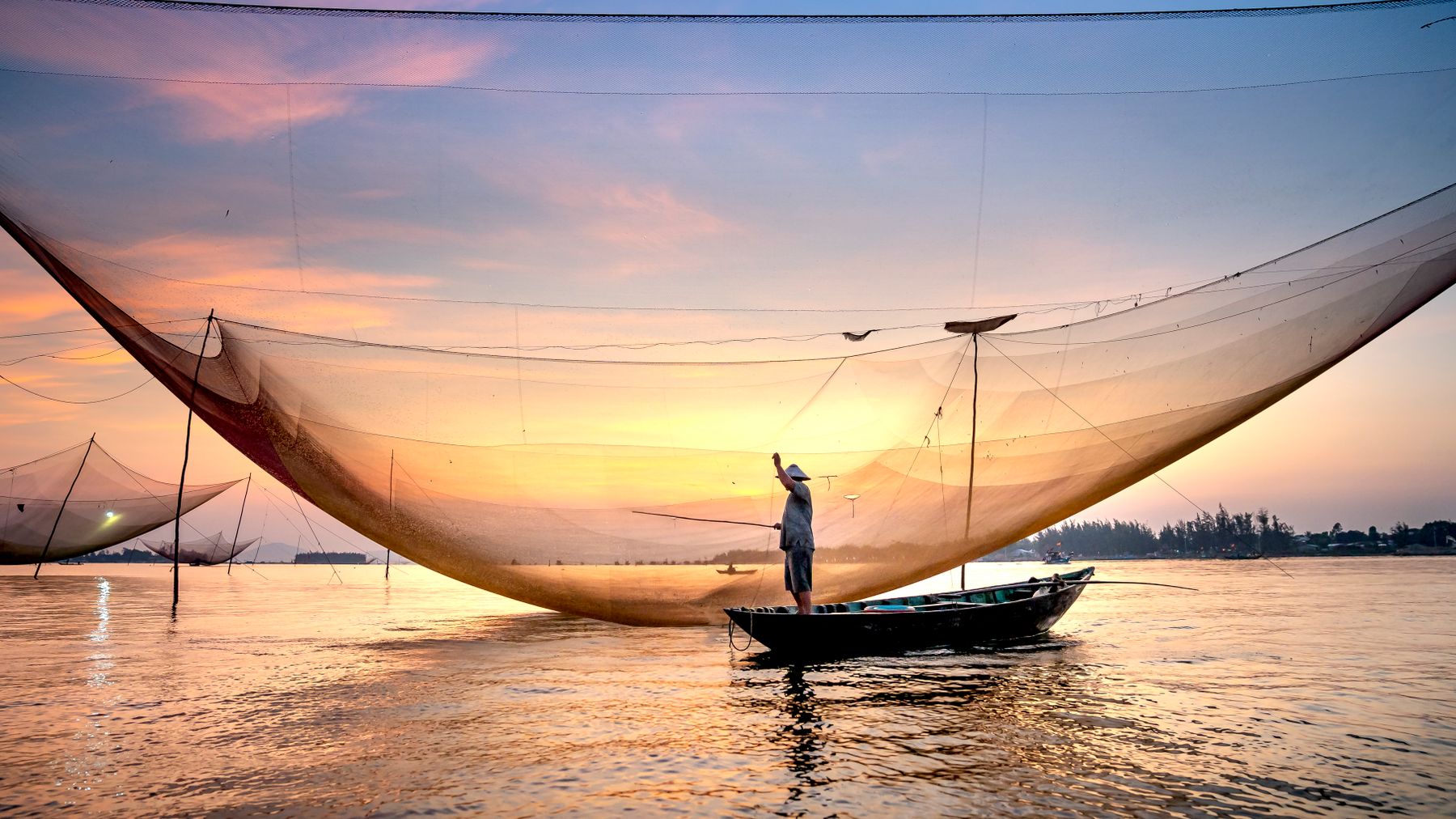
Photo by Quang Nguyen Vinh on Pexels
How to get there
From Dong Hoi
Bao Ninh is only about 5 km from Dong Hoi city center. Cross the Nhat Le Bridge heading east, then follow the coastal road south along the peninsula. A taxi or Grab car costs around 40,000-60,000 VND. Most hotels on the peninsula will arrange a pickup if you ask.
If you're on a rented motorbike (the better option for exploring the full length of the beach), it's a 10-minute ride from central Dong Hoi.
From further afield
Dong Hoi has its own airport (Dong Hoi Airport, VDH) with daily flights from Hanoi and Saigon — typically 800,000-1,500,000 VND one way if booked in advance. The Reunification Express train stops at Dong Hoi station; a sleeper berth from Hanoi runs about 500,000-700,000 VND and takes 9-10 hours overnight. From Hue, it's roughly 3.5 hours by train or 4 hours by bus (around 150,000-200,000 VND).
What to do
Walk the full beach
Seriously, just walk it. Head north from the resort cluster near the bridge and within 20 minutes the crowd thins to almost nothing. You'll pass fishing boats pulled up on shore, women sorting the morning catch, and long empty stretches where the only footprints are yours. The sand is firm and pale, good for a barefoot hour.
Swim at the south end
The water near the river mouth is calmest, and this is where locals swim in the late afternoon. There's a gentle slope into the water — no sudden drop-offs. A few spots have basic sun loungers you can rent for 30,000-50,000 VND.
Rent a motorbike and ride north
The coastal road running up the peninsula is flat, quiet, and scenic in an understated way — dunes on one side, river flats and prawn ponds on the other. Ride all the way to the northern tip where the beach narrows and the casuarina forest thickens. A half-day rental in Dong Hoi runs 120,000-150,000 VND.
Visit the fishing village
The small settlement midway up the peninsula is still very much a working village. Early morning (around 5:30-6:00 AM) is when boats come in and the sorting begins. Nobody minds if you watch or photograph, but buy something — a bag of dried shrimp makes a good trail snack and costs almost nothing.
Day-trip to Phong Nha
Phong Nha (퐁냐 / 峰牙 / フォンニャ)-Ke Bang National Park is about 45 km northwest of Dong Hoi, or roughly an hour by motorbike or car. Most travelers do Bao Ninh as the beach complement to a Phong Nha visit, not the other way around.
Where to eat nearby
The southern end of Bao Ninh has a row of seafood restaurants facing the beach. They're all similar — plastic chairs, tanks of live fish, cold Huda beer. Point at what you want and they'll grill or steam it. A meal of grilled squid, morning glory, rice, and a couple beers runs about 150,000-250,000 VND per person.
Two things to seek out specifically:
- "Banh xeo" — the central Vietnamese version here uses smaller, crispier crepes stuffed with shrimp and bean sprouts, wrapped in rice paper with herbs. Several of the beachfront spots do a decent version.
- "Chao hau" (oyster porridge) — Nhat Le River oysters are a local ingredient. The porridge is thin, peppery, served with fried shallots and a squeeze of lime. Ask at any of the riverside restaurants on the Dong Hoi side if the beach places don't have it.
For Vietnamese coffee, cross back into Dong Hoi. The beach-side options are instant stuff.

Photo by Long Bà Mùi on Pexels
Where to stay
Budget (400,000-700,000 VND/night): Small guesthouses and homestays on the peninsula, usually family-run. Basic but clean, some with beach views. Don't expect much English.
Mid-range (1,000,000-2,000,000 VND/night): A few newer hotels and boutique properties near the bridge, with pools and air-conditioned rooms. Sun Spa Resort is the most established, though it's seen better days.
Top-end (2,500,000+ VND/night): A couple of resort properties have gone up in recent years targeting domestic tourists. They're fine but not worth a premium over the mid-range places unless you want an all-inclusive setup.
Practical tips locals would tell you
- Bring cash. Card acceptance is limited to the larger resorts. ATMs are in Dong Hoi, not on the peninsula.
- Sunscreen is not optional. The beach faces east with no shade for long stretches. The midday sun here is serious, even in April.
- Rip currents exist on the northern end, especially after storms. Swim where the locals swim.
- Mosquitoes pick up around dusk near the prawn ponds. Bring repellent if you're staying on the quieter northern stretch.
Common mistakes
- Showing up in November. You'll get rain, closed restaurants, and a grey sea. Check the season.
- Booking a full week. Bao Ninh is a one-to-two-night stop, not a week-long destination. Pair it with Phong Nha and maybe a night in Hue to build a proper central Vietnam route.
- Skipping Dong Hoi entirely. The city itself has good "pho" and "bun" spots, a riverside promenade, and more restaurant variety than the beach. Don't strand yourself on the peninsula for every meal.
- Expecting Hoi An or Da Nang levels of infrastructure. This is a quiet, developing beach area. That's the point — but set your expectations accordingly.
Last updated · May 29, 2026 · independently researched, never sponsored.