A Province Apart
Ben Tre was something unusual in Vietnam (베트남 / 越南 / ベトナム)'s Mekong Delta (메콩 델타 / 湄公河三角洲 / メコンデルタ): a province almost entirely surrounded by water. Squeezed between two main branches of the Tien Giang River—a major tributary of the Mekong—the province was actually composed of two river islands with no highway connection to the outside world until 2009. The only land border was a narrow strip touching Vinh Long Province at its western tip.
On June 12, 2025, Ben Tre was officially merged into Vinh Long as part of a national administrative consolidation. But for travelers and food explorers, Ben Tre's identity remains rooted in its geography, crops, and culture.
The Landscape: Floods, Fields, and Coconuts
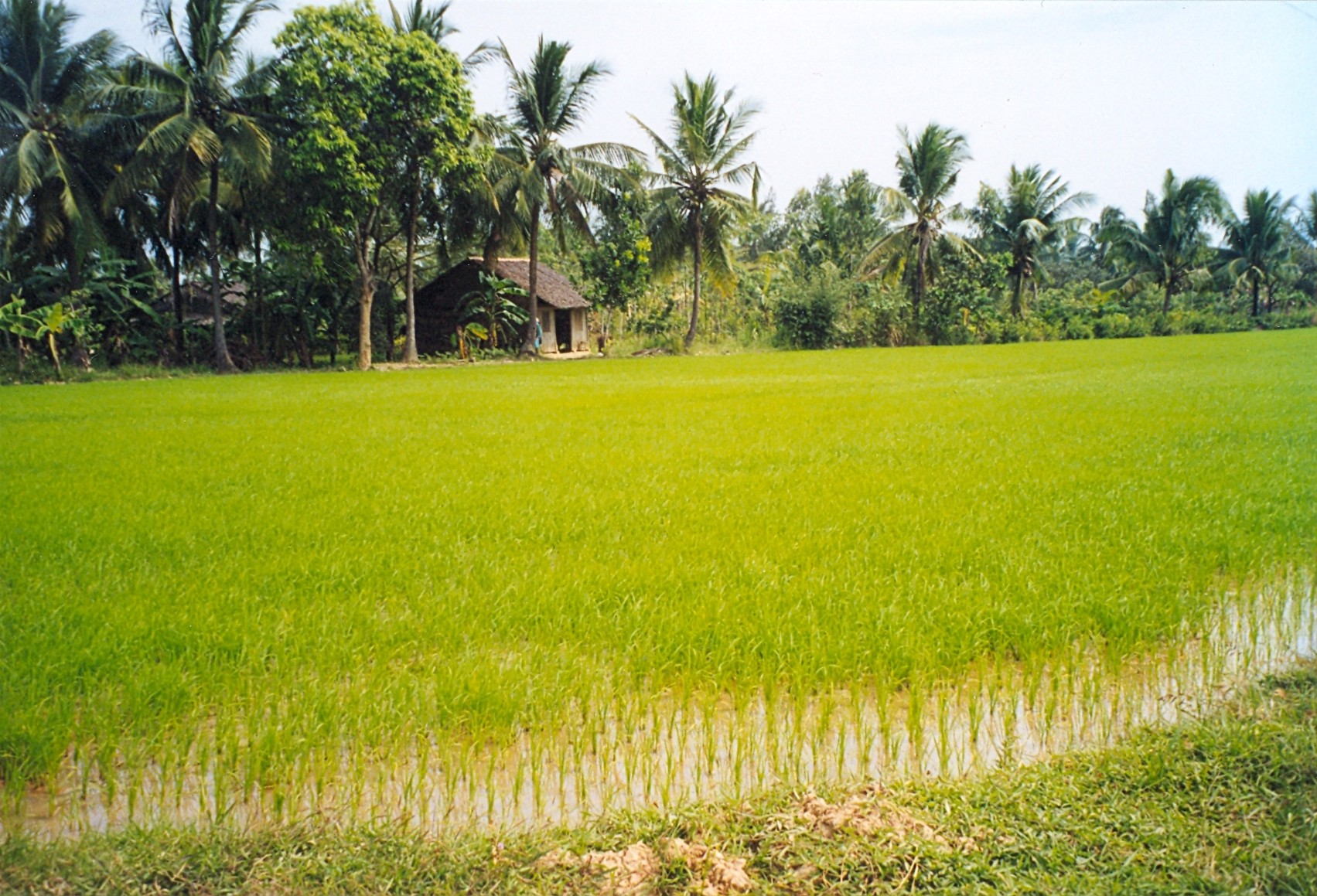
Ben Tre's entire territory was crisscrossed by rivers, canals, and irrigation ditches—a maze of waterways that made it ideal for rice production but also made it vulnerable to flooding. The province's average elevation was just 1.25 meters (about 4 feet) above sea level, making it one of the lowest points in the Mekong region.
Climate researchers at Can Tho University estimated that a one-meter rise in sea levels could inundate 51% of Ben Tre's land. That vulnerability is why you see so much coastal adaptation here: houses on stilts, floating gardens, and a culture built around water management.
But Ben Tre's fame wasn't for rice—it was for coconuts. Endless groves of coconut palms covered the province, and over time they became as much a part of the region's identity as the water itself. At its peak, Ben Tre had over 70,000 hectares of coconut plantations, producing roughly half of Vietnam's total coconut output. That dominance earned it the nickname "Xu Dua"—coconut land. Walk through the villages between Ben Tre town and Giong Trom district, and it feels like every single plot of land has at least a few palms. The local economy revolves around coconut oil pressing, coconut candy production, coir rope making, and increasingly, coconut-based cosmetics for export.

Photo by Đan Thy Nguyễn Mai on Pexels
A Bridge Changes Everything
For decades, the only way to reach Ben Tre by car was by ferry across the Tien Giang. That isolation ended on January 19, 2009, when the Rach Mieu Bridge opened, connecting Ben Tre directly to Tien Giang Province to the north. The bridge became one of southern Vietnam's major transport arteries, finally linking the island-province to the mainland road network.
Before the bridge, Ben Tre was genuinely cut off—a place where water was the primary highway. Boats and ferries still matter today, but the bridge gave the province a new relationship with the wider region.
The practical impact for visitors: you can now drive from Saigon to Ben Tre town in roughly 85 km via the My Thuan Expressway and National Road 60, a trip that takes around two hours by car or bus. Phuong Trang (FUTA) buses run the Saigon–Ben Tre route multiple times daily from the Western Bus Station (Ben Xe Mien Tay), tickets around 90,000–120,000 VND one way. If you're already in My Tho—about 70 km from Saigon and the usual launching point for Mekong Delta day tours—Ben Tre town is just 15 km across the Rach Mieu Bridge.
The Coconut Religion
Ben Tre's most distinctive cultural artifact is the "Coconut Religion," or Dao Dua—a syncretic spiritual movement founded by Nguyen Thanh Nam in the mid-20th century. Followers of the religion consumed only coconuts and coconut products, treating the coconut as sacred.
The religion's spiritual center was Con Phuong (Phoenix Islet), where remnants of structures and a memorial stone dedicated to Truong Vinh Ky can still be seen. Though the movement was suppressed by authorities, it left a permanent mark on Ben Tre's cultural identity—a blend of agriculture, spirituality, and local history.
Visiting Con Phuong today offers a glimpse into this unusual chapter of Vietnam's religious landscape, as well as views across the river system that defined the province. Most visitors reach the islet by small motorboat from Ben Tre town's riverside pier—expect to pay around 150,000–250,000 VND for a shared boat trip that includes Con Phuong and one or two other islets. The overgrown temple ruins, multi-tiered prayer towers, and dragon-shaped columns feel like a surrealist film set slowly being reclaimed by jungle. There's no entrance fee, but a small donation box sits near the memorial stone.
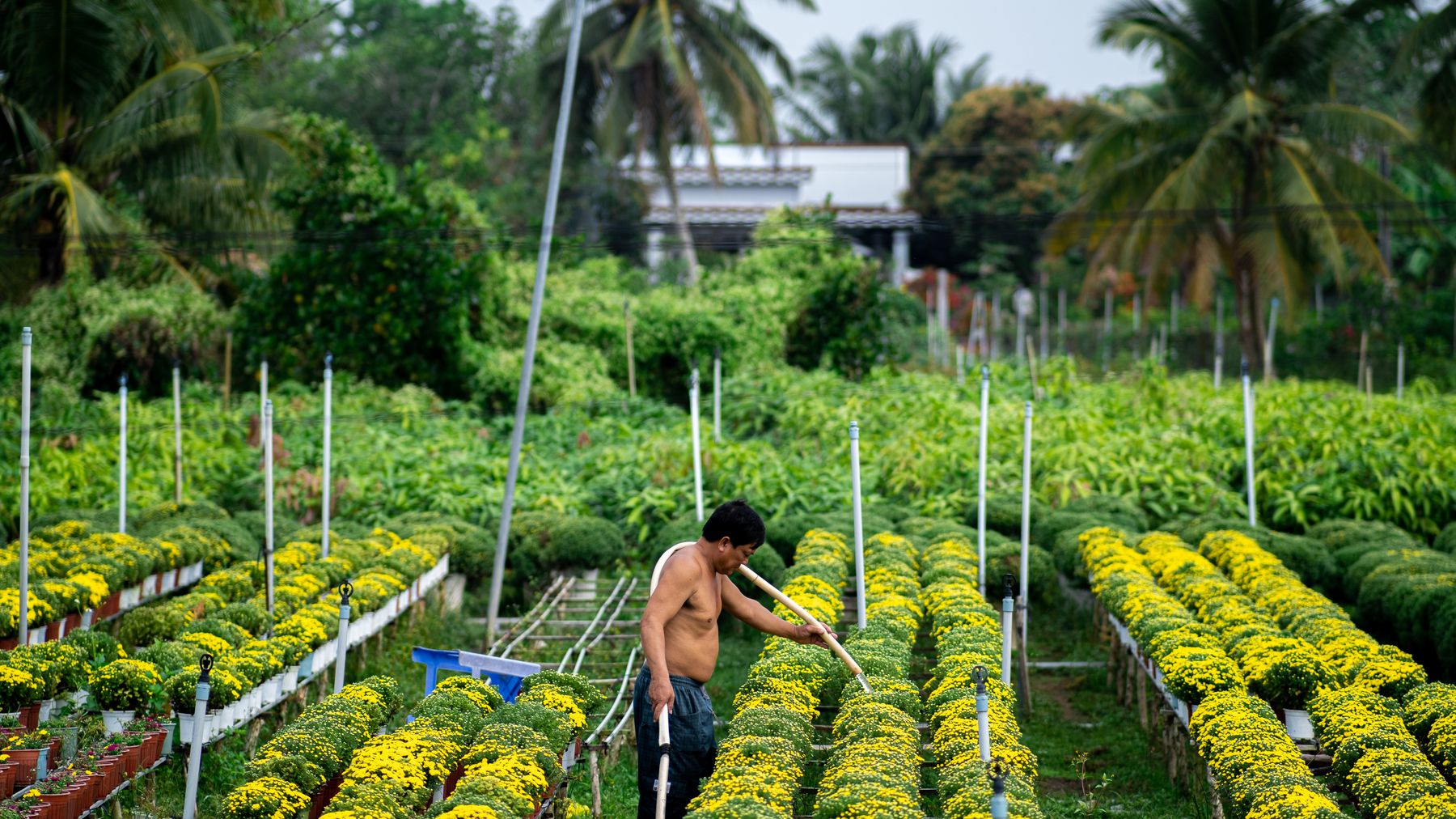
Photo by Đạt Đào on Pexels
What to Eat in Ben Tre
The Mekong Delta has its own food dialect, and Ben Tre speaks it with a coconut accent. Nearly everything here gets cooked in, with, or alongside coconut in some form.
"Banh trang" (rice paper) is a regional staple, and Ben Tre's version—thin, slightly chewy, sometimes mixed with coconut milk before drying—shows up at almost every meal. Locals wrap grilled fish, herbs, pickled vegetables, and sliced banana flower inside a sheet of rice paper, then dip the roll in fish sauce. It's the same mechanics as "goi cuon" (fresh spring rolls) you'll find in Saigon, but the wrapper and the fillings here are distinctly delta.
"Hu tieu" is the delta's signature noodle soup—a pork-and-prawn broth served with thin rice noodles, bean sprouts, and chopped green onion. Ben Tre's version tends to run sweeter than what you'd find further south in Can Tho. A bowl at the market costs 30,000–40,000 VND. Look for stalls near Ben Tre Central Market (Cho Ben Tre) that open by 6:00 AM and close before noon.
Coconut candy ("keo dua") is what most Vietnamese associate with Ben Tre. The chewy, milky squares are made from fresh coconut milk, malt, and sugar, boiled down and hand-cut into pieces. Factories in Phu Nhuan hamlet on the road to Mo Cay offer free tours where you watch the entire process—from coconut cracking to candy wrapping. You can buy bags directly for 30,000–50,000 VND per pack. Durian-flavored versions exist for the adventurous.
Grilled snakehead fish ("ca loc nuong trui") is another delta classic: a whole fish buried in straw, set on fire, then served with rice paper wraps, herbs, and tamarind dipping sauce. Riverside restaurants along the Tien Giang in Ben Tre town serve it for 120,000–180,000 VND per fish.
For a drink, try "nuoc dua tuoi"—fresh coconut water, served straight from the shell for 15,000–20,000 VND at any roadside stand. It tastes noticeably different from packaged coconut water: sweeter, less acidic, with a faintly grassy note. Pair it with a side of "banh mi" from the small cart vendors near the market for a quick, cheap breakfast.
River Life: Boat Trips and the Islet Circuit
The standard Ben Tre boat tour follows a route through the narrow canals that cut between coconut plantations and fruit orchards on the main river islands. Most tours depart from Hung Vuong pier in Ben Tre town or from the tourism hub at the base of Rach Mieu Bridge on the Ben Tre side.
The typical circuit hits three or four islets in about three to four hours:
- Con Phung (Phoenix Islet): The Coconut Religion ruins, as described above.
- Con Qui (Tortoise Islet): Small-scale coconut candy workshops and honey bee farms. You'll be offered honey tea and seasonal fruit (longan, rambutan, mangosteen depending on the month).
- Con Lan (Unicorn Islet): Fruit orchards and "don ca tai tu" folk music performances—a traditional southern Vietnamese music genre played on modified lutes and two-string fiddles.
Private boat charters run 400,000–600,000 VND for the half-day circuit (up to 4–6 people per boat). Group tours arranged through guesthouses or through operators at the pier cost 150,000–200,000 VND per person. Either way, you'll spend most of the trip on narrow wooden boats gliding under canopied waterways so tight that the coconut palms almost touch overhead.
A worthwhile add-on: rent a bicycle at one of the islets (around 50,000 VND) and ride through the plantation paths yourself. The flat terrain makes cycling effortless, and you'll pass village houses, small temples, and chicken farms that the tour boats skip.
A Name and Its Origins
The name "Ben Tre" translates roughly to "bamboo port," though the irony is obvious given the province's worldwide reputation for coconuts, not bamboo. Scholars believe the area was originally inhabited by Khmer people and may have had a different name before Vietnamese settlement waves brought their own language and place names.
The name itself is a reminder that Vietnam's Mekong Delta was a frontier of migration and cultural blending—Khmer, Vietnamese, Chinese, Cham, and other communities all left their mark on the region's identity.
Common Mistakes and What Surprises Foreigners
Treating it as a My Tho day trip afterthought. Most Mekong Delta tours from Saigon focus on My Tho and the Tien Giang islets. Ben Tre gets tacked on as a quick canal ride, if at all. The problem: you spend three hours on a bus and thirty minutes on a boat. Ben Tre rewards a slower pace—at least one overnight, ideally two.
Expecting English menus and tourist prices. Outside the boat tour circuit, Ben Tre town is a working provincial capital. Restaurants around Cho Ben Tre and along Hung Vuong Street don't always have English signage. Learn the basics: "xin cho toi mot to hu tieu" (please give me a bowl of hu tieu), or just point at what the person next to you is eating. Prices are honest here—a full meal rarely tops 60,000 VND.
Visiting during peak flood season without planning. October and November bring the highest water levels to the delta. Roads between Ben Tre town and outlying districts like Ba Tri and Thanh Phu can flood. This isn't necessarily a reason to avoid the area—flooded fields have their own beauty, and it's the season when floating markets further upriver in Can Tho are most active—but pack waterproof bags and confirm road conditions before heading to coastal areas.
Skipping the southern coast entirely. Most visitors never leave the islet circuit near Ben Tre town. But the coast around Ba Tri district, roughly 40 km southeast, has quiet casuarina-lined beaches and salt flats. It's not a beach vacation destination—the water is silty and brown—but the landscape is stark and photogenic, and the seafood drying operations along the shore are fascinating to walk through.
Assuming coconut candy is the only souvenir. It's the famous one, yes, but Ben Tre also produces excellent "ruou dua" (coconut wine), woven palm-leaf goods, and coconut shell handicrafts. The workshops along the Phu Nhuan hamlet road sell directly.
Quick Reference: Ben Tre at a Glance
- Getting there: 85 km from Saigon via My Thuan Expressway + National Road 60. Bus from Ben Xe Mien Tay: 90,000–120,000 VND, ~2 hours. 15 km from My Tho across Rach Mieu Bridge.
- Best months: December–April (dry season, lower humidity, calmer rivers). Avoid late October–November for flooding.
- Key districts: Ben Tre town (administrative center), Mo Cay (coconut candy factories), Giong Trom (plantation heartland), Ba Tri (coastal salt flats).
- Budget meals: 30,000–60,000 VND per dish at market stalls and local restaurants.
- Boat tours: 150,000–200,000 VND per person (group), 400,000–600,000 VND (private charter, half day).
- Accommodation: Guesthouses ("nha nghi") in Ben Tre town start around 200,000–350,000 VND/night. Homestays on the islets run 300,000–500,000 VND including dinner and breakfast.
- Currency: VND only in most places. ATMs available in Ben Tre town center (Vietcombank, BIDV on Dong Khoi Street). Card payment is rare outside newer hotels.
- Language tip: "Cho toi nuoc dua" = give me coconut water. "Bao nhieu tien?" = how much?
Visiting Ben Tre Today
While Ben Tre province officially no longer exists as an administrative unit, its geography and culture are unchanged. Travelers still navigate by water here; coconut products—from husks to milk to candy—remain the economic lifeblood; and the low, river-cut landscape shapes everything from food to architecture to daily life.
The Rach Mieu Bridge has opened Ben Tre to day trips and longer stays, but the province's identity as a water-based, agricultural, tightly-knit region persists. It remains one of the most distinctive corners of the Mekong Delta—and one of the most rewarding for anyone willing to slow down, eat well, and let the river set the pace.
If you're building a wider Mekong Delta loop, Ben Tre fits naturally between a day or two in My Tho and a longer stay in Can Tho, where the floating markets and "bun rieu" (crab noodle soup) stalls add another layer to the delta experience. From Can Tho, ambitious travelers push further to Chau Doc near the Cambodian border, or loop back to Saigon via Vinh Long's pottery villages and fruit orchards.
Frequently Asked Questions
How do I get from Saigon to Ben Tre by bus or car?
Ben Tre town is roughly 85 km from Saigon via the My Thuan Expressway and National Road 60, taking about two hours by car. Phuong Trang (FUTA) buses run the route multiple times daily from Ben Xe Mien Tay (Western Bus Station), with tickets costing 90,000-120,000 VND one way. If you are coming from My Tho, Ben Tre town is just 15 km across the Rach Mieu Bridge.
What is Ben Tre most famous for producing in the Mekong Delta?
Ben Tre is known as "Xu Dua" — coconut land — and at its peak had over 70,000 hectares of coconut plantations producing roughly half of Vietnam's total coconut output. The local economy centers on coconut oil pressing, coconut candy production, coir rope making, and coconut-based cosmetics for export. Villages between Ben Tre town and Giong Trom district are lined with coconut palms, and the crop defines both the landscape and the regional identity.
When did Ben Tre get its first road connection to the rest of Vietnam?
Ben Tre had no highway link to the outside world until January 19, 2009, when the Rach Mieu Bridge opened and connected the province directly to Tien Giang Province to the north. Before that, the only way to reach Ben Tre by car was by ferry across the Tien Giang River. The province was effectively two river islands, with its only land border being a narrow strip touching Vinh Long Province at its western tip.
Final Note
Ben Tre is not the Mekong Delta's loudest destination—that title goes to the floating markets of Can Tho or the tour-boat congestion of My Tho. But it might be the most honest one. The coconut groves, the narrow canals, the candy workshops, the riverside "hu tieu" at dawn—none of it exists for tourists. It just exists. And you're welcome to show up.
Last updated · May 29, 2026 · independently researched, never sponsored.