Hoi An's "banh mi" scene has a reputation that precedes it, and mostly the reputation holds up. The local version is distinct: the baguette shell is thinner and crispier than Saigon's, the filling-to-bread ratio tilts heavily toward filling, and there's a layering logic — pate first, then cold cuts, then pickled daikon-carrot, cucumber spears, fresh coriander, a smear of mayo, and a hit of chili-fish-sauce — that takes real practice to get right. Below is an honest shortlist of the places worth a detour, one or two worth skipping, and what you should actually order.
The Phuong vs. Madam Khanh Debate
Ask any long-term expat in Hoi An to settle this and you'll get an argument. "Banh Mi (반미 / 越式法包 / バインミー) Phuong" (2B Phan Chau Trinh, open roughly 6:30am–9:30pm) is the famous one — Anthony Bourdain called it the best banh mi he'd ever eaten on a 2009 episode, and the queue has barely let up since. That kind of fame does things to a kitchen. The bread is still good, the fillings are still generous (35,000–45,000 VND depending on the combo), and if you're visiting Hoi An for two days, you should eat here once. But it runs like a tourist operation now: staff are fast and a little mechanical, the seating area is chaotic, and the magic can feel diluted when they're cranking out 500 sandwiches before noon.
"Banh Mi Phuong" is the origin story. Madam Khanh is the counter-argument.
Banh Mi Madam Khanh (115 Tran Cao Van, open roughly 6:30am–7pm, closed irregularly) is smaller, calmer, and — depending on the day — noticeably better. Madam Khanh herself still works the cart most mornings. Her pate is darker and more livery, the chili paste is house-made and legitimately hot, and she uses a slightly shorter baguette that holds together better when loaded. Expect 30,000–40,000 VND. Come before 10am; she sells out.
Four More Places Worth Knowing
Banh Mi Phuong Nga
Location: 27 Tran Hung Dao. Hours: ~6am–10pm. Price: 25,000–35,000 VND.
This one rarely makes the tourist lists, which is precisely why it's on this one. Phuong Nga is a family stall that's been on Tran Hung Dao for over fifteen years. The bread comes from a local bakery a few streets away and arrives in batches — so go at opening or around 3pm for the freshest shell. The standout item is the "thit nuong" version (grilled pork), which most banh mi in Hoi An (호이안 / 会安 / ホイアン) don't do well. Here they grill to order over charcoal on a small grate beside the cart. The result is smoky and slightly charred, and it changes the sandwich entirely.
Banh Mi Hanh
Location: 45 Le Loi. Hours: ~7am–2pm. Price: 20,000–30,000 VND.
The cheapest on this list and arguably the most honest. No social media presence, no English menu, a handwritten board outside. Hanh makes one type of banh mi — full filling, no substitutions — and the price reflects a local customer base, not a tourist one. The pickled vegetables here have a sharper vinegar bite than Phuong or Madam Khanh, which cuts through the fat of the pate more cleanly. Worth the walk from the Ancient Town.
Banh Mi Thi
Location: Corner of Nguyen Thai Hoc and Bach Dang, riverside. Hours: ~5pm–10pm (evening cart only). Price: 30,000–40,000 VND.
Most banh mi in Hoi An is a breakfast-to-lunch operation. Thi is one of the few carts that runs in the evening, which is useful if you've spent the afternoon at Cu Lao Cham or cycling out toward An Bang beach and arrive back hungry after dark. The evening bread is slightly softer — not ideal but acceptable — and the filling is heavier on the egg (fried egg versions available). Pairs reasonably with a roadside "bia hoi" from the stalls along Bach Dang.
Banh Mi Co Rut
Location: 56 Nguyen Duy Hieu. Hours: ~6am–noon. Price: 25,000–30,000 VND.
A small shop that's been expanding its pate selection over the last few years. They currently offer three pate types — standard pork liver, a chicken liver version, and a rough-cut country pate (closer to a French-style rillette texture). Ask for the "co ba loai pate" if you want all three layered, which they'll do without complaint. This is the most technically interesting banh mi on the shortlist, though the bread is occasionally under-toasted on slow mornings.

Photo by Hiếu Vũ Vlog on Pexels
What Makes the Hoi An Version Distinct
It's worth being specific here rather than just saying Hoi An banh mi is "special." The baguette tradition in central Vietnam runs through French colonial-era bakeries in Da Nang and Hue — the bread tends to be thinner-walled and crunchier than the airier Saigon loaf. Hoi An's version also uses more fresh herb volume than most: whole coriander sprigs, sometimes Thai basil, occasionally thinly sliced spring onion. The chili-fish-sauce drizzle is applied last, not mixed into anything, so the heat level is visible and you can ask for more or less. And the use of two pates — one smooth, one coarser — is a Hoi An quirk that's worth appreciating rather than rushing past.
For context on how banh mi fits into Vietnamese food culture more broadly, the street food trail from Hoi An north to Hue is worth a day of riding — you'll pick up "mi quang" and "bun bo hue" along the way, two dishes that don't exist meaningfully outside central Vietnam.
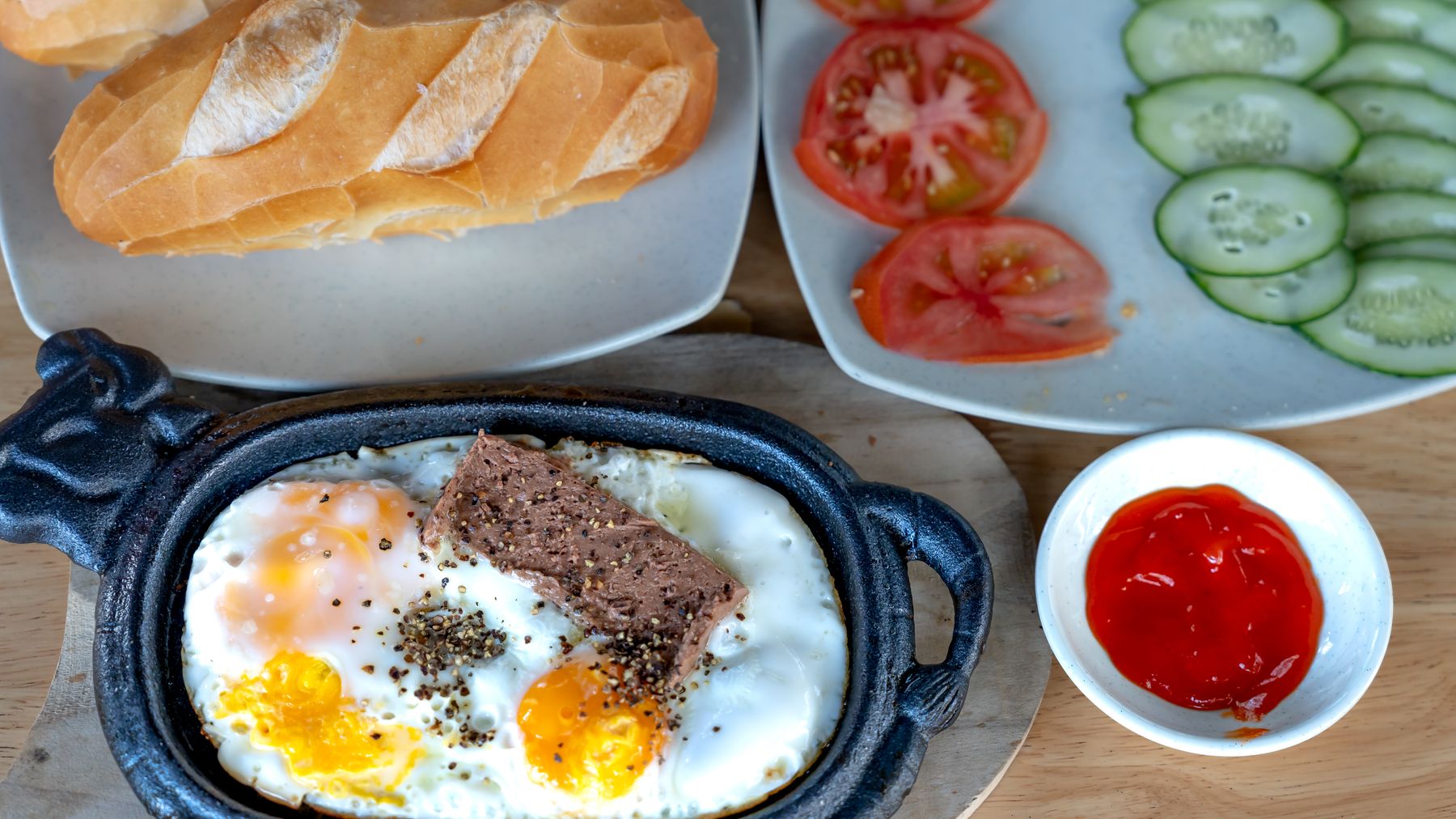
Photo by Quang Nguyen Vinh on Pexels
Skip This Place
Any banh mi stall that has printed English photo menus laminated to the front and positions itself inside the Ancient Town pedestrian zone near Nguyen Hoang bridge. The bread at several of these operations is pre-toasted and left to sit. You're paying a 10,000–15,000 VND location premium for a less fresh product. Walk three minutes in any direction and eat better.
Practical Notes
Most stalls are cash only — carry small bills (20,000 and 50,000 VND notes). Morning is peak freshness for the bread; anything after 11am risks a softer shell. If you're staying multiple nights, do Madam Khanh one morning and Phuong Nga another — the comparison is more instructive than eating at Phuong twice.
Last updated · May 29, 2026 · independently researched, never sponsored.