What is banh nam, and why is Hue's version different?
"Banh nam" means different things in different parts of Vietnam (베트남 / 越南 / ベトナム). In northern cities like Hanoi, you might find it as a thin, crispy crepe. But in Hue, "banh nam" is a steamed rice cake—soft, slightly translucent, folded into a pocket and filled with seasoned shrimp, ground pork, sometimes a piece of pork fat, and fresh herbs. It's served with a bowl of dipping broth (either fish sauce–based or shrimp broth) and a plate of raw vegetables: lettuce, cucumber, mint, and sometimes perilla.
Hue (후에 / 顺化 / フエ)'s banh nam reflects the city's royal court heritage. It's refined but unpretentious—the kind of breakfast dish that has been served from the same spot for decades. The texture of the rice cake matters here: it should be silky, not rubbery, and should hold together without being thick or doughy.
Where to find it
Banh Nam Ha Tuy (near Hue Station)
This is the spot locals will send you to first. Located on Ha Tuy Street (a side road off Dien Bien Phu, near the old Hue train station), Ha Tuy has been running for roughly 30 years. The rice cakes here are made fresh each morning—you can see the steam rising from the kitchen before 7 a.m. A plate of three pieces costs 25,000 VND. The filling is generous: visible shrimp, minced pork, and a small piece of pork fat that gives it richness.
Arrive between 6:30 and 8:30 a.m. if you want to catch it before they sell out. By 10 a.m., they often run low. The broth here is mild and slightly sweet, made with shrimp stock. Pair it with their fresh vegetables and a side of salt with lime and chili if you want extra flavor.
Banh Nam Kep (Chu Van An Street)
Kep (which means "pinched" or "folded") is on Chu Van An, in the Phu Cat ward, about 2 km from the Citadel. This spot is known for a thicker, slightly chewier rice cake—some locals prefer it, others don't. It's more filling than Ha Tuy's version. A plate here runs 25,000–30,000 VND depending on size. The broth is stronger and more herbal, with hints of star anise. If you like a more substantial, almost savory-sweet broth, Kep is worth trying.
They open at 6 a.m. and typically close by 10 a.m., so timing is crucial.
Banh Nam Anh Thi (Pham Hong Thai Street)
This vendor operates from a small stall on Pham Hong Thai, not far from the Perfume River. Anh Thi makes a lighter, more delicate version—the rice cake is thinner and more silky than the other two. Some locals swear by this version for breakfast, especially if they prefer something that doesn't sit heavy. Cost: 25,000–28,000 VND for three pieces.
The filling here is more herb-forward; you'll taste fresh mint and dill clearly. Open 6–9 a.m. weekdays; sometimes open a bit later on weekends.
Banh Nam at Dong Ba Market (occasional morning vendor)
Inside Dong Ba Market, near the food stalls in the south section, a vendor sets up most mornings with banh nam. It's less consistent than the dedicated spots above—sometimes they're there, sometimes not—but if you're in the market anyway, it's worth a look. Prices are slightly lower (22,000–24,000 VND) because of the lower rent. Quality varies; some mornings the rice cakes are perfectly steamed, other times they're slightly gummy.
Photo by Vietnam Tri Duong Photographer on Pexels
How to order and what to expect
Most banh nam vendors in Hue don't have English-language menus. Ordering is simple: point at the pile of folded rice cakes in the steamer, say how many you want ("ba cai" = three pieces, "bon cai" = four), and they'll add them to a plate with a soup spoon.
You'll receive:
- A plate of banh nam (usually 3–4 pieces, depending on size)
- A small bowl of broth for dipping
- A plate of fresh vegetables (lettuce, cucumber, mint, perilla leaf)
- Possibly a small dish of salt mixed with lime and chili, or chili sauce on the side
To eat: dip the banh nam into the broth, add a piece of vegetable or herb, and eat it in one or two bites. The combination of soft rice cake, savory filling, fresh herbs, and light broth is the point. Don't overthink it.
Price range: 22,000–30,000 VND (roughly 90 cents to $1.20 USD) for a satisfying breakfast or light lunch.
When to go
Baranm nam is emphatically a breakfast and early-lunch food. All the spots mentioned open by 6 a.m. and most close by 10 or 11 a.m. A few might open again for lunch (noon–2 p.m.), but they're not reliable.
If you're visiting Hue, wake early. The difference between eating it fresh at 7 a.m. and lukewarm at 10 a.m. is real. Weekday mornings are quieter; weekends draw small crowds, especially around 8 a.m.
Bring small cash (VND only—these vendors don't take cards) and expect to eat standing up or at a plastic stool next to the stall. This is street food in its truest form.
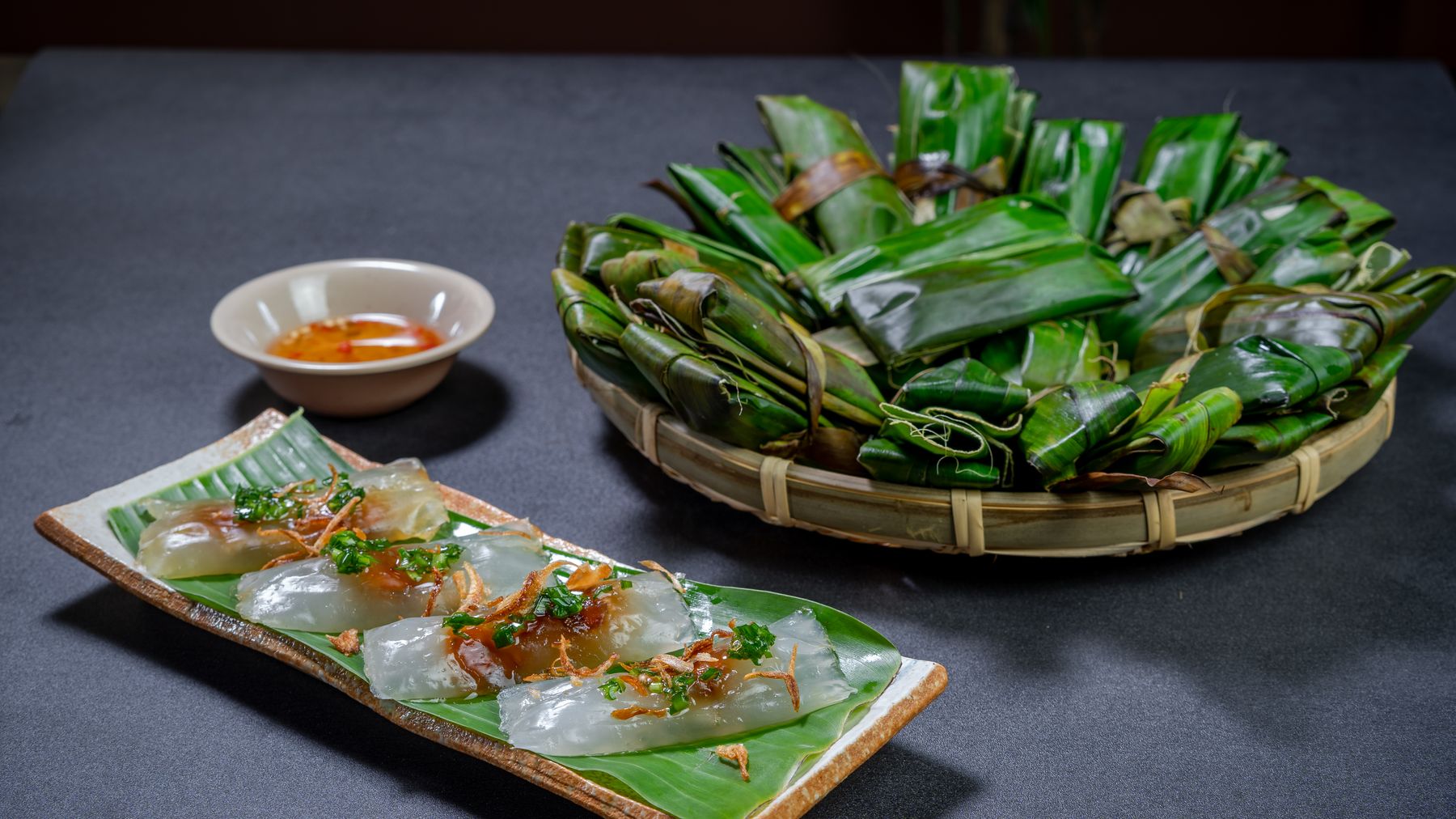
Photo by Hải Nguyễn on Pexels
Why Hue's banh nam matters
This dish sits at the intersection of Hue's royal court tradition and its everyday food culture. It's not fancy, but it's been refined over generations—the texture of the rice cake, the proportion of filling to wrapper, the subtlety of the broth. Eating banh nam in Hue feels like accessing something locals have been eating since childhood, something that belongs to the city and nowhere else in Vietnam.
Practical notes
Go in the morning, bring small bills, and expect to stand. If one vendor is sold out or closed on a particular day, the others are usually reliable. The dish keeps well for about an hour if you need to take it back to your hotel, though it's best eaten fresh.
Last updated · Jun 12, 2026 · independently researched, never sponsored.