The Tower and the Legend
Thien Mu Pagoda sits on the north bank of the Perfume River, about 5 km southwest of Hue city centre. The seven-storey octagonal tower — officially called Thap Phuong Duc — dominates any photograph of the river. It's been there since 1601, built during the Tran dynasty, though the current tower dates to 1844 under Thieu Tri.
Like most Vietnamese temples, Thien Mu has a foundation myth. The story goes that a woman dressed in white and red robes appeared on the riverbank in 1601, stood under a cinnamon tree, and pronounced: "A sacred tower will be built here to bring peace and prosperity to the land." She vanished, and the monk Thich Tien began construction. Whether that woman was a spirit or simply village folklore is less important than the tower itself — it's become the symbol of Hue (후에 / 顺化 / フエ).
The main temple compound sits below the tower, open-sided with a courtyard. You can buy incense inside (5,000 VND for a bunch) and leave it at the main altar, where photographs of deceased patrons line the walls. The monks are used to foreign visitors and generally indifferent to your presence.
The Austin Car and Modern History
In the main temple building, a 1963 Austin sedan sits in an enclosed case. This is not a random exhibition piece — it belonged to Thich Quang Duc, a Buddhist monk from Huong Lam Pagoda in Saigon who self-immolated in Saigon in June 1963 to protest religious persecution. His act galvanised international attention and accelerated the unraveling of the Ngo Dinh Diem regime. After his death, the car was brought to Thien Mu for safekeeping. Today it functions as a reminder of that turbulent era and the pagoda's role as a centre of Buddhist activism.
You can photograph the car, though the lighting inside the case is dim. Vietnamese visitors often pay quiet respect before it.

Photo by Quang Nguyen Vinh on Pexels
Getting There and What to See
From Hue city centre, take a taxi (around 150,000–200,000 VND, 15 minutes) or book a motorbike driver for the day (200,000–300,000 VND for 4–6 hours). The pagoda entrance is free; there's a small parking area and a ticket booth that sells incense and trinkets.
Inside the main temple, the main altar faces the Perfume River. Behind it, a narrow wooden staircase climbs into the tower — all seven floors are accessible, though the stairs get cramped by the third level. The view from the top is worth the climb: you see the river curving past the pagoda, green hills beyond, and on clear days, the entire sweep of the Hue valley.
The pagoda grounds are peaceful. There are bell towers, smaller shrines, and a cemetery on the hillside behind the main temple. Monks often sit in the courtyard in the morning, sweeping or tending bonsai.
Best Time to Visit
Early morning — 6:00–7:30 AM — is ideal. Fewer tourists, softer light on the river, and you'll see monks at prayer in the main hall. By 10:00 AM, tour groups start arriving, and the place becomes crowded. Sunset (around 5:00–5:30 PM depending on season) is also good for photographs, with the tower silhouetted against an orange sky and the river catching the last light.
If you're visiting during Tet (뗏 (베트남 설날) / 越南春节 / テト) or peak summer (July–August), go early or expect to share the tower stairs with dozens of other visitors. The pagoda is busy on Lunar New Year's Eve and New Year's Day, when local worshippers make pilgrimages.
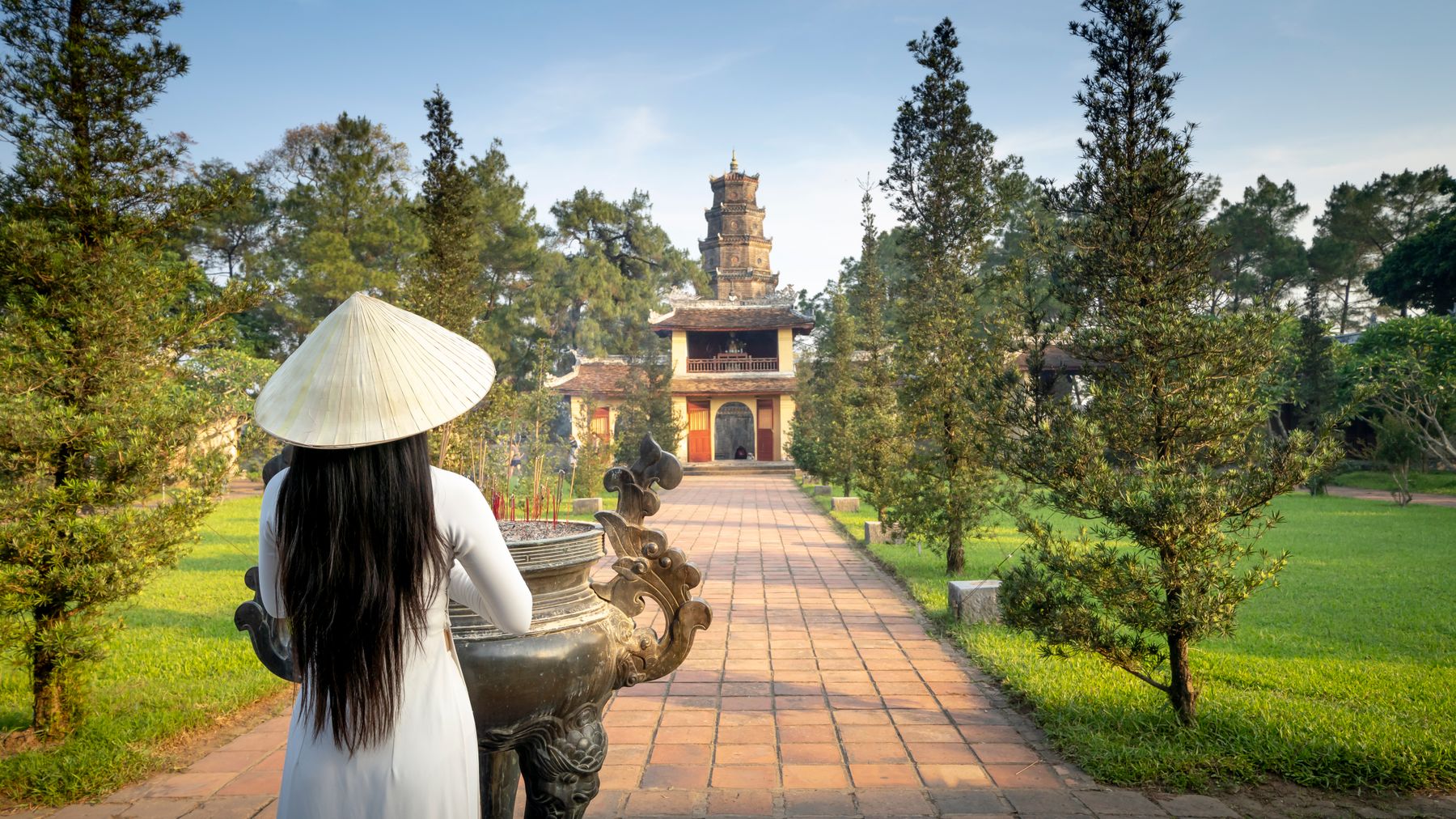
Photo by Quang Nguyen Vinh on Pexels
Combining with a Dragon Boat Tour
Many Hue tour operators offer "Perfume River" cruises — usually half-day trips that combine Thien Mu with other pagodas (like Tu Duc Tomb or Thien Mu itself) or a simple sightseeing float down the river. A typical boat tour costs 150,000–400,000 VND per person depending on boat type and what's included.
If you have time, the boat ride to Thien Mu is pleasant. You'll pass fishing nets, local boathouses, and see the pagoda approaching from the water — the angle makes the tower even more impressive. Some tours stop for 30–45 minutes at the pagoda, giving you time to climb the tower and see the main temple before heading elsewhere.
Alternatively, hire a private longtail boat for the day (negotiate around 300,000–500,000 VND) and ask the boatman to take you upriver slowly, stopping as you like. This is less structured but more relaxed.
Frequently Asked Questions
How far is Thien Mu Pagoda from Hue city centre?
Thien Mu Pagoda sits on the north bank of the Perfume River, about 5 km southwest of Hue city centre. A taxi takes roughly 15 minutes and costs 150,000–200,000 VND. Alternatively, hire a motorbike driver for 200,000–300,000 VND for 4–6 hours, which lets you combine the pagoda with other nearby sites. Entrance to the pagoda grounds is free.
What is the Austin car inside Thien Mu Pagoda?
The 1963 Austin sedan on display belonged to Thich Quang Duc, a Buddhist monk who self-immolated in Saigon in June 1963 to protest religious persecution. His act drew international attention and contributed to the collapse of the Ngo Dinh Diem regime. After his death, the car was brought to Thien Mu for safekeeping. Visitors can photograph it, though lighting inside the display case is dim.
When is the best time of day to visit Thien Mu Pagoda?
Early morning between 6:00 and 7:30 AM offers the fewest crowds, softer river light, and a chance to see monks at prayer in the main hall. By 10:00 AM tour groups arrive and the tower stairs become congested. Sunset around 5:00–5:30 PM is good for photographs. During Tet and peak summer months (July–August), arriving early is especially important.
Practical Notes
Wear comfortable shoes — the paths are paved but the tower stairs are steep and narrow. Bring water (no vendor at the pagoda itself). If you're planning to visit Buddhist temples, dress modestly (covered shoulders and knees; many pagodas request this, though enforcement is loose). The pagoda is open dawn to dusk, no fixed hours. Sunrise or late afternoon visits avoid crowds and offer better light for photos.
Last updated · May 29, 2026 · independently researched, never sponsored.