Hanoi has a possessive relationship with "bun cha". Ask anyone from Saigon to Da Nang and they'll tell you it's a northern thing — specifically a Hanoi thing — and they're not wrong. The dish barely exists in recognizable form south of Ninh Binh (닌빈 / 宁平 / ニンビン). Which means when you're in the city, you have no excuse not to eat it properly.
What Makes Hanoi Bun Cha Different
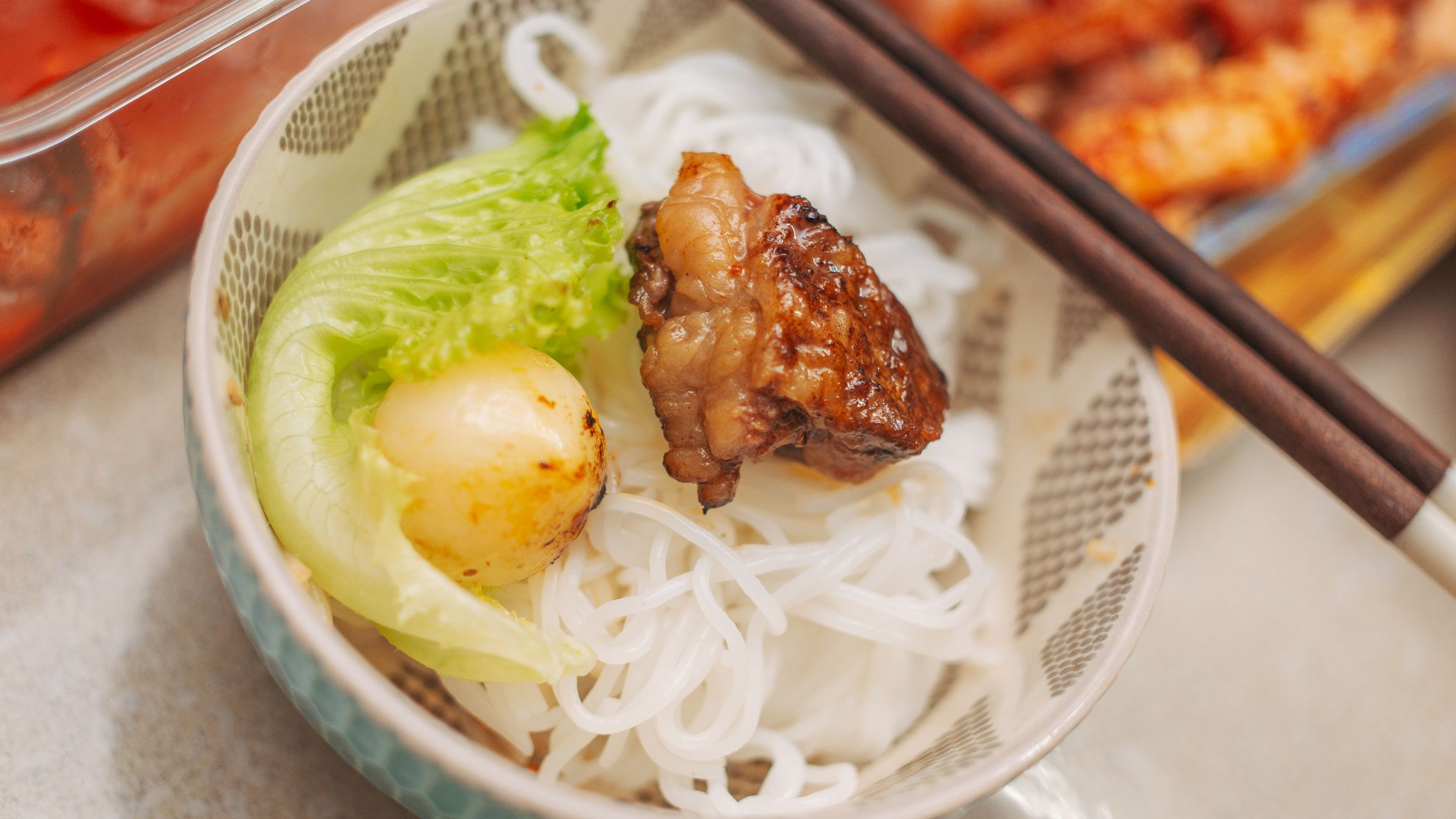
Bun cha (분짜 / 烤肉米粉 / ブンチャー) is grilled pork — two kinds, always — served alongside a bowl of warm, sweet-sour dipping broth and a plate of "bun", the round vermicelli noodles. The two pork components are "cha mien" (flat, griddled patties made from minced pork) and "cha vien" (small, fatty meatballs). Both go into the broth, not on top of the noodles. That's a detail a lot of tourist-facing places get wrong.
The broth is the tell. A good one is diluted fish sauce with vinegar, sugar, and a bit of garlic and chili — light enough to dip into repeatedly without overpowering. The noodles stay separate on the plate. You pull a pinch, dip it into the broth, eat with a bite of pork, a leaf of perilla or tia to, maybe a sliver of green papaya pickle. That's the rhythm of a proper bun cha lunch.
One more thing: bun cha is a lunch food. Most serious shops open around 11am and close when the pork runs out — often by 1:30 or 2pm. Arriving at 9am expecting breakfast, or at 7pm hoping for dinner, will leave you disappointed.
4 Shops Worth the Detour
Bun Cha Huong Lien — 24 Le Van Huu
Yes, this is the place Barack Obama and Anthony Bourdain ate at in 2016, and yes, they've leaned into it hard — there's a framed photo, a replica table, the works. But beneath the tourist patina, the bun cha here is genuinely good. The broth has the right acidity, the cha vien are properly fatty without being greasy, and the portions are honest. Expect to pay around 70,000–80,000 VND for a full set with a side of "cha gio" (fried spring rolls), which you should order. The queue moves fast even when it looks daunting. Located in Hai Ba Trung district, a short taxi ride from Hoan Kiem.
Bun Cha Dac Kim — 1 Hang Manh
This one has been in the Old Quarter for decades and has the institutional confidence to prove it. No English menus, no printed prices on a board outside — you sit down, they bring bun cha, you pay around 60,000 VND. The cha mien patties here are slightly charred on the edges in a way that adds real smokiness to the broth. The herbs plate comes piled with perilla, lettuce, and green banana. Go before noon.
Bun Cha 34 Hang Than
Hang Than in Ba Dinh district is informally known as the street of banh cuon and bun cha. Number 34 is a small family operation that fills up with local office workers by 11:30am. The broth is on the sweeter side — less vinegar than Dac Kim — and the meatballs are dense and well-seasoned. Two people eating here, including iced tea, won't break 150,000 VND. It's the kind of place that's always busy and never on any list, which is usually a reliable indicator.
Bun Cha Sinh Tu — 29 Hang Quat
Smaller, quieter, and slightly easier to get a table than Dac Kim two streets over. The pork here is marinated with a touch more lemongrass than the standard Hanoi formula, which divides opinion but I find it works. The "bun" noodles are fresh and soft rather than the slightly firmer dried variety some places use. Around 55,000–65,000 VND a bowl. Also in the Old Quarter, so easy to fold into a morning walk around Hoan Kiem Lake.

Photo by Hồng Quang Official on Pexels
What to Order and How to Eat It
When you sit down at any bun cha shop, you typically don't order — a set arrives. The only real decisions are whether to add cha gio (do it, usually 20,000–30,000 VND extra) and what to drink. Most places have "bia hoi" on tap if it's lunchtime and you're inclined, or simple iced green tea, often free or 5,000 VND.
Eating technique: don't dump the noodles into the broth bowl. The noodles stay on the plate; you dip each bite-sized pinch into the broth and eat it with a piece of pork and a herb leaf. Add sliced chili directly to the broth if you want heat. The pickled green papaya or kohlrabi that comes on the side cuts through the richness — eat it throughout, not just at the end.

Photo by Pew Nguyen on Pexels
Price and Timing
Bun cha in Hanoi runs 50,000–80,000 VND per person at most honest local shops. Tourist-facing spots near Hoan Kiem can push to 90,000–100,000 VND, which is still reasonable. The sweet spot for timing is 11:15am to 12:30pm — the pork is fresh off the charcoal and the shops haven't yet run low on broth. Avoid arriving after 1:30pm unless you've confirmed the place is still serving.
If you're planning a broader Hanoi food morning, bun cha pairs logically with an earlier stop for "banh mi" or "egg coffee" before the noon rush — the Old Quarter and Ba Dinh have enough density that you can eat your way through both without needing transport between stops.
Practical Notes
All four spots listed here are cash only — carry small bills (20,000 and 50,000 VND notes). None require reservations; just show up. Hanoi's bun cha shops don't hold tables, so if it looks full, wait at the edge — turnover is fast and you'll be seated within ten minutes.
Last updated · Jun 7, 2026 · independently researched, never sponsored.



