"Nem lui" is one of those dishes that tastes better when someone from Hue tells you where to go. It's pork and shrimp pounded around a stick of sugar cane, grilled until the exterior chars and the inside stays tender—a Royal City signature that rarely travels well outside the region. The dish shows up elsewhere in Vietnam (베트남 / 越南 / ベトナム), but in Hue it has a particular texture and seasoning logic that feels like home cooking scaled up for lunch crowds.
What makes Hue's nem lui different
Nem lui isn't exclusive to Hue (후에 / 顺化 / フエ)—you'll find it in Da Nang, Saigon, even Hanoi. But the Hue version leans toward a finer mince, often with a higher ratio of shrimp to pork, which gives it a delicate bounce. The sugar cane stays in the hand longer here; elsewhere it's sometimes pre-cut into coins. And the dipping sauce in Hue kitchens tends to be less sweet than what you get down south, often heavier on nuoc cham (fish sauce) with fresh herbs folded in at the last moment.
Hue's royal culinary heritage shows up in the details. The meat is pressed tighter, sometimes with a whisper of cinnamon or star anise. You'll rarely see it served alone—it comes with rice paper, fresh herbs (basil, mint, lettuce), and a small plate of sauce meant for dipping or rolling. The ritual matters.
Where locals eat it
Nem Lui 37 Nguyen Hue
This is the spot near the old city center that caters mostly to residents and lunch crowds. The owner has been grilling nem lui from the same corner for nearly two decades. Order at the counter, grab a plastic stool facing the street. A skewer costs 12,000–15,000 VND (about 50–60 US cents). They grill to order, which takes 4–5 minutes, and the exterior gets that crucial char while the inside stays juicy. The sauce here is noticeably less sugar than competitors—muoc cham with fresh dill and lime. Go between 11 am and 1 pm, or you'll miss the lunch rush energy that makes it worth visiting.
Nem Lui Ba Ngu (Pham Hong Thai street)
A smaller operation, Ba Ngu sets up a narrow aluminum table with a charcoal grill, a jar of sauce, and a stack of rice paper. The nem lui runs 13,000 VND per stick. What sets Ba Ngu apart is the ratio: roughly 60% shrimp, 40% pork, which some locals prefer because it doesn't feel as heavy. The mince is almost paste-like in texture. Ask for them "well-done" ("tam chay") if you like the exterior very dark; the default is medium. This stall is dinner-focused; it opens around 5 pm and runs until 9 pm, when foot traffic on Pham Hong Thai slows. Sitting here, you'll eat alongside students and office workers, not tourists.
Nem Lui Xa Tay (Tu Duc Tomb area)
A slightly more formal setup than the street stalls—there's a small covered seating area and a laminated menu. Nem lui is 16,000 VND. The distinguishing feature is the sugar cane quality; they source thinner, fresher stalks that grill faster and have a more delicate sweetness. If you're visiting the Tomb of Tu Duc in the afternoon, this is a logical lunch stop (it's 3 km south of the city center, on the road leading out). The owner's wife often eats here too, which is a reliable sign the food isn't priced for tourists. Arrive before noon or after 1:30 pm to avoid the midday scrum.
Nem Lui Em Hoa (Dong Ba Market perimeter)
If you're exploring Dong Ba Market in the morning, Em Hoa grills nem lui on a small charcoal brazier just outside the market's east entrance. 14,000 VND per stick. This is grab-and-go territory; there's no seating, but locals buy two or three at a time and eat them while walking. The pork here has a pronounced salty-savory finish, less shrimp in the mix than Ba Ngu, so it feels more filling. The sauce is thicker and more vinegary. Go early (7–9 am), before the market crowds thin and before the mid-morning heat makes charcoal grilling less appealing.
Nem Lui u Ly (Ben Ngu quay)
A family-run stall on the riverside, facing the Perfume River. Nem lui is 15,000 VND. The sugar cane here is sometimes filled with a thin paste of crab and pork before the main mixture is applied, a variation that feels more luxe than the standard version. Order and sit at one of the low plastic tables overlooking the water. This is a sunrise-to-lunch operation; they close by 2 pm. Locals come here before work or for an early breakfast after a walk along the riverbank.
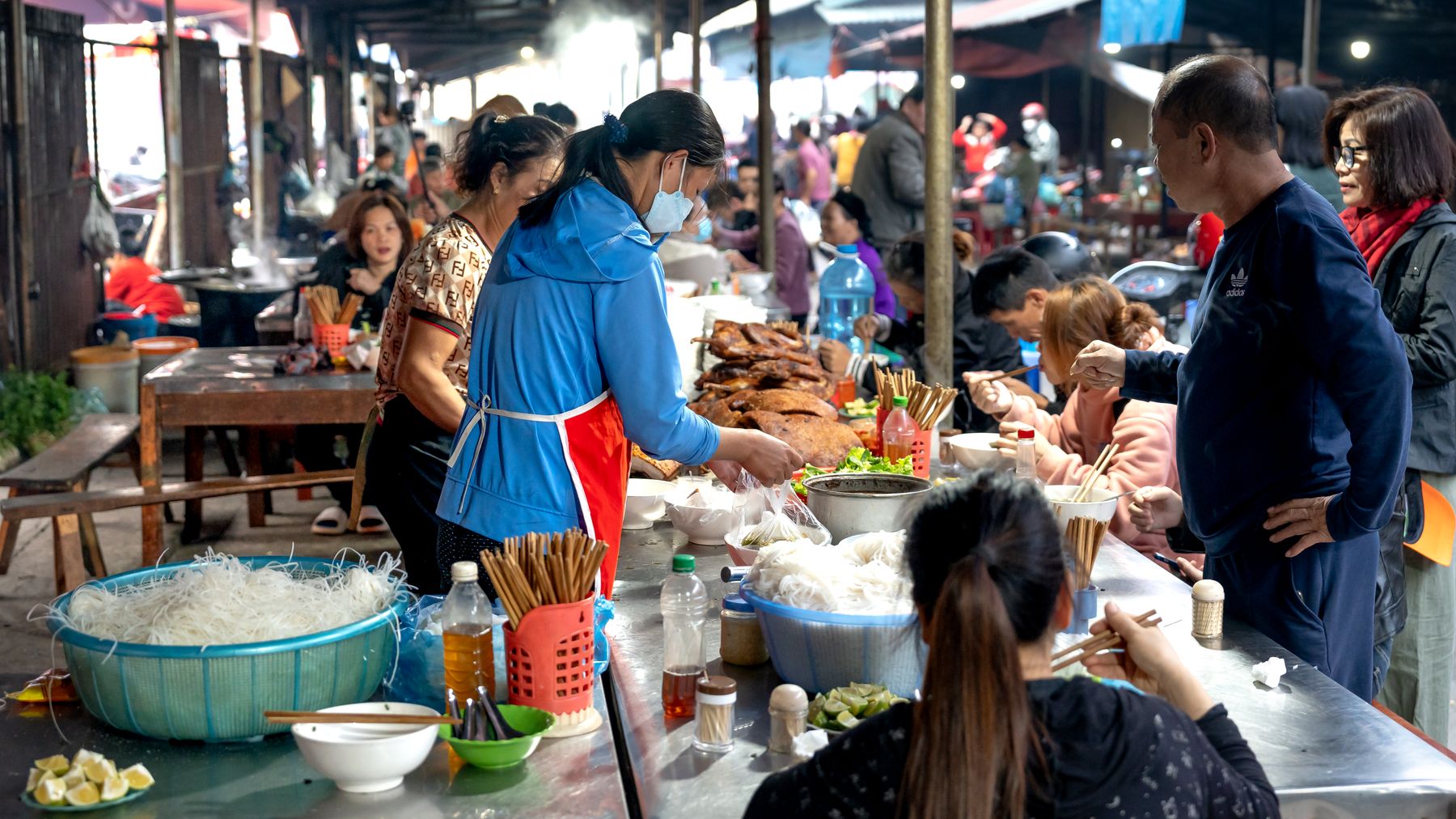
Photo by Quang Nguyen Vinh on Pexels
How to order and eat
Most stalls operate on a simple system: point at how many you want, and they grill to order. Say the number in Vietnamese if you're comfortable: "ba cai" (three). If you prefer it well-done, say "tam chay"; for medium, just nod. It'll take 4–6 minutes.
When it arrives, the sugar cane stays in your hand or on the plate. Tear off a piece of rice paper, add a leaf of lettuce and a few herb sprigs (basil is standard), then slide the meat off the cane onto the rice paper. Dip in sauce, roll, eat. Some people eat the meat off the cane directly, dipping each bite—that's fine too, and often faster.
The dish pairs well with a cold "bia hoi" (draught beer) if it's lunch, or a glass of fresh lime juice or "da trai" (iced sugar cane juice) if you're eating early or in the evening. Most stalls will point you to a nearby vendor or provide drinks for 5,000–8,000 VND.
Photo by Vietnam Tri Duong Photographer on Pexels
When to go
Nem lui is best eaten fresh and warm, so timing matters. Lunch spots peak between 11:30 am and 1 pm; dinner stalls bustle from 6–7:30 pm. If you go outside those windows, you'll eat older grilled batches that have lost their char. Early morning stalls (Em Hoa, u Ly) hit their stride between 7–8:30 am. Avoid mid-afternoon (2–5 pm) unless you're at one of the larger setups; many stalls close or have minimal stock.
Winter (November–January) is ideal—cooler weather makes grilling more pleasant, and charcoal doesn't get as temperamental. In summer, the stalls still operate, but the cooks work faster and the grill heat is punishing.
Practical notes
Bring small bills; most stalls don't have change for large notes. If you speak no Vietnamese, pointing and holding up fingers works fine. The experience is unadorned—plastic stools, no English menus, no Wi-Fi—which is exactly why locals keep coming back.
Last updated · May 29, 2026 · independently researched, never sponsored.