A Coastal Province With Layers of History
Binh Dinh sits on Vietnam (베트남 / 越南 / ベトナム)'s south-central coast, sandwiched between Quang Ngai to the north and Phu Yen to the south, with Gia Lai's mountains rising inland. The 6,066 km² province is home to over 1.5 million people, most living in the fertile lowlands around Quy Nhon and the delta of the Con River.
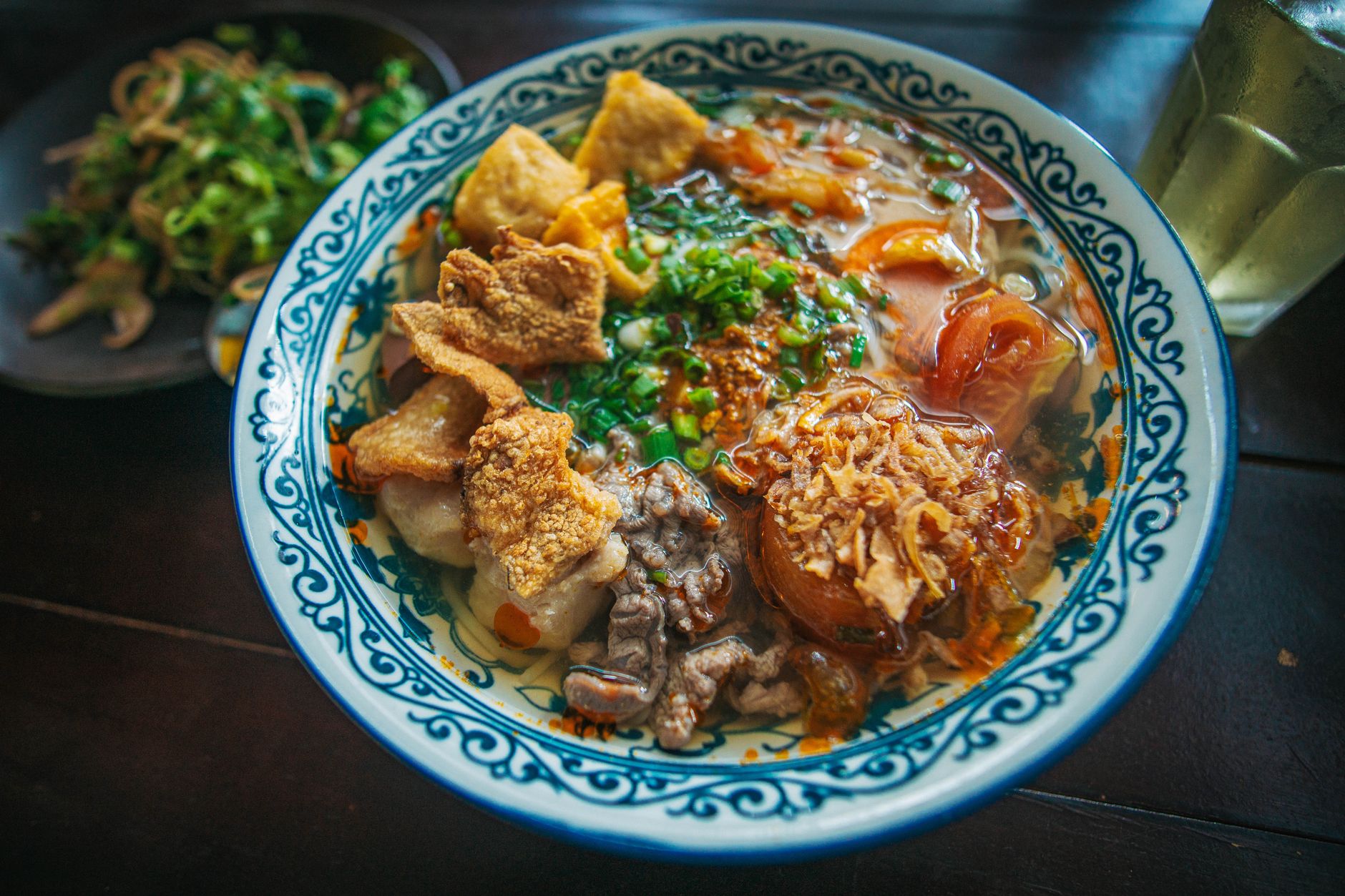
What makes Binh Dinh worth a detour: it's less touristed than nearby Da Nang or Nha Trang (냐짱 / 芽庄 / ニャチャン), but carries real historical weight. You'll find Champa ruins, a dynasty capital, and a working agricultural landscape that still feels lived-in rather than packaged. This is the kind of place where you sit at a sidewalk plastic table eating "bun cha ca" (fish cake noodle soup, a local specialty) and realize you haven't seen another foreign face in two days.
The Champa Kingdom and Vijaya
Binh Dinh is believed to be one of the earliest Cham settlements in what is now Vietnam. By the 11th and 12th centuries, the Champa city-state of Vijaya had become a major power, centered on what is now Quy Nhon and the lower Con River valley.
Vijaya's architecture stood apart from other Champa centers. Most Cham structures used brick, but Vijaya blended stone and brick—a labor-intensive approach that suggests either influence from the Khmer empire (Angkor) or access to a large workforce. The city thrived as a port and trade hub until war with Vietnamese forces in the 15th century, and Vijaya was defeated in 1471, marking the decline of Champa as a regional power.
Today, scattered Cham towers and ruins dot the province, though many are overgrown or fragmentary. The most accessible clusters include the "Thap Doi" (Twin Towers) right inside Quy Nhon city on Tran Hung Dao street—free to visit and easy to reach on foot—and the Banh It towers about 20 km north of the city center near Phu Cat. Banh It sits on a hilltop and rewards the short climb with wide views over rice paddies and the Kon River. Further out, the Duong Long towers (about 50 km northwest near Tay Son district) are among the tallest Cham towers still standing in Vietnam, reaching roughly 24 meters. Entry fees at most sites are minimal, around 10,000–15,000 VND, or sometimes nothing at all since many towers sit in open fields without formal ticketing.
Quy Nhon itself has a small Cham Museum (Bao Tang Binh Dinh, on Nguyen Hue street) if you want context before exploring. Expect a modest collection—stone lintels, Shiva carvings, pottery fragments—but it helps you read the ruins once you're standing in front of them. The museum is open daily except Mondays, roughly 7:30–11:00 and 13:30–17:00, and admission is around 20,000 VND. If you've visited the larger Cham Museum in Da Nang, the Quy Nhon collection is smaller but more specifically tied to the Vijaya period.
Quy Nhon: Former Tay Son Capital
Quy Nhon, the provincial capital, served as the seat of the "Tay Son" dynasty—named after the Tay Son district where the family originated. From here, the Tay Sons ruled briefly before internal conflict and war consumed them in 1802.
Today Quy Nhon is a working port city with a long, underdeveloped beach, seafood restaurants along the waterfront, and enough guesthouses to overnight comfortably. It's not packaged for tourists, which is part of its appeal. You can eat fresh crab at the harbor, walk the colonial-era streets inland, and see a functioning Vietnamese city without the crowds of Hanoi or Ho Chi Minh City.
The Tay Son Museum in Tay Son district (about 45 km west of Quy Nhon on Highway 19) is the main memorial to the dynasty. It sits on the grounds where the three Tay Son brothers—Nguyen Nhac, Nguyen Hue, and Nguyen Lu—grew up. The compound includes a small exhibition hall with weapons, maps, and reproductions of 18th-century military campaigns, plus a traditional garden. Admission is around 20,000 VND, and the site is usually quiet. Budget about half a day if you combine the drive with a stop at the Duong Long Cham towers nearby.

Photo by Thai Nguyen on Pexels
Geography: Mountains, Rivers, and Coastal Lowlands
Binh Dinh's landscape is split. The west is mountainous—peaks reach 1200 meters in An Lao district in the northwest—and forms a natural border with Gia Lai. The coast and central lowlands are gentler, dominated by the Con River delta. This delta has historically been the population and economic hub, fertile enough to support rice cultivation and fishing.
The major passes—An Khe to Gia Lai, Cu Mong to Phu Yen, Binh De toward Quang Ngai—are mountainous and scenic drives if you're traveling between provinces on National Route 1. The coast itself is rocky and moderate; beaches exist but aren't as famous as those in Nha Trang or Da Nang.
Several rivers drain the province. The Con is largest and most navigable, historically crucial for trade. Others include the Lai Giang, My Cat, and Ha Thanh rivers, each supporting smaller agricultural communities.
What to Eat in Binh Dinh
Binh Dinh's food scene is anchored by seafood and noodles, and it's distinct enough from what you'll find in Hue or Saigon that it's worth eating intentionally here.
"Banh xeo" in Binh Dinh is different from the southern version you might have tried in Ho Chi Minh City. Here the crepes are smaller, thicker, and often stuffed with shrimp, pork, and bean sprouts, then wrapped in rice paper with herbs and dipped in a peanut-based sauce rather than the fish sauce common down south. Look for small shops on the side streets off Tran Hung Dao—a plate of 4–5 pieces runs 25,000–40,000 VND.
"Bun cha ca" (fish cake noodle soup) is perhaps the most iconic Quy Nhon dish. The broth is lighter than pho and loaded with handmade fish cakes—some fried, some steamed—along with herbs and chili. A bowl costs 30,000–45,000 VND at most street-side shops. Try the cluster of stalls along Tran Doc street near the fishing port for versions made with the morning catch.
For seafood, head to the stretch of restaurants along Xuan Dieu street facing the beach. Grilled squid, steamed clams, garlic butter shrimp—prices are posted by weight, and a full spread for two with beer runs around 300,000–500,000 VND, far cheaper than similar meals in Nha Trang. Point at whatever looks fresh in the tank and negotiate politely. Useful phrase: "Bao nhieu mot ky?" (How much per kilogram?).
Binh Dinh is also known for "nem" (fermented pork rolls), a regional variation of the cured pork you'll find across central Vietnam. These are denser and more sour than the Hue version. Vendors sell them vacuum-packed if you want to carry some onward.
Don't skip "ca phe" here. Quy Nhon doesn't have the cafe culture of Da Lat or Hanoi's Old Quarter, but a few spots along Nguyen Hue and An Duong Vuong serve solid Vietnamese coffee—strong, dark, with condensed milk. A "ca phe sua da" (iced milk coffee) costs 15,000–25,000 VND. Morning coffee on the beach road, watching fishing boats come in, is one of the better ways to start a day in this city.
What to Do: A Short Itinerary
In Quy Nhon:
- Walk the harbor at dawn; breakfast on "com tam" (broken rice) or pho at a street stall.
- Visit Cham Museum for context on local history.
- Eat fresh seafood at waterfront restaurants in the evening.
- Stay 1–2 nights; the city is small but unhurried.
Outside the city:
- Day trip to nearby Cham tower ruins (ask your guesthouse for directions; many are on motorbike-accessible dirt roads).
- Visit the Con River delta if you're interested in agricultural tourism—rice fields, coconut plantations, and small fishing villages.
- Hike or motorbike through the western mountainous districts (An Lao, Vinh Thanh) if you have time and an adventurous spirit; these areas see few foreign visitors.
- Ky Co beach, about 25 km northeast of Quy Nhon, is a small cove with clear water and a rocky coastline. It's become more popular with domestic tourists in recent years—weekends get busy—but on weekdays it's still relatively quiet. Boat transfers from Nhon Ly fishing village run about 50,000–100,000 VND per person. Eo Gio (Windy Pass), nearby, is a rocky headland with strong winds and good views; no entry fee.

Photo by Quang Nguyen Vinh on Pexels
When to Visit
Binh Dinh is tropical and monsoon-influenced. The dry season (October to April) is most comfortable for travel. May to September brings heat and occasional typhoons. Typhoon season can be intense; check forecasts before a coastal visit.
Getting There
Quy Nhon has a small airport (Phu Cat Airport, code UIH, about 35 km north of the city center) with flights from Hanoi and Ho Chi Minh City. Bamboo Airways and Vietnam Airlines operate the most frequent routes; one-way tickets typically run 800,000–1,500,000 VND if booked a few weeks ahead. A taxi from the airport to central Quy Nhon costs around 250,000–350,000 VND.
Overnight buses from both cities also serve the province. National Route 1 connects Quy Nhon to Da Nang (north) and Nha Trang (south)—both 4–5 hours by bus. The Quy Nhon train station (Dieu Tri, about 10 km from city center) sits on the Reunification Express line, so you can also arrive by rail from Hue, Da Nang, or Saigon. Trains are slower than flying but comfortable on the SE-class carriages, and the coastal stretch from Quy Nhon south toward Nha Trang is one of the more scenic sections of the whole line.
Local transport within Binh Dinh is by motorbike taxi, rental motorbike, or minibus. Organized tour operators based in Quy Nhon can arrange day trips to ruins and rural areas if you don't want to navigate independently. Motorbike rentals run 120,000–180,000 VND per day from guesthouses. Grab works in central Quy Nhon but coverage gets patchy once you leave the city.
Common Mistakes and What Surprises Foreigners
Assuming Quy Nhon is a beach resort town. It's not. The beach is long and pleasant for a morning walk, but this isn't Nha Trang or Phu Quoc. Quy Nhon is a working city first. If you come expecting a resort strip, you'll be confused. If you come expecting an actual Vietnamese city with good food and real atmosphere, you'll enjoy it.
Skipping the Cham towers because they "look small in photos." They are small compared to Angkor. That's not the point. Standing in front of a 900-year-old brick tower in the middle of a rice field, alone, with no ticket booth or gift shop—that's a different kind of experience. Give them a chance.
Not renting a motorbike. The Cham sites, beaches, and countryside are spread across the province. Taxis are scarce outside the city, and bus routes are limited. A motorbike opens up the whole province. If you're not comfortable driving, hire a "xe om" (motorbike taxi) driver for the day—expect to pay around 300,000–500,000 VND for a full day with a local driver.
Trying to do Binh Dinh as a day trip from Da Nang or Nha Trang. It's 4–5 hours each way by road. You need at least two nights in Quy Nhon to see the city, eat properly, and make one day trip to the towers or coast. Three nights is better if you want to explore the Tay Son area or the western mountains.
Expecting English menus everywhere. Outside the handful of tourist-oriented hotels, menus are in Vietnamese. Learn a few words: "bun" (noodles), "com" (rice), "ca" (fish), "ga" (chicken), "bo" (beef), "khong cay" (not spicy). Pointing at what the next table is eating works well.
Quick Reference
- Province: Binh Dinh (south-central coast)
- Capital: Quy Nhon (pop. ~450,000)
- Airport: Phu Cat (UIH), 35 km north of Quy Nhon; flights from Hanoi and HCMC
- Train station: Dieu Tri, 10 km from center, on the Reunification Express line
- Best season: October–April (dry); avoid September–November peak typhoon risk
- Budget hotel: 250,000–500,000 VND/night for a clean guesthouse with AC and wifi
- Mid-range hotel: 600,000–1,200,000 VND/night along the beach road
- Street food meal: 30,000–50,000 VND
- Seafood dinner for two with beer: 300,000–500,000 VND
- Motorbike rental: 120,000–180,000 VND/day
- Key Cham sites: Thap Doi (in-city), Banh It (20 km north), Duong Long (50 km northwest)
- Key beaches: Quy Nhon city beach, Ky Co (25 km northeast), Bai Xep (10 km south)
- Currency: VND. ATMs available in Quy Nhon center. Cash preferred at small shops and market stalls.
- Useful phrase: "Tinh tien" (the bill, please)
Final Note
Binh Dinh isn't trying to impress you, and that's exactly why it works. This is a province where the history is real and unpolished, the food is local and cheap, and the coastline hasn't been carved up into resort parcels. Give it two or three nights, rent a motorbike, eat the fish cake noodles, and drive out to a Cham tower that nobody else is visiting. You'll leave understanding a part of Vietnam that most travelers skip entirely.
Last updated · May 29, 2026 · independently researched, never sponsored.