The unlikely origin of salt in coffee
"Ca phe muoi"—salt coffee—was born in Hue, the old imperial capital, sometime in the 1990s. The story is simple: a local coffee vendor was trying to balance the harshness of the cheap robusta beans that were (and still are) standard in Vietnam (베트남 / 越南 / ベトナム). Robusta is woody, astringent, and unforgiving when brewed strong. Someone added salt. Not much—just a small pinch into the cup—and it worked. The sodium suppresses bitterness receptors on your tongue the same way it does in salted caramel, and suddenly the coffee tastes rounder, sweeter, less aggressive. The drink stuck in Hue and has slowly drifted northward over the past two decades.
Today, Hue (후에 / 顺化 / フエ) still claims it, but you'll find it in Hanoi and Saigon too, usually in smaller coffee shops run by people with roots in central Vietnam.
How it's made
The method is dead simple. Start with the Vietnamese dripper—the metal phin that sits on top of your cup. Load it with dark-roasted robusta (ground medium-fine), add hot water (about 90–95°C), let it drip slowly for 3–5 minutes. While it's dripping, pour about 2–3 tablespoons of sweetened condensed milk into the cup. When the coffee finishes, stir it all together.
The salt comes at the end. The person making it—or you, if you're daring—adds a pinch (roughly 1/4 teaspoon) directly to the cup. Stir. Taste. Most people don't taste the salt; they taste the smoothness. The bitterness flattens, the sweetness of the condensed milk rounds out, and the coffee becomes almost creamy despite containing no cream.
Variations exist. Some vendors add salt to the phin itself, mixed into the grounds. Others dissolve it in a tiny bit of hot water first. The effect is the same.
Why it works (the science)
Salt blocks bitter-taste compounds from reaching your taste buds. Robusta—especially the budget stuff—is loaded with chlorogenic acid and other harsh compounds. In an unsweetened black coffee, these dominate. Add sweetened condensed milk, and you've masked some of it, but not all. Add salt, and you've cut the perception of bitterness so thoroughly that the coffee tastes almost dessert-like without being cloying.
It's not unique to Vietnam. Pinches of salt have been added to coffee in Nordic countries, Ethiopia, and parts of the Middle East for centuries. But the Vietnamese version—combining cheap robusta, heavy condensation, and salt into one small, intense shot—is distinctly its own thing.

Photo by 🇻🇳🇻🇳Nguyễn Tiến Thịnh 🇻🇳🇻🇳 on Pexels
Where to try it in Hue
Hue's old city center, around Tran Phu Street and the alleyways near the Perfume River, has dozens of small coffee shops. Cà Phê Muối Hương (literally "Salt Coffee Huong") on Nguyen Hue is a pilgrimage site if you want the thing done right—though it's small, cramped, and the owner won't rush you. Expect to sit for 10–15 minutes while your coffee drips. Cost: 30,000 VND (about $1.20). Nearby, Cà Phê Muối An on a tiny side street off Tran Phu does much the same thing and is less touristy.
If you're staying near the Imperial Citadel, walk through the narrow lanes near the Dong Xuan Market equivalent in the old quarter—vendors there often have it on the menu.
In Hanoi and Saigon
In Hanoi, head to the Old Quarter and look for shops with "Hue" or "muoi" in the name. Cà Phê Muối Hà Nội (there are a few with this exact name) on side streets near the Tran Quoc Pagoda area or scattered through Ba Dinh District will have it. The drink is less common here than in Hue, so not every coffee shop will make it—ask first.
Saigon has more options because the city attracts more migrants from the north-central regions. District 1 (around Ben Thanh Market and the surrounding lanes) and District 3 have several shops. Cà Phê Muối Xứ Huế on Ngo Duc Ke is a reliable bet. Again, 25,000–40,000 VND depending on size and location.
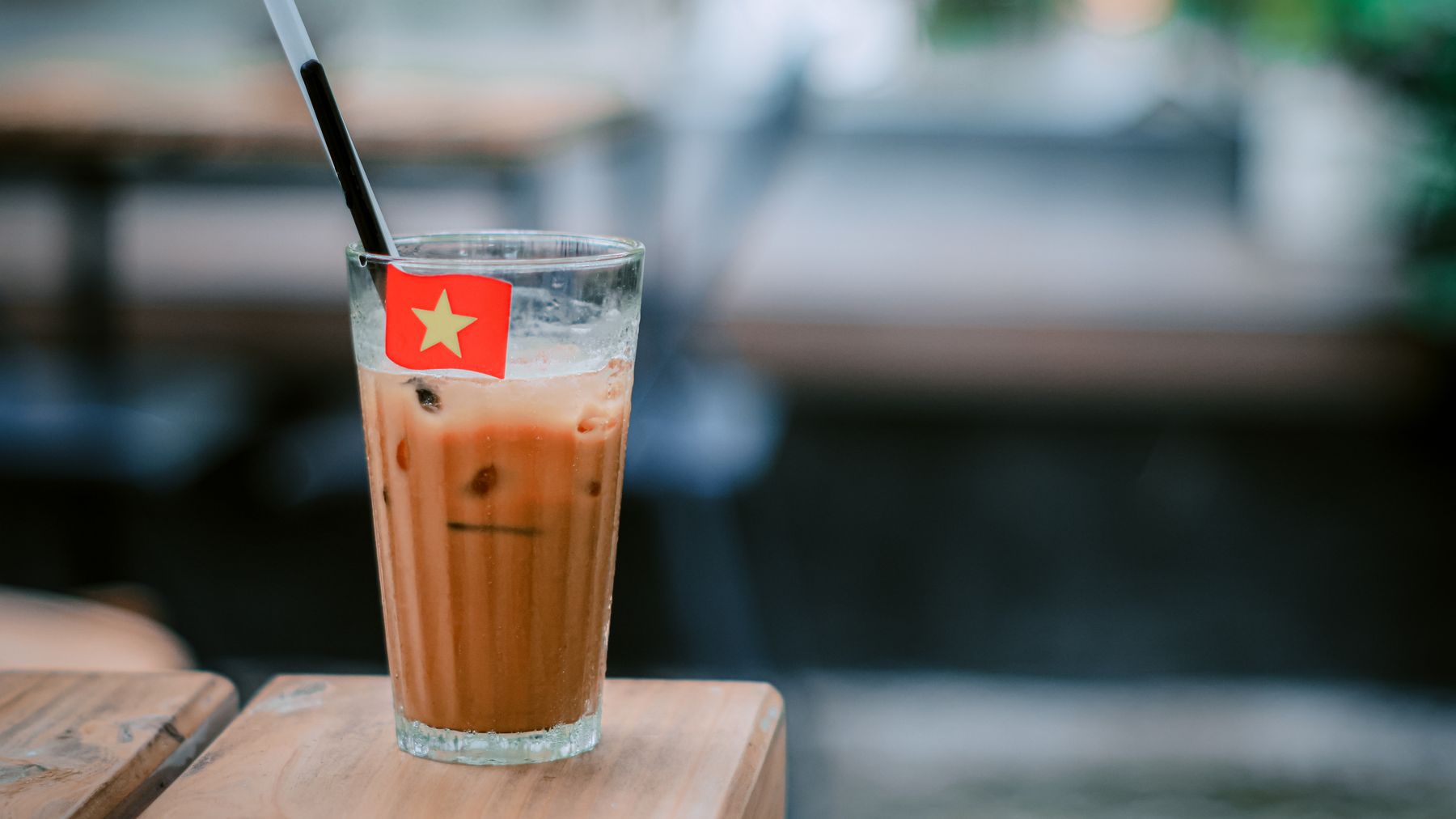
Photo by 🇻🇳🇻🇳Nguyễn Tiến Thịnh 🇻🇳🇻🇳 on Pexels
How it compares
You might be wondering where "ca phe muoi" fits in the landscape of Vietnamese coffee drinks:
- Vietnamese coffee): Iced condensed-milk coffee, no salt. Sweeter, more straightforward. The everyday drink.
- Egg coffee (ca phe trung): Hanoi's signature—condensed milk whisked with egg yolk and poured into hot coffee. Rich, custardy, creamy. Touristed but delicious. Tastes nothing like salt coffee.
- Salt coffee: The middle ground. Lighter than egg coffee, more complex than plain "ca phe sua da", with a savory-sweet edge that takes getting used to.
Taste it blind, and most people will notice something "off"—but in a good way. The coffee feels fuller on the tongue. Less aggressive. They'll guess salt, or they won't, but they'll want another sip.
Practical notes
Salt coffee is an acquired taste. Order it once, drink it slowly, and decide if the smoothness wins you over. It costs 25,000–40,000 VND depending on where you buy it—well within budget for a coffee drink in Vietnam. If you love robusta's body but hate its bite, this is your drink. If you prefer lighter, milder coffee, stick with the egg coffee or a simple "ca phe sua da" iced.
Last updated · May 29, 2026 · independently researched, never sponsored.