What it is
Cau Ngoi Thanh Toan is a wooden bridge with a tiled roof sitting over a small irrigation canal in Thanh Toan village, about 8 km east of central Hue. Built in 1776 by Tran Thi Dao, a woman from the village with no children who donated her wealth to construct a covered bridge for locals crossing the canal, it's one of the last remaining "cau ngoi" (tile-roofed bridges) in Vietnam (베트남 / 越南 / ベトナム). If you've been to Hoi An and walked the Japanese Covered Bridge, this is its quieter, less commercialized cousin — older, in fact, and sitting in the middle of rice paddies instead of a tourist strip.
The bridge is about 17 meters long with a gently arched wooden frame, terracotta roof tiles, and built-in benches on both sides where farmers still sit and rest during the day. It was recognized as a national historical monument in 1990 and restored several times, most recently after typhoon damage. The structure keeps its original character: dark wood, worn smooth by centuries of foot traffic.
Why travelers go
Most people visit Hue (후에 / 顺化 / フエ) for the Imperial Citadel Thang Long, the tombs (Tomb of Tu Duc and Tomb of Khai Dinh get the most traffic), and the food. Cau Ngoi Thanh Toan offers something different — a reason to get out of the city center and into the agricultural countryside that still defines daily life for most people in this region.
The bridge itself takes five minutes to walk across. The real draw is the surrounding village: a functioning rural community with rice fields, lotus ponds, small temples, and a folk culture museum housed in a traditional garden home next to the bridge. There's no entrance gate, no ticket booth for the bridge, and on most days you'll share the area with more locals than tourists.
Best time to visit
Hue's weather is its own thing — wetter and cooler than Saigon or Da Nang, with a rainy season that hits hard from September through December. The canal around the bridge can flood during heavy rains in October and November, which makes the area muddy and less pleasant to walk around.
The best months are February through May. The weather is dry, temperatures hover around 25-30°C, and the rice paddies around the village are green. June through August works too, but it gets properly hot — 35°C and above — and the walk from the parking area to the bridge has almost no shade.
If you time it right, the village hosts a small market on certain lunar calendar dates (check locally) where vendors sell traditional crafts, "nem chua" (fermented pork), and local snacks on the bridge itself.
How to get there from Hue
The bridge is in Thanh Toan village, Phu Vang district, roughly 8 km east of Hue's city center.
By motorbike or scooter: The most common option. Head east on Phan Boi Chau street, cross the rail tracks, and follow signs toward Thanh Toan. The ride takes about 20-25 minutes. Rental scooters in Hue run 120,000-150,000 VND per day.
By Grab/taxi: A Grab bike from the center costs around 30,000-40,000 VND one way. A Grab car runs about 60,000-80,000 VND. Ask the driver to wait — finding a return ride from the village can take a while since Grab availability is thin out here.
By bicycle: Some hotels and guesthouses in Hue rent bicycles for 50,000-80,000 VND per day. The ride takes about 40-50 minutes on flat roads through villages and rice fields. This is genuinely the best way to do it if the weather cooperates — the route itself is half the experience.
Guided tour: Several Hue tour operators bundle Thanh Toan with other countryside stops (Thuy Bieu village, incense-making villages) for around 400,000-600,000 VND per person including lunch.
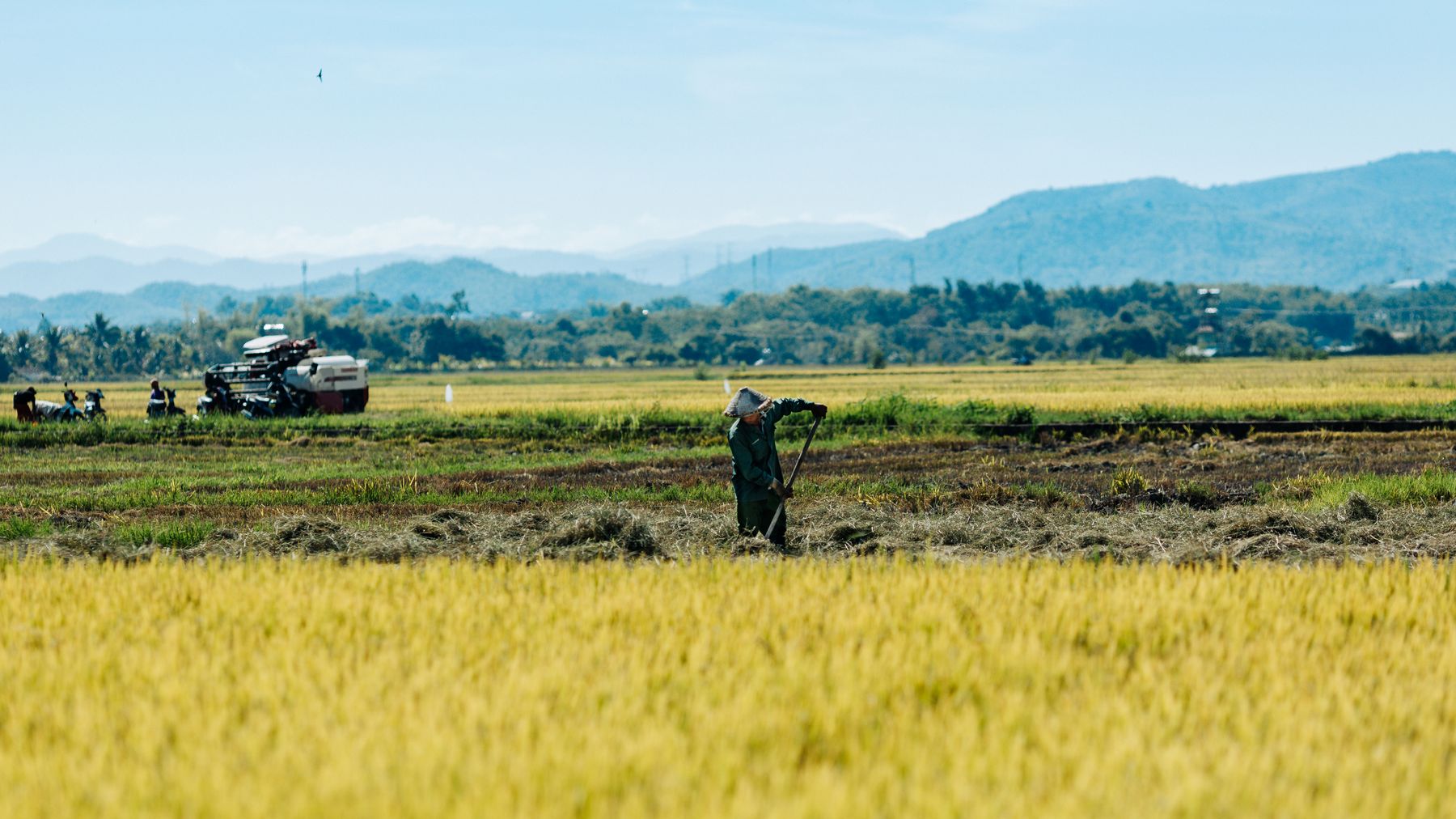
Photo by Thái Trường Giang on Pexels
What to do
Walk the bridge and sit
Seriously. The benches built into both sides of the bridge are there for a reason. Sit down, watch the canal, let a few minutes pass. Farmers come through with produce, kids bike across after school. It's a bridge that functions as a village living room.
Visit the folk museum
Right next to the bridge, a small museum (entry around 20,000 VND) displays traditional farming tools, household items, and crafts from the region. It's modest — one or two rooms — but gives context to the agricultural life you see around you. Look for the old rice-husking tools and fish traps.
Walk the village and rice paddies
There are dirt paths and small lanes leading away from the bridge into the surrounding fields. No map needed — the village is small enough that you won't get lost. The lotus ponds near the canal are worth finding, especially from May through July when they bloom.
Try "banh canh" at the village market
If the periodic market is running, look for thick "banh canh" noodle soup — the Hue version uses a crab-based broth and is heavier and more savory than what you'll find further south. The market vendors set up right on and around the bridge.
Catch a local craft demonstration
Some visits coincide with craft demonstrations organized for tour groups — conical hat ("Non La") weaving, rice paper making, or traditional kite building. These aren't always scheduled, but if a tour group is there, you can usually watch or join in.
Where to eat nearby
The village itself has a handful of small food stalls near the bridge parking area, serving "bun bo Hue" (the spicy beef noodle soup Hue is famous for) and "banh xeo" — crispy rice-flour crepes stuffed with shrimp and pork, wrapped in herbs. Expect to pay 25,000-40,000 VND per bowl or plate. These are basic setups — plastic chairs, tin roofs — but the food is honest and local-priced.
For something more substantial, head back toward Hue. The stretch of restaurants along Kim Long road, about 15 minutes from the village, serves solid "com hen" (baby clam rice) and other Hue specialties.
Where to stay
There's no accommodation in Thanh Toan village itself. Stay in Hue and visit as a half-day trip.
- Budget: Guesthouses and hostels in Hue's backpacker area (Pham Ngu Lao / Vo Thi Sau streets) start around 150,000-300,000 VND per night.
- Mid-range: Hotels near the Perfume River or south bank run 500,000-1,200,000 VND per night with breakfast.
- Upscale: A few boutique properties and restored garden houses in Kim Long or Thuy Bieu start around 1,500,000 VND and up.

Photo by Hiếu Vũ Vlog on Pexels
Practical tips locals would tell you
- Bring cash. There are no ATMs in the village and nobody takes cards.
- Wear shoes you don't mind getting dusty. The paths around the paddies are packed earth — fine when dry, slippery when damp.
- Go early. By 10 a.m. on busy days, tour buses start arriving. Before 8 a.m., it's just you and the village.
- Combine it with other stops. Thanh Toan alone is a 1-2 hour visit. Pair it with Thuy Bieu pomelo village or the royal tombs south of Hue to fill a day.
- Respect the space. People live here. Ask before photographing someone's home or garden. A smile and a nod go a long way.
Common mistakes to avoid
- Expecting a major attraction. This isn't a theme park. If you need constant stimulation, you'll be disappointed. The appeal is in the quiet and the details.
- Coming only for the bridge. The bridge takes five minutes. The village, the fields, the food, and the pace of rural life are the actual experience.
- Skipping it because it's "just a bridge." Plenty of travelers in Hue never leave the Citadel-tomb-pagoda circuit. Thanh Toan is a different texture entirely, and it costs almost nothing to visit.
Practical notes
No entrance fee for the bridge or village — just the small museum charge. Budget 2-3 hours for a relaxed visit including cycling time from Hue. The site is wheelchair-accessible only on the main path to the bridge; the village lanes and paddy trails are not.
Last updated · May 29, 2026 · independently researched, never sponsored.