Cho Quang Ba is not a tourist attraction. It is a working flower wholesale market on the edge of West Lake in Hanoi, where thousands of bundles move between growers, dealers, and retailers between 3am and 6am every morning. If you show up at 9am with a camera, you will find an empty lot and regret it.
But if you arrive in darkness with a taxi driver who knows the place, you will spend two hours watching the Vietnamese market economy at full velocity: flowers stacked in metal buckets, dealers on phones shouting prices, old women wrapping bouquets in plastic at impossible speed, and the smell of wet earth and lilies so strong it fills your sinuses.
It is the closest most people get to seeing how Hanoi actually functions before the rest of the city wakes up.
Getting there
From the Old Quarter, a taxi ride costs around 80,000 VND and takes 15–20 minutes depending on traffic (which is minimal at 3am). Tell your taxi driver "Cho Hoa Quang Ba" or show him the address: Nguyen Huu Canh Street, near the intersection with Quang Ba Ward.
If you're staying near West Lake, it's closer—maybe 10 minutes on foot from Tay Ho. The market sits just off the main road; you'll know you're close when you start seeing flower trucks and smell the cut stems.
Grab works at 3am, though wait times can be longer than during the day—five to ten minutes in my experience. Book a GrabCar rather than GrabBike if you want to doze on the way. If you are coming from the French Quarter or Ba Dinh district, expect a fare of 60,000–100,000 VND depending on surge pricing. From Cau Giay or Dong Da, it is roughly 6–8 km and around 50,000–70,000 VND.
Take cash (VND only). No card readers. Few vendors speak English. This is not a tourist convenience.
What's actually there
The market is divided into loose sections: chrysanthemums dominate in autumn and winter (August to February), arranged in tight sprays of yellow, white, pink, and burgundy. In spring, lotus flowers and lilies arrive in bulk. Orchids come year-round in smaller quantities. You'll also see gladiolus, roses, carnations, and a lot of greenery—fern, ruscus, salal—bundled up for filler.
Most transactions happen in units of 50 or 100 stems. Prices vary wildly by season and freshness. A bundle of chrysanthemums in autumn might be 20,000–40,000 VND wholesale; out of season, double that. Lotus is expensive (150,000+ VND per bundle in spring).
Flowers here supply a significant portion of Hanoi's retail shops, wedding decorators, and funeral suppliers. Much of the stock is trucked in from growing regions like Me Linh (about 30 km northwest of Hanoi), Tay Tuu in the suburbs, and even from Da Lat—the cool highland city that produces an enormous share of Vietnam (베트남 / 越南 / ベトナム)'s cut flowers year-round. Da Lat roses and hydrangeas travel overnight on refrigerated trucks and arrive at Quang Ba around 2am, still cold to the touch.
The crowd is almost entirely Vietnamese traders: people who own flower shops in Hanoi (하노이 / 河内 / ハノイ), neighborhood sellers, wholesalers sending stock to the provinces. A few tourists show up occasionally, but they are exceptions. You will be watched. You will be asked questions in Vietnamese. This is normal.
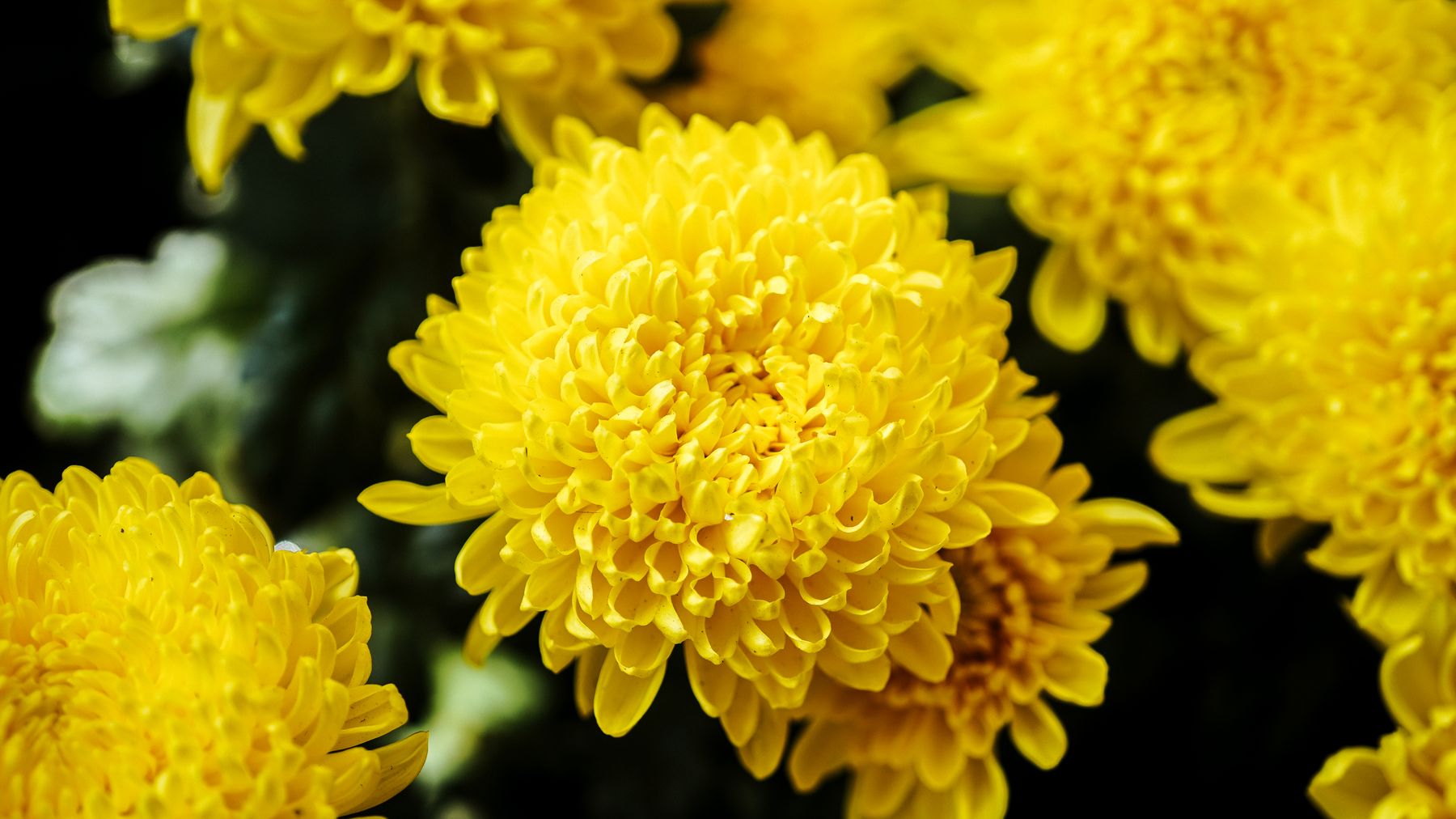
Photo by Tam Nguyen on Pexels
When to go
Peak time is 4am to 5:30am. That's when the density is highest and the action is loudest. If you arrive at 3am, you'll see the setup and early arrivals. If you come at 6am, it's winding down. By 7am, the lot is nearly cleared.
Fresh inventory is highest in spring (March–May) and autumn (August–October). Winter sees reliable chrysanthemum volume. Summer is slower and flowers look tired by market end.
If you happen to visit in the days before Tet (Vietnamese New Year, usually late January or early February), the market reaches another level entirely. Tet is the biggest flower-buying event of the year—peach blossoms, kumquat branches, "hoa mai" (apricot blossoms), and marigolds move in enormous quantities. The market spills out onto the surrounding streets, and activity runs almost continuously from midnight onward. Prices spike, tempers are short, and the energy is electric. It is the single best night to visit, but also the most chaotic. Expect the crowd to be three or four times normal size.

Photo by Thuan Pham on Pexels
Photography
Bring a camera or phone. The light is bad (pre-dawn or dawn twilight), so a wide aperture (f/2.0 or lower) helps, or accept that your ISO will be high. Tungsten warehouse lights give everything a sickly yellow cast; embrace it or bring a white-balance filter.
Don't be the person asking permission for every shot. People are working. A respectful, discreet approach—photos between transactions, not blocking movement—is standard. If someone tells you to stop, you stop.
The best images are often not the flowers themselves, but the hands, the buckets, the morning rush, the old faces. Pay attention to that instead of Instagram-framing a single stem.
What to do before and after the market
A pre-dawn market visit pairs naturally with an early morning in the Tay Ho and West Lake area. Here is a rough sequence that works well:
Before (2:30am–3:30am): If you are up that early and want caffeine first, a few 24-hour "ca phe" spots exist along Lac Long Quan street near the lake, though options are limited. Most people just head straight to the market.
After (5:30am–7:00am): This is where the visit pays off. You are already awake, already near the lake, and Hanoi is just waking up. Walk or ride 10 minutes east toward Truc Bach Lake for a bowl of "pho" at one of the stalls that open around 5:30am. Pho Thin on Lo Duc Street (about 4 km southeast) is one of the city's most respected bowls—it opens at 6am. Alternatively, head toward the Old Quarter for "banh cuon"—steamed rice rolls filled with minced pork and mushroom—which many shops start serving by 6:00am along Hang Ga or Thanh Ha streets.
If you are a coffee person, the walk from Quang Ba south along the lakeshore toward Thanh Nien road is pleasant in the cool early light. Several lakeside cafes open by 6:30am, and you can get an egg coffee or a "ca phe sua da" (iced milk coffee) while watching the tai chi groups on the waterfront. The area around the Tran Quoc Pagoda, which sits on a small island connected to Thanh Nien road, is especially quiet at that hour.
For those who want to extend the morning into a full Hanoi food crawl, the Old Quarter is roughly 4 km from Quang Ba. By 7:00am you can find "bun cha" (grilled pork with noodles) at early-opening shops, or a "banh mi" cart doing brisk business with commuters. The famous Bun Cha Huong Lien on Le Van Huu—where Barack Obama and Anthony Bourdain ate in 2016—opens at 10am, so it won't work as an immediate follow-up, but it is worth noting for later in the day.
Common mistakes and what surprises foreigners
Coming too late. This is the number one error. If you arrive at 6:30am thinking that counts as "early," you will find half-empty buckets and cleanup crews. Set an alarm for 3:00am. Yes, it hurts.
Blocking the trucks. Small delivery vehicles and motorbikes loaded with flowers thread through the market constantly. Foreigners sometimes stop in the middle of a lane to take photos. You will be honked at aggressively, and you will deserve it. Stay to the edges, keep moving, and keep your ears open.
Expecting English. Nobody here is waiting to explain things to you. A few useful phrases: "Bao nhieu?" (how much?), "Dep qua" (very beautiful—a compliment that goes a long way), and "Xin loi" (excuse me / sorry). Even clumsy pronunciation earns goodwill.
Wearing sandals or white shoes. The ground is wet, muddy, and littered with stems, leaves, and crushed petals. Closed-toe shoes, dark colored. You have been warned.
Trying to haggle like a tourist market. This is wholesale. Prices are already low. Vendors are selling in volume to regulars, not negotiating over a single rose with a backpacker. If you do buy a small bunch (some vendors will accommodate), pay what they ask. It is already cheaper than any flower shop in the city.
Assuming it runs like Ben Thanh Market in Saigon. Ben Thanh is partly a tourist market with fixed stalls, signage, and souvenir shops. Quang Ba is a raw logistics operation. There are no stall numbers, no posted prices, no information booth. That is the point.
How Quang Ba fits into Hanoi's market culture
Hanoi is a city of specialized markets, each operating on its own clock. Quang Ba handles flowers. Dong Xuan Market in the Old Quarter is the largest covered market and runs daytime hours with everything from fabric to dried goods. Long Bien Market, under the old French-built Long Bien Bridge about 5 km east of Quang Ba, is Hanoi's main wholesale fruit and vegetable market—it also peaks between 2am and 5am and shares the same frantic energy. If you enjoy Quang Ba, Long Bien Market is the natural next visit on another night.
The tradition of pre-dawn wholesale markets is not unique to Hanoi—Hue, Da Nang, and Saigon all have them—but Quang Ba's lakeside setting and the sheer volume of flowers give it a specific character. The area around West Lake has been associated with flower growing for generations; the nearby villages of Nghi Tam and Quang Ba historically cultivated peach trees and ornamental plants long before the city expanded outward.
Quick reference
- Name: Cho Hoa Quang Ba (Quang Ba Flower Market)
- Address: Nguyen Huu Canh Street, Quang Ba Ward, Tay Ho District, Hanoi
- Hours: approximately 2:00am–6:30am daily (busiest 4:00am–5:30am)
- Entry fee: free
- Distance from Old Quarter: ~6 km (15–20 min by taxi)
- Taxi cost from Old Quarter: 60,000–100,000 VND
- Best season: spring (March–May) for variety; Tet / 越南春节 / テト) week for intensity
- Payment: cash only (VND)
- English spoken: virtually none
- Facilities: no restrooms, no ATM, no cafe on-site
- What to bring: cash, phone/camera, closed-toe shoes, small bag, water
- Useful phrases: "Bao nhieu?" (how much?), "Dep qua" (beautiful), "Xin loi" (excuse me)
Practical notes
Wear comfortable walking shoes and dark clothes you don't mind getting wet and stained. The lot has puddles and flower debris. Bring a small backpack or cross-body bag—no large luggage. Stay alert to vehicle movement; small trucks navigate the market throughout the morning.
If you're hungry, there's a pho stall nearby that opens at 4am. The market itself does not have a cafe. Bring water.
Don't expect to buy flowers at wholesale prices. Retailers will not sell single bouquets, and if they do out of curiosity, it will be at near-retail price anyway. The point is observation, not shopping.
Final note
Quang Ba is not comfortable, not convenient, and not designed for you. That is exactly why it is worth the 3am alarm. It is one of the few places left in Hanoi where tourism has not smoothed the edges, and where the city's daily machinery is visible and loud and real. Go once, drink your coffee after, and you will understand a part of Hanoi that the daytime never shows you.
Last updated · May 29, 2026 · independently researched, never sponsored.