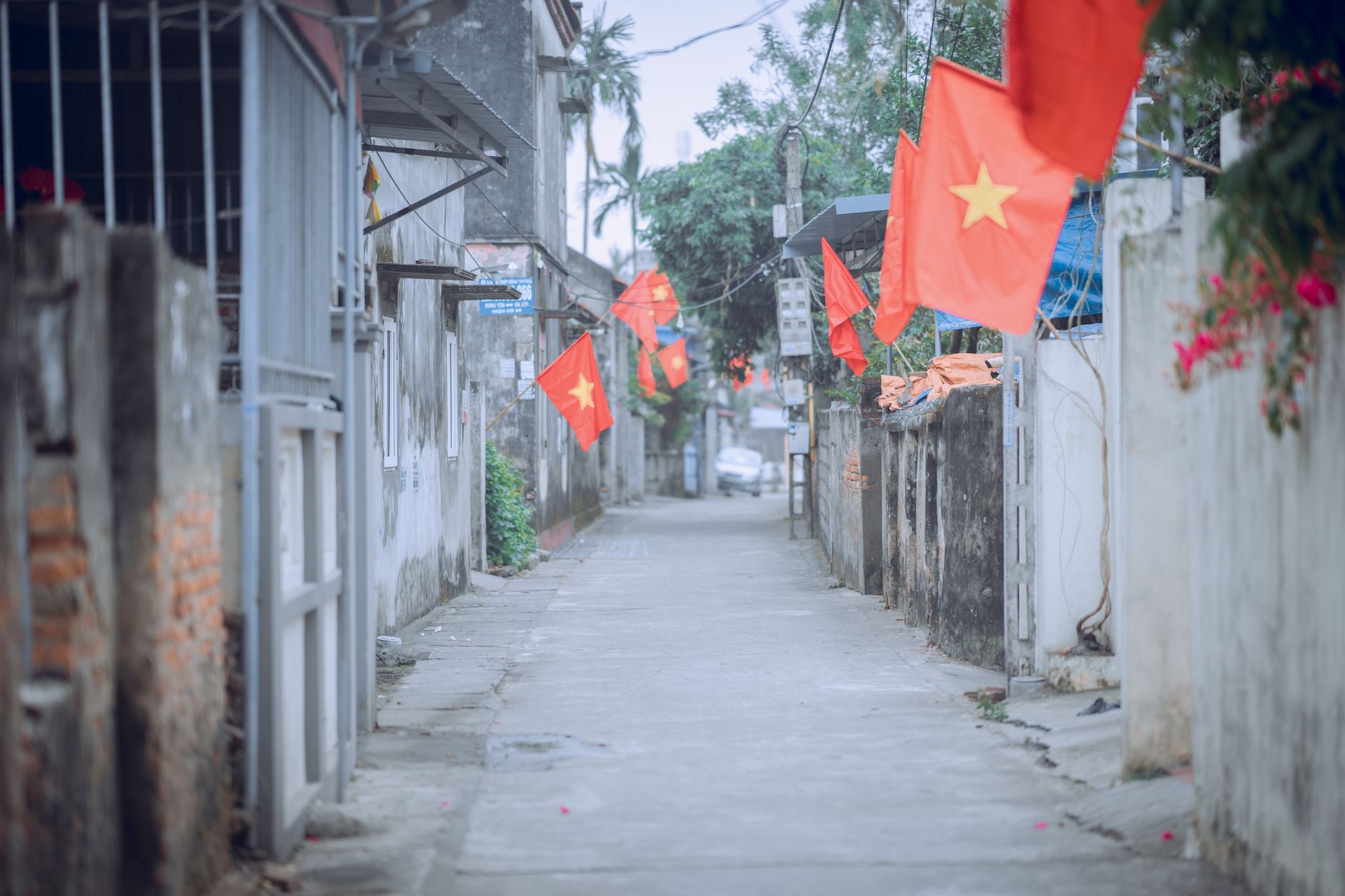
Hau Giang province sits in the heart of Vietnam's Mekong Delta (메콩 델타 / 湄公河三角洲 / メコンデルタ), overshadowed by its larger neighbor Can Tho but holding its own with distinct charm. The province's identity pivoted in 2004 when Can Tho city was elevated to municipality status, and the remaining rural and waterway-dependent areas became Hau Giang as we know it today.
Geography and Waterways
The province is defined by low-lying terrain and an extensive network of rivers and canals integral to daily life and transport. The Hau River (Bassac River), a major Mekong distributary, anchors the system. Boats and ferries are common—sometimes more reliable than roads on the waterlogged landscape.
National Highway 61 spans approximately 120 kilometers through the province, linking Hau Giang to Can Tho Municipality and onward to Ho Chi Minh City. But waterways are the real arteries here. If you're driving, the section of Highway 61 through Cai Tac town market offers a genuine snapshot of local commerce and daily rhythm—farmers, vendors, and the smell of produce and diesel fuel.
The Xa No Canal, one of the longest hand-dug canals in the delta, cuts through the province for roughly 38 km and serves as a lifeline for irrigation and local transport. In the early morning you'll see wooden sampans loaded with jackfruit, coconuts, and bundles of morning glory heading toward market towns. Most canal-side jetties double as informal gathering points where neighbors trade gossip and "ca phe" — the delta's social glue, served strong and iced from thermoses balanced on the prow of a boat.
Key Towns and Administrative Heart
Vi Thanh is the provincial capital and administrative hub. It's modest compared to Can Tho (껀터 / 芹苴 / カントー) or Ho Chi Minh City, but that's the point. The city center features a clock tower and the Chuong Thien Victory Monument in Ward 5. These aren't Instagram spots—they're local landmarks that mark civic identity.
Vi Thanh's main drag along Tran Hung Dao street has a handful of local "com binh dan" (everyday rice) shops where a plate of rice with two or three sides — braised pork, steamed greens, fried egg — runs 25,000–35,000 VND. There's no English menu; just point at the steel trays behind the glass. If you want "ca phe sua da" (iced milk coffee), look for the aluminum drip filters set up on plastic tables outside shophouses — 12,000–18,000 VND a glass.
Nga Bay, another provincial city, is known for its floating markets and role as a waterway junction. The name literally means "seven branches" — a reference to the seven canals that converge at the town center. Both towns reflect the slower pace and agricultural focus that defines Hau Giang.
Agriculture and Local Economy
Rice cultivation, fruit orchards, and aquaculture are the backbone. The Mekong Delta's fertile alluvial soils support large-scale farming, and the markets overflow with fresh produce. You'll find "banh mi" vendors stacked with tomatoes and herbs pulled from local fields. The province has established a 902-hectare industrial zone, signaling a gradual economic diversification, but agriculture remains the dominant force.
Sugar cane is another major crop — Hau Giang is one of the delta's key sugar-producing areas, and during harvest months (November through March) you'll pass flatbed trucks stacked impossibly high with cane on Highway 61. Roadside vendors press fresh sugar cane juice ("nuoc mia") for 10,000–15,000 VND a cup, often mixed with a squeeze of kumquat. It's one of the best roadside drinks in the entire Mekong Delta.

Photo by Thien Phuoc Phuong on Pexels
Markets and Regional Cuisine
Food here is hyper-local and seasonal. Nga Bay's floating markets are worth the early start—by 6 a.m., vendors are selling everything from river fish to tropical fruit. The pace is unhurried and distinctly non-touristy.
Regional dishes reflect the delta's waterways: fresh river fish, shrimp from aquaculture ponds, and rice-based staples. Street food is inexpensive (most meals under 50,000 VND) and authentic—not plated for cameras. "Com tam" (broken rice) with grilled fish is a morning standard.
The delta also has its own riff on "hu tieu" — a pork-and-shrimp rice noodle soup that's lighter and sweeter than Saigon's version. In Vi Thanh, look for the stalls near the morning market on Nguyen Thai Hoc street; a bowl costs around 30,000–40,000 VND and comes with a side plate of bean sprouts and herbs you tear in yourself. "Goi cuon" (fresh spring rolls) stuffed with river prawns are another reliable order — dipped in a slightly fermented "tuong" sauce rather than the peanut version you get further north.
If you've eaten your way through Saigon's street food scene and want to understand where the ingredients actually come from, Hau Giang's markets are a reality check. The fish was swimming that morning. The herbs were cut an hour ago. There's no supply chain — just a canal and a basket.
Exploring by Water and Road
Visitors can take boat trips along canals, exploring the landscape from water level and seeing how communities live along the waterways. The Lung Ngoc Hoang Nature Reserve offers wetland ecosystems and birdwatching for those with patience and decent binoculars.
Lung Ngoc Hoang covers roughly 2,800 hectares of cajuput forest and freshwater swamp about 30 km southwest of Vi Thanh. Entry is around 20,000 VND, and you can hire a local boatman for a canal loop through the reserve for approximately 150,000–200,000 VND per boat (fits 2–4 people). Go early — before 7 a.m. — for the best chance of spotting herons, cormorants, and the occasional water monitor lizard. The reserve is quieter and far less commercialized than similar wetland sites near Can Tho.
Transport is straightforward: buses from Can Tho or Ho Chi Minh City run regularly to Vi Thanh and other towns. Once there, motorbike rental (around 100,000-150,000 VND per day) is practical; canal-side villages are often better explored on two wheels than by car.
From Can Tho, Vi Thanh is about 60 km southwest — roughly 90 minutes by motorbike or local bus. Buses depart from Can Tho's central bus station (Ben Xe Khach Can Tho, 91B Nguyen Van Linh) every 30–45 minutes; expect to pay around 50,000–70,000 VND for a one-way ticket. From Ho Chi Minh City, the journey is approximately 230 km and takes 4–5 hours by bus, with most services routed through Can Tho.

Photo by Vietnam Tri Duong Photographer on Pexels
Climate and Timing
Hau Giang's low elevation and canal-dependent infrastructure make it vulnerable to flooding during monsoon season (May–October). The driest, most pleasant months are November through February. Temperatures are warm year-round (25-35°C), and humidity is high.
January and February are particularly good if you want to overlap with Tet / 越南春节 / テト) (Lunar New Year) preparations. The markets ramp up with seasonal flowers — yellow "mai" blossoms, marigolds, kumquat trees — and the towns feel livelier than usual. Just be aware that during the actual Tet holiday (usually 3–5 days), many shops and restaurants close, and transport schedules thin out. Book accommodation in advance if you're visiting during that window.
Useful Vietnamese Phrases for the Delta
English is rare in Hau Giang. Even basic Vietnamese goes a long way. A few phrases that actually help:
- "Cho toi mot phan" — Give me one portion (pointing at food)
- "Bao nhieu tien?" — How much?
- "Di Ve Thanh" — Go to Vi Thanh (useful when flagging down a bus or xe om)
- "Ngon lam" — Very delicious (guaranteed to make a street vendor smile)
- "Tinh tien" — The bill, please
Most transactions are cash-only. ATMs exist in Vi Thanh and Nga Bay, but don't count on them in smaller villages. Carry small bills — 10,000 and 20,000 VND notes — since vendors may not have change for 500,000.
Common Mistakes and What Surprises Foreigners
Expecting tourist infrastructure. There are no hostels with rooftop bars, no walking-tour operators, no "best of" listicle restaurants. Accommodation in Vi Thanh is limited to a handful of local guesthouses ("nha nghi") in the 200,000–400,000 VND per night range. Rooms are clean but basic — air conditioning, a hard bed, and a squat toilet in many cases. If that's not your speed, base yourself in Can Tho and day-trip.
Skipping Nga Bay's market because you already "did" Can Tho's Cai Rang floating market. They're different experiences. Cai Rang is large-scale, somewhat commercialized, and packed with tourist boats by 7 a.m. Nga Bay's market is smaller, quieter, and almost entirely local. You might be the only foreigner on the water.
Underestimating the sun. The delta is flat and shadeless. Even in the "cool" season, midday sun at water level is intense. Bring a hat, sunscreen, and water. Heatstroke is a real risk if you're on a boat or motorbike for hours without cover.
Assuming you'll find "pho" everywhere. Pho is a northern dish. Down here, breakfast is more likely to be "hu tieu," "bun rieu" (crab noodle soup), or rice porridge ("chao"). Embrace the local order instead of hunting for what you know.
Photographing people without asking. Market vendors and boatmen are generally friendly, but the delta is not a zoo. A nod, a smile, and a gesture toward your camera before shooting is basic courtesy. Most people will wave you in; some will wave you off. Respect both.
Quick Reference — Hau Giang at a Glance
- Provincial capital: Vi Thanh
- Distance from Can Tho: ~60 km (1.5 hours by road)
- Distance from Ho Chi Minh City: ~230 km (4–5 hours by bus)
- Best months to visit: November – February (dry season)
- Average meal cost: 25,000–50,000 VND
- Motorbike rental: 100,000–150,000 VND/day
- Guesthouse rates: 200,000–400,000 VND/night
- Key attractions: Nga Bay floating market, Lung Ngoc Hoang Nature Reserve, Xa No Canal, Cai Tac town market
- Languages spoken: Vietnamese (very limited English)
- Currency: Cash (VND) only in most places; ATMs in Vi Thanh and Nga Bay
Why Visit
Hau Giang won't satisfy travelers hunting for colonial architecture or white-sand beaches. It's for people interested in how most of Vietnam's south actually lives—rural, water-bound, agricultural, and largely unglamorous. The pace is deliberate. The markets are real. The food is fresh and cheap. If you've spent time in Saigon or Can Tho and want to see the delta without the tourist infrastructure, Hau Giang is the answer.
The province's ongoing environmental challenges—sea-level rise and land subsidence threaten low-lying areas—add a layer of urgency to visiting now, to witness the traditional way of life while it persists in current form.
Travelers building a broader Mekong Delta loop might pair Hau Giang with a few days in Can Tho, then continue south toward Phu Quoc for the coast, or northeast toward Saigon with a stop for "bun bo Hue" along the way — proof that you don't have to leave southern Vietnam to eat across the country's entire flavor spectrum.
Frequently Asked Questions
How far does National Highway 61 stretch through Hau Giang province?
National Highway 61 spans approximately 120 kilometers through Hau Giang, connecting the province to Can Tho Municipality and onward to Ho Chi Minh City. The stretch through Cai Tac town market is worth slowing down for — farmers and vendors line the road, and the section gives a direct look at local commerce that the waterways alone cannot provide.
What does a typical meal cost at a local rice shop in Vi Thanh?
At a com binh dan (everyday rice) shop along Tran Hung Dao street in Vi Thanh, a plate of rice with two or three sides — braised pork, steamed greens, or a fried egg — costs 25,000–35,000 VND. There are no English menus; point at the steel trays behind the glass. A ca phe sua da (iced milk coffee) from a nearby shophouse runs 12,000–18,000 VND.
When is the best time to see sugar cane harvesting along Highway 61?
Sugar cane harvest in Hau Giang runs from November through March. During these months, flatbed trucks stacked high with cane are a common sight on Highway 61. Roadside vendors press fresh sugar cane juice (nuoc mia) for 10,000–15,000 VND a cup, typically mixed with a squeeze of kumquat — one of the more distinctive roadside drinks in the Mekong Delta.
Final Note
Hau Giang is not trying to impress you, and that's precisely the appeal. It's a province built around water, rice, and the daily negotiation between the two. If you show up with reasonable expectations, a bit of Vietnamese, and an appetite for whatever's freshest at the morning market, you'll leave understanding the Mekong Delta in a way that no Can Tho day tour can replicate.
Last updated · May 29, 2026 · independently researched, never sponsored.