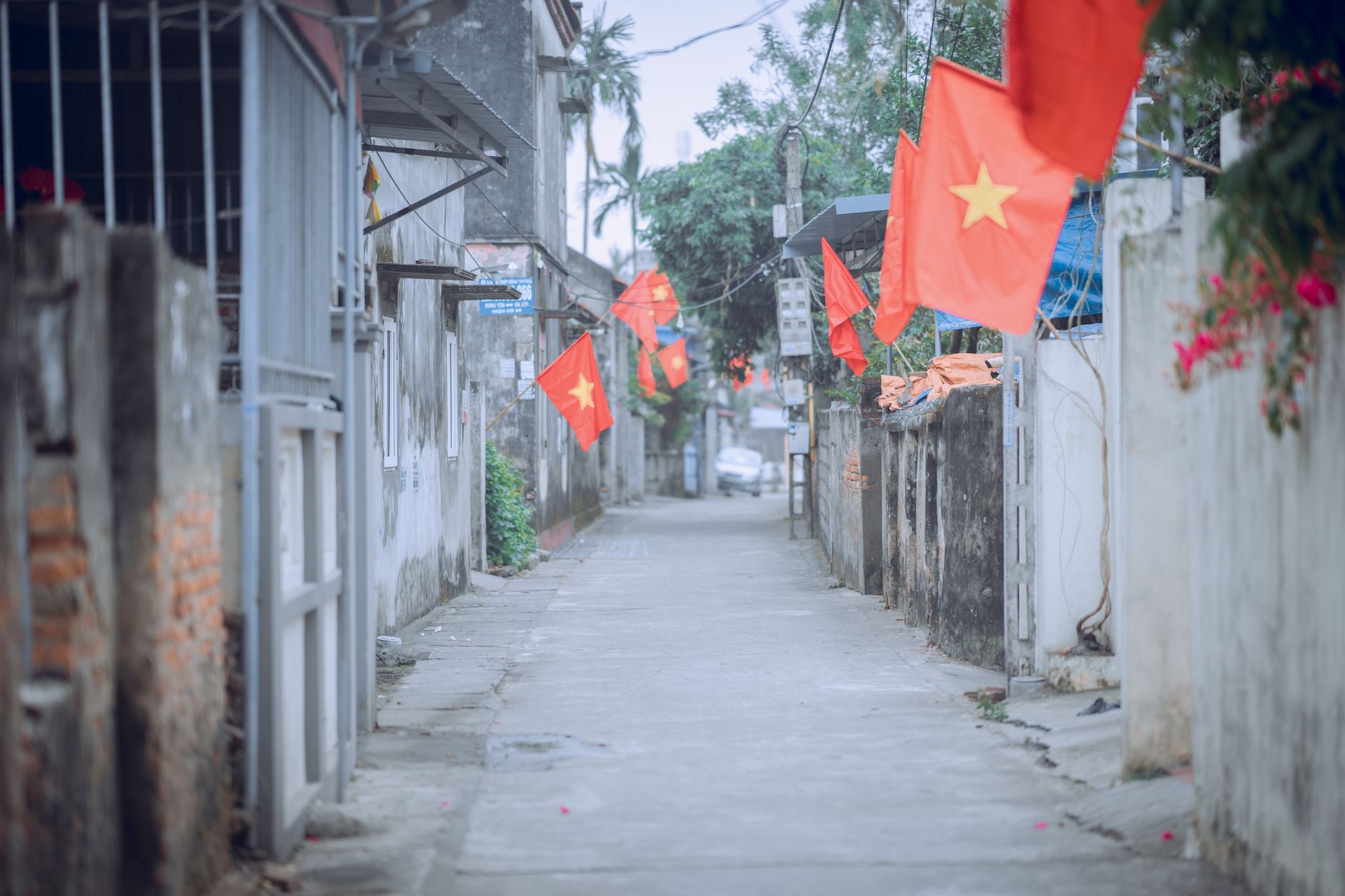
Phan Rang sits about 330 km northeast of Ho Chi Minh City and 95 km south of Nha Trang (냐짱 / 芽庄 / ニャチャン) — close enough to Nha Trang for a day trip, far enough that most tourists skip it. That's a loss. The city (officially Phan Rang-Thap Cham since 1992) is the nerve center of Cham culture in Vietnam, and the two temple complexes here are the real thing: active sites of pilgrimage and ceremony, not museum pieces.
If you're moving between Ho Chi Minh City and Da Nang or Hoi An along the coast, Phan Rang is a natural overnight stop — and a far more interesting one than another beach resort.
The Cham Temples
About 2 km west of Thap Cham Railway Station, Po Klong Garai temple complex sits on a hilltop overlooking the city. The main tower, built of intricately laid red brick in the 13th century, commemorates King Po Klong Garai, the last reigning Cham king. The craftsmanship is remarkable: small bricks mortared so tightly they've survived centuries without concrete. Inside the central sanctuary, a lingam (carved stone pillar) bears the king's likeness.
Entry to Po Klong Garai costs around 15,000 VND per person. The site opens daily from roughly 7:00 to 17:00, though the guard sometimes locks up earlier on slow days. Go in the morning — the light on the red brick is better before 9:00, and you'll likely have the hilltop to yourself. Bring water; there's almost no shade on the climb up.
The second major site, Po Rome temple tower, is about 20 km southwest, accessible via Phu Quy and the village of Hau Sanh. The road out is flat and passes through dry scrubland and grape trellises — pleasant on a motorbike, tedious by taxi. Po Rome is smaller and quieter than Po Klong Garai, but arguably more atmospheric because fewer visitors make the trip. Both complexes remain active — this is not a "sight-see and leave" situation. During the "Kate festival" in October (held around the 15th), the Cham community gathers to make ceremonial offerings of bullocks and food. Witnessing that, or a wedding ceremony, or even a smaller Ramadan observance, is the way to understand Cham faith and identity, not a solo walk through ruins.
If Cham architecture interests you, the towers here are cousins to the My Son sanctuary near Hoi An and the Po Nagar towers in Nha Trang, but Po Klong Garai and Po Rome are less restored and more spiritually active.
Cham Culture
The Cham people here maintain a culture that blends Islam with older animist traditions, and inheritance runs through the maternal line — a rarity in Southeast Asia. You'll see it in the ornate ceremonial dress at festivals, the way women lead family units, the specificity of ritual. The towers themselves are decorated with fire motifs (arches with tongue-like brick extensions representing flames), and calyx-like minarets crown each structure.
The local Cham also farm rice, grow grapes and peaches, and raise Brahman cattle and goats. If you eat a meal with a Cham family, you're likely to find rice, seafood, and locally grown fruit on the table.
The Cham community in Ninh Thuan numbers around 80,000, making it the largest Cham population center in Vietnam (베트남 / 越南 / ベトナム). Villages like Bau Truc and My Nghiep, both within 10 km of Phan Rang's center, are worth a short visit. Bau Truc is known for traditional pottery made without a wheel — potters here shape clay by hand and fire pieces in open rice-straw kilns. You can watch the process and buy pieces directly; a simple vase runs 50,000-150,000 VND. My Nghiep specializes in brocade weaving on wooden looms, producing textiles with geometric Cham patterns. Both villages are signposted from the main road and don't charge entry.

Photo by Loifotos on Pexels
Why Phan Rang Is Dry
Phan Rang is one of Vietnam's driest cities, receiving only about 700-800 mm of rain per year (one-third the national average). This aridity — combined with the coast — creates a particular microclimate. Most rain falls September to November; the rest of the year is dry season. Temperatures hover around 27-28 degrees C (81-82 degrees F) year-round. The dryness supports viticulture: Phan Rang grapes, destined for wine production, thrive here.
The landscape reflects that climate. Driving into Ninh Thuan from either direction, you notice the shift: green coastal hills give way to brown scrub, cacti, and low thorny bushes. It looks more like coastal Rajasthan than tropical Vietnam. Salt flats stretch along the road near Ninh Hai district. The visual contrast with nearby Nha Trang or Da Lat (only about 110 km northwest and 1,500 meters higher in elevation) is stark.
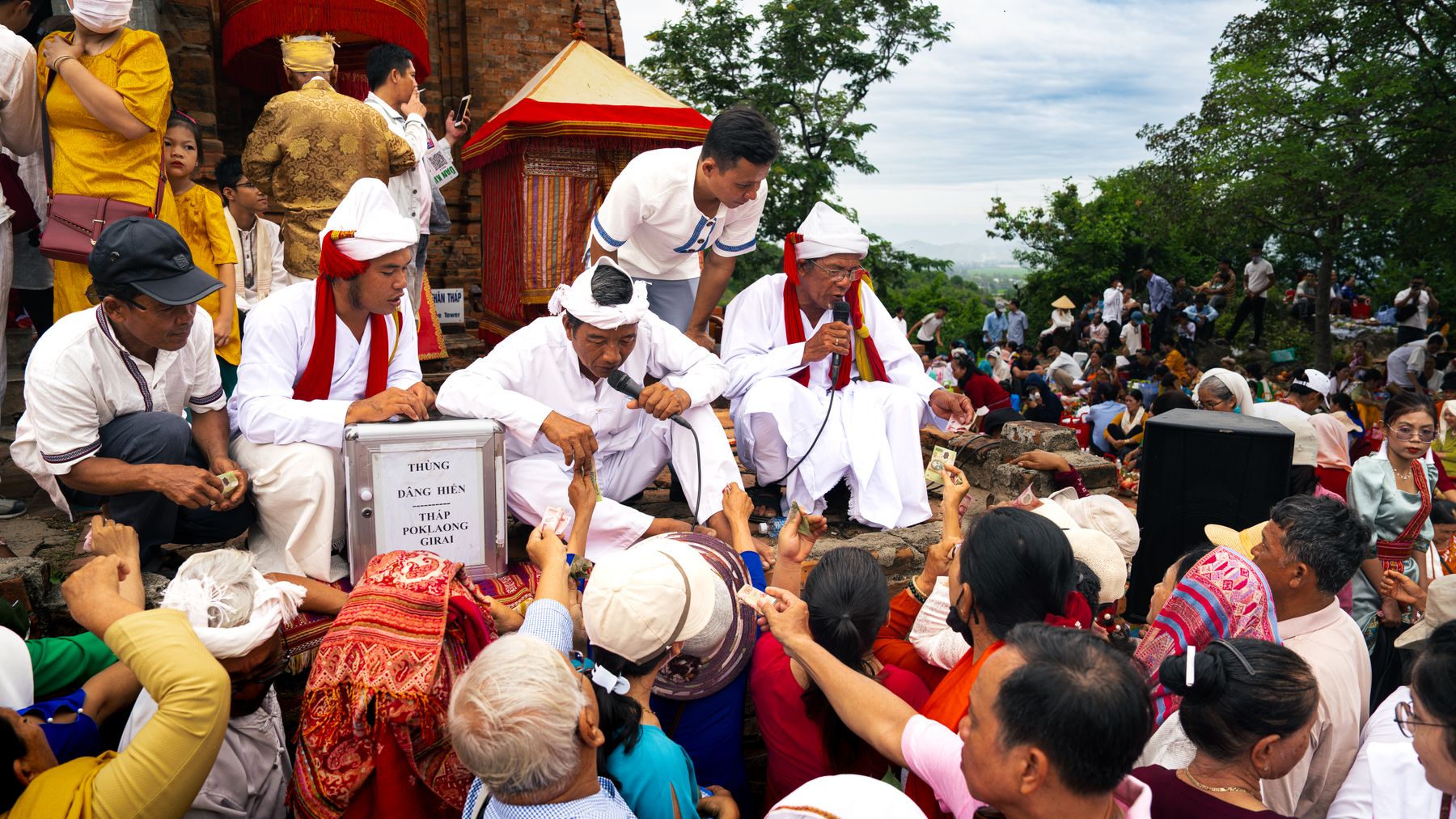
Photo by Felix Schickel on Pexels
Grapes and Seafood
The city is known for high-quality table grapes and wine grapes, especially in the surrounding districts. Rice production tops 30,000 tons annually, but it's the grapes — and the vineyards — that make Phan Rang distinctive in a vineyard-poor country.
You can visit grape farms in Thai An village (about 6 km south of the city center) without much planning — just turn down a side road and look for the trellises. Farmers sell bunches directly for 30,000-60,000 VND per kilogram depending on variety and season. The local grape wine is sweet and mild, more of a curiosity than a serious bottle, but worth trying once. You'll find it at markets and small shops throughout the city for around 80,000-120,000 VND per bottle.
With 10 km of coastline, seafood is central to the economy and the table. Fish, shrimp, scallops, and squid are farmed and caught. Industrial shrimp farming, particularly in Dong Hai ward, has expanded in recent years. A visit to the waterfront at dawn — fishing boats unloading, nets spread on the sand — gives a real sense of the work.
For eating, head to the stretch of seafood restaurants along Ngo Gia Tu street near the coast. Most places display the catch on ice out front — point and choose, then tell them how you want it cooked (grilled, steamed, fried). A plate of grilled scallops with peanuts and scallions runs about 80,000-120,000 VND. Grilled squid, around 100,000 VND. Rice is extra (5,000-10,000 VND). Nothing is in English, but pointing works fine.
Don't overlook the local "banh canh" — thick tapioca noodles in a cloudy pork or fish broth. It's sold from small stalls near the central market for 25,000-35,000 VND a bowl. You'll also find solid "banh mi" carts in the morning around 16 Thang 4 street, though the bread here tends to be softer than the crackly Hoi An or Saigon versions.
What to Eat and Drink
Phan Rang's food scene is small-town Vietnamese with a coastal lean. A few things to seek out:
- "Banh can": Small rice-flour cakes cooked in clay molds over charcoal, served with a sweet fish dipping sauce and sliced scallions. This is a Ninh Thuan specialty and tastes best from morning stalls near Cho Phan Rang (the central market). Expect to pay 20,000-30,000 VND for a plate of 6-8 cakes.
- Grilled rock lobster: Ninh Thuan's coast produces smaller, affordable rock lobsters. Restaurants along the Vinh Hy Bay road (about 35 km northeast of the city) grill them over coals and serve them with salt, pepper, and lime. A lobster runs roughly 300,000-500,000 VND depending on size — a fraction of resort prices.
- "Ca phe": Coffee culture is modest here compared to Hanoi or Saigon, but you'll find perfectly good "ca phe sua da" (iced milk coffee) at small shops along the main drag. A glass costs 15,000-20,000 VND.
- Lamb and goat: The dry climate supports goat farming, and Ninh Thuan is known across southern Vietnam for its goat meat. "Lau de" (goat hotpot) and grilled goat with lemongrass are served at several spots on the road between Phan Rang and the coast. A hotpot for two runs about 200,000-300,000 VND.
Common Mistakes Visitors Make
- Visiting only Po Klong Garai and leaving. The temples take 30-45 minutes. If that's all you do, you'll wonder what the fuss was about. Budget a full day: temples in the morning, craft villages midday, seafood for lunch, Vinh Hy Bay or Ninh Chu Beach in the afternoon.
- Coming without a motorbike. Taxis exist but are scarce and expensive for the distances involved. Grab coverage is thin outside the city center. Rent a motorbike from your hotel (100,000-150,000 VND/day) or in Nha Trang before riding down.
- Skipping the Kate festival. If your dates are flexible at all and October works, aim for Kate. The rest of the year the temples are quiet — still beautiful, but you miss the living culture that makes them special.
- Expecting tourist infrastructure. There are no English-language tours, almost no English menus, and limited ATMs outside the center. Bring cash (VND), download a translation app, and accept that you'll order by pointing.
- Confusing Phan Rang with Phan Thiet. They're different cities. Phan Thiet is further south, near Mui Ne's sand dunes. Buses and booking platforms occasionally mix them up. Double-check your ticket.
Quick Reference
- Getting there: Train from Hanoi or Ho Chi Minh City to Thap Cham station. Buses from Nha Trang (~2 hours, ~80,000 VND), Mui Ne (~3.5 hours), or HCMC (~5-6 hours, ~180,000 VND by sleeper bus).
- Best time to visit: October for the Kate festival. January-August for dry, sunny weather. Avoid late October-November for the brief rainy window.
- Budget: A day in Phan Rang costs very little. Rooms at local guesthouses run 200,000-400,000 VND/night. Meals average 30,000-80,000 VND. Temple entry is 15,000 VND.
- Language: Vietnamese only in most situations. Learn "xin chao" (hello), "bao nhieu" (how much), and "tinh tien" (the bill, please).
- Key distances from city center: Po Klong Garai (2 km), Po Rome (20 km), Bau Truc pottery village (8 km), My Nghiep weaving village (10 km), Ninh Chu Beach (5 km), Vinh Hy Bay (35 km).
- Nearby connections: Nha Trang (95 km north), Da Lat (110 km northwest), Mui Ne/Phan Thiet (150 km south), Ho Chi Minh City (330 km southwest).
Practical Notes
Phan Rang achieved city status in 2007 and serves as capital of Ninh Thuan Province. The city is divided into 12 wards and one commune. Public transport is modest; a scooter rental is useful if you plan to visit Po Rome (the second temple, 20 km out). The railway station connects to Hanoi and Ho Chi Minh City. Most travelers arrive by bus from Nha Trang (about 2 hours) or heading south toward Mui Ne.
Accommodation is basic but clean. There are a handful of mid-range hotels along 16 Thang 4 street and Ngo Gia Tu street — expect air conditioning, hot water, and Wi-Fi, but don't expect boutique anything. If you want a beach stay, Ninh Chu Beach (5 km east of center) has a few resort-style options in the 500,000-1,200,000 VND/night range. Vinh Hy Bay, further out, has one or two higher-end resorts but limited budget choices.
The best time to visit for Cham culture is October (Kate festival). For food, come hungry: the seafood is fresh, and local restaurants are not geared to tourists (a good sign). Grapes are in season late summer and early autumn.
Bottom Line
Phan Rang is not on the usual Vietnam itinerary, and it doesn't try to be. There are no backpacker bars, no cooking classes, no Instagram-ready infinity pools. What it has is a living Cham culture you won't find anywhere else in the country, honest coastal food at local prices, and a dry landscape that looks nothing like the Vietnam most visitors imagine. For anyone moving along the coast between Ho Chi Minh City and Hue or Da Nang, one night here changes the texture of the whole trip.
Last updated · May 29, 2026 · independently researched, never sponsored.