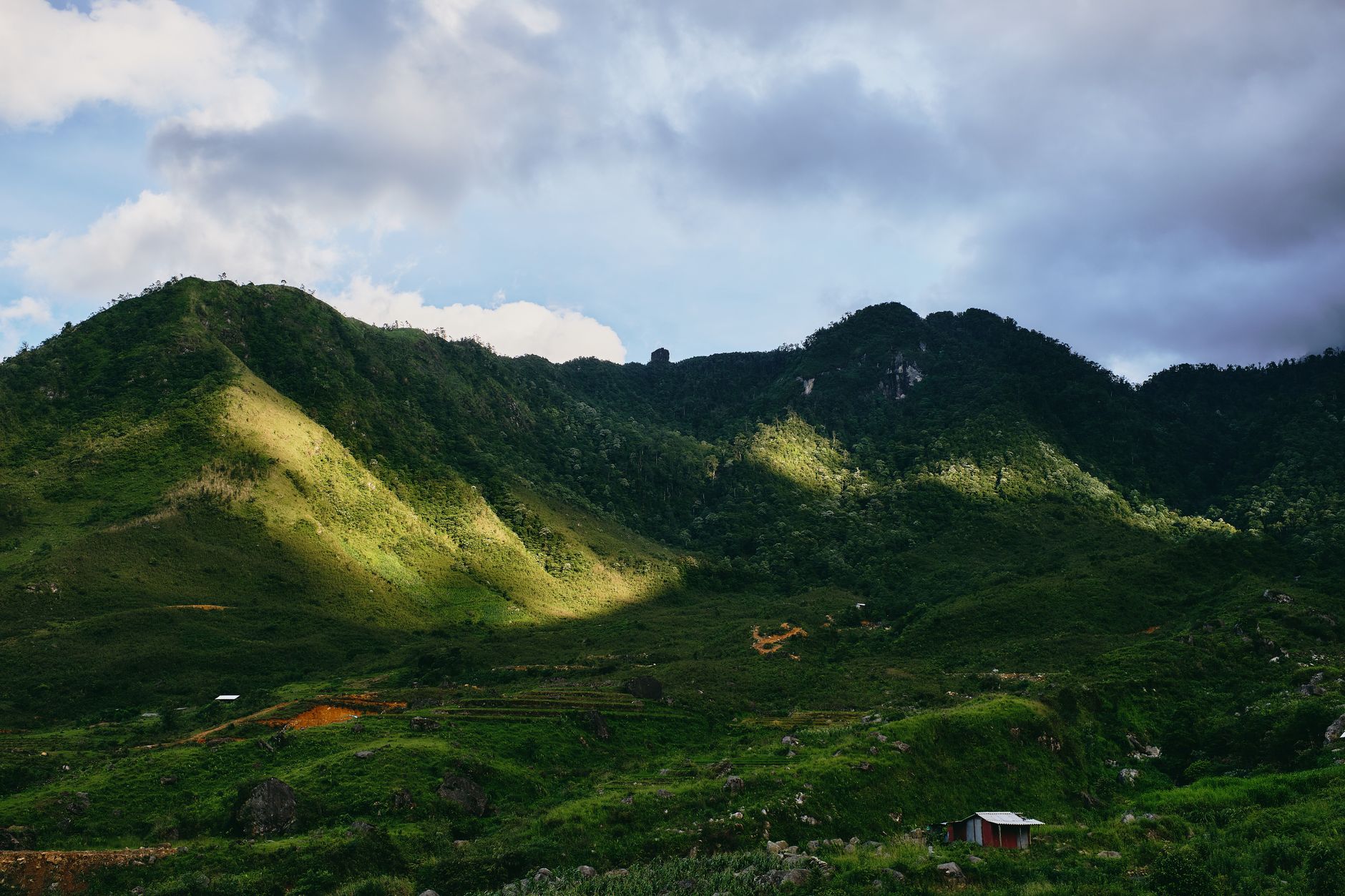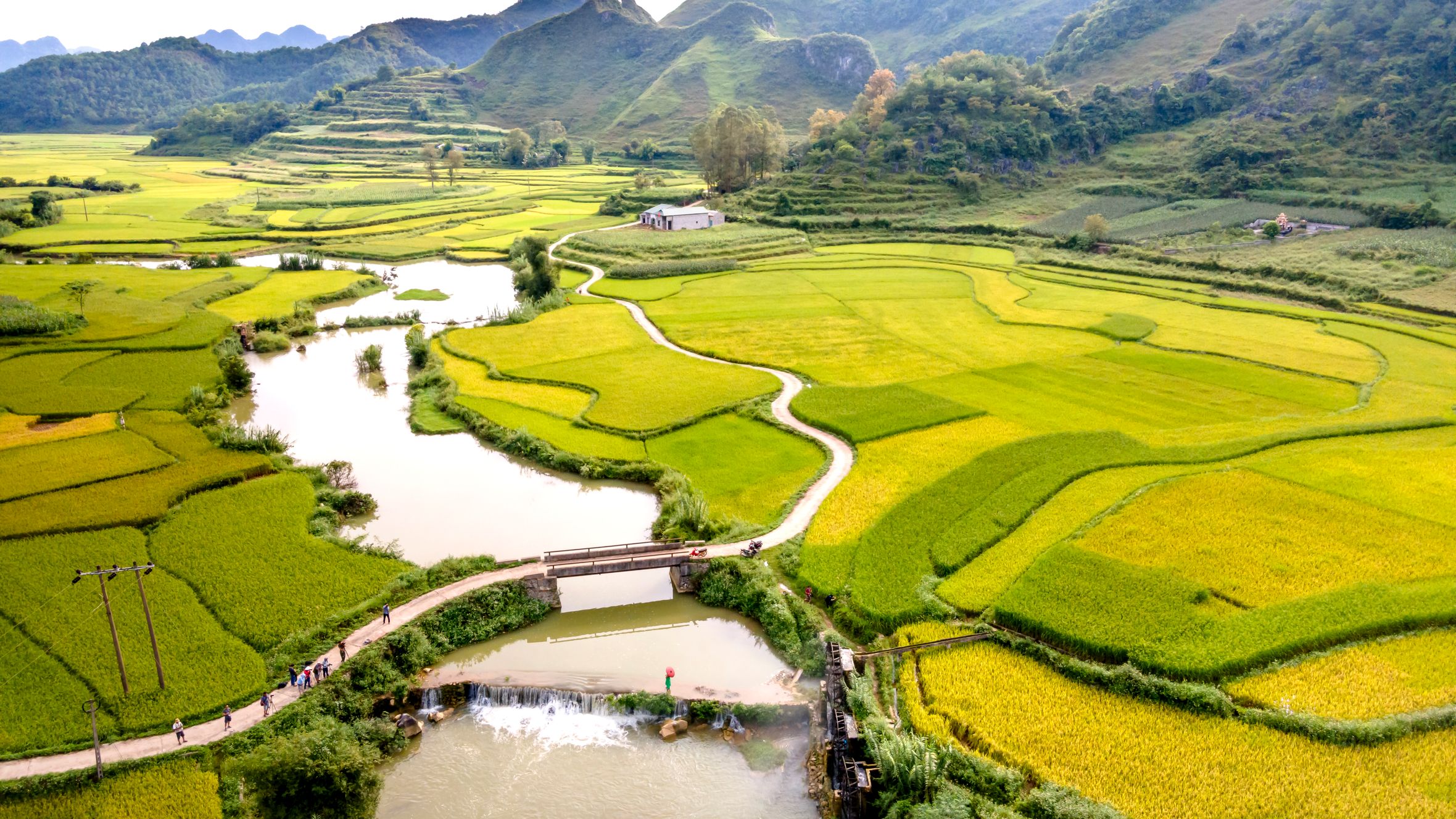
Dien Bien Phu sits in northwestern Vietnam (베트남 / 越南 / ベトナム)'s mountains, 480 km from Hanoi. Its weather is far from stable — monsoons, fog, and cool mountain nights mean timing matters more here than in warmer lowland regions. The tourist season is tighter and shorter than the rest of Vietnam.
October to November — the sweet spot
This is when Dien Bien feels most livable. Temperatures drop to 15–22°C, humidity is low, and the sky stays clear. Rice paddies are at their greenest, and trekking conditions are near-perfect. Visibility in the hills is excellent, so if you're hiking around Muong Thanh Valley or up to Pa Khoang Pass, you'll see where you're walking.
Crowds are moderate but manageable. You'll see other backpackers, mostly Westerners and Southeast Asian visitors, but not the dense tour-bus chaos of Hanoi. Guesthouses fill 60–70% capacity; you can still book a room same-day at small hotels around the main road (Nguyen Hue Street, near the market).
Harvest season means local food is abundant — fresh corn, root vegetables, and sticky rice from autumn crops. Street vendors sell "com lam" (bamboo-tube sticky rice) for 15,000–25,000 VND per tube, and bowls of "pho" with local herbs run 30,000–40,000 VND at market stalls. Prices on street food stay stable. If you've eaten your way through Hanoi (하노이 / 河内 / ハノイ)'s Old Quarter — pho, bun cha, banh cuon — the highland versions here taste noticeably different, heavier on wild herbs and black cardamom.
December to February — cold and clear
Winter in Dien Bien isn't extreme, but it's cold for Vietnam. Expect 8–18°C. Mornings are foggy; afternoons clear. It's still a good time for outdoor work, though some mountain passes can flood if rain hits overnight.
Tourist traffic drops sharply after mid-December. January and early February are the quietest months — perfect if you want silence and solitude. Guesthouses operate at 30–40% capacity. You might have entire stretches of trail to yourself.
Downside: nights are chilly without proper layers, and some smaller shops close or operate part-time. Food is less fresh than autumn — vegetables are stored, dried, or transported from lowlands. This is the season when locals lean on preserved meats, dried bamboo shoots, and "thit trau gac bep" (smoke-dried buffalo meat hung above the kitchen hearth). You'll find it sold at the central market for around 300,000–400,000 VND per kilogram — it's chewy, smoky, and pairs well with sticky rice and a glass of local corn wine.
One upside of winter: Vietnamese coffee tastes better when it's cold. Dien Bien city has a handful of small "ca phe" shops along Tran Dang Ninh Street where a "ca phe sua da" costs 15,000–20,000 VND, though in December you'll probably want it hot.
March to April — spring, before the rain
Temperatures climb to 15–28°C. The landscape is wild with spring flowers — rhododendrons, magnolias, mustard greens blooming on hillsides. It's beautiful, but brief.
Spring Break crowds arrive mid-March through April, especially Easter holidays. Tourist traffic jumps to 60–70% of peak. Hotels start filling; prices nudge up by 10–15% from winter rates.
The tail end of dry season means trails are still walkable, but showers become more frequent. Plan hikes for early morning; expect afternoon rain. If you're combining Dien Bien with a loop through Ha Giang or Sapa, March is a workable window — roads are mostly dry across the northwest, and you can link the two regions by bus via Lai Chau (about 190 km, 5–6 hours).

Photo by GIANG VU on Pexels
May to September — monsoon; avoid unless you have time
Southwest monsoon dumps 1,500+ mm of rain across these months. Temperatures hover at 20–28°C — warm, but humidity is relentless (80%+). Roads wash out; trails flood; visibility in the hills drops to 50 meters on bad days.
Tourist numbers plummet. Guesthouses operate at 20–30% capacity, and many small tour operators shut down or go day-to-day. Prices fall 20–30% compared to peak season — if you book direct with a guesthouse, you can negotiate. A double room that costs 350,000 VND in October might go for 220,000–250,000 VND in July.
It's not impossible to travel here, and the thinned crowds appeal to some. But trekking is unreliable, and you'll spend more time indoors. Mudslides occasionally close mountain roads; check local news before planning. If you do get stuck for a day, the Dien Bien Phu Museum (open daily, 7:30–11:00 and 13:30–17:00, entry 30,000 VND) and the A1 Hill battlefield site are walkable in the city center and don't require trail conditions.
Key festivals and events
Dien Bien has no major tourist festivals, but the Hung Kings Festival (typically early April) is celebrated locally — you may see temple gatherings and ritual offerings if you're nearby.
Tet (Lunar New Year, late January or early February) transforms the region. Locals return home; markets swell briefly; guesthouses fill for a week. If you're here, expect less English and more Vietnamese speakers; tourist services slow down.
The Thai and H'mong communities around Dien Bien hold smaller seasonal celebrations tied to harvests and new planting cycles. These aren't on any tourist calendar, but if you stay in a homestay village like Him Lam (3 km from city center) or Noong Nhai (8 km south), your host may invite you to join. There's no entrance fee — just bring a small gift or contribute to the communal meal.
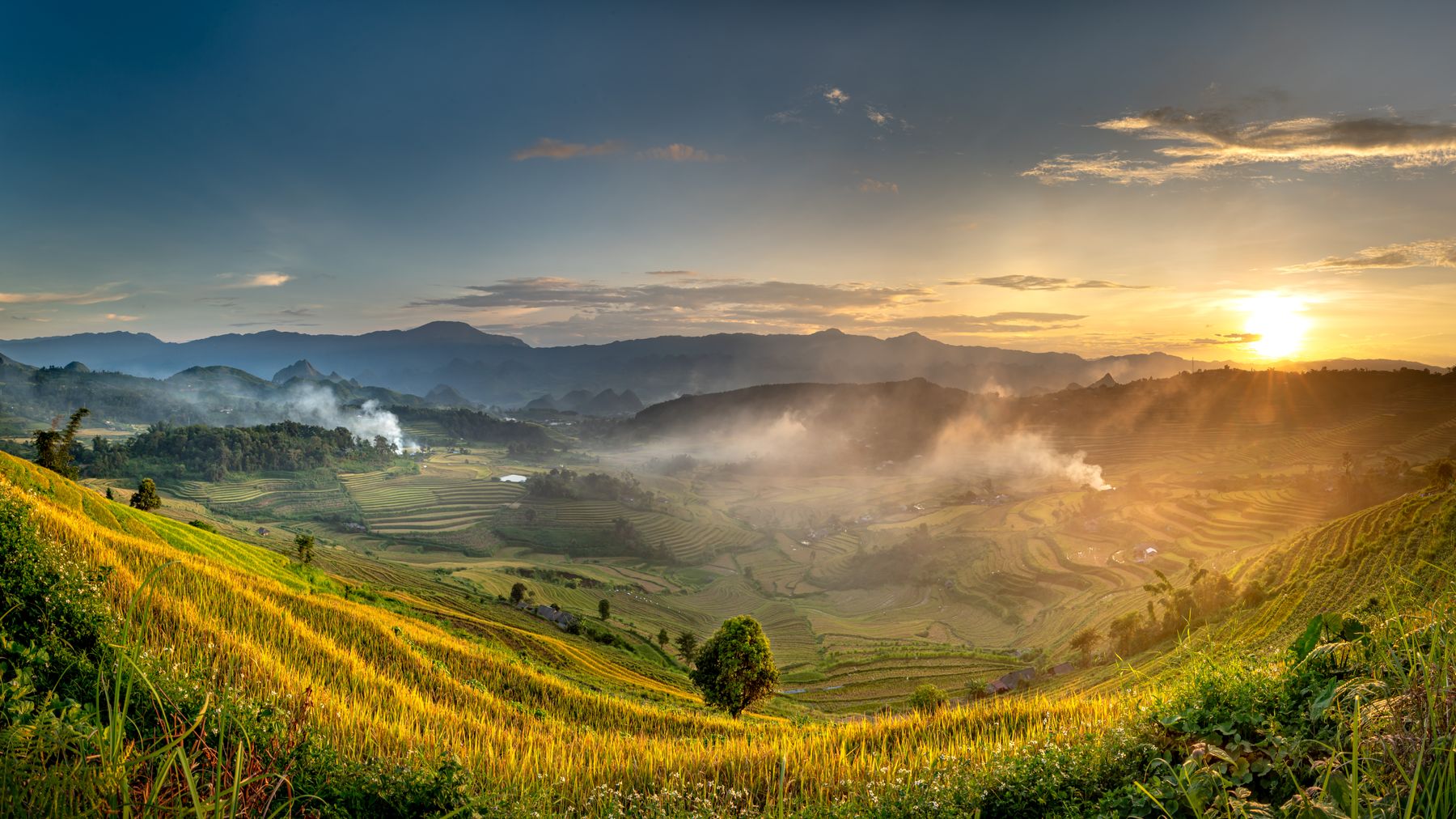
Photo by Quang Nguyen Vinh on Pexels
Getting to Dien Bien and getting around
Most travelers reach Dien Bien Phu by air or bus from Hanoi. Vietnam Airlines operates daily flights from Noi Bai Airport to Dien Bien Phu Airport (code DIN) — flight time is about 1 hour, and tickets range from 800,000 to 1,800,000 VND depending on season and how far ahead you book. The airport is 2 km from the city center; a taxi or xe om ("xe om" — motorbike taxi) costs 30,000–50,000 VND.
By bus, the Hanoi–Dien Bien route takes 9–11 hours via National Highway 6 through Hoa Binh and Son La. Sleeper buses depart from My Dinh bus station (Hanoi) in the evening, arriving early morning. Tickets cost 250,000–350,000 VND. The road is mountainous with tight turns — if you get motion sickness, sit near the front and bring ginger candies.
Inside Dien Bien, distances are short. The city itself is small enough to walk, but for trips to Pa Khoang Lake (15 km), Muong Phang (25 km), or outlying villages, you'll need a motorbike rental (120,000–180,000 VND per day from guesthouses) or a local guide with transport. If you've ridden the Ha Giang loop, the roads here are similarly winding but slightly less extreme.
What to eat in Dien Bien
Dien Bien's food scene is small but distinct. The Thai ethnic minority — the largest group in the valley — shapes most of what you'll eat here.
"Xoi nep nuong" (grilled sticky rice) is everywhere, often served with grilled pork or dried buffalo. At the morning market near Muong Thanh Bridge, a plate of sticky rice with side dishes runs 25,000–40,000 VND. The rice is local, grown in Muong Thanh Valley, and has a nuttier flavor than lowland varieties.
For something soupy, look for "canh bon" — a broth made with taro stems, often paired with freshwater fish from the Nam Rom River. It's mild, slightly sour, and shows up at lunch stalls along Hoang Cong Chat Street for around 30,000 VND a bowl. It won't remind you of pho or bun rieu — the highland palate is less sweet, more herbal.
If you want something closer to familiar Vietnamese comfort food, most guesthouses can point you to a com tam or "bun" stall. Banh mi sellers set up near the market by 6:00 a.m. — expect a simpler version than Saigon's overstuffed sandwiches, usually just pate, pickled vegetables, and chili for 15,000–20,000 VND.
Corn wine ("ruou ngo") is the local drink. It's strong (30–40% alcohol), served in small ceramic bowls, and offered freely at homestays. Pace yourself. For something gentler, a cold bia hoi (draft beer) at the streetside stalls on Nguyen Hue Street costs about 10,000–15,000 VND per glass.
What surprises foreigners
The elevation doesn't feel high, but the weather acts like it. Dien Bien sits at only about 490 meters, yet temperatures swing 15°C between morning and afternoon. People arrive in shorts and regret it by nightfall.
English is rare. Outside of a few guesthouses that cater to foreign backpackers, almost no one speaks English. Learn a few phrases: "Bao nhieu tien?" (how much?), "Khong co thit" (no meat, if vegetarian), "Cam on" (thank you). A translation app on your phone is genuinely essential here — more so than in Da Nang or Hoi An where tourism infrastructure is built for English speakers.
ATMs exist but aren't everywhere. There are a few ATMs on Tran Dang Ninh Street (Agribank, BIDV, Vietcombank), but they occasionally run out of cash on weekends. Bring extra VND from Hanoi. Credit cards are accepted at almost nowhere outside the one or two nicer hotels.
The food schedule is strict. Breakfast stalls open at 5:30–6:00 and close by 8:30. Lunch is 11:00–13:00. Dinner is 17:00–20:00. Outside those windows, your options are instant noodles from a convenience store or whatever your guesthouse can improvise. This isn't Saigon, where someone is grilling something at 2:00 a.m.
It's quieter than you expect. After dark, the city is near-silent. No nightlife to speak of, no backpacker bar strip. If you need evening entertainment, bring a book or download something before you arrive — Wi-Fi is functional but slow at most guesthouses.
Weather by month: quick reference
October: 15–22°C, clear, minimal rain. Best overall.
November: 12–20°C, clear, dry. Still excellent; fewer tourists than October.
December: 8–16°C, mornings fog, afternoons clear. Quiet, cold nights.
January–February: 8–15°C, fog and frost possible. Coldest, emptiest.
March: 12–24°C, spring blooms, increasing showers.
April: 15–28°C, frequent afternoon rain, Easter crowds.
May–June: 20–28°C, heavy rain, very few tourists.
July–August: 20–27°C, intense monsoon. Occasional landslides.
September: 18–26°C, rain decreasing, warming up.
At a glance
- Best months: October and November (cool, dry, clear skies)
- Cheapest months: June through August (monsoon discounts, 20–30% off rooms)
- Coldest months: January and February (lows near 8°C, frost possible)
- Wettest months: June through August (1,500+ mm total across monsoon season)
- Distance from Hanoi: 480 km by road, 1 hour by air
- Elevation: ~490 meters
- Budget room: 200,000–350,000 VND per night (guesthouse double)
- Street meal: 25,000–45,000 VND
- Local coffee: 15,000–20,000 VND
- Peak crowd period: Late March through mid-April
- Languages spoken: Vietnamese, Thai (ethnic minority), very limited English
Practical notes
Book accommodation in October–November if you want choice; in January–February you can often walk in and negotiate. June–August prices are lowest but travel logistics are hardest. Pack layers year-round; mountain weather changes fast. Most trekking operators reduce services May–September, so confirm availability in advance if you're visiting then.
If you're building a larger northwest loop, Dien Bien pairs naturally with Sapa (280 km northeast via Lai Chau) or Ninh Binh on a longer return route through the Red River Delta. Budget at least two full days in Dien Bien itself — one for the city and battlefield sites, one for the surrounding valley and villages.
Final note
Dien Bien rewards people who plan around weather, not around hype. It's not a place you stumble into casually — it takes effort to reach, and conditions outside the October–November window require flexibility. But that effort filters out the crowds, and what's left is one of northwest Vietnam's most honest landscapes: a wide valley, a slow-moving river, and food that tastes like the mountains it comes from.
Last updated · May 26, 2026 · independently researched, never sponsored.