Linh Ung Pagoda on Son Tra Peninsula is the most visited temple in Da Nang, and for good reason — a 67-meter Lady Buddha statue overlooking the East Sea, a sprawling complex built into the hillside, and one of the few places in the city where you can feel genuinely removed from the traffic below.
What It Is and How It Got Here
Linh Ung Son Tra is the youngest of three Linh Ung pagodas in Da Nang (다낭 / 岘港 / ダナン), completed in 2010 after about six years of construction. It sits at an elevation of roughly 693 meters on the Son Tra Peninsula, facing the coastline. The centrepiece is the Lady Buddha statue — officially called the Avalokitesvara Bodhisattva — which stands 67 meters tall on a lotus-shaped platform and is visible from much of Da Nang's beachfront. The temple grounds cover around 20 hectares, with a main worship hall, an 18-arhat garden, ornamental bonsai collections, and several smaller shrines scattered across terraced levels.
The pagoda follows the Mahayana Buddhist tradition and functions as an active place of worship. On any given morning, you'll find local devotees burning incense alongside tour groups — it hasn't become purely a tourist attraction, which is part of what makes it worth the drive up.
Why Travelers Go
The Lady Buddha statue is the obvious draw, but the real appeal is the combination of the temple complex and Son Tra Peninsula itself. From the upper terraces, you get wide views across Da Nang's coastline, My Khe Beach, and the Marble Mountains in the distance. The grounds are well maintained and large enough that you can walk for 30-40 minutes without retracing your steps. The 18-arhat statues in the garden are individually carved and genuinely expressive — worth a slow walk rather than a quick photo.
It also pairs naturally with a half-day loop around Son Tra Peninsula, where you might spot red-shanked douc langurs (one of the rarest primates in Southeast Asia) in the forest canopy along the road.
Best Time to Visit
The dry season from March to August is ideal, with April through June being the sweet spot — warm but not yet peak summer heat, and low humidity compared to later months. Mornings before 9 AM are the best window: fewer tour buses, cooler temperatures, and softer light for photos. The rainy season (September to December) brings fog that can obscure the views entirely, and the road up Son Tra can get slick.
Avoid weekends and Vietnamese public holidays, especially around Tet and the Hung Kings Festival, when the pagoda gets genuinely packed. Weekday mornings are a different experience — sometimes you'll have whole sections of the garden to yourself.
How to Get There
Linh Ung Pagoda is about 10 km northeast of central Da Nang. The road climbs through Son Tra Peninsula and is paved but winding.
- Motorbike rental: The most popular option. Rentals run 100,000-150,000 VND/day from most hotels. The ride takes about 25 minutes from the Han River bridges. The road has some sharp turns, so ride at your own comfort level.
- Grab car: Around 100,000-150,000 VND one way from the city centre. Ask the driver to wait (or arrange a return) — Grab availability at the pagoda itself is inconsistent.
- Taxi: Metered taxis cost roughly the same as Grab. Mai Linh and Tien Sa are the reliable Da Nang companies.
- Guided tour: Many hotels offer half-day Son Tra tours that include Linh Ung, usually bundled with a stop at the monkey-spotting viewpoints. Expect 300,000-500,000 VND per person.
There is no public bus service to the pagoda.
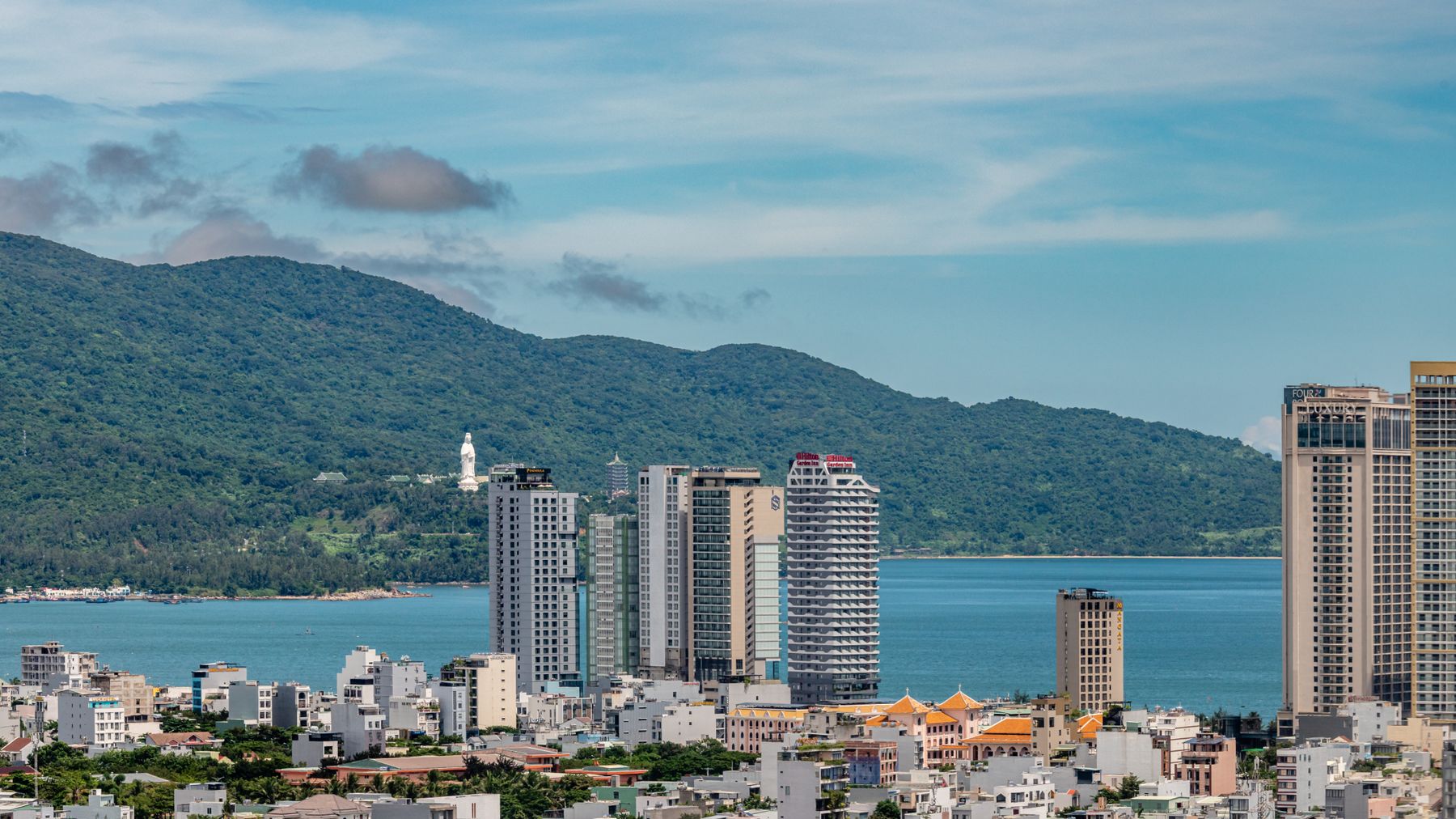
Photo by Kirandeep Singh Walia on Pexels
What to Do
Walk the Full Complex
Most visitors beeline for the Lady Buddha statue, snap a photo, and leave within 20 minutes. That's a waste. Walk the entire complex — the main hall has detailed woodwork and a large golden Shakyamuni Buddha, the side halls have smaller altars worth a look, and the bonsai garden behind the main structures is quiet and well-curated.
The 18-Arhat Garden
A path winds through 18 large stone statues depicting Buddhist arhats in various poses — laughing, meditating, arguing. Each has distinct character. It's one of the more photogenic spots in the complex and usually less crowded than the main plaza.
Climb to the Base of the Lady Buddha
You can walk right up to the base of the statue and enter the lower level, which contains small shrines on each floor. The interior is modest, but standing directly beneath the statue gives you a sense of scale that photos from the plaza don't capture.
Combine with a Son Tra Peninsula Loop
If you have a motorbike, loop the peninsula road. The Ban Co Peak viewpoint (about 15 minutes further) offers panoramic views, and the forested stretches between viewpoints are where you're most likely to spot douc langurs in the trees.
Catch Sunrise or Sunset
The pagoda faces east, making it a legitimate sunrise spot. Sunset works too — the light hits the statue and the gilded roof details in a way that justifies the second trip up the hill.
Where to Eat Nearby
There's nothing at the pagoda itself beyond a small drink stand. Head back down to the coast.
- "Mi quang" is Da Nang's signature noodle dish — turmeric-tinted broth, rice noodles, shrimp, pork, herbs, and a handful of crushed rice crackers on top. Mi Quang Ba Vi on Le Dinh Duong is a reliable local spot, bowls around 35,000-45,000 VND.
- "Banh xeo" in Da Nang tends to be smaller and crispier than the Saigon version. Ba Duong on Hoang Dieu is the classic recommendation, with crispy pancakes for around 50,000 VND each, stuffed with shrimp and bean sprouts.
For seafood, the string of restaurants along Pham Van Dong beach road (Man Thai area, near the base of Son Tra) serves fresh catches at reasonable prices — point at what you want in the tank and negotiate.
Where to Stay
Most travelers stay in Da Nang's beachfront area along My Khe or near the Han River and day-trip to Linh Ung.
- Budget: Guesthouses and hostels near the beach start around 200,000-400,000 VND/night.
- Mid-range: Hotels along Vo Nguyen Giap (the main beach road) run 600,000-1,200,000 VND/night with sea views and pools.
- Splurge: The InterContinental Sun Peninsula, actually located on Son Tra Peninsula itself, sits between the pagoda and the city — rates from around 5,000,000 VND/night.

Photo by Tuan Minh on Pexels
Practical Tips Locals Would Tell You
- Dress code matters. Cover your shoulders and knees. The pagoda provides wraps at the entrance, but they're not always available during peak times. Bring a light scarf.
- Shoes off when entering any worship hall. Wear shoes that slip on and off easily.
- Free entry. There's no admission fee. Donations are welcome but not expected.
- Bring water. The complex involves a fair amount of walking and stairs, and there's limited shade in the main plaza area.
- Incense and offerings are available for purchase near the entrance for around 10,000-20,000 VND if you want to participate.
Common Mistakes to Avoid
- Only giving it 20 minutes. Budget at least an hour, ideally 90 minutes, to see the full grounds without rushing.
- Going midday. The plaza has almost no shade and temperatures can push past 35°C in summer. Morning or late afternoon only.
- Skipping Son Tra Peninsula. Treating the pagoda as a standalone stop misses half the appeal. The peninsula road, the monkey viewpoints, and Ban Co Peak make a proper half-day excursion.
- Relying on Grab for the return. Signal can be weak on the peninsula. If you take a car up, arrange the return before your driver leaves.
Practical Notes
Linh Ung Son Tra is open daily from roughly 5:30 AM to 9 PM. It pairs well with a morning at the pagoda followed by an afternoon in Hoi An (호이안 / 会安 / ホイアン) (about 30 km south) or an evening along the Han River in Da Nang, where the Golden Bridge-inspired Dragon Bridge breathes fire on weekend nights. If you're spending several days in central Vietnam, Hue and the Marble Mountains are both easy day trips from the same base.
Last updated · May 26, 2026 · independently researched, never sponsored.