What My Son Is and Why It Matters
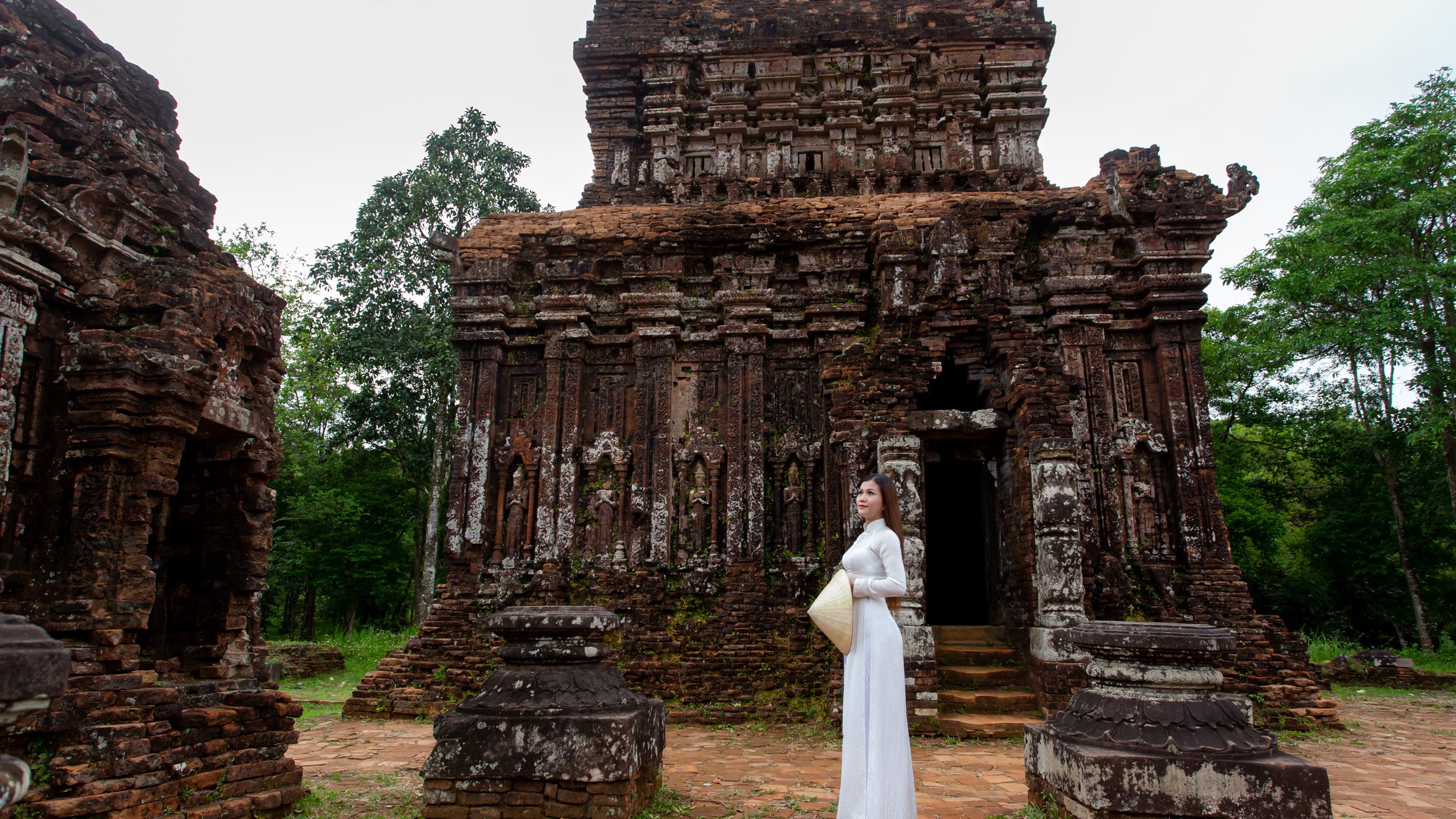
My Son is a cluster of partially ruined Hindu temples built by the Champa Kingdom between the 4th and 14th centuries. It sits in a narrow valley about 70 km southwest of Da Nang, surrounded by low mountains and dense secondary forest. UNESCO listed it as a World Heritage Site in 1999.
The complex once held around 70 structures. War damage and centuries of jungle reclamation have reduced that number, but roughly 20 temple groups remain standing or partially intact. The architecture draws from Indian Hindu traditions — Shiva worship, specifically — but developed its own distinct Cham style over a thousand years. If you've visited Angkor in Cambodia, the comparison is inevitable, but My Son is far smaller and quieter. That's part of its appeal.
Think of it less as a grand spectacle and more as a place where you walk slowly, notice the brickwork, and try to understand how a civilization built these towers without mortar — a construction technique scholars still debate.
Why Travelers Go
My Son offers something different from the usual Central Vietnam circuit of beaches and "banh mi" stalls. It's genuinely old in a way that few sites in the country can match. The valley setting is atmospheric, especially in the early morning when mist sits between the temple groups and the tour buses haven't arrived yet.
It pairs well with a few days in Da Nang (다낭 / 岘港 / ダナン) or Hoi An. If you're already visiting the Imperial Citadel Thang Long in Hanoi or the tombs in Hue, My Son adds a Cham chapter to your understanding of Vietnamese history — a civilization that predates the southward expansion of the Viet people.
Best Time to Visit
The dry season from February to August is ideal. March through May hits the sweet spot: warm but not yet scorching, low rainfall, and thinner crowds than summer.
Avoid October and November if you can. Central Vietnam's rainy season peaks then, and the valley floods occasionally. The trails between temple groups turn muddy, and some sections close.
Whatever month you go, arrive early. Gates open at 6:00 AM. By 9:30 AM, organized tour groups from Da Nang and Hoi An (호이안 / 会安 / ホイアン) flood the site. If you're there at 6:30, you'll have the main groups nearly to yourself for a solid hour.
How to Get There from Da Nang
By motorbike or car
The drive takes about 90 minutes from central Da Nang via the QL1A highway, then turning southwest onto provincial roads. The route is well-signed. A private car with driver runs around 1,200,000–1,500,000 VND round trip with waiting time. Renting a motorbike (150,000–200,000 VND/day) works if you're comfortable with Vietnamese traffic and want the flexibility to stop along the way.
By organized tour
Half-day group tours from Da Nang cost 400,000–600,000 VND per person, including transport, entrance ticket, and an English-speaking guide. Hoi An-based tours are slightly cheaper since the distance is shorter — about 45 km. Most depart at 7:30 AM and return by 1:00 PM.
Entrance fee
Tickets cost 150,000 VND for adults (as of early 2025). That includes access to the small on-site museum near the parking area.

Photo by ㅤ quang vinh ㅤ on Pexels
What to Do at My Son
Walk the temple groups in order
The site divides into lettered groups (A, B, C, D, E, etc.). Groups B, C, and D are the best preserved and most accessible. Start there. Group A was largely destroyed during the war but the remaining foundations give a sense of scale. Budget 2–2.5 hours to walk everything at a comfortable pace.
Study the brickwork up close
The Cham builders used a fired-brick technique with no visible binding agent — no morite, no cement. Some theories suggest they used a resin from local trees. Get close to the walls and look at how precisely the bricks fit together. The carvings are integrated directly into the brick, not applied as a separate layer.
Catch the traditional Cham dance performance
A short "Apsara" dance performance runs twice each morning (usually around 9:00 AM and 10:00 AM) on a small outdoor stage between the parking area and the temple groups. It's brief — about 15 minutes — but gives useful context for the sculptural motifs you'll see on the towers.
Visit the on-site museum
Small but worth 20 minutes. It houses original stone sculptures, linga, and carved lintels recovered from the site. The labeling is basic but the objects themselves are striking, especially the Shiva and Ganesha pieces.
Compare with Po Nagar
If you're traveling south afterward, the Po Nagar towers near Nha Trang are another major Cham site — still actively used for worship. Seeing both gives you a fuller picture of Cham architecture across different centuries and regions.
Where to Eat Nearby
There's a basic food court at the My Son parking area — serviceable but forgettable. Better to eat before or after.
On the drive back toward Da Nang, stop in the Duy Xuyen area for "mi quang" — the turmeric-tinted noodle dish that's a regional staple. Small roadside spots along the QL610 serve it for 30,000–45,000 VND a bowl. "Com ga" (chicken rice) is another reliable option in the same stretch. If you're heading back via Hoi An instead, the town has no shortage of "cao lau" and "banh xeo" once you arrive.
Where to Stay
Most visitors base themselves in Da Nang or Hoi An and treat My Son as a half-day trip. That's the right call — there's no compelling accommodation near the site itself.
- Budget: Hostels and guesthouses in Da Nang's Son Tra or Hai Chau districts run 200,000–400,000 VND/night.
- Mid-range: Hotels along the Da Nang beachfront or in Hoi An's Cam An area go for 800,000–1,500,000 VND/night.
- Higher-end: Riverside resorts between Da Nang and Hoi An start around 2,500,000 VND/night.
Photo by Serg Alesenko on Pexels
Practical Tips Locals Would Tell You
- Wear shoes with grip. The paths between temple groups are uneven laterite and exposed brick. Sandals work in dry weather but you'll regret them if it rained the night before.
- Bring water and sunscreen. Shade is limited between groups, and the walk is longer than it looks on the map — roughly 2 km total if you visit all open sections.
- Hire a guide at the entrance if you want context. Freelance guides charge about 300,000–400,000 VND for a full tour. The temples are more interesting when someone explains what the carvings depict.
- The site has limited phone signal in the valley. Download any maps or translation apps before you arrive.
Common Mistakes to Avoid
- Arriving after 9:00 AM. The heat builds fast and the crowds peak between 9:30 and 11:00. Early arrival changes the experience completely.
- Rushing through in 45 minutes. Some tour groups speed-walk the main groups and leave. Give yourself at least two hours. The details reward patience.
- Skipping the museum. It's easy to walk past it on the way to the temples. See it first — it provides context that makes the ruins more legible.
- Expecting Angkor Wat scale. My Son is compact and partially ruined. Adjust expectations and appreciate it for what it is: a quiet, historically rich site, not a monumental complex.
Practical Notes
My Son works best as a morning trip paired with an afternoon in Da Nang or Hoi An. The combination of Cham ruins in the morning and a bowl of mi quang on the drive back makes for one of the better day trips in Central Vietnam — no superlatives needed, just good history and good noodles.
Last updated · May 29, 2026 · independently researched, never sponsored.