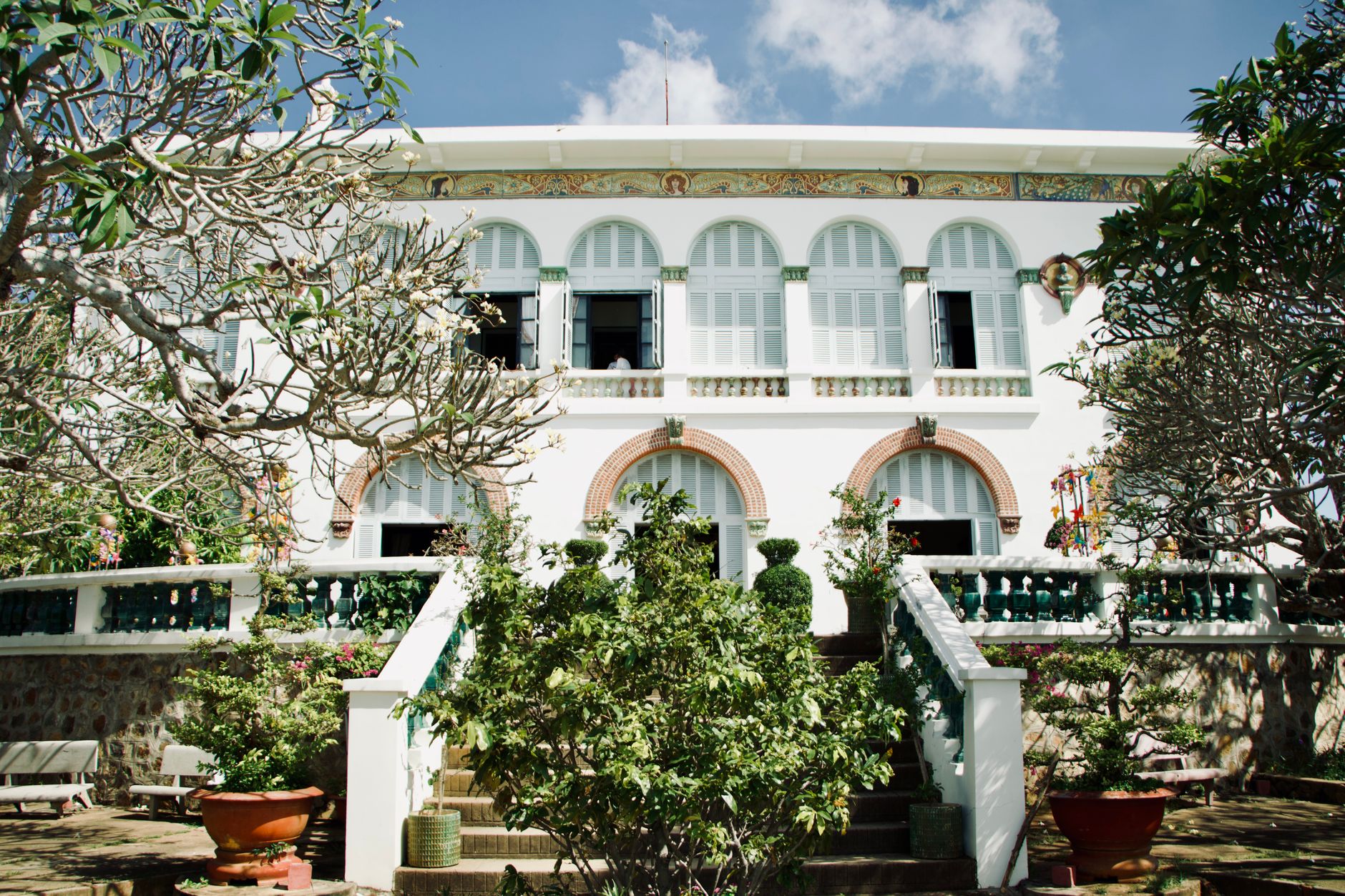
What Nha Vuon An Hien actually is
Nha Vuon An Hien is a traditional Hue garden house — "nha vuon" — sitting on the north bank of the Perfume River, about 2 km west of the Imperial Citadel. It dates back roughly 200 years and has passed through the hands of royal family members, mandarins, and eventually Princess Ngoc Son, who maintained it through much of the 20th century. The property was later donated to Hue's cultural preservation authorities.
The compound covers around 4,500 square meters. That's small by rural standards but significant for a garden house inside the city. The layout follows classical Hue (후에 / 顺化 / フエ) feng shui principles: a main wooden house facing south, flanked by fruit orchards, ornamental gardens, a lotus pond, and a screen wall at the entrance to deflect bad spirits. The timber frame, carved panels, and tile roof are original or faithfully restored. It's one of the few "nha vuon" in Hue where the architecture, gardens, and spatial design survive more or less intact.
Why travelers go
Hue has dozens of pagodas, royal tombs like the Tomb of Tu Duc and the Tomb of Khai Dinh, and the massive Imperial Citadel. Most visitors spend their time at these big-ticket sites and skip the garden houses entirely. That's a mistake.
Nha Vuon An Hien gives you something the major monuments don't: a sense of how Hue's aristocratic families actually lived day to day. The scale is intimate. There are no tour bus crowds, no ticket queues. On a weekday morning you might have the entire garden to yourself. The compound is genuinely peaceful — old longan and jackfruit trees, frangipani, bonsai collections, and a thick canopy that drops the temperature a few degrees even in summer. If you've been grinding through tomb after tomb in the heat, this place is a reset.
Best time to visit
Hue's weather splits into two rough seasons: hot and dry from March to August, and cool and wet from September to January. February sits in between — mild but sometimes drizzly.
For Nha Vuon An Hien specifically, March through May is ideal. The gardens are green, the lotus pond is filling in, and temperatures hover around 25-30°C before the brutal June-August heat. The fruit trees bloom or bear fruit in spring, which adds color and fragrance.
Avoid October and November if you can. Hue catches the worst of central Vietnam (베트남 / 越南 / ベトナム)'s monsoon during these months — heavy rain, occasional flooding, and grey skies. A garden house in a downpour loses most of its appeal.
The compound is typically open from 7:00 AM to 5:30 PM daily. Mornings before 9:00 AM are best for light and quiet.

Photo by Tuấn Vũ on Pexels
How to get there
From central Hue — say, from the area around Dong Ba Market or the Citadel — Nha Vuon An Hien is about 2-3 km west along the north bank of the Perfume River, on Nguyen Phuc Nguyen street in Kim Long ward.
By bicycle: The best option. Hue is flat, and the ride along the river takes 10-15 minutes from the Citadel area. Most hotels and guesthouses rent bikes for 30,000-50,000 VND per day.
By motorbike taxi (Grab or Xe Om): A Grab bike from the Citadel area runs about 15,000-25,000 VND. Quick and simple.
By taxi: Around 40,000-60,000 VND from the tourist center. Probably overkill for such a short distance, but fine if you're coming from south of the river.
On foot: Walkable from the Citadel in about 25-30 minutes if you follow the river road. The walk itself is pleasant.
Entry fee is typically 40,000-50,000 VND per person. Occasionally a caretaker will offer a brief tour of the house interior — worth accepting if offered.
What to do
Walk the garden with intention
Don't just snap photos and leave. The garden is designed to be experienced slowly. Follow the stone paths through the fruit orchard, sit by the lotus pond, look at how the trees frame the main house from different angles. The layout isn't random — it's composed like a painting. Give it 45 minutes minimum.
Study the main house interior
The wooden house has carved transoms, lacquered panels, and family altars that show traditional Hue craftsmanship. Look at the ceiling beams and door carvings — the detailing is meticulous. The furniture arrangement follows strict Confucian hierarchy: ancestral altar at center, reception areas flanking it. If you've visited the royal tombs, you'll recognize the aesthetic scaled down to domestic life.
Photograph the screen wall and entrance
The "binh phong" screen wall at the front gate is a classic Hue architectural element. It blocks direct sightlines into the home (feng shui again) and often features decorative motifs. The one at An Hien is well-preserved and photographs cleanly in morning light.
Visit neighboring garden houses
Kim Long ward has several other "nha vuon," and you can combine two or three in a single morning by bike. An Hien is the most polished, but the surrounding neighborhood gives context. Ask the caretaker if any nearby houses are open.
Sit and drink tea
Some visitors report being offered tea by the caretaker. If not, bring a bottle of water and sit on the stone benches near the pond. This is a place for slowing down, not checking boxes.
Where to eat nearby
Kim Long ward isn't a major food street, but Hue's best eating is only a short ride away.
Head back toward the Citadel area for "bun bo Hue" — the city's signature spicy beef noodle soup. Quan Bun Bo Hue O Phuong on Nguyen Du street is a reliable local spot; expect to pay 35,000-45,000 VND per bowl. For "banh khoai" — Hue's crispier, smaller cousin of "banh xeo" — try Hanh Restaurant on Pho Duc Chinh street, where a plate runs around 30,000-40,000 VND.
If you want something lighter after a morning walk, Hue's "che" dessert shops are everywhere near Dong Ba Market. A cup of layered sweet soup costs 15,000-25,000 VND.
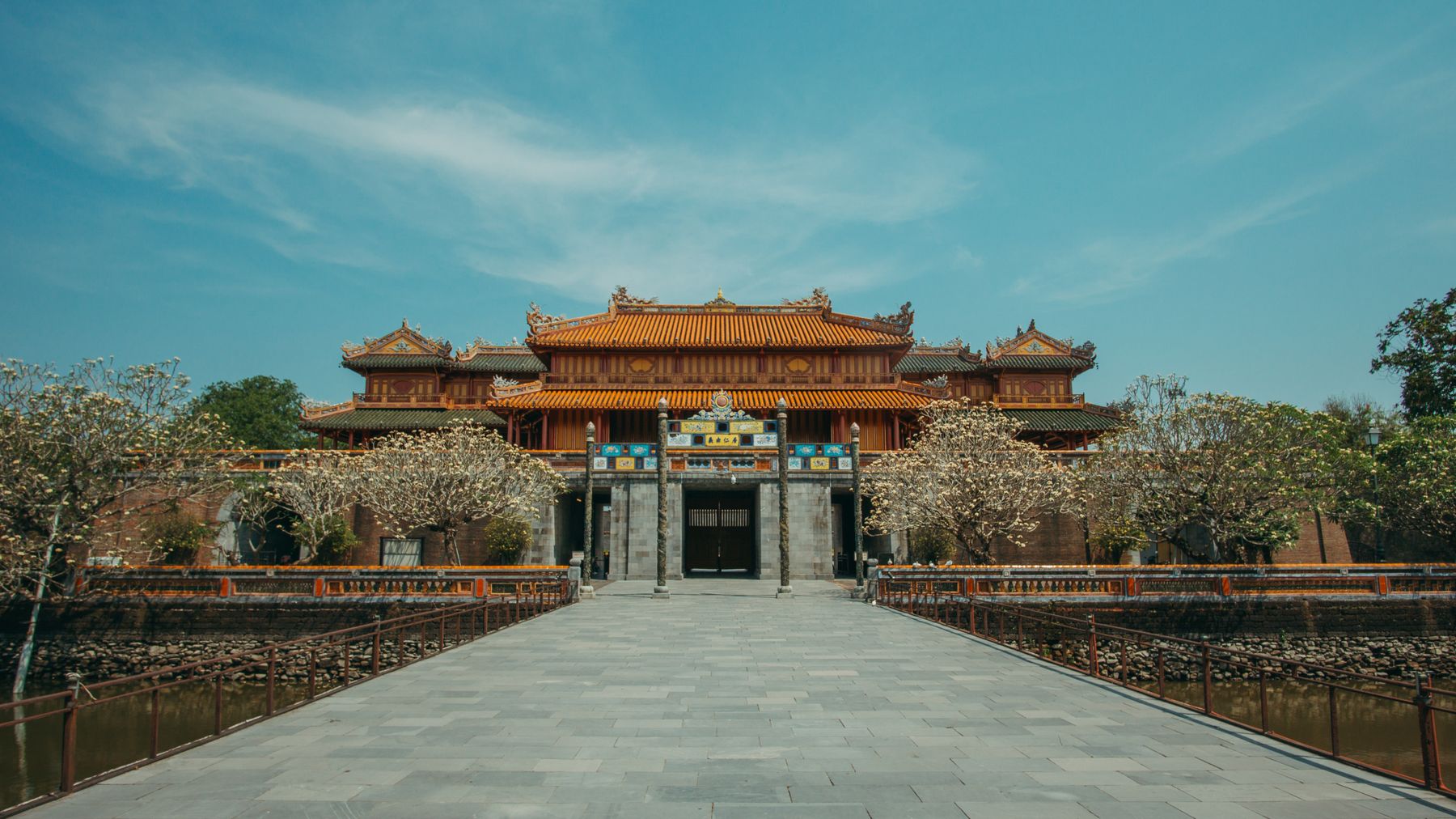
Photo by FOX ^.ᆽ.^= ∫ on Pexels
Where to stay
Most travelers base themselves in central Hue, either south of the river (backpacker and mid-range area around Pham Ngu Lao and Le Loi streets) or north near the Citadel.
- Budget: Guesthouses and hostels south of the river, 150,000-350,000 VND per night.
- Mid-range: Boutique hotels near the Citadel or along the riverfront, 600,000-1,200,000 VND per night.
- Upscale: A few heritage-style hotels have opened in the Kim Long area itself, running 1,500,000-3,000,000 VND per night. Staying in this neighborhood puts you within walking distance of An Hien.
Practical tips
- Wear shoes you can slip off easily. You'll remove them before entering the main house.
- Bring mosquito repellent. Dense gardens near water mean mosquitoes, especially in the afternoon.
- Cash only. The entry fee and any nearby food stalls won't take cards.
- Combine with Thien Mu Pagoda. It's about 1 km further west along the river — a natural pairing for a half-day itinerary.
Mistakes to avoid
Rushing through in 15 minutes. This isn't a monument with an information plaque. If you speed-walk the garden and leave, you'll wonder what the fuss was about. Budget at least 45 minutes.
Coming midday in summer. The garden has shade, but Hue at noon in July is 38°C. You won't enjoy anything. Go early morning or late afternoon.
Skipping it because it's not on the main tourist circuit. Hue's garden houses are a UNESCO-recognized part of the city's cultural landscape. An Hien is one of the most accessible examples. If you only visit tombs and pagodas, you're seeing Hue's ceremonial face but missing how the city's culture played out in daily life.
Last updated · May 29, 2026 · independently researched, never sponsored.