Gateway to Cambodia and the Cao Dai
Tay Ninh province occupies the crossroads between Ho Chi Minh City and Phnom Penh, Cambodia — roughly 99 km from the city center via National Route 22, and 40 km from the Cambodian border. As of 2019, it holds a population of 1.17 million spread across 4,042 km². The province's defining feature is the "Cao Dai" faith, one of Vietnam (베트남 / 越南 / ベトナム)'s homegrown religions, with its Holy See anchored in Tay Ninh. The other major religious presence is Hoa Hao Buddhism. For travelers, Tay Ninh reads as a working province — not a tourist destination in the classic sense, but a genuine slice of rural Southeast Vietnam that most visitors skip.
Getting here from Saigon is straightforward. Buses depart from An Suong Bus Station (Hoc Mon district) roughly every 30 minutes between 5:00 AM and 6:00 PM, costing around 60,000–80,000 VND for the two-hour ride. If you hire a private car or taxi, expect 800,000–1,200,000 VND one way. Motorbike riders take National Route 22 straight through Cu Chi district — the same road that passes near the Cu Chi Tunnels, which makes combining both into a single day trip a logical move.
The Cao Dai Holy See and Religious Landscape
The Cao Dai Holy See (Caodaism) dominates Tay Ninh's spiritual identity. As of 2019, the province counted 415,920 Cao Dai followers — the largest single religious group. Catholicism (45,992 adherents), Buddhism (38,336), and Islam (3,337) follow. The Cao Dai temple, with its pastel-colored architecture and syncretic iconography blending Confucianism, Buddhism, Christianity, and Daoism, is the primary draw for outsiders.
If you visit, time your arrival for the noon prayer ceremony (12:00 PM sharp). Worshippers file in wearing white, blue, yellow, or red robes depending on their spiritual branch. Visitors can watch from the upper gallery — shoes off, quiet, no flash photography. The ceremony lasts about 45 minutes. Other daily sessions happen at 6:00 AM, 6:00 PM, and midnight, but the midday one draws the most followers and is the most accessible for day-trippers. Entry is free. Modest dress is expected: cover shoulders and knees.
The temple complex itself sprawls across several hectares in Hoa Thanh district, about 4 km southeast of Tay Ninh town center. Beyond the main cathedral, you will find administrative buildings, a hospital, gardens, and smaller prayer halls. The architecture borrows from European cathedrals, Chinese pagodas, and Islamic mosques simultaneously — columns wrapped in dragons, a giant "Divine Eye" above the entrance, and ceiling murals that look like nothing else in Vietnam. Plan at least 90 minutes to walk the grounds properly.
Tay Ninh is ethnically mixed. The Kinh (ethnic Vietnamese) form the majority at 1.05 million (2009 census). Khmer (7,578), Cham (3,250), ethnic Chinese/Hoa (2,495), and Xtieng (1,654) round out the population. This ethnic diversity reflects the province's border position and historical role as a frontier.
Agriculture and Landscape
Rubber and sugar dominate the visible landscape. In 2016–2018, Tay Ninh's agricultural strategy pivoted toward higher-value fruit crops — soursop, grapefruit, pineapple, banana, dragon fruit — grown under VietGAP standards. By end of 2018, fruit-growing areas had reached 20,212 hectares with a 9.1% annual growth rate. Rice and cassava still exist but are no longer the economic anchor.
The climate is tropical monsoon: dry season December–April (30–34 °C daytime, cool nights), rainy season May–November (warm, humid, 1,800–2,200 mm annual rainfall). The inland position behind the Truong Son Range offers some typhoon shelter from June to August. This climate suits not only rubber and sugar but also fruit and livestock.
Driving through Tay Ninh during dry season, you pass kilometer after kilometer of rubber plantations — orderly rows of pale-barked trees with small collection cups wired to their trunks. The sugar cane harvest (roughly November through April) means slow-moving trucks piled high with cane on the provincial roads. None of this is staged for tourists. It is the actual economy in motion.

Photo by Thinh La on Pexels
Black Virgin Mountain (Nui Ba Den)
"Nui Ba Den" — Black Virgin Mountain — is the province's most recognizable natural landmark, rising 986 meters above the flat plains about 11 km northeast of Tay Ninh town. It is the highest peak in southern Vietnam's lowland region, visible from tens of kilometers away.
A cable car system (Sun World Ba Den Mountain) now runs to the upper stations, making the summit accessible without a serious hike. Ticket prices hover around 200,000–250,000 VND for a round trip (check current rates at the ticket office — prices adjust periodically). The cable car ride itself takes about 8–10 minutes and offers wide views over the plantations and rice paddies below. Operating hours are typically 5:30 AM to 5:30 PM, though weekend and festival hours may extend.
If you prefer walking, the hiking trail from the base takes roughly 2–3 hours up depending on fitness. The path is stepped and paved in most sections, with drink vendors along the way selling water for 10,000–15,000 VND. The route passes several pagodas and shrines built into the mountainside — Ba Den Pagoda, Hang Pagoda, and smaller worship sites that see steady foot traffic from Vietnamese pilgrims year-round.
At the top, there is a large Buddha statue, a temple complex, and on clear days, views that stretch all the way to Saigon (사이공 / 西贡 / サイゴン)'s skyline. Early mornings (arrive before 7:00 AM) give the best visibility and the coolest temperatures. By midday, haze and heat make the climb less pleasant.
The mountain holds deep significance in Vietnamese folklore. The legend of the "Black Virgin" — a young woman named Ly Thi Thien Huong who threw herself from the peak rather than betray her betrothed — is retold in temple murals and by local guides. The mountain also played a strategic role during wartime, though today it is entirely a pilgrimage and recreation site.
Festivals and Lunar Calendar
Tay Ninh observes two major festivals tied to Black Virgin Mountain:
- Black Virgin Mountain Festival (15th–18th day, first lunar month): pilgrimage and religious observance
- Via Ba Festival (5th–6th day, fifth lunar month): secondary celebration at the same site
The Hoi Yen Dieu Tri festival at the Cao Dai Holy See occurs on the 15th day of the eighth lunar month. All three are lunar-calendar events; check ahead before visiting.
During the Black Virgin Mountain Festival, expect tens of thousands of pilgrims climbing the mountain overnight, many carrying incense and offerings. The atmosphere is intense and genuine — this is not a tourism event. Roads around the base become congested, and parking fills before dawn. If you want to witness it, arrive the evening before and plan to climb with the crowd. If you want to avoid it, skip that week entirely.
What to Eat in Tay Ninh
Tay Ninh has a distinct local food identity that most Saigon day-trippers miss because they eat at the Cao Dai temple parking lot and leave. That is a mistake.
"Banh canh" Tay Ninh is the signature dish — thick tapioca-and-rice noodles in a pork bone broth, topped with pork knuckle, fish cake, and fried shallots. The texture is chewier and denser than what you find in Saigon versions. A bowl runs 35,000–50,000 VND at local shops. Look for stalls along Cach Mang Thang Tam street in Tay Ninh town.
"Banh trang" Tay Ninh — rice paper snacks — are the province's most famous export product. You will see them everywhere: dried rice paper discs flavored with chili, garlic, shrimp paste, or coconut milk, sold in bags for 15,000–40,000 VND. The Trang Bang district (about 50 km from Tay Ninh town, closer to Saigon) is the production center. Locals eat them as snacks with "ca phe" or beer, and they make practical, lightweight souvenirs.
"Muoi tom" (shrimp salt) from Tay Ninh is another local specialty — a pinkish-red condiment made from dried shrimp, salt, sugar, and chili, used as a dipping powder for fruit. A jar costs 30,000–60,000 VND and keeps well.
Beyond the local specialties, Tay Ninh market stalls serve standard southern Vietnamese fare: "com tam" (broken rice plates), "goi cuon" (fresh spring rolls), and "hu tieu" (clear pork noodle soup). For "ca phe sua da" (iced milk coffee), any roadside "quan ca phe" will do — prices are lower here than in Saigon, typically 15,000–25,000 VND per glass. Do not expect craft coffee or specialty roasters. This is working-class Vietnamese coffee culture at its most straightforward.
Infrastructure and Border Access
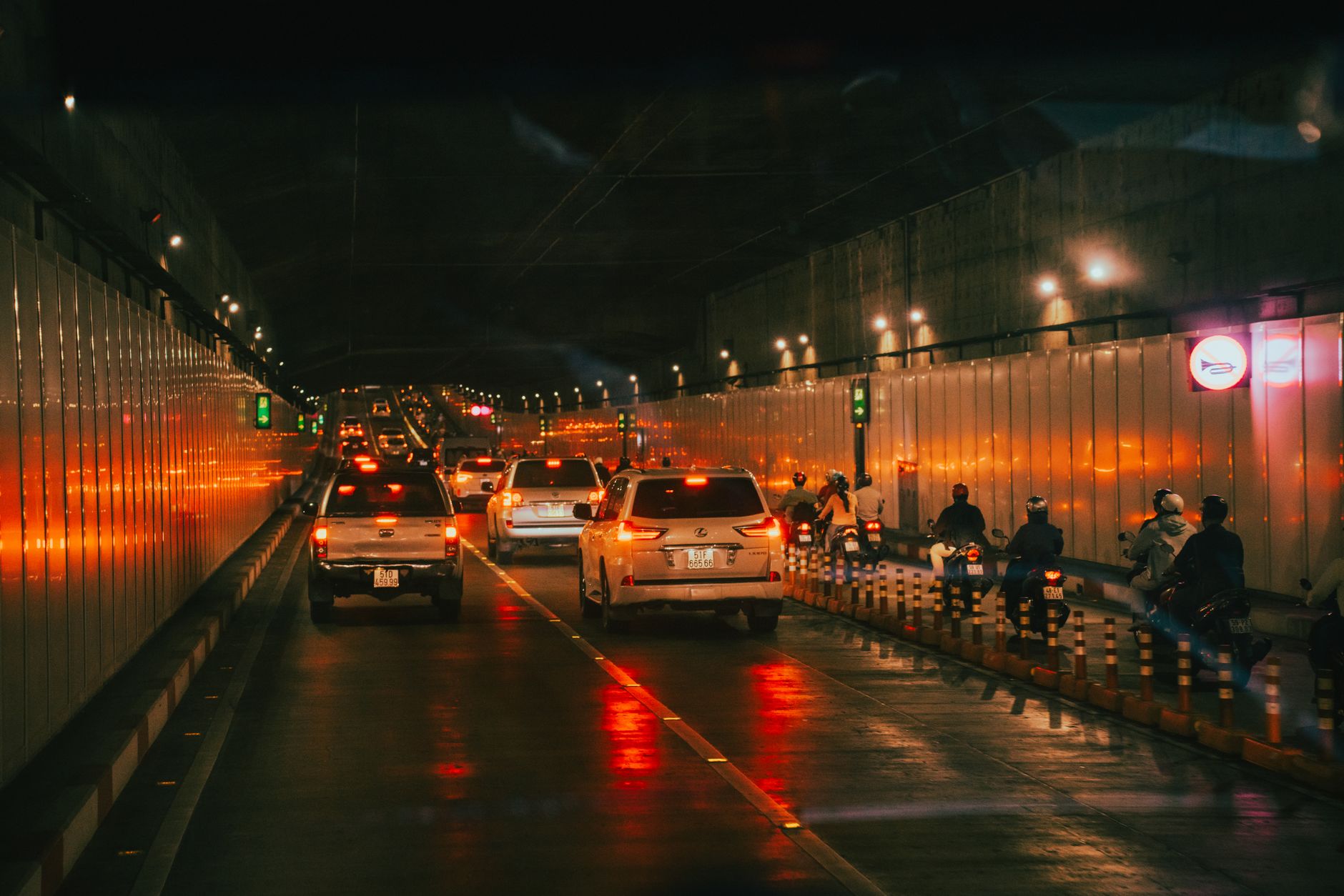
As of October 2019, a major infrastructure project was greenlit: the Ho Chi Minh City–Moc Bai Expressway, a public-private partnership connecting the city to the Moc Bai International Border Gate. National Route 22 currently carries roughly 39,700 vehicles daily (near its 40,000 design capacity) between Ho Chi Minh City and Moc Bai. The new expressway is scheduled for completion by 2025 with at least four lanes, with expansion to six or eight lanes planned by 2045.
Moc Bai International Border Gate facilitates trade and tourism with Cambodia and Thailand. For travelers, this is the key overland crossing if you're heading northwest toward the Cambodian border or onward to Thailand. Cross-border buses from Saigon's Mien Tay Bus Station to Phnom Penh (around 230,000–300,000 VND, 6–7 hours) pass through Moc Bai. You can also take a local bus to Tay Ninh town, explore for a day, then catch a separate bus or taxi the remaining 40 km to the border gate the next morning. Cambodian e-visas are accepted at Moc Bai, but confirm current entry requirements before you travel — rules shift.

Photo by Haneul Trac on Pexels
Economic Profile
Tay Ninh has demonstrated steady growth. In 2018, gross regional domestic product grew 8.5%, and the provincial competitiveness index jumped five places year-on-year, ranking 14th out of 63 Vietnamese cities and provinces. The province operates nine industrial parks (five operational, four planned) covering 4,485 hectares total, with focus on rubber processing, sugar refining, and light manufacturing.
The economy remains rooted in agriculture and border trade. Tay Ninh is not a commercial or tech hub; it is the heartland of rubber, sugar, fruit, and cross-border logistics.
Common Mistakes and What Surprises Foreigners
Arriving too late for the noon ceremony. The Cao Dai prayer starts at 12:00 PM exactly. If you walk in at 12:15, you have missed the processional entry, which is the most visually striking part. Tour buses from Saigon sometimes cut it close — if you are on a group tour, confirm departure time.
Treating Tay Ninh as "just" the Cao Dai temple. Most organized day trips bus you to the temple, give you 90 minutes, then drive back. You miss Nui Ba Den, the local food, and the agricultural landscape. An overnight stay — even one night at a basic guesthouse in Tay Ninh town (300,000–500,000 VND) — lets you see the mountain at dawn and eat at local spots.
Underestimating the heat. Tay Ninh's inland position means no coastal breeze. Dry season afternoons push 34°C regularly, and the flat terrain offers little shade between sites. Bring water, wear a hat, and do outdoor activities before 10:00 AM or after 3:00 PM.
Expecting English. Outside the Cao Dai temple (where a few guides speak basic English), Tay Ninh is largely Vietnamese-speaking. Useful phrases: "Bao nhieu tien?" (How much?), "Cho toi mot phan" (Give me one serving), "Cam on" (Thank you). Translation apps work — 4G coverage is decent in town.
Forgetting it is a religious site. The Cao Dai Holy See is an active place of worship, not a museum. Dress modestly, keep your voice low during ceremonies, and ask before photographing worshippers up close. This is basic respect, but tour groups sometimes forget.
Quick Reference: Tay Ninh at a Glance
- Distance from Saigon: 99 km northwest via National Route 22 (~2 hours by bus)
- Distance to Moc Bai border gate: ~40 km from Tay Ninh town
- Bus from Saigon: An Suong Station, every 30 min, 60,000–80,000 VND
- Best season: December–April (dry, cooler)
- Cao Dai noon ceremony: 12:00 PM daily, free entry, modest dress required
- Nui Ba Den cable car: ~200,000–250,000 VND round trip, opens 5:30 AM
- Hiking to summit: 2–3 hours, stepped path, drink vendors along the way
- Local dishes: "banh canh" Tay Ninh, "banh trang" rice paper, "muoi tom" shrimp salt
- Accommodation: Basic guesthouses 300,000–500,000 VND/night in town
- Language: Very limited English — bring a translation app
- Currency: VND only at local shops; some border-area vendors accept USD or riel
When to Visit
Dry season (December–April) is preferable for travel — cooler, less rain, easier road conditions. The rainy season (May–November) brings mud and humidity but far fewer tourists. Most travelers base themselves in Saigon and take a day trip or overnight to see the Cao Dai Holy See and Black Virgin Mountain, then continue to Moc Bai if crossing into Cambodia.
Tay Ninh pairs well with other southern destinations. Riders heading north from Saigon sometimes combine it with a stop at the Cu Chi Tunnels (about 60 km from Tay Ninh), and travelers moving through the Mekong Delta region can loop from Saigon to Tay Ninh to Cambodia without backtracking. If you are spending a longer stretch in southern Vietnam — say, based in Saigon with side trips to Da Lat or Phu Quoc — Tay Ninh fits neatly into a single day or overnight between bigger destinations.
Tay Ninh is not a leisure destination; it is a historical and religious site with genuine agricultural landscape. Come for the temples, the border crossing, and the working Vietnamese countryside — not for beaches or nightlife.
Final Note
Tay Ninh rewards the kind of traveler who does not need a checklist of attractions to justify a visit. It is one of those Vietnamese provinces that works best when you slow down, eat at the market, watch a ceremony, and let the flat green landscape do what it does. Most people pass through on a bus. The ones who stop tend to remember it.
Last updated · May 29, 2026 · independently researched, never sponsored.