Thac Mo sits about 35 km southwest of Hue's city center, deep enough into the foothills of the Truong Son range that you feel like you've left Central Vietnam (베트남 / 越南 / ベトナム)'s coastal flatlands behind entirely. It's not a major tourist circuit stop, which is exactly why it's worth the ride.
What it is
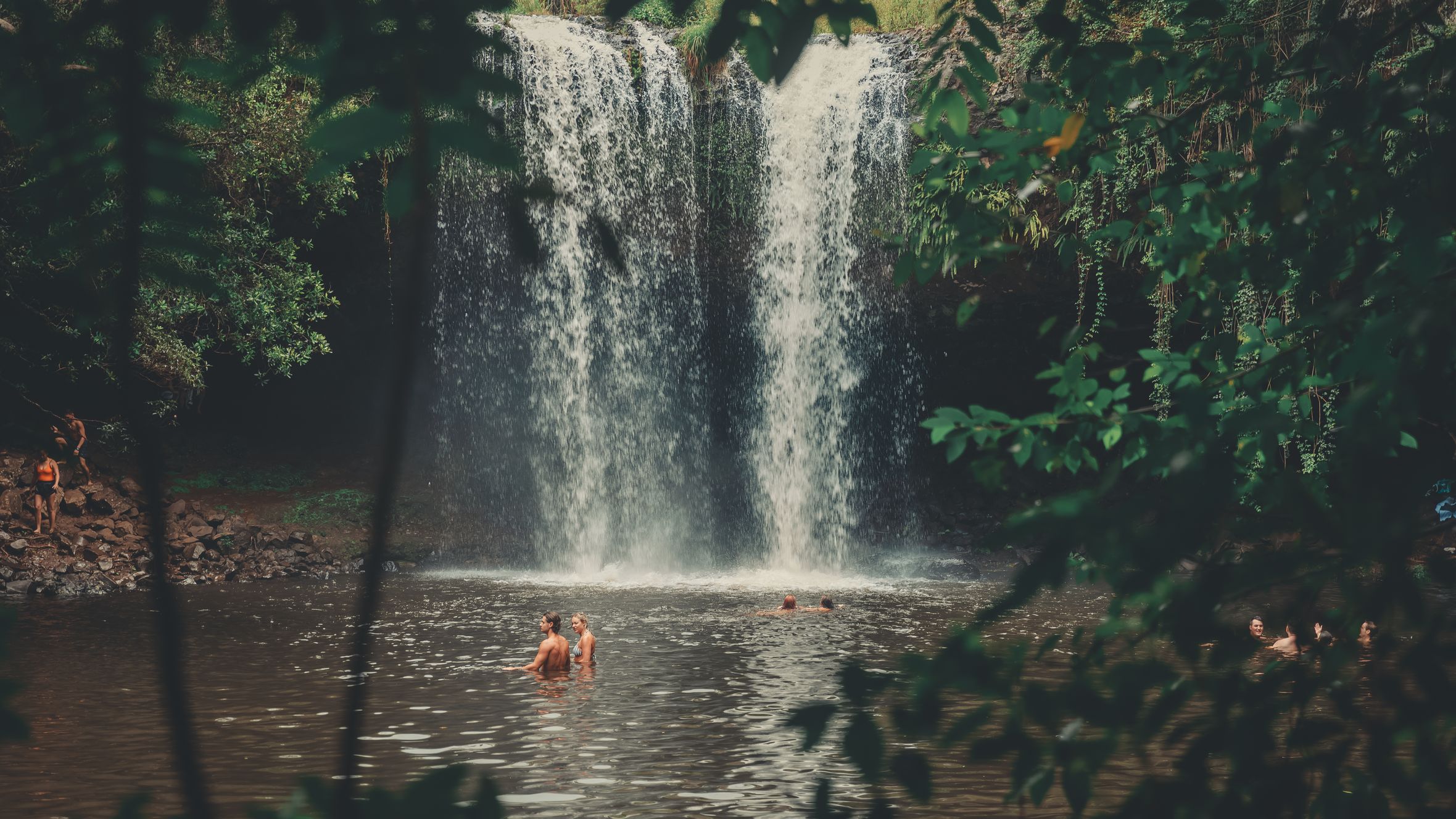
Thac Mo — roughly "Dream Waterfall" — is a multi-tiered cascade fed by streams running off the mountains in the A Luoi district direction. The falls drop through several levels of mossy rock into natural pools, surrounded by dense tropical forest. The whole area sits within a managed eco-tourism zone, so there's a small entrance fee (typically 30,000–50,000 VND) and basic facilities like shelters and a few food stalls near the trailhead.
The site has been developed for domestic tourism over the past decade. On weekdays it's genuinely quiet. Weekends and public holidays — especially around Tet and summer months — draw families from Hue (후에 / 顺化 / フエ) who come to swim, cook outdoors, and escape the heat.
Why travelers go
Hue is famous for its Imperial Citadel, the royal tombs like the Tomb of Tu Duc and Tomb of Khai Dinh, and its food. But after two or three days of pagodas and "bun bo Hue", most people are ready for something physical and green. Thac Mo fills that gap without requiring a multi-day trek or a flight to Sapa or Ha Giang.
The draw is simple: cool water, forest shade, and a short hike that's accessible to most fitness levels. The trail from the parking area to the main falls takes around 20–30 minutes, with some uneven terrain and river crossings on stepping stones. It's not technical, but wear shoes you don't mind getting wet.
Best time to visit
Hue's weather splits roughly into two seasons: hot and dry (April–August) and cool and wet (September–February). For Thac Mo, the sweet spot is May through July. The falls have decent water volume from late-spring rains, temperatures in the hills are bearable compared to Hue proper, and the forest canopy keeps things shaded.
Avoid September through November — Hue gets hammered by typhoon-season rain, and the trails can be slippery or even closed after heavy storms. The falls look dramatic when they're swollen, but access roads sometimes flood and the swimming pools get murky.
March and April work too if you want thinner crowds, though water levels may be lower.
How to get there from Hue
From central Hue, the ride to Thac Mo takes roughly 45–60 minutes by motorbike via QL49 heading west. The road is paved almost the entire way, with the last few kilometers on a narrower concrete lane that's still manageable on any scooter.
- Motorbike rental: 120,000–150,000 VND/day from shops around the backpacker area on Pham Ngu Lao or Vo Thi Sau streets. This is the best option — you set your own schedule and can stop at villages along the way.
- Grab car: Around 250,000–350,000 VND one way. You'll need to negotiate a wait or arrange a return pickup, since Grab drivers are scarce out there.
- Guided tour: A handful of Hue-based tour operators bundle Thac Mo with other countryside stops (rice paddies, incense villages, Lang Co beach detour) for 500,000–800,000 VND per person including lunch.
If you're riding yourself, fill up on fuel before leaving the city. There are a few roadside fuel stops along QL49 but nothing guaranteed near the falls.

Photo by Quang Nguyen Vinh on Pexels
What to do
Swim the lower pools
The lowest tier has the widest, calmest pool — waist to chest deep in most spots during peak season. The water is cold enough to shock you for about ten seconds, then it's perfect. Locals bring inflatable tubes; you can sometimes rent one at the entrance for 20,000 VND.
Hike to the upper tiers
A rough trail follows the stream up through two more levels of falls. The second tier is the most photogenic — water fans out over a wide rock shelf into a green pool framed by ferns. The climb takes maybe 15 minutes from the base but involves scrambling over wet boulders. Bring a dry bag for your phone.
Picnic like a local
Vietnamese families don't just visit waterfalls — they set up camp. Bring a mat, some fruit, and a few cans of "bia hoi" or bottled tea, and claim a flat rock near the water. The entrance area has covered shelters with hammocks if you'd rather nap after the swim.
Birdwatch the canopy
The forest around Thac Mo is dense broadleaf, and early morning visits (before 9 AM) reward patient visitors with flashes of kingfishers, bulbuls, and occasionally hornbills in the upper canopy. Bring binoculars if you have them.
Stop at a village on the way back
The road to Thac Mo passes through several small communities where you can see incense stick production and rice paper drying on bamboo racks. Nobody's going to charge you admission — just be respectful, wave, and ask before photographing people.
Where to eat nearby
There's no real restaurant scene at the falls. A couple of stalls near the entrance sell grilled meat skewers, instant noodles, and drinks. For a proper meal, eat before or after in Hue.
On the way back, stop along the river stretch of QL49 for "com hen" — rice with tiny clams from the Huong River, tossed with peanuts, sesame crackers, herbs, and chili oil. Several family-run spots serve it for 25,000–35,000 VND a plate. It's one of those dishes that barely exists outside Hue.
Back in town, reward yourself with a bowl of bun bo Hue at any of the local joints on Ly Thuong Kiet street, or cool down with an "egg coffee" at one of the cafes along the south bank of the Perfume River.
Where to stay
Thac Mo is a day trip from Hue — there's no accommodation at the falls themselves.
- Budget: Hostels and guesthouses in Hue's backpacker zone run 150,000–300,000 VND/night for a dorm or basic private room.
- Mid-range: Boutique hotels near the Citadel area go for 600,000–1,200,000 VND/night. Look along Le Loi or Nguyen Cong Tru streets.
- Splurge: A few resort-style properties sit along the Perfume River, 1,500,000–3,000,000 VND/night with pools and river views.

Photo by Quang Nguyen Vinh on Pexels
Practical tips locals would tell you
- Bring reef-safe sunscreen or skip it. The pools are small and feed back into local streams. Chemical sunscreen contaminates quickly.
- Cash only. There's no card reader at the entrance or food stalls. Bring small bills.
- Wear water shoes or old sneakers, not flip-flops. The rocks are slippery, and the trail has sections where you're walking through shallow water.
- Start early. Leave Hue by 7:30 AM and you'll have the falls mostly to yourself until around 10, when domestic visitors start arriving.
- Bring your trash out. There are bins at the entrance but they overflow on weekends. Pack a bag for your own waste.
Common mistakes to avoid
- Going after heavy rain without checking conditions. Ask your hotel or a local Grab driver whether the road is clear. Flash floods aren't common, but mudslides occasionally block the last stretch.
- Wearing nice clothes. You will get wet. The spray from even the lower tier reaches the rocks where people sit. Dress for it.
- Skipping the upper tiers. Most visitors stay at the bottom pool. The second and third levels are quieter and more interesting, and the hike is short.
- Leaving too late. The ride back to Hue on a motorbike after dark isn't fun — the road has minimal lighting and occasional livestock crossings.
Practical notes
Thac Mo works best as a half-day escape paired with Hue's more famous sights — spend a morning at the falls, an afternoon at the Tomb of Tu Duc or the Imperial Citadel. If you've already done the main Hue circuit and want a reason to stay another day, this is it.
Last updated · May 29, 2026 · independently researched, never sponsored.