Why Thai Nguyen Matters
Thai Nguyen province sits 50 kilometers northeast of Hanoi and 75 kilometers inland from central Hanoi, serving as the threshold between the Red River Delta and the mountainous northeast. It's Vietnam (베트남 / 越南 / ベトナム)'s largest tea producer by far—16,000 hectares under cultivation, yielding 100,000 tonnes of fresh leaves and 25,000 tonnes of dried tea annually. "Tra Thai Nguyen" (Thai Nguyen tea) carries a reputation for clean, floral character that commands premium prices across Vietnam.
The province counts 1.29 million residents across 3,527 square kilometers, split nearly evenly by gender. What sets it apart is ethnic composition: seven ethnic minority groups live alongside the dominant Kinh majority, including Tay, Nung, San Diu, and San Chay peoples, each with distinct languages and food traditions. With 21 universities and colleges, Thai Nguyen ranks third in Vietnam for higher education—a fact that shapes the city's character. The student population keeps the city livelier and cheaper than you'd expect—food stalls cluster around campus gates, and the cafe scene punches above its weight for a provincial capital.
The Tea Landscape
Thai Nguyen's rolling midlands, 200–400 meters above sea level, create ideal conditions for tea. The province's three climatic zones—cool in the high mountains (Vo Nhai District), temperate in the foothills, and warm in the valleys—allow year-round harvesting. Average temperatures range from 15.2°C in January to 28.9°C in June. Rainfall runs 2,000–2,500 millimeters annually, with August the wettest month.
Tea gardens dominate the landscape around Pho Yen City and southern Thai Nguyen City. Visitors can tour estates, watch hand-rolling and pan-firing in small workshops, and buy directly from producers at wholesale prices. The dry-season flush (September–October) and spring flush (March–April) draw the most attention, but fresh leaves are available year-round.
Tan Cuong commune, about 10 km west of Thai Nguyen City center, is the most famous tea-growing area. The soil here is slightly acidite and iron-rich, which locals credit for the tea's distinctive sweetness. A kilogram of premium Tan Cuong green tea runs 300,000–800,000 VND when purchased directly from a family workshop—roughly half what you'd pay in a Hanoi gift shop. If you visit during the spring flush, you can watch the entire process from leaf-picking to pan-firing in a single morning. Most families are happy to demonstrate; just show up, point at the drying racks, and say "xin xem" (may I watch). They'll almost certainly pour you a cup too.
La Bang village and Phuc Xuan commune are quieter alternatives to Tan Cuong, with fewer tour buses and the same caliber of tea. The road between them makes a satisfying half-day motorbike loop through terraced hills and small Tay hamlets.
Tam Dao National Park and Mountains
The Tam Dao range rises from the southwest, its highest peak topping 1,529 meters. Established in 1996, Tam Dao National Park protects over 20 peaks, including Thien Thi (1,375 m) and Thach Ban (1,388 m). Seventy percent of the park's 535-square-kilometer buffer zone is forested—natural and plantation alike. The park is accessible by road, with trekking trails linking major peaks and cool-air rest stops.
Two other ranges—Ngan Son (running Bac Kan to Vo Nhai) and Bac Son (northwest-southeast)—provide shelter from winter monsoons and diverse habitats for endemic bird species.
For day hikers, the trail from Tam Dao town up to the radio tower summit takes about two hours one way and gains roughly 300 meters of elevation. The path is mostly shaded, with stone steps on the steeper sections. Bring water—there are no vendors past the trailhead. Longer routes into the park's core require a local guide, which the national park office arranges for around 500,000 VND per day. Birders come specifically for the Vietnamese greenfinch and short-tailed scimitar babbler, both of which are easier to spot in the early morning mist between November and February.
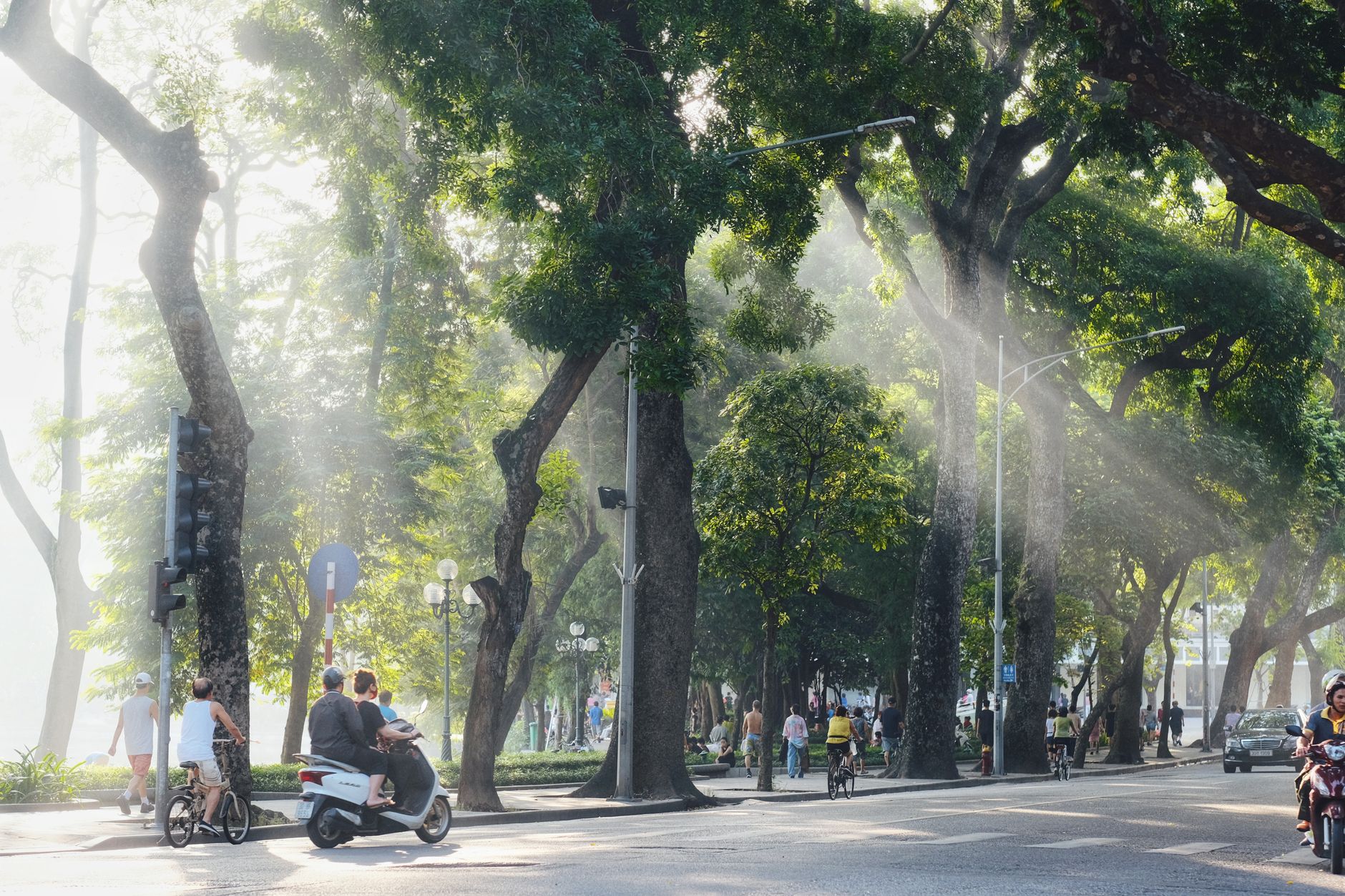
Tam Dao town itself is a French-era hill station with a faded colonial feel. Weekenders from Hanoi (하노이 / 河内 / ハノイ) fill its small hotels on Saturday nights, but midweek the place is nearly empty. Room rates in town run 300,000–600,000 VND for a clean double.

Photo by Quang Nguyen Vinh on Pexels
Nui Coc Lake and Surrounding Sites
Nui Coc Lake, about 15 km west of Thai Nguyen City, is a reservoir built in the 1970s covering roughly 25 square kilometers. It's not a wild, remote destination—there are paddle boats, lakeside restaurants, and a resort or two—but it is genuinely pleasant on a weekday morning when local families aren't picnicking. A boat ride around the lake's small islands costs 100,000–200,000 VND per person depending on group size and duration.
The lake connects to a local legend about a couple named Coc and Cong, which you'll see depicted in statues near the entrance gate. The surrounding pine forest is good for a casual walk, and a handful of cafes perched on the hillside serve "tra Thai Nguyen" (Thai Nguyen tea) brewed properly in small clay pots—worth a stop just for the ritual.
Beyond Nui Coc, the Museum of Ethnic Cultures of Vietnam in Thai Nguyen City is one of the better ethnographic museums in the north. It covers all 54 recognized ethnic groups with textiles, farming tools, and reconstructed houses. Admission is 30,000 VND. Budget an hour minimum; the textile collection alone is substantial. If you've been to the Ethnology Museum in Hanoi, this one covers similar ground but with more space and fewer crowds.
Buying and Brewing Thai Nguyen Tea
Tea is the obvious thing to bring home, and buying it here saves real money. A few tips from experience:
Taste before you buy. Every shop and workshop will brew samples. Pay attention to the second and third steeps—cheap tea fades fast, good tea holds flavor through five or six pours. The best Tan Cuong green tea has a light vegetal sweetness without bitterness, even when slightly over-steeped.
Packaging matters for transport. Vacuum-sealed bags keep tea fresh for months and pack flat in a suitcase. Most workshops offer vacuum sealing for free or a few thousand dong. Loose tea in paper bags loses flavor within weeks once opened.
Price benchmarks as of recent seasons: standard green tea runs 150,000–250,000 VND per kilogram, premium single-origin Tan Cuong is 400,000–800,000 VND, and competition-grade lots from known producers can exceed 1,000,000 VND. If someone quotes you double these numbers, you're in a tourist-markup shop—walk to the next one.
For brewing at home, use water just off the boil (about 80–85°C), steep for 30–45 seconds on the first pour, and increase by 15 seconds each round. Vietnamese green tea is forgiving compared to Japanese varieties, but boiling water will scorch it. A small "am chen" (clay teapot set) from Bat Trang pottery village near Hanoi makes a good companion purchase—prices start around 100,000 VND for a basic set.
Food and Ethnic Culture
Tay and Nung minorities in the north prepare sticky rice, grilled fish wrapped in leaves, and foraged mushroom soups. Kinh lowlanders grow rice in the flatter zones and prepare traditional "com tam" (broken-rice) with roasted shallot and egg. Several small restaurants in Thai Nguyen City and Vo Nhai town serve ethnic minority dishes on weekends when families come to market. Ask your guesthouse for current spots; they change seasonally.
"Ca phe sua da" (iced coffee with sweetened condensed milk) is the default morning drink everywhere. The local water is clean and tea-culture runs deep—even street vendors serve hot or iced leaf tea alongside coffee.
Thai Nguyen City's food scene leans practical rather than glamorous. The area around Hoang Van Thu Street and the central market has "bun cha" (grilled pork with noodles and herbs) stalls that open around 10:30 AM and close when the meat runs out—often by 1 PM. A bowl runs 30,000–45,000 VND. "Pho" shops open earlier, from 6 AM, and a beef "pho" here costs 35,000–50,000 VND, cheaper than Hanoi equivalents. For something local, look for "banh cuon" (steamed rice rolls) filled with minced pork and wood ear mushroom, served with a fish sauce dip and fried shallots. Morning market stalls sell it for 20,000–30,000 VND per plate.
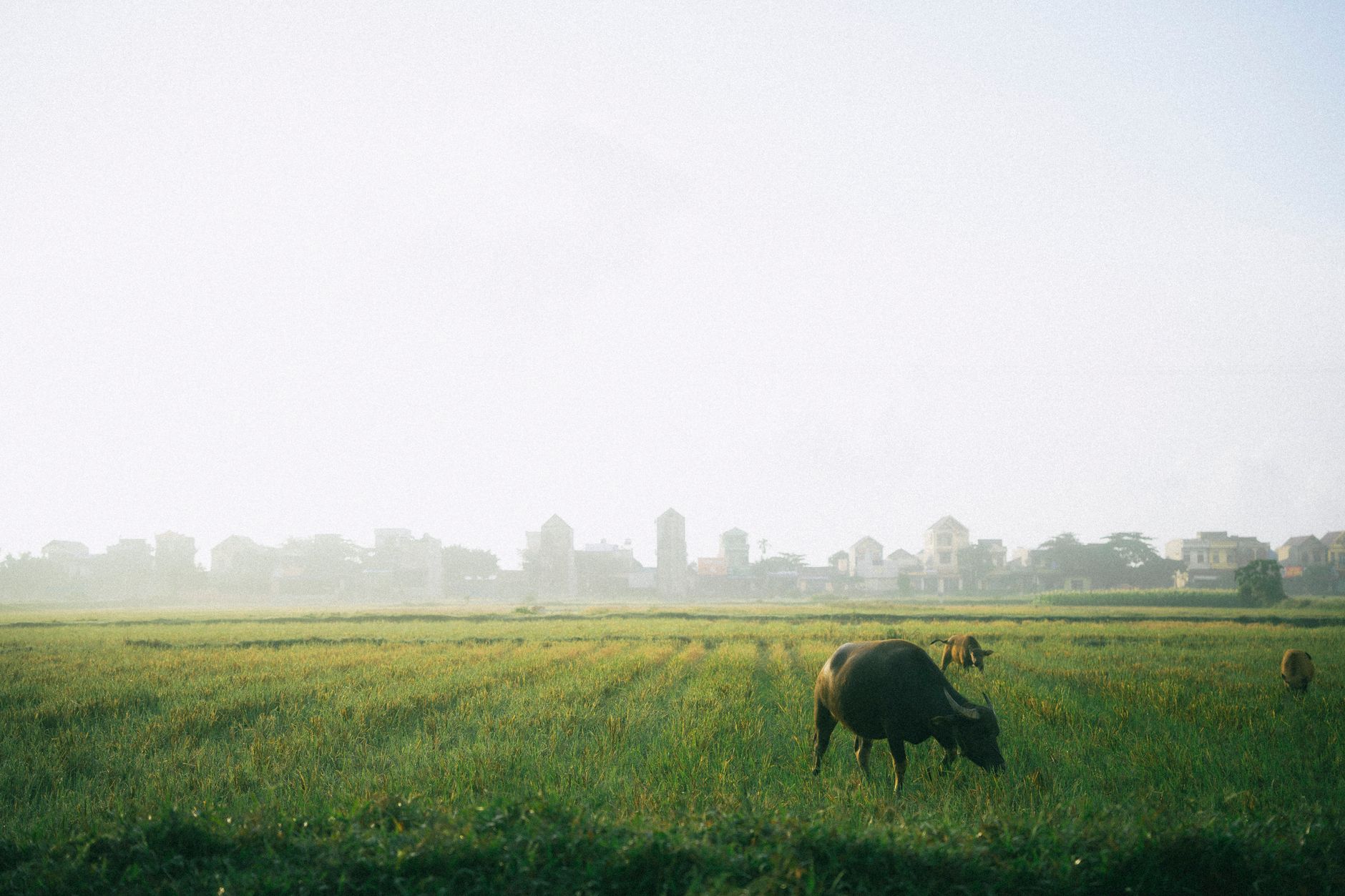
In Vo Nhai district, Sunday markets are where Tay and Dao families trade produce, and a few vendors sell "com lam"—sticky rice cooked inside bamboo tubes over charcoal. It's smoky, slightly sweet, and pairs well with grilled pork. These markets start early (6–7 AM) and thin out by noon.

Photo by Thái Trường Giang on Pexels
Getting Here and Around
Thai Nguyen City lies 75 kilometers from central Hanoi and 50 kilometers from Noi Bai International Airport. Direct bus routes run hourly from Hanoi's Gia Lam or Mien Bac terminals (2.5 hours, around 100,000–150,000 VND). The railway to Hai Phong also stops in Thai Nguyen City. Within the province, motorbike rental or hired drivers are essential; public buses link the city to district towns like Vo Nhai and Dong Hy, but schedules are sparse.
If you're coming from Sapa or Ha Giang, Thai Nguyen sits on the return route to Hanoi and works as a one- or two-night stopover to break the drive. From Ninh Binh or Hue, you'd route through Hanoi first—there's no practical direct connection.
Grab works in Thai Nguyen City for car and motorbike rides, though driver availability drops outside the center. For tea village visits and Nui Coc Lake, hiring a "xe om" (motorbike taxi) driver for a half-day is simpler—expect to pay 200,000–300,000 VND for 3–4 hours including waiting time. Agree on the price before you go.
When to Visit
October through April offers dry weather and comfortable temperatures (15–25°C). May through September is wet and hot (25–29°C), but tea gardens are lush and fewer tourists crowd the trails. Tet (lunar new year) in late January or February sees local festivals in Vo Nhai and Phuc Yen villages, though accommodations fill quickly.
The Thai Nguyen International Tea Festival, held every two years (even years), draws domestic visitors and tea traders. It's worth timing a trip around if it overlaps with your travel dates—expect tea competitions, cultural performances, and discounted bulk prices from producers looking to move inventory.
Common Mistakes and What Surprises Foreigners
Expecting a tourist trail. Thai Nguyen doesn't have one. There's no backpacker street, no hostel cluster, no English-language walking tour. That's the appeal, but it also means you need a basic plan. Download offline maps and have your guesthouse write destinations in Vietnamese on a card.
Skipping the tea workshops. Some visitors drive through Tan Cuong, photograph the hills, and leave. The actual experience is sitting with a family, watching them fire leaves in a wok, and tasting four or five varieties in sequence. This takes an hour. Budget it.
Arriving without cash. ATMs exist in Thai Nguyen City, but villages and tea communes are cash-only. Bring at least 1,000,000 VND in small bills (50,000 and 100,000 notes) for tea purchases, meals, and transport.
Underestimating distances. The province is compact on a map, but mountain roads to Vo Nhai or Tam Dao are slow—30 km can take over an hour. Don't plan three distant stops in a single day.
Assuming all tea tastes the same. It doesn't. The difference between a 200,000 VND/kg bulk green tea and a 700,000 VND/kg Tan Cuong first-flush is dramatic. Taste the range before buying gifts.
Quick Reference
- Distance from Hanoi: 75 km (2–2.5 hours by bus)
- Distance from Noi Bai Airport: 50 km
- Bus fare from Hanoi: 100,000–150,000 VND
- Province area: 3,527 sq km
- Population: 1.29 million
- Tea area under cultivation: 16,000 hectares
- Key districts for visitors: Thai Nguyen City (base), Tan Cuong (tea), Vo Nhai (mountains/ethnic culture), Tam Dao (national park)
- Hotel range: 200,000–600,000 VND per night
- Best months: October–April (dry), March–April (spring tea flush)
- Languages: Vietnamese universally; Tay and Nung in northern districts; limited English
- ATMs: Available in Thai Nguyen City; scarce elsewhere
Practical Notes
Thai Nguyen City has basic hotels, internet cafes, and an ATM network. Outside the city, options shrink; Vo Nhai and Pho Yen have small guesthouses (200,000–400,000 VND per night). Restaurants outside the city center often lack English menus—pointing or showing photos on your phone works. The province is safe for travelers; petty theft is uncommon. Roads to the mountains are paved but narrow in places; hire a driver if you're not confident on two wheels.
Final Note
Thai Nguyen won't show up on most itineraries, and honestly, that's part of why it works. It's close enough to Hanoi for a day trip but rewards an overnight stay—especially if you care about tea or want contact with Tay and Nung village life without the long ride to Ha Giang or Sapa. Come with patience, a willingness to point at things, and enough cash for a few kilograms of good tea.
Last updated · May 29, 2026 · independently researched, never sponsored.