The Park That Rewrites Textbooks
Vu Quang National Park sits in Ha Tinh Province along Vietnam (베트남 / 越南 / ベトナム)'s North Central Coast—550 square kilometers of dense, mountainous forest that has become synonymous with zoological surprise. Established as a forest reserve in 1986 and upgraded to national park status in 2002, it's remote enough that new species are still being identified within its boundaries.
The remoteness is the point. Thick forest, rugged terrain, and minimal infrastructure have allowed creatures to survive—and hide from science—for centuries. This is not a park optimized for visitor comfort. It's a working research station where conservation and discovery come first.
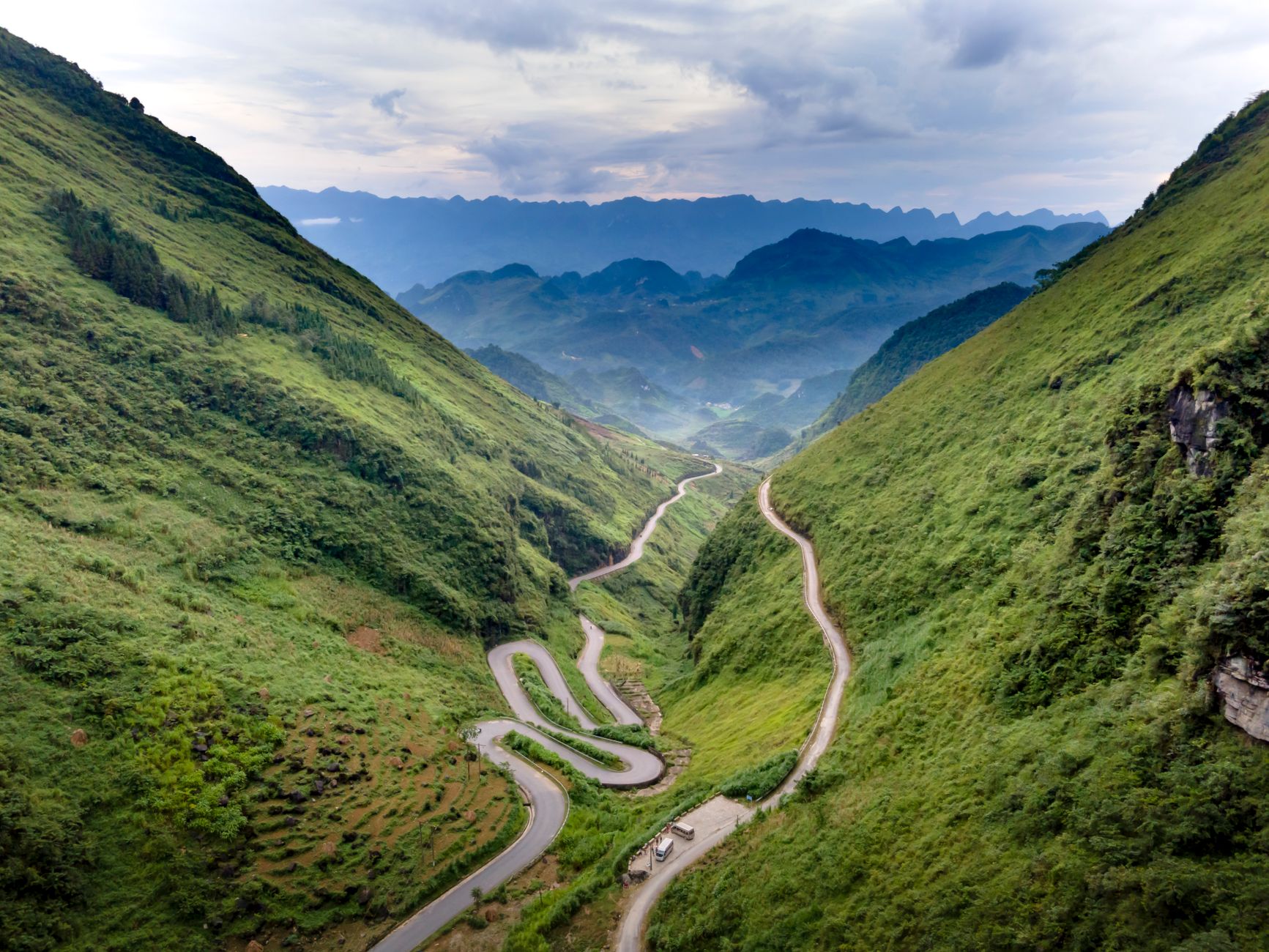
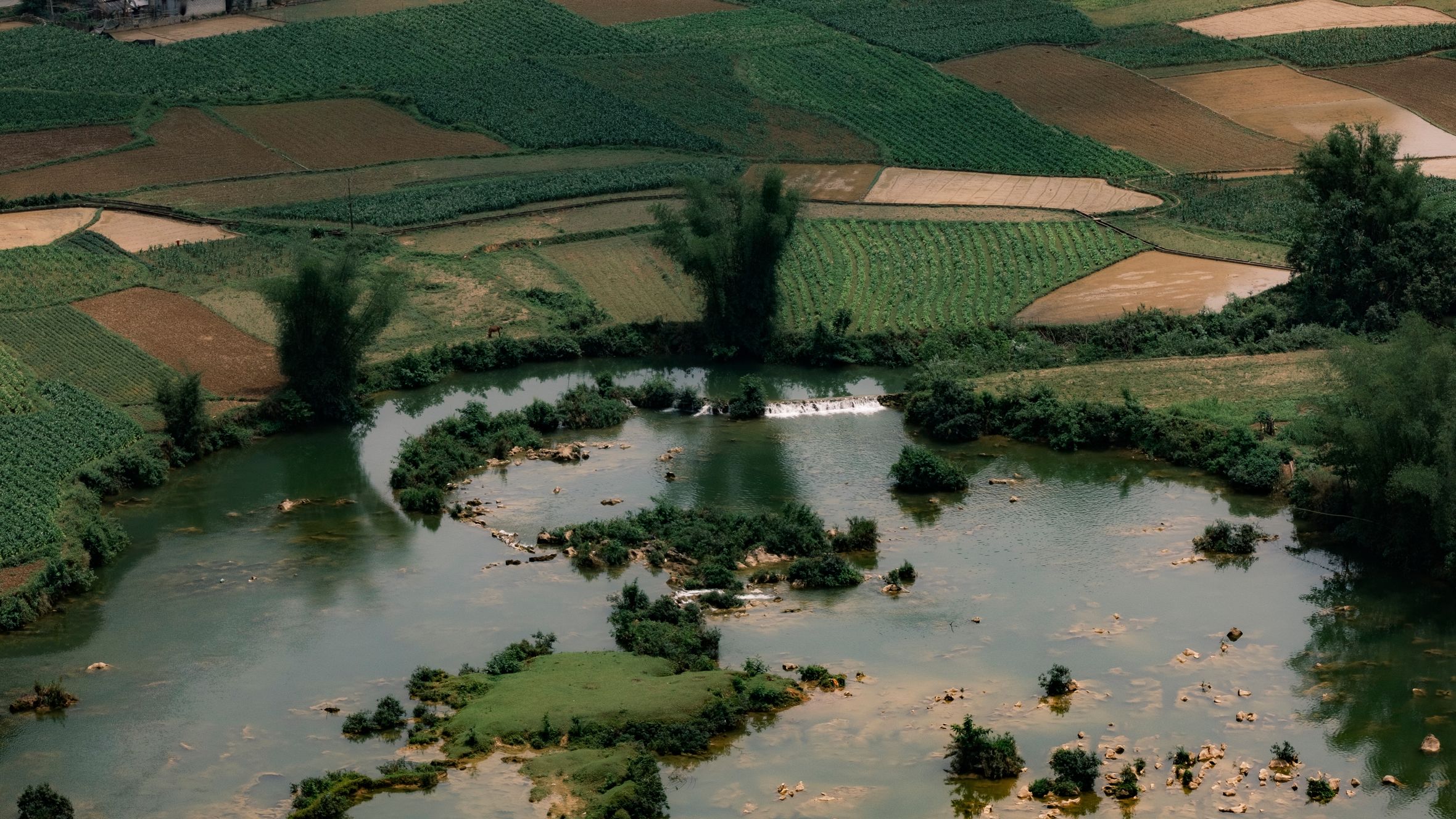
The elevation ranges from around 100 meters in the river valleys to over 2,200 meters at the highest ridgeline along the Laos border. That gradient creates stacked ecological zones—lowland evergreen forest, montane forest, cloud forest—each with its own microclimate and its own residents. The Ngan Pho and Ngan Sau rivers drain through the park, carving limestone valleys where species can evolve in near-total isolation from neighboring populations. It's that combination of altitude, water, and dense canopy that makes Vu Quang less a single habitat and more a patchwork of dozens.
The "Asian Unicorn" and Other Flagship Species
The park's most famous resident is the "saola" (Pseudoryx nghetinhensis), often called the "Asian unicorn." First formally described in 1992, it's a bovid so rare and elusive that sightings remain newsworthy decades later. Saola look like a cross between a deer and an antelope, with parallel horns and a stocky build. They're critically endangered, and Vu Quang remains one of the few places they might still exist.
To put that rarity in context: fewer confirmed photographs of wild saola exist than of snow leopards. Camera traps have captured only a handful of images since the species was named. Local ethnic minority hunters—primarily the Chut people—had known about the animal for generations, calling it by various names, but Western science had no record of it until a joint Vietnamese-WWF survey team found skulls with unusual horns in a hunter's home. The 1992 description was the first new large mammal described anywhere on Earth in over fifty years, and it put Vu Quang on the global conservation map overnight.
Equally remarkable is the "giant muntjac" (Megamuntiacus vuquangensis), discovered in the early 1990s and recognized as the world's largest muntjac—a family of small, spike-antlered deer. The park is also home to the "Quang Khem" (slow deer), another endemic species, and the Northern White-Cheeked Gibbon, a critically endangered primate whose calls echo through the forest canopy. If you camp overnight near the higher ridges, you can sometimes hear gibbon pairs dueting at dawn—a rising, falling call that carries over a kilometer through still morning air.
Beyond mammals, the park harbors five fish species new to science: Parazacco vuquangensis, Crossocheilus vuha, Pararhoedus philanthropus, Pararhoedus equalitus, and Oreoglanis libertus. Each discovery hints at how little we still know about Southeast Asian ecosystems.

Photo by Loifotos on Pexels
Ongoing Mysteries
Vu Quang still teases scientists with unconfirmed sightings and tantalizing hints. In 1994, a cream-colored slow loris—possibly from Vu Quang—was spotted at Hanoi Zoo. That same year, wildlife experts documented a black muntjac in nearby Laos, raising the question of whether it also roams Vu Quang's forests. A Vietnamese warty pig (Sus bucculensis)—a species supposedly extinct in the wild—showed up as a skull and meat sample, suggesting remote populations might still survive.
These unresolved cases exemplify why Vu Quang matters: it's a living laboratory where the boundaries of what we know about wildlife are constantly being redrawn.

Photo by Regan Dsouza on Pexels
The Forests Themselves: What You're Walking Through
Most visitors fixate on the flagship animals, but the forest itself is the real show. Vu Quang contains some of the last intact tracts of Annamite Range wet evergreen forest—a habitat type that has been logged or converted to plantation across much of Vietnam. Below around 800 meters, you're walking under a canopy of dipterocarp and laurel trees draped in epiphytes, ferns, and orchids. The undergrowth is dense enough that you rarely see more than 20 meters ahead. Above 1,000 meters the character shifts: shorter trees, thicker moss, cooler air. The highest elevations stay wrapped in cloud for much of the wet season, feeding streams that eventually drain into the Lam River system.
The botanical diversity hasn't been as headline-grabbing as the animal discoveries, but researchers have catalogued over 2,000 plant species in the park, including several rare conifers and cycads. For anyone interested in birdwatching, over 300 bird species have been recorded, among them the Crested Argus and the Vietnamese Pheasant—both of which are easier to hear than to see. Early mornings on the mid-elevation trails offer the best chance for sightings, especially between October and March when migrant species pass through.
How to Get There and What It Costs
Vu Quang is roughly 360 km south of Hanoi—about seven to eight hours by car or bus via National Highway 1A to Ha Tinh city, then another 70 km west on provincial roads toward Vu Quang town. There's no airport in Ha Tinh; the nearest one is Dong Hoi Airport in Quang Binh Province (about 160 km south of the park), which receives domestic flights from Hanoi and Saigon. From Dong Hoi you can also visit Phong Nha-Ke Bang National Park before heading north to Vu Quang, which makes a logical two-park itinerary.
Most travelers arrange transport from Ha Tinh city. A private car from Ha Tinh to the park entrance runs around 500,000–800,000 VND one way; motorbike rental in town costs about 150,000–200,000 VND per day if you're confident on mountain roads. Public buses to Vu Quang town exist but are infrequent and won't drop you at the park gate.
Park entry fees are modest—typically 40,000–60,000 VND for the entrance ticket. A mandatory local guide for trekking routes costs around 300,000–500,000 VND per day. If you want a multi-day trek into the deeper forest zones, negotiate a package through the park management board ("ban quan ly vuon quoc gia") in advance. These deeper treks require a small team: guide, porter, sometimes a ranger escort. Expect to pay 1,500,000–3,000,000 VND per person per day all-in for multi-day trips, depending on group size.
Accommodation near the park is basic. Vu Quang town has a few "nha nghi" (guesthouses) in the 150,000–300,000 VND range—clean enough, cold-water showers, no frills. Ha Tinh city, about 70 km east, offers proper hotels if you need air conditioning and hot water before or after your trek.
What Surprises Foreigners
The park isn't set up for casual tourism. If you're used to the well-marked trails and visitor centers at places like Cat Ba or Bach Ma, Vu Quang will feel raw. There are no boardwalks, no interpretive signs in English, no gift shop. The infrastructure serves researchers and forest rangers first.
You almost certainly won't see the famous animals. Saola sightings are so rare that even researchers working in the park for years haven't had confirmed encounters. Giant muntjac are nocturnal and deep-forest dwellers. Come for the ecosystem, the forest, and the birdlife—not for a guaranteed wildlife checklist.
Leeches are constant companions during the wet season (May–October). The terrestrial leeches in Annamite forests are aggressive and ubiquitous. Long socks tucked into pants, leech socks, and DEET help, but accept that you'll find a few on you. It's not dangerous, just startling the first time.
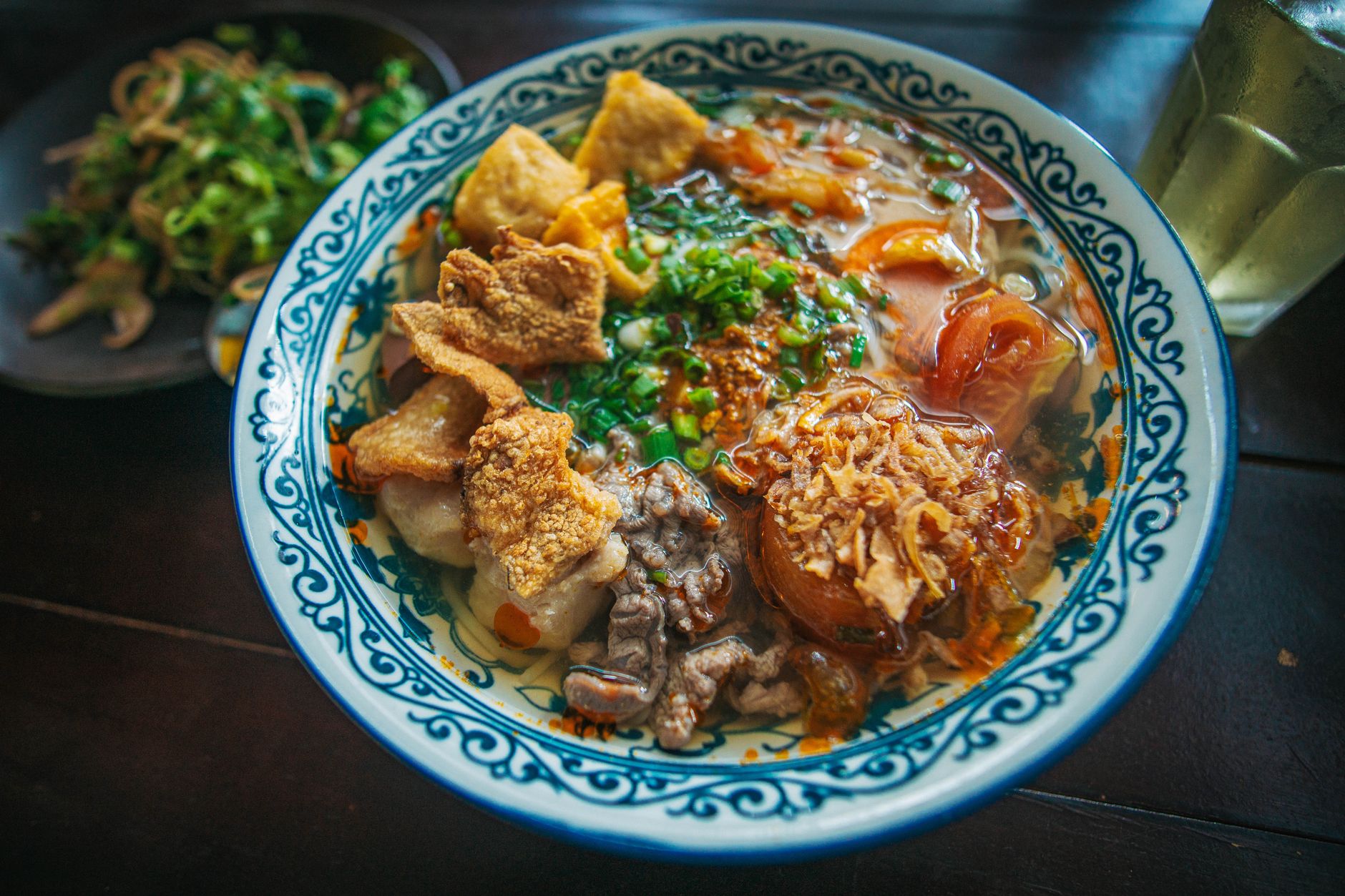
Food options near the park are limited. Vu Quang town has "com binh dan" (cheap rice) stalls and maybe one or two basic restaurants. Don't expect the kind of street food variety you'd find in Hanoi or Hue. Bring snacks, and if you're trekking overnight, your guide team usually handles cooking with rice, canned fish, and whatever fresh vegetables are available. For proper meals, Ha Tinh city has more range—try local "bun bo" (the Ha Tinh version is thinner-broth and more peppery than the famous bun bo Hue (분보후에 / 顺化牛肉粉 / ブンボーフエ) you'd get further south in Hue).
The language barrier is real. English is rarely spoken by guides or locals. A few Vietnamese phrases go a long way: "xin chao" (hello), "cam on" (thank you), "bao nhieu?" (how much?). Having a translation app loaded offline is genuinely useful here, not just a convenience.
Quick Reference
- Location: Ha Tinh Province, North Central Coast, roughly 360 km south of Hanoi
- Area: 550 square kilometers
- Elevation range: ~100 m to over 2,200 m
- Established: Forest reserve 1986; national park 2002
- Best season for trekking: November–April (dry season, fewer leeches, clearer trails)
- Wet season: May–October (heavy rain, leeches, some trails impassable)
- Entry fee: 40,000–60,000 VND
- Guide fee: 300,000–500,000 VND/day
- Nearest city with hotels: Ha Tinh city (~70 km east)
- Nearest airport: Dong Hoi (Quang Binh), ~160 km south
- Key species: Saola, giant muntjac, Northern White-Cheeked Gibbon, Crested Argus, 300+ bird species, 2,000+ plant species
- Language at park: Vietnamese only; bring an offline translation app
Visiting: What to Expect
Access is through Ha Tinh Province's administration and local guides. Expect a raw, undeveloped experience compared to more tourist-heavy national parks. The park prioritizes research and conservation over visitor amenities, so trails are rugged, facilities are basic, and the focus is ecological, not recreational.
You won't easily spot a saola or giant muntjac—they're nocturnal, elusive, and adapted to avoid detection. But you will walk through pristine forest, possibly hear gibbon calls, and understand viscerally why this corner of Vietnam matters to global biodiversity. Arrange visits through the park administration or tour operators specializing in ecological tourism; they'll advise on seasonal access, terrain, and what wildlife is actively being studied.
Vu Quang works well as part of a broader North Central Coast route. You could pair it with a few days in Hue exploring the Imperial Citadel and the city's famous food scene, or head south to Da Nang and then Hoi An. Travelers coming from the north might loop through Ninh Binh and Phong Nha before reaching Ha Tinh. The park itself needs two to three days minimum—one day for the lower trails, one or two more if you want to push into the higher-elevation zones where the rarest species have been recorded.
Vu Quang is for travelers with a genuine interest in ecology and conservation, not casual sightseeing. Come here to witness a place where science is still being written.
Final Note
Vu Quang doesn't try to impress you with facilities or convenience—it impresses you by simply existing, largely unchanged, in a country where forest cover has been under pressure for decades. If you make the effort to get here, you're walking through one of the most scientifically significant patches of forest on the planet. That's not hyperbole; it's just what the species list says.
Last updated · May 29, 2026 · independently researched, never sponsored.