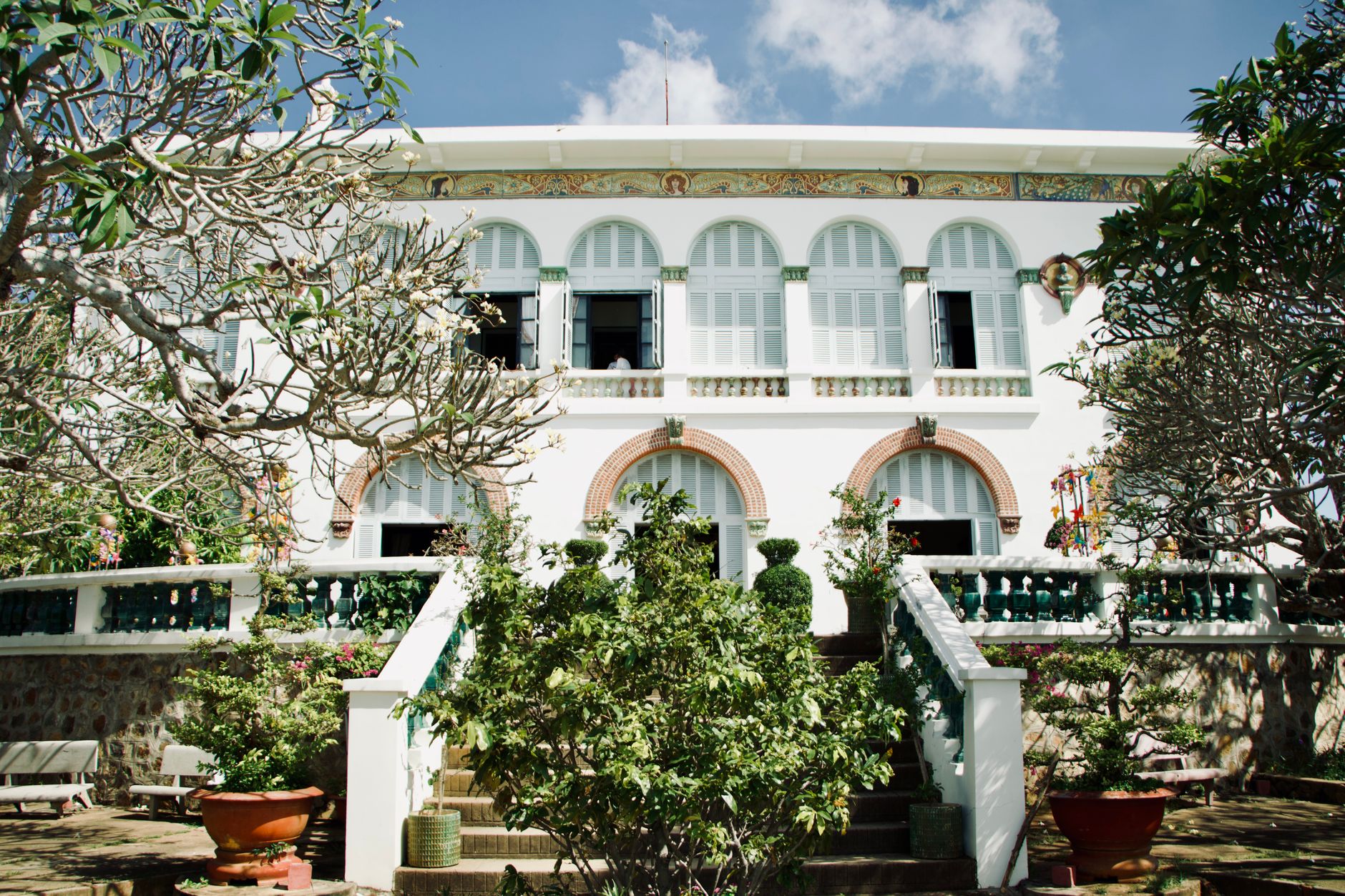
Two weathered Cham towers rise from a small park on Tran Hung Dao street, surrounded by residential blocks and motorbike traffic. That contrast — ancient sacred architecture boxed in by a living city — is what makes Thap Doi worth a stop in Quy Nhon.
What it is
Thap Doi (literally "Twin Towers") is a pair of brick Cham towers dating to the late 12th century, built during the Champa kingdom's presence across what is now central Vietnam (베트남 / 越南 / ベトナム). The larger tower stands roughly 20 meters tall; the smaller one about 18. Both feature the signature Cham construction style — interlocking baked bricks fitted without visible mortar, with carved sandstone lintels above the doorways.
Unlike the more famous Po Nagar towers in Nha Trang (냐짱 / 芽庄 / ニャチャン) or the sprawling My Son sanctuary near Hoi An, Thap Doi sits right inside Quy Nhon city, on a low hill just a few hundred meters from the coast. The towers were likely Hindu temples dedicated to Shiva, though some researchers note Buddhist-influenced elements in the carvings. Restoration work in the 1990s rebuilt portions of the upper sections, so what you see is a mix of original brickwork and reconstruction — obvious if you look closely at the color differences in the masonry.
Why travelers go
Most visitors to Quy Nhon come for the beaches and seafood, and Thap Doi often gets squeezed into an afternoon between the coastline and lunch. That's fair — this is not a half-day site. But it rewards the 30-45 minutes you give it. The carvings on the main tower's entrance, particularly the Garuda figure on the lintel, are some of the better-preserved examples of Cham stonework in Binh Dinh province. And the setting is genuinely unusual: you're standing next to structures older than Angkor Wat's outer galleries while scooters idle at a traffic light 50 meters away.
For anyone interested in Cham heritage, Binh Dinh province has a higher concentration of tower sites than almost anywhere else in Vietnam — Thap Doi is the most accessible of the bunch.
Best time to visit
Quy Nhon's dry season runs from March through September, with April to June being the sweet spot — warm but not yet peak summer heat. The rainy season (October through December) can bring heavy downpours that make the small park around the towers muddy and the sky flat gray, which isn't ideal for seeing the brickwork details.
Mornings before 9 AM or late afternoons after 4 PM give you the best light on the towers and fewer visitors. Midday sun washes out the red-brown tones of the brick.
How to get there
Quy Nhon is the nearest hub. From Da Nang, you can take a train (about 5-6 hours, from around 170,000 VND for a hard seat to 400,000 VND for a soft sleeper) or a bus (roughly 6 hours, 200,000-250,000 VND). Flights from Saigon or Hanoi land at Phu Cat Airport, about 35 km northwest of Quy Nhon — a taxi into town runs 250,000-350,000 VND.
Once in Quy Nhon, Thap Doi is on Tran Hung Dao street, about 1.5 km north of the city center. A Grab bike costs 15,000-20,000 VND, or you can walk it in 20 minutes from the main beach area. The site is visible from the road — you can't miss two medieval towers next to a roundabout.
For travelers exploring the broader Central Highlands, Gia Lai province and its capital Pleiku sit about 170 km northwest of Quy Nhon via Highway 19 (around 3.5 hours by bus, 120,000-150,000 VND). Some travelers combine a Quy Nhon coastal stay with a push inland to the highlands.

Photo by Thái Nguyễn on Pexels
What to do
Walk the full perimeter of both towers
Most visitors stand at the front, take a photo, and leave. Circle around the back of the larger tower where the brickwork is less restored and more visibly original. You can see where centuries of weather have eroded the mortar-less joints into deep grooves.
Study the lintels and corner carvings
The sandstone carvings above the main entrance of the larger tower depict Garuda — a mythical bird figure from Hindu tradition. The smaller tower has simpler ornamentation but features corner pilasters with lotus motifs. Bring a zoom lens or binoculars if you care about the details up high.
Visit Binh Dinh Museum afterward
About 2 km south on Nguyen Hue street, the Binh Dinh provincial museum has a small but solid collection of Cham sculptures and artifacts recovered from sites across the province. It adds context to what you've just seen. Free entry, closed Mondays.
Combine with other Cham sites
If you rent a motorbike (150,000-200,000 VND/day), you can loop in Thap Banh It (about 20 km north, arguably the most impressive tower cluster in the province) and Thap Duong Long (30 km northwest) in a single morning. This trio gives you a real sense of Cham architectural range.
Sit in the park
The small garden around the towers has benches and shade trees. Locals use it as a neighborhood park — people doing morning exercises, kids playing after school. It's a calm spot to sit for a few minutes and watch city life happen around 800-year-old towers.
Where to eat nearby
Quy Nhon is serious seafood territory, but the local specialty to seek out is "banh xeo" — the central Vietnamese version here uses smaller, crispier crepes than the Saigon style, stuffed with shrimp and bean sprouts. Try the cluster of "banh xeo" stalls on Dien Hong street, about 1 km south of Thap Doi. Expect 10,000-15,000 VND per crepe.
For something more substantial, "bun cha ca" (fish cake noodle soup) is Quy Nhon's signature bowl. The shops along Le Hong Phong street near the central market serve it for 30,000-40,000 VND.
Where to stay
Quy Nhon has a decent spread of accommodation. Budget guesthouses near the beach run 200,000-400,000 VND/night. Mid-range hotels along An Duong Vuong and Xuan Dieu streets go for 500,000-900,000 VND with sea views and air conditioning. A few resort-level properties sit south of the city toward Ghenh Rang, starting around 1,500,000 VND.
Stay near the main beach strip and everything — Thap Doi included — is within easy reach by foot or Grab.
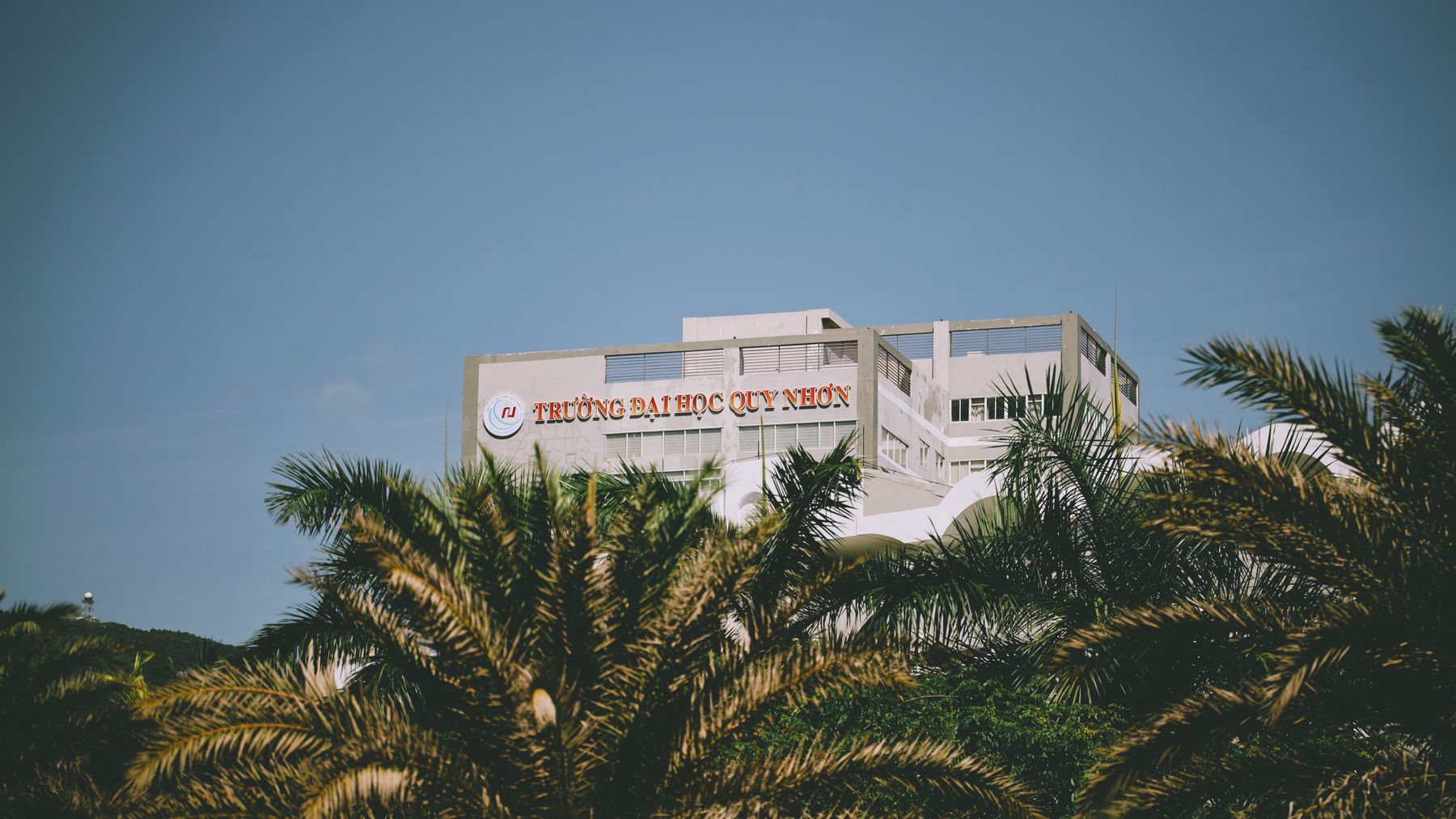
Photo by E.OHIPHOTO on Pexels
Tips locals would tell you
- Entry to Thap Doi is free. There's no ticket booth, no gate — you just walk in from the street.
- The park closes loosely around 6 PM but there's no hard enforcement. Early morning visits are common among locals.
- Wear shoes you don't mind getting dusty. The paths are paved but the area around the tower bases is packed dirt.
- If you're combining Quy Nhon with a trip to the highlands, book the bus to Pleiku a day ahead during holidays — it fills up.
Common mistakes to avoid
- Expecting a major site. Thap Doi is two towers in a city park, not a sprawling complex. Calibrate expectations and you'll appreciate it more.
- Skipping Binh Dinh's other towers. Thap Doi alone gives you a taste. The province's outer sites — especially Thap Banh It — are where the Cham heritage really hits.
- Visiting only at midday. Harsh overhead light flattens the brickwork. Morning or late afternoon shadows reveal the texture and carving depth.
Practical notes
Thap Doi works best as a 30-45 minute stop folded into a day exploring Quy Nhon. Pair it with the Binh Dinh Museum and a bowl of bun cha ca, and you've got a solid morning before heading to the beach. For anyone tracing Cham heritage across central Vietnam — from My Son to Po Nagar — this is a small but genuine piece of the picture.
Last updated · May 29, 2026 · independently researched, never sponsored.