Yen Tu mountain has been the center of Vietnamese Zen Buddhism for over 700 years. The Truc Lam Yen Tu monastery complex sprawls across its slopes and summit in Quang Ninh province, about 130 km east of Hanoi. Whether you come for the history, the hiking, or just to get above the lowland humidity, this is one of the most significant religious sites in the country — and it earns that status honestly.
What it is and why it matters
Truc Lam Yen Tu is the headquarters of the Truc Lam Zen school, a distinctly Vietnamese branch of Buddhism founded in the 13th century by Emperor Tran Nhan Tong. After abdicating the throne, he retreated to Yen Tu mountain, ordained as a monk, and established the Truc Lam ("Bamboo Grove") lineage. The complex includes multiple pagodas, temples, stupas, and meditation halls spread along the trail from the mountain's base (around 50 m elevation) to the Dong (Bronze) Pagoda at the 1,068 m summit.
The site was heavily restored and expanded in the early 2000s, so what you see today is a mix of ancient foundations and modern reconstruction. The Dong Pagoda at the peak, cast entirely in bronze, is a relatively recent rebuild — but the stone stupas, old-growth forest, and the route itself carry genuine weight.
Why travelers go
Pilgrims come by the hundreds of thousands during the Yen Tu Festival (roughly January to March on the lunar calendar), which makes the mountain trail feel like a slow-moving queue. Outside of festival season, the draw is different: a serious uphill walk through dense forest, a chain of temples that get progressively older and quieter as you climb, and views over the northeastern coast that stretch toward Ha Long Bay on clear days. It's a physical, contemplative day out — not a quick photo stop.
Best time to visit
The Yen Tu Festival season runs from the 10th day of the first lunar month to the end of the third lunar month (usually late January through April). This is when the site is most culturally alive — incense smoke everywhere, chanting, crowds. It's also when it's most packed, especially on weekends.
For a quieter experience, go between September and November. The heat has broken, rain is tapering off, and you might have long stretches of the upper trail to yourself. Avoid July and August: the trail gets slippery, leeches appear, and afternoon storms roll in fast.
How to get there
From Hanoi (하노이 / 河内 / ハノイ), the most practical route is to head east on the Hanoi–Hai Phong expressway, then cut north toward Uong Bi city. Total drive time is around 2.5 hours by car or motorbike (130 km). A Grab car from central Hanoi runs roughly 1,200,000–1,500,000 VND one way, which makes it worth splitting with others.
Alternatively, catch a bus from My Dinh or Gia Lam station to Uong Bi (around 100,000–120,000 VND, 2.5–3 hours). From Uong Bi, it's 15 km to the Yen Tu ticket gate — a xe om (motorbike taxi) costs about 50,000–80,000 VND.
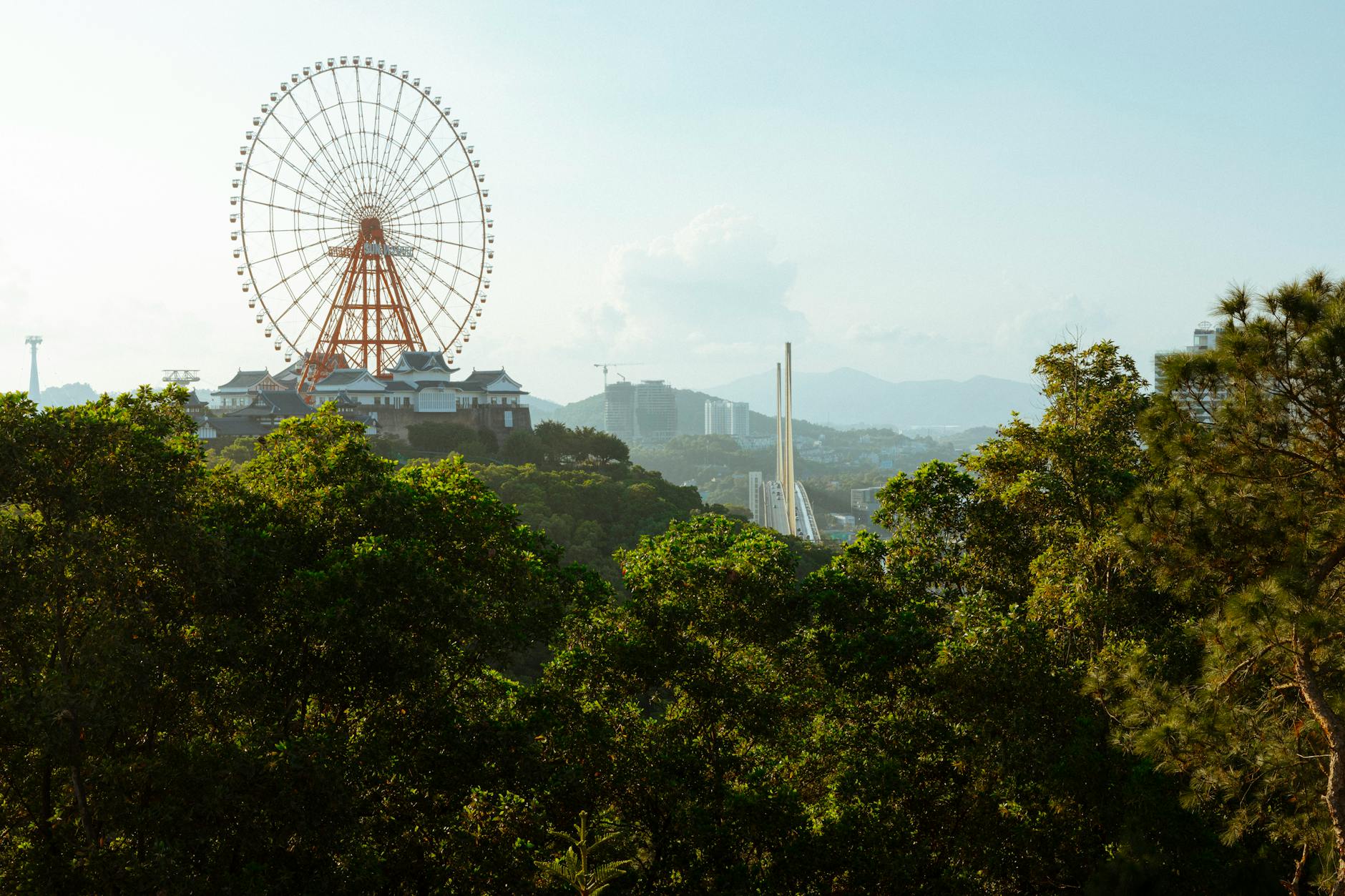
If you're already in Ha Long Bay (하롱베이 / 下龙湾 / ハロン湾), the drive is shorter: roughly 50 km west, about an hour by car.

Photo by Kirandeep Singh Walia on Pexels
What to do
Hike the full trail to Dong Pagoda
The complete trail from the base to the summit is about 6 km one way, with around 1,000 m of elevation gain. Allow 3–4 hours up and 2–3 hours down. The path is paved or stepped for most of it, but the final push to Dong Pagoda is steep and narrow. Wear proper shoes — flip-flops are a recipe for a twisted ankle.
Take the cable car for the middle section
A cable car covers the steepest middle portion of the mountain, from the Giai Oan Pagoda area up to the Hoa Yen Pagoda zone. Tickets cost around 200,000–300,000 VND round trip (prices vary by season). This cuts out the hardest climbing but skips some of the best forest sections. A reasonable compromise: ride up, walk down.
Visit Hoa Yen Pagoda
Hoa Yen, at roughly 500 m elevation, is the largest and most active pagoda on the mountain. This is where Tran Nhan Tong spent much of his monastic life. The courtyard has ancient trees, stone steles, and usually a few monks going about their day. It's the emotional center of the complex — more so than the summit.
Explore the Tran Nhan Tong stupa and Vien Cong Pagoda trail
Between Hoa Yen and the summit, a side trail leads to the royal stupa where the emperor-monk's remains were interred. It's quieter than the main route and lined with old-growth trees. Vien Cong Pagoda, further along, is small and usually empty — a good place to sit.
Spend time at Giai Oan stream
At the mountain's base, Giai Oan ("Stream of Absolution") runs through a forested area near the first pagoda. On non-festival days, it's a peaceful spot to rest before or after the hike.
Where to eat nearby
Uong Bi town is the nearest real food hub. Look for "banh cuon" — the local version uses a slightly thicker rice sheet and comes with a dipping broth rather than nuoc cham. Street stalls near the central market sell it for 25,000–35,000 VND per plate.
For something more substantial, the area around the Yen Tu parking lot has rows of com binh dan ("rice plate") stalls. Quality is basic but honest. Expect to pay 40,000–60,000 VND for a plate with grilled pork, greens, and rice. If you're heading back through Uong Bi, the "bun" (vermicelli noodle) shops along the main road are a better bet than the tourist-zone food stalls.
Where to stay
Most visitors treat Yen Tu as a day trip from Hanoi or Ha Long Bay. But if you want an early start on the trail (recommended — fewer people, cooler air), Uong Bi has budget hotels from 250,000–400,000 VND per night. The Legacy Yen Tu resort complex near the mountain entrance sits in a higher bracket, roughly 1,500,000–3,000,000 VND, and includes a separate temple zone and hot springs.
Ha Long Bay accommodation is 50 km away and gives you the option of combining Yen Tu with a bay trip.

Photo by Tường Chopper on Pexels
Practical tips locals would tell you
- Bring your own water. Vendors along the trail charge double what you'd pay at the base, and the summit kiosk charges more again.
- Start early — ideally before 7:00 AM. The cable car opens around 6:00–6:30 AM during festival season, later in the off-season.
- Entrance fee to the scenic area is around 40,000 VND per adult. Cable car is separate.
- Dress modestly if entering active pagodas: cover shoulders and knees. This is a working monastery, not just a tourist attraction.
- Cell service is patchy above Hoa Yen Pagoda. Download offline maps if you need navigation.
Common mistakes to avoid
- Going on a weekend during Tet or the Yen Tu Festival without expecting festival-level crowds. The trail can have literal traffic jams between January and March.
- Underestimating the hike. The 6 km distance sounds short, but it's uphill the entire way. People in average fitness should budget the full day.
- Skipping the side trails. The main route to the summit gets all the foot traffic, but the detours to the stupa and smaller pagodas are where the mountain feels like what it was meant to be — a place for quiet.
Practical notes
Yen Tu works well paired with a trip to Ha Long Bay — the two are close enough for a combined two- or three-day itinerary from Hanoi. Come outside festival season if solitude matters to you. And take the walk seriously: the mountain earns its reputation one step at a time.
Last updated · May 26, 2026 · independently researched, never sponsored.