What it is
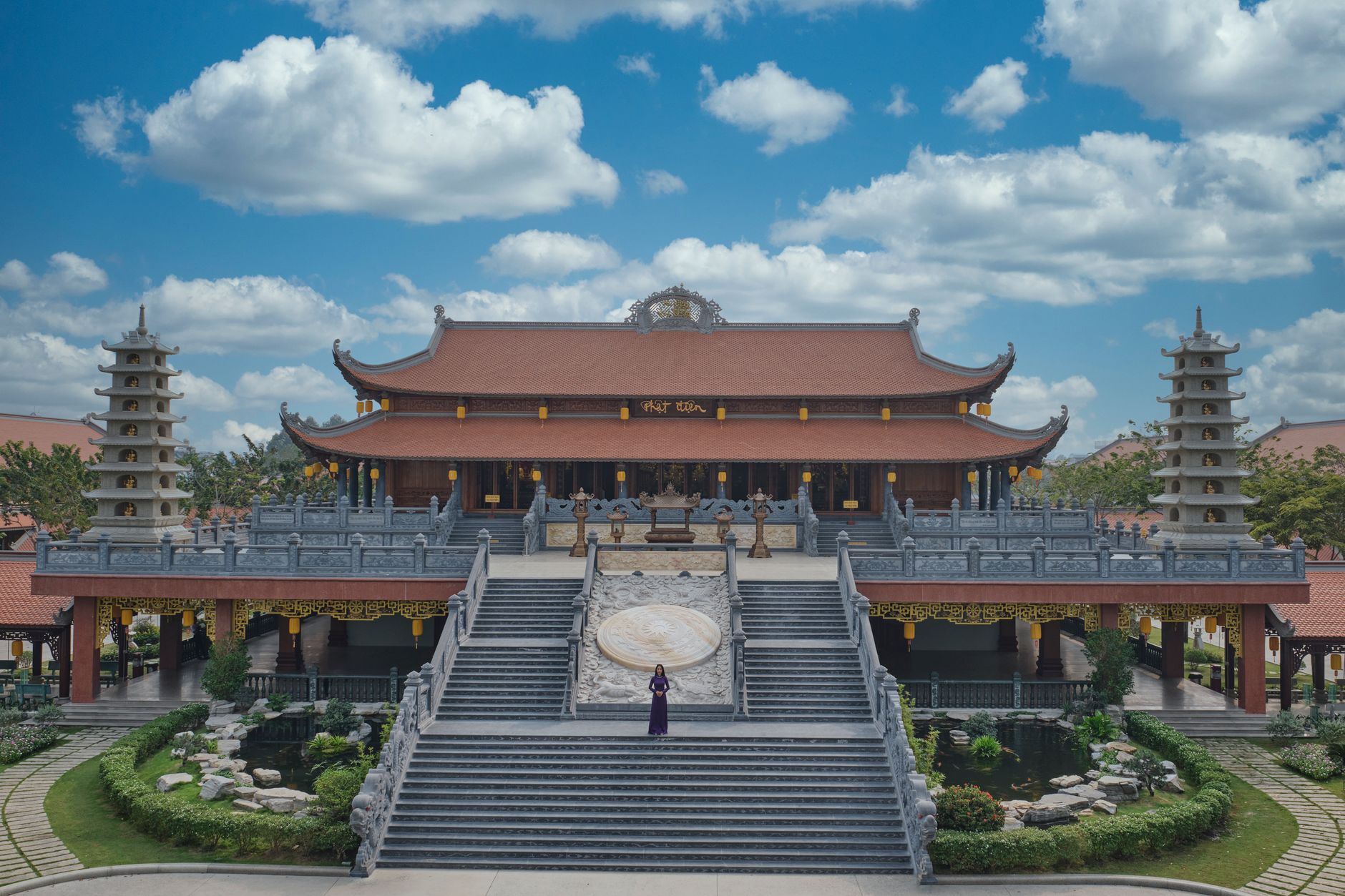
Den Phu Ung is a temple complex in Phu Ung village, Khoai Chau district, Hung Yen province — about 55 km southeast of Hanoi. It honors Pham Ngu Lao (1255–1320), the peasant-born general who helped repel Mongol invasions in the 13th century. The temple sits on land believed to be his birthplace, and the site has been rebuilt and expanded several times since the Tran Dynasty.
The current structures date mostly from 19th-century restorations, with heavy wooden beams, dragon-motif carvings, and a layout typical of northern Vietnamese communal worship architecture. It's classified as a national historical relic, which in practical terms means it's maintained but not overly commercialized.
Why travelers go
Den Phu Ung isn't on most tourist itineraries, which is exactly the point. You come here for the architecture — the layered wooden temple halls, the carved stone stelae — and for the atmosphere of a working village shrine that hasn't been sanitized for visitors. During the annual festival (sixth day of the first lunar month), the grounds fill with ceremonial processions, "[ca tru](/posts/ca-tru-hanoi (하노이 / 河内 / ハノイ)-traditional-music)" singing, wrestling matches, and rice-cooking contests. Outside festival season, you'll likely have the place mostly to yourself.
It's also a useful stop if you're exploring the Red River Delta beyond Hanoi — pair it with Bat Trang pottery village or the longan orchards that Hung Yen is known for.
Best time to visit
Festival time (late January–February): The sixth day of the first lunar month brings the full spectacle — processions, traditional games, incense smoke, crowds. If you want energy and ritual, this is it.
September–November: Cooler weather, dry skies, and longan season (July–September tail end). The temple grounds are quiet, the surrounding rice paddies turn gold before harvest, and you can actually appreciate the architecture without dodging elbows.
Avoid: Mid-summer (June–August) is brutally humid in the delta, and the flat terrain offers zero shade relief on the walk from parking to temple.
How to get there from Hanoi
By motorbike or car: Take the Hanoi–Hai Phong expressway east, exit at Khoai Chau, then follow provincial roads south toward Phu Ung village. Total distance is about 55 km, roughly 1 hour 15 minutes without traffic. Expressway toll runs about 35,000 VND for a car.
By bus: Catch a bus from Giap Bat station to Hung Yen city (about 25,000–35,000 VND, 1.5 hours), then grab a local "xe om" (motorbike taxi) to the temple — roughly 15 km further, expect 50,000–70,000 VND negotiated or use Grab if signal cooperates.
By Grab/taxi from Hanoi: Around 350,000–450,000 VND one way. Worth it if you're splitting with others or combining with nearby stops.

Photo by Sk4ter bol on Pexels
What to do
Walk the temple halls
The complex has three main worship halls arranged front-to-back. The front hall ("bai duong") is open-sided with heavy ironwood columns. The middle and rear halls hold the altar to Pham Ngu Lao and associated relics. Look for the carved dragons on the roof ridges — they're distinctly Tran-dynasty style even in the restored versions.
Read the stone stelae
Several carved stone tablets in the courtyard record temple renovations and local history. They're in classical Chinese script ("chu Han"), but the visual craftsmanship of the carving itself is worth examining.
Explore the village
Phu Ung village outside the temple walls is a typical delta settlement — narrow lanes, brick houses, small ponds. Walk 10 minutes in any direction and you're in rice paddies. This is where you get the sense of how deep Hung Yen's agricultural roots go.
Catch a festival event
If you time it for the [lunar new year](/posts/tet (뗏 (베트남 설날) / 越南春节 / テト)-lunar-new-year-guide) festival, don't miss the wrestling matches ("dau vat") held in the courtyard, or the rice-cooking competition where teams race to produce perfect rice over open flames.
Visit the nearby longan orchards
Hung Yen's "nhan long" (longan fruit) is famous across Vietnam. If visiting July–September, stop at roadside orchards between Khoai Chau and Hung Yen city. Vendors sell fresh bunches for 30,000–50,000 VND per kilogram.
Where to eat nearby
Hung Yen province isn't a culinary destination on its own, but two things are worth seeking:
- "Bun thang" in Hung Yen city: The local version uses a lighter broth than Hanoi's, with shredded chicken and egg crepe. Try the stalls along Nguyen Van Linh street near the old market — a bowl runs 30,000–40,000 VND.
- "Banh cuon" Khoai Chau: Thin steamed rice rolls filled with minced pork and wood ear mushroom, served with fried shallots and dipping sauce. Look for breakfast stalls near the Khoai Chau market — 20,000–30,000 VND per plate.
Where to stay
Hung Yen city (15 km from the temple) has basic hotels and guesthouses:
- Budget: Local nha nghi (guesthouses) near the bus station, 200,000–350,000 VND/night. Clean enough, no frills, hot water usually works.
- Mid-range: A few newer hotels along Highway 39 in Hung Yen city offer air-conditioned rooms with breakfast for 500,000–800,000 VND/night.
- Day trip: Most travelers visit Den Phu Ung as a half-day trip from Hanoi and don't stay overnight. This is the practical move unless you're combining with other Hung Yen stops.

Photo by HONG SON on Pexels
Practical tips locals would tell you
- Bring cash. There are no ATMs near the temple, and the nearest reliable one is in Khoai Chau town center.
- Dress modestly — covered shoulders and knees — since this is an active worship site. You'll see locals in normal clothes, but as a visitor it shows respect.
- The temple closes informally around 17:00. There's no ticket booth or entrance fee, but a small donation (10,000–20,000 VND) in the offering box is standard.
- If you ride a motorbike, the last 3 km of village road is narrow and sometimes muddy after rain. Go slow.
Common mistakes to avoid
- Coming on a random weekday expecting activity: Outside festival season, the temple is quiet and unstaffed. That's fine if you want solitude, but don't expect guides or explanations.
- Skipping the village walk: The temple alone takes 20–30 minutes to see. The surrounding village and paddies are half the experience.
- Relying on Google Maps for the final approach: Map pins for rural temples in the delta are sometimes off by a few hundred meters. Ask locals for "Den Phu Ung" once you're in the village — everyone knows it.
- Visiting only the temple in Hung Yen: If you've made the trip, combine it with Pho Hien ancient trading port area (in Hung Yen city) to justify the travel time.
Practical notes
Den Phu Ung rewards travelers who like quiet historical sites more than polished tourist attractions. Budget a half-day from Hanoi, bring your own water, and time it for either the festival chaos or the post-harvest calm — both versions are worth the drive.
Last updated · May 29, 2026 · independently researched, never sponsored.