What it is
Cua Khau Lao Cai is the main international border crossing between Vietnam (베트남 / 越南 / ベトナム) and China's Yunnan province, sitting right where the Red River flows between the two countries. The crossing connects Lao Cai city on the Vietnamese side with Hekou on the Chinese side, separated by a bridge you can walk across in about three minutes.
The border gate has operated in various forms since the French colonial period, though it was closed for over a decade following conflict in 1979. It reopened in 1993 and has since grown into one of Vietnam's busiest northern land crossings — handling both international tourists and a constant stream of cross-border trade.
Why travelers go
Most foreign visitors use Cua Khau Lao Cai for one of three reasons: entering Vietnam overland from Kunming (a popular backpacker route), exiting Vietnam into Yunnan, or simply visiting the border area as a day trip while based in Lao Cai or Sapa. The third group is larger than you'd think — watching the flow of goods and people at an active land border has a certain fascination, and the surrounding area has decent food and a lively market atmosphere.
For those heading to or from Sapa (사파 / 沙坝 / サパ), Lao Cai city is already the transit hub, so the border gate is just 3 km from the train station. Easy to tack on.
Best time to visit
The border gate operates daily from 7:00 to 22:00 (Vietnam time), though the Chinese side closes at 21:30 Beijing time — note the one-hour time difference. For actual crossings, arrive before 9:00 or after 14:00 to avoid the morning rush of tour groups and traders.
Season-wise, October through March offers cooler weather in Lao Cai (15-22°C most days). Avoid the days immediately before and after Tet — the crossing gets overwhelmed with Vietnamese-Chinese trade traffic and processing slows considerably. Chinese Golden Week (early October) also creates bottlenecks from the other direction.
How to get there
From Hanoi
The overnight train from Hanoi to Lao Cai remains the classic route — roughly 8 hours, departing around 21:00-22:00 and arriving at 5:00-6:00. Tickets run 250,000-600,000 VND depending on berth class. Book through the official Vietnam Railways site or at Hanoi station (120 Le Duan). From Lao Cai station, the border gate is 3 km east — a taxi costs 30,000-40,000 VND.
Buses from My Dinh station in Hanoi take 5-6 hours (daytime) and cost around 200,000-350,000 VND. Several sleeper buses run overnight as well.
From Sapa
Sapa to Lao Cai city is 35 km, about 45 minutes by bus or car. Public buses leave every 20-30 minutes from Sapa bus station (30,000 VND). Most hotels arrange shuttles for 50,000-100,000 VND per person.
From the Chinese side
If arriving from Kunming, you'll take a train to Hekou (about 6 hours) or a bus, then walk across the bridge into Vietnam. Vietnamese e-visas are accepted at this crossing.

Photo by Quang Vuong on Pexels
What to do
The border gate area itself isn't a theme park — it's a working crossing. That said, a few things are worth your time:
- Watch the trade flow at the Vietnamese side of the bridge. Porters carry enormous loads of goods back and forth. Best viewed mornings.
- Coc Leu Market, about 500 meters from the gate, sells Chinese imports, local hill-tribe textiles, and dried goods. Bargain hard — opening prices assume you're buying wholesale.
- Walk along the Red River on the Vietnamese bank. There's an informal path heading south from the bridge with views across to Hekou's skyline, which feels oddly urban compared to the Vietnamese side.
- Lao Cai Museum (free entry, closed Mondays) covers regional ethnic minority culture — Hmong, Dao, Tay — and has a small but decent textile collection.
Where to eat
Lao Cai city has solid northern Vietnamese food without Sapa's tourist markup.
- Pho in Lao Cai tends toward the classic Hanoi style — clear broth, thin noodles. Try the strip of pho stalls on Nguyen Hue street near the market, 35,000-45,000 VND per bowl.
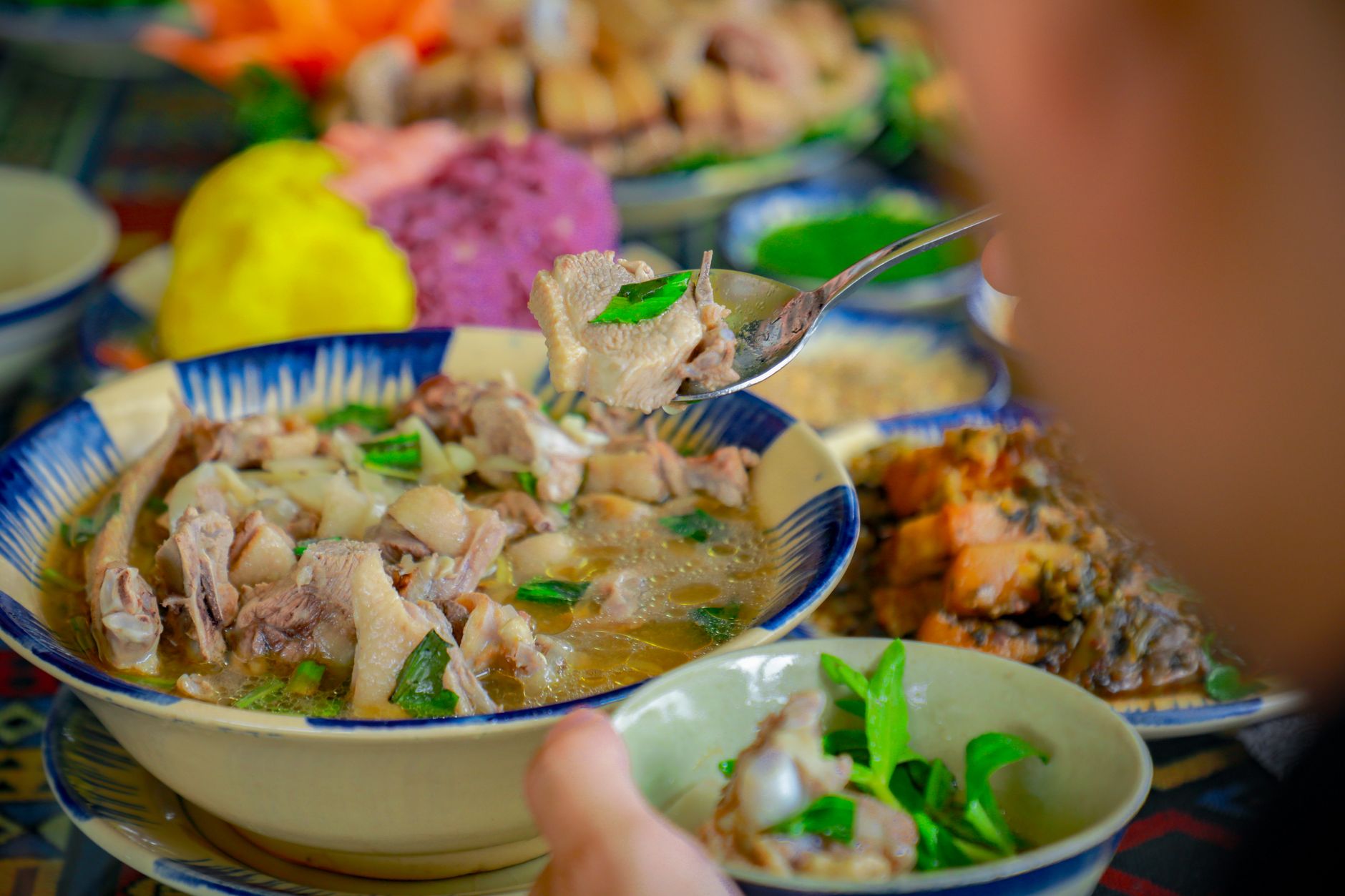
- "Thang co" (horse meat stew) is the local specialty of the region's highland minorities. Several restaurants on Hoang Lien street serve it, usually on weekend mornings. It's an acquired taste — gamey, heavy on aromatics.
- For something quick near the border gate itself, there are banh mi carts and rice plate shops along the road to the crossing. A "com tam" plate with grilled pork runs about 40,000 VND.
- Chinese-influenced dishes are common here — hotpot restaurants near Coc Leu Market serve cross-border flavors at local prices (150,000-250,000 VND for two people).
Don't skip Vietnamese coffee here. Lao Cai sits at the edge of northern coffee-growing areas, and several small cafes on Pho Moi street roast their own beans.
Where to stay
Most travelers either stay one night in Lao Cai before/after a crossing or skip it entirely for Sapa. If you do stay:
- Budget: Guesthouses near the train station cluster around 150,000-250,000 VND/night. Basic but functional. Try the strip on Pham Ngu Lao (yes, same name as Saigon's backpacker street).
- Mid-range: A few newer hotels on Nguyen Hue and Hoang Lien streets offer clean rooms with river views for 400,000-700,000 VND.
- Near the border: There are a couple of hotels within walking distance of the gate, convenient for early crossings. Expect to pay 300,000-500,000 VND.

Photo by Quang Nguyen Vinh on Pexels
Practical tips
- Bring your passport and a printed copy of your visa/e-visa. The Vietnamese immigration officers here are efficient but methodical.
- Change money at the gold shops on Nguyen Hue street, not at the border gate itself. Rates at the gate are 3-5% worse. Vietnamese dong, Chinese yuan, and US dollars are all traded.
- The one-hour time difference between Vietnam (UTC+7) and China (UTC+8) catches people out. Set both time zones on your phone.
- ATMs are available at Vietcombank and BIDV branches within 1 km of the gate. They dispense VND only.
- If you're crossing into China, you'll need a valid Chinese visa — it's not visa-free or visa-on-arrival for most nationalities.
Common mistakes
- Arriving during lunch hour (11:30-13:30): Staffing drops and lines slow. Plan around it.
- Not having a printed e-visa: Digital-only sometimes works, sometimes doesn't. Print it.
- Confusing Lao Cai city with Sapa: They're 35 km apart. Hotels booked in "Lao Cai" on apps are usually in the city, not up the mountain.
- Trying to cross with an expired passport: Vietnam requires 6 months validity. China requires the same. Check both.
- Overpaying taxis from the station to the border: It's a 3 km ride. Anything over 50,000 VND and you're being taken for a ride in both senses.
Practical notes
Cua Khau Lao Cai is functional rather than glamorous — a place you pass through rather than linger. But if you're transiting anyway, the surrounding area rewards a few hours of wandering: good noodles, a lively market, and the particular energy of a border town where two countries bleed into each other across a river.
Last updated · May 29, 2026 · independently researched, never sponsored.