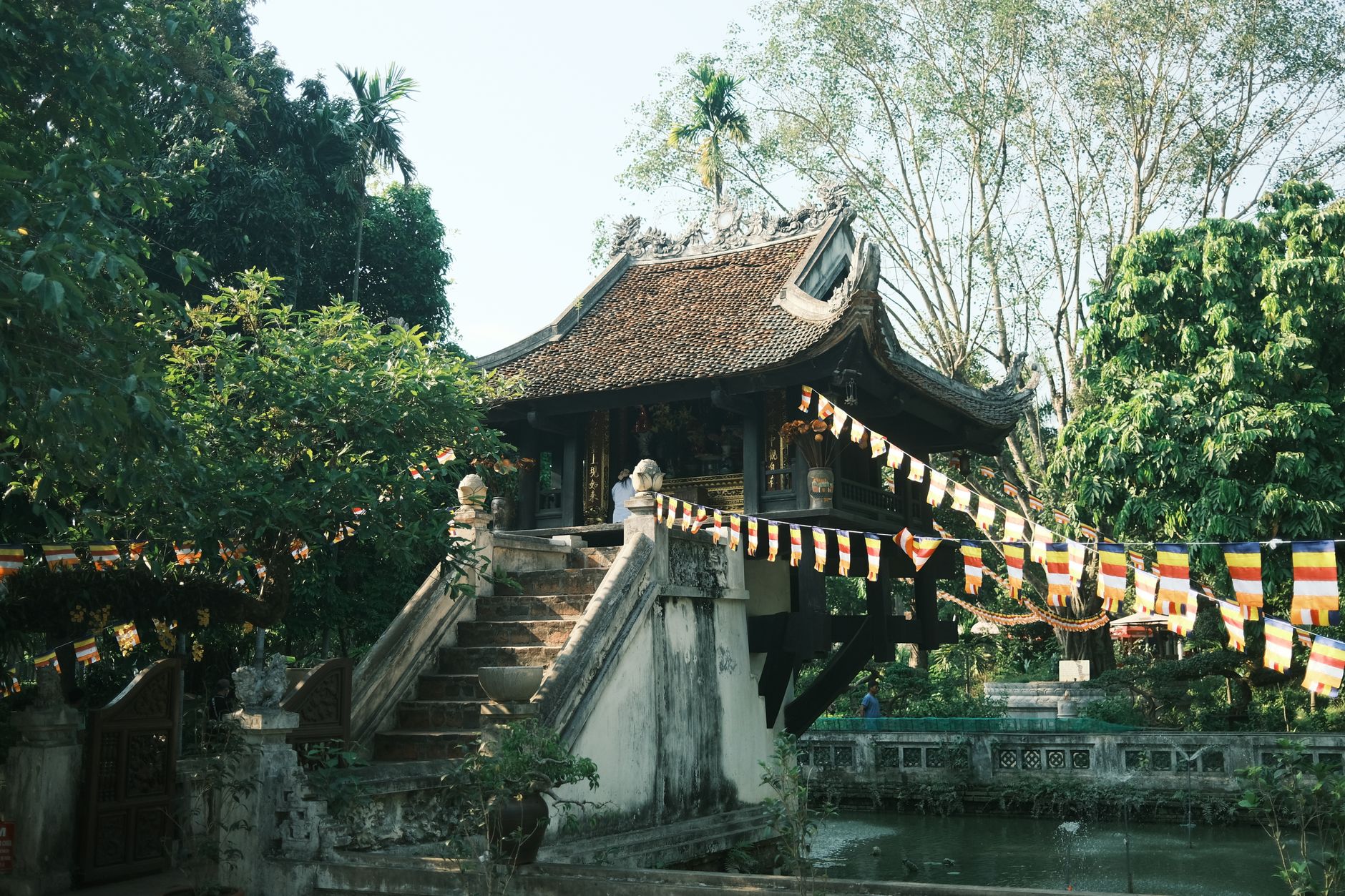
The Temple of Literature is one of those rare places in Hanoi that actually lives up to its reputation. Built in 1070, Van Mieu - Quoc Tu Giam served as Vietnam (베트남 / 越南 / ベトナム)'s first national university for over 700 years, and walking through its five courtyards today still feels like stepping into a different tempo of life — even with tourist buses parked outside.
What it is and why it matters
Van Mieu (the temple) was established under Emperor Ly Thanh Tong to honor Confucius and promote scholarly learning. Six years later, Quoc Tu Giam (the university) was added to educate sons of royalty and, eventually, talented commoners. For centuries, this was the intellectual center of Vietnam — the place where the country's civil service exams were held and its brightest scholars trained.
What survives today is a walled compound covering about 54,000 square meters on Quoc Tu Giam Street in Dong Da District. The complex is organized into five courtyards connected by gates, each progressively more sacred, ending at the sanctuary dedicated to Confucius and his disciples. The architecture is a mix of original 11th-century layout with structures rebuilt during the Le and Nguyen dynasties.
The site is also a symbol you already know even if you haven't visited — the main gate, Khue Van Cac (the Constellation of Literature Pavilion), appears on the Vietnamese 100,000 VND banknote.
Why travelers go
People come for the stone stele — 82 of them, mounted on carved stone tortoises, each inscribed with the names and birthplaces of doctoral graduates from exams held between 1442 and 1779. UNESCO recognized these as a Memory of the World in 2010. They're housed in the third courtyard, and rubbing the tortoise heads for good luck is technically discouraged (the oil from hands erodes the stone), though you'll see Vietnamese students doing it before university entrance exams every June.
Beyond the stele, it's one of the best-preserved examples of traditional Vietnamese architecture in Hanoi (하노이 / 河内 / ハノイ). The compound is also genuinely peaceful most mornings — a contrast to the usual Hanoi pace.
Best time to visit
The sweet spot is October through December or March through April, when Hanoi's weather cooperates — cooler and drier, good for walking open courtyards. Summers (June–August) are brutally humid, and much of the complex is outdoors with limited shade.
Time of day matters more than season, though. Get there at 8:00 AM when gates open. By 10:00, tour groups arrive in waves and the courtyards lose their calm. Late afternoon (after 4:00 PM) is a decent second option, especially for photography when the light softens.
Avoid visiting during Tet / 越南春节 / テト) unless you want crowds — the temple is a popular spot for calligraphy scholars ("ong do") who set up during the Lunar New Year period, which is culturally interesting but packed.
How to get there
Van Mieu sits about 2 km southwest of Hoan Kiem Lake, the center of Hanoi's Old Quarter.
- Grab/taxi: 15–20 minutes from the Old Quarter, 25,000–40,000 VND depending on traffic.
- Bus: Route 02 or 41 stops nearby on Nguyen Thai Hoc Street. Fare is 7,000 VND.
- Walking: A 25-minute walk from Hoan Kiem Lake down Nguyen Thai Hoc Street — pleasant if the weather is mild and a good way to pass through the French Quarter.
- Cyclo: Drivers around the Old Quarter will offer rides for 80,000–120,000 VND. Negotiate before you sit down.
Admission: 30,000 VND for adults (about $1.20 USD). Free for children under 15.
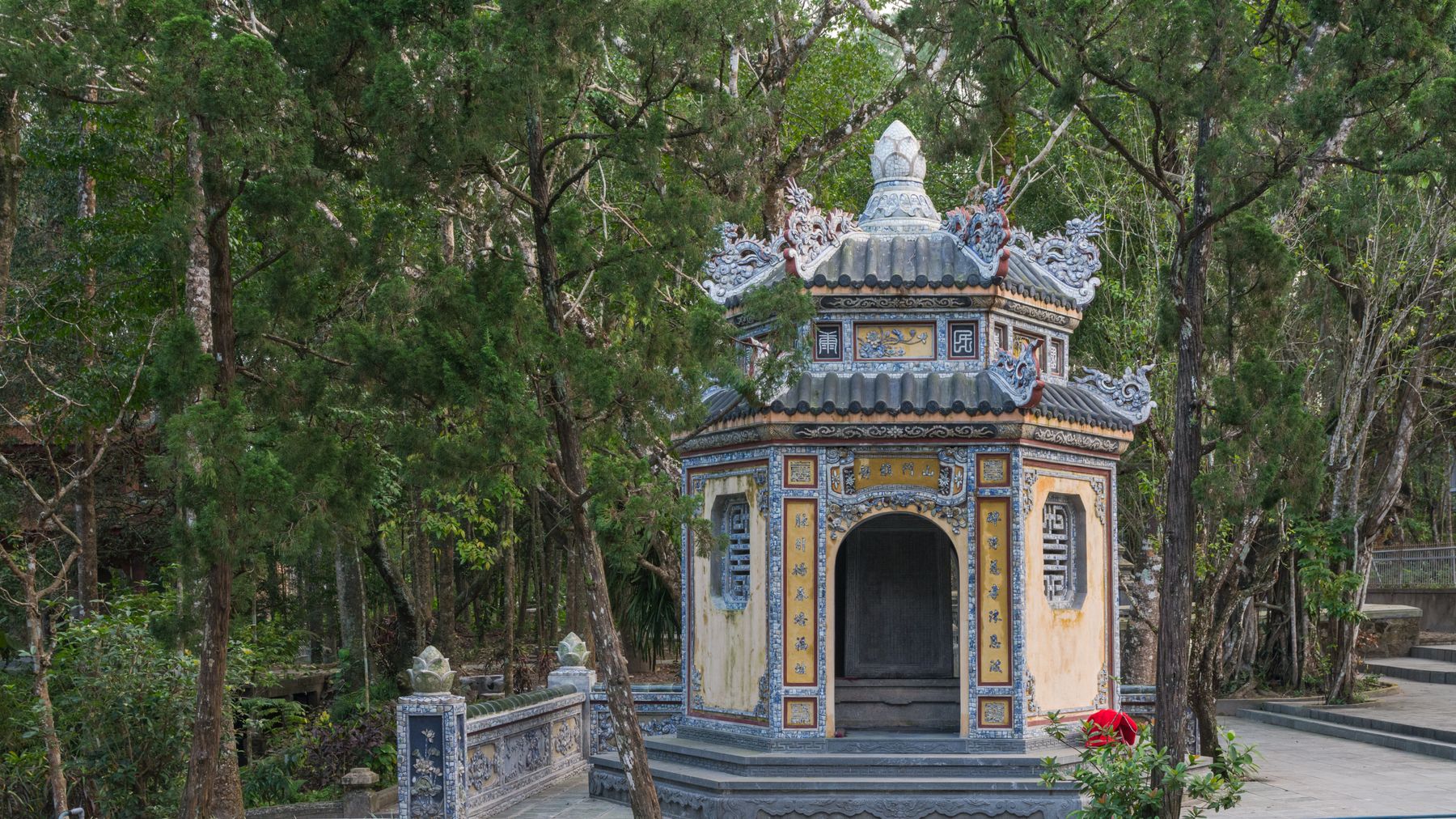
Photo by Ricardo Santanna on Pexels
What to do inside
Walk the five courtyards in order
Don't skip ahead. The complex was designed as a progression — from the bustling entrance through increasingly serene spaces. The first two courtyards are garden areas with frangipani and banyan trees. The third holds the famous stele. The fourth is the ceremonial heart with the main altar to Confucius. The fifth courtyard, rebuilt in 2000, houses exhibits on the university's history.
Spend time with the stele garden
The 82 stone stele in the third courtyard are the highlight. Each records the names of graduates, the exam topic, and sometimes commentary on the state of scholarship at the time. English-language plaques explain several of them. Give this section at least 20 minutes rather than snapping a photo and moving on.
Visit the Quoc Tu Giam exhibition hall
The fifth courtyard has a small but well-curated museum with artifacts from the university's history — woodblock prints, scholar's tools, and reproductions of exam papers. Most visitors breeze past it, which is a mistake.
Watch for calligraphy demonstrations
Scholar-calligraphers sometimes work in the courtyards, especially on weekends and around Tet or the Hung Kings Festival period. You can commission a personalized piece in Chinese or Vietnamese characters, usually for 50,000–200,000 VND depending on size.
Check the temporary exhibitions
The complex regularly hosts photography and art exhibitions in its side buildings. No extra charge, and they rotate every few weeks.
Where to eat nearby
The surrounding streets have solid options within a 10-minute walk.
- "Bun cha" on Nguyen Khuyen Street: Several small shops serve Hanoi's signature grilled-pork-and-noodle dish for 40,000–50,000 VND. Look for the one with the most motorbikes parked outside — the usual rule.
- "Pho" on Van Mieu Street: There's a no-name pho stall about 200 meters north of the main gate that locals line up at before 8:00 AM. A bowl runs 35,000–45,000 VND. Nothing fancy, just properly made beef broth.
- For egg coffee, head back toward Hoan Kiem Lake — the cafes around Ngu Xa and Hang Gai streets do it better than anything in the immediate temple area.
Where to stay
Most travelers base themselves in the Old Quarter or around Hoan Kiem Lake, both within easy reach.
- Budget: Hostels and guesthouses in the Old Quarter run 150,000–350,000 VND/night ($6–$14).
- Mid-range: Hotels around Hoan Kiem or the French Quarter go for 800,000–1,500,000 VND/night ($32–$60).
- Higher-end: Several boutique hotels on Ma May or Hang Bong streets offer rooms from 2,000,000 VND/night ($80+).
Staying near the temple itself puts you in a quieter residential neighborhood — pleasant, but with fewer restaurant and nightlife options.
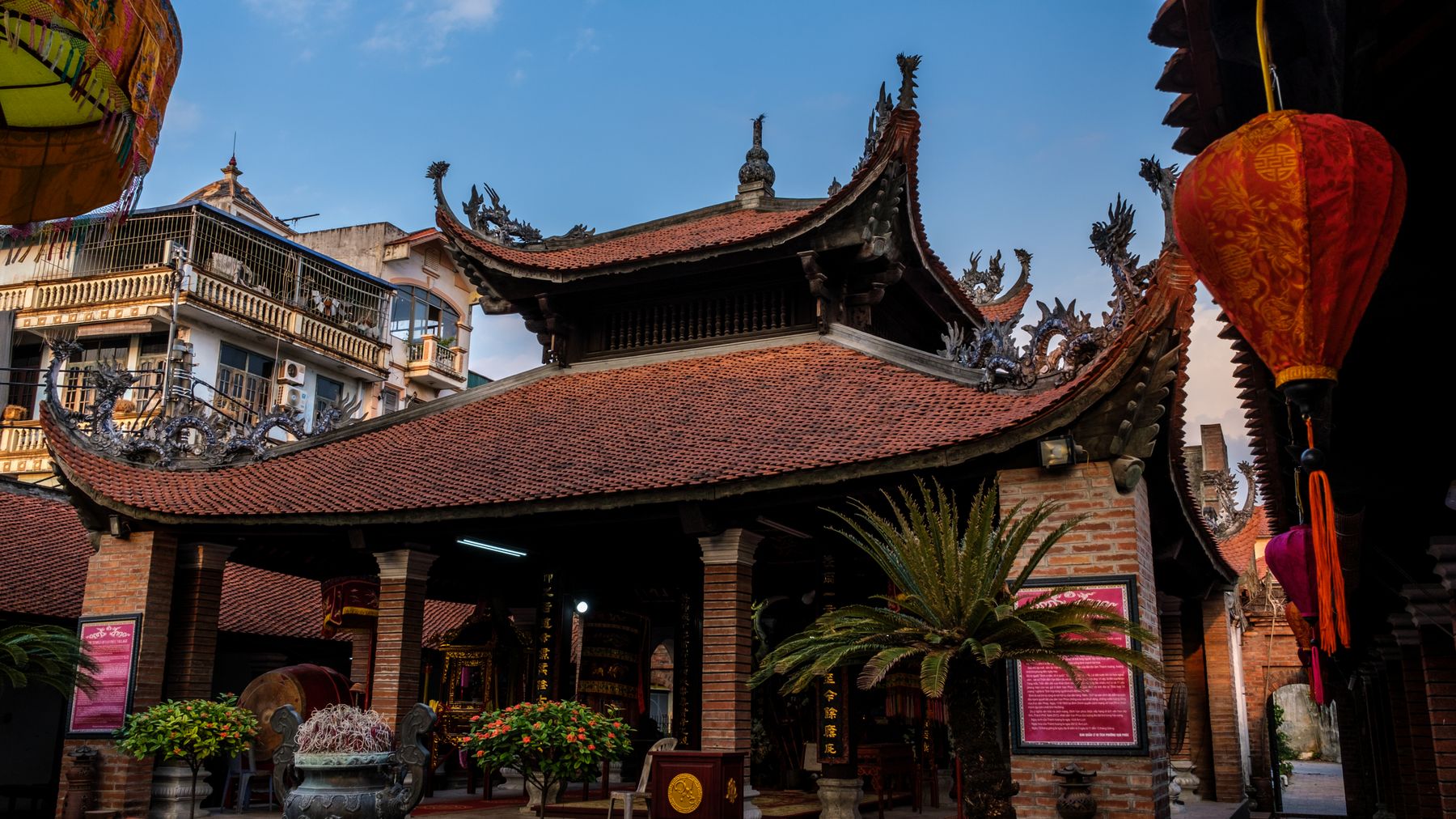
Photo by Nghĩa Văn on Pexels
Practical tips locals would tell you
- Hire a guide or skip the audio guide. The site's English signage is decent but doesn't tell the full story. A local guide (bookable at the entrance for around 200,000 VND) makes the stele garden and ceremonial halls far more meaningful.
- Dress modestly. It's not strictly enforced, but this is a Confucian temple and scholarly site. Covering shoulders and knees is respectful.
- Budget 60–90 minutes. Rushing through in 30 minutes — which most tour groups do — defeats the purpose.
- Bring water. There's limited shade in the courtyards and no real café inside the complex.
Common mistakes to avoid
- Visiting between 10:00 AM and 2:00 PM. Peak tour-bus hours. The courtyards are designed for quiet contemplation, not weaving through selfie sticks.
- Only photographing Khue Van Cac. The pavilion is iconic, but the real substance is in the third and fourth courtyards.
- Rubbing the tortoise heads. It makes for a fun photo, but the wear on 500-year-old stone is real. Staff will ask you to stop.
- Confusing it with the Imperial Citadel Thang Long. They're different sites about 1.5 km apart. Both worth visiting, but plan for separate trips.
Practical notes
Van Mieu - Quoc Tu Giam is open daily from 8:00 AM to 5:00 PM (last entry at 4:30). It's closed occasionally for state events — worth checking if you're visiting around major holidays. The complex is largely wheelchair accessible on the main path, though some thresholds between courtyards are raised.
Last updated · May 29, 2026 · independently researched, never sponsored.