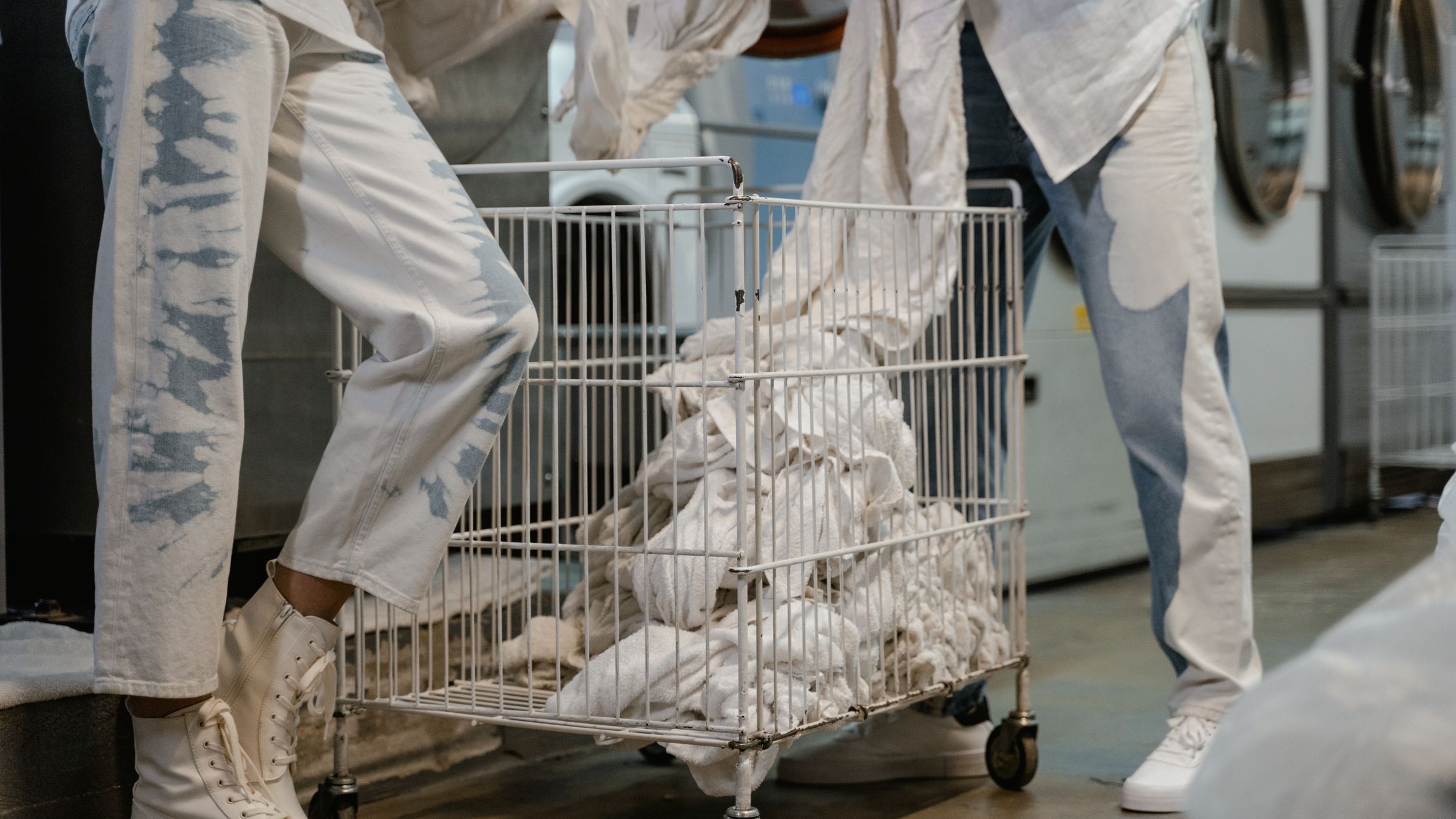
Where to wash clothes in Vietnam
You have three main options: the hotel, a local laundromat ("giat ui"), or your own hands. Most travelers pick the laundromat—it's faster and far cheaper than hotels, and less exhausting than handwashing in a sink.
The choice often depends on where you are and how long you're staying. Backpackers grinding through a two-week route from Hanoi down to Saigon usually hit a laundromat every four or five days. Short-stay tourists bouncing between Hoi An and Da Nang might just use the hotel. Either way, you'll figure out a rhythm fast—laundry in Vietnam is simple once you know the system.
Quick reference: laundry at a glance
- Hotel laundry: 25,000–60,000 VND per item. Turnaround 24 hours (same-day +50%). Best for short stays or emergencies.
- Local laundromat ("giat ui"): 30,000–50,000 VND per kg. Turnaround 24–48 hours (same-day +50%). Best value for most travelers.
- Self-service machines: Rare. 30,000–50,000 VND per load where available. Mostly Hanoi and Saigon (사이공 / 西贡 / サイゴン) expat areas.
- Handwashing: Free. Practical only for light fabrics. Drying takes 1–3 days depending on season and airflow.
- Guesthouse washing machine: Some hostels and guesthouses let you use theirs for free or 20,000–30,000 VND. Ask at the front desk.
- Payment: Cash is king. Some shops accept Momo or Zalo Pay—don't count on it outside major cities.
Hotel laundry
Expect to pay 25,000–60,000 VND per item, or roughly $1–3 USD each. A T-shirt costs about 30,000 VND; jeans or a shirt run higher. Turnaround is usually 24 hours, though some places offer same-day service for a 50% premium.
This is the most expensive route, but it's fuss-free. Staff will sort, wash, dry, and return everything folded or on hangers. Use it when you're in a hurry or staying only a night or two.
At mid-range hotels in cities like Hue or Da Lat, you'll typically find a laundry form in the room—fill it out, place the bag outside your door, and it comes back the next afternoon. Higher-end places in Saigon's District 1 or Hanoi (하노이 / 河内 / ハノイ)'s Hoan Kiem area sometimes include a few free items per stay, so check your booking details. Budget hotels and hostels rarely offer in-house laundry at all; they'll point you to the nearest "giat ui" instead.
One thing to note: hotel prices are per item, not per kilo. That means a single pair of socks costs the same as a polo shirt on most price lists. If you have a big load, the math gets painful fast. Five T-shirts, two pairs of shorts, underwear, and socks can easily hit 300,000–400,000 VND at a hotel—triple what a laundromat would charge for the same pile.
Local laundromats (giat ui)
This is where most long-term travelers go. A typical "giat ui" charges by weight: 30,000–50,000 VND per kilogram (2.2 lbs). A full backpack's worth of clothes—maybe 3–4 kg—costs 90,000–150,000 VND and takes 24–48 hours.
You can find them on Google Maps (search "giat ui" + your neighborhood) or ask your guesthouse staff. They're often tucked into residential areas, not flashy storefronts. Drop off in the morning, pick up the next day or two days later.
In Hanoi, the Old Quarter and the streets around Ta Hien have a few reliable spots, though you may need to walk five minutes into the alleys off Hang Bac or Hang Be. In Saigon, the backpacker strip of Bui Vien in District 1 has laundromats on practically every side street—Pham Ngu Lao and De Tham too. In Hoi An, look along Hai Ba Trung or Tran Hung Dao streets, a short walk from the Ancient Town. Da Nang has plenty scattered around the My Khe beach area and along Nguyen Van Linh.
Most laundromats offer same-day service, but it costs extra—usually 50% more. If you need clothes by evening, ask when you drop them off. Some places can turn around a small batch in 4–6 hours.
Staff usually speak minimal English, but you can point to items, show them on your fingers how many kilos you think it is, and nod. They'll weigh everything. Payment is cash only at most places; a few accept e-wallet transfers via Momo or Zalo.
A useful detail: most laundromats wash and dry-fold as a single service. "Giat ui" literally means "wash and iron," though ironing is standard only at some shops. If you specifically want items ironed or pressed, confirm when you drop off. Some charge an extra 5,000–10,000 VND per kg for ironing.

Photo by tu nguyen on Pexels
Self-service laundromats
These are rare in Vietnam. You'll find a handful in big cities like Hanoi and Saigon, mostly near expat neighborhoods or university areas, but they're not common. If you prefer not to hand clothes to a stranger, ask your guesthouse—many have washing machines guests can use for free or a small fee.
In Hanoi, a couple of coin-operated laundromats have opened around the Tay Ho (West Lake) expat district and near Cau Giay. In Saigon, Binh Thanh and Thu Duc (near universities) have a few. Expect 30,000–50,000 VND per load for the machine, plus 20,000–30,000 VND if you use the dryer. You'll need to bring your own detergent or buy a single-use packet on site for about 5,000 VND.
Da Nang, Nha Trang, and Da Lat have almost none. In smaller cities and towns—Sapa, Ninh Binh, Phu Quoc—self-service machines simply don't exist. The drop-off "giat ui" model dominates the country.
Useful Vietnamese phrases for laundry day
You don't need much language to get your clothes washed, but a few phrases help, especially outside tourist zones.
- "Giat ui" (wash and iron) — the word for laundry service. Point to your bag and say this; they'll understand.
- "Bao nhieu?" (how much?) — useful when the price isn't posted.
- "Khi nao xong?" (when will it be done?) — they'll usually answer with a time or hold up fingers for hours.
- "Hom nay duoc khong?" (is today possible?) — asking for same-day service.
- "Can than" (be careful) — say this while pointing to a delicate item.
- "Khong say" (don't use the dryer) — if you want air-dry only.
Most of the time, Google Translate's camera mode or a simple translation screenshot on your phone does the job. But even a badly pronounced "giat ui" gets a smile and a nod.
What to watch out for
Delicate items. Don't send silk, linen, or anything hand-wash-only unless you trust the place. Confirm with staff—mime "careful" and point to the fabric. Most laundromats are rough-and-tumble operations; they use hot water and heavy machines.
Color bleeding. Your reds and blacks might bleed onto lighter clothes, especially if washed together for the first time. Mention if you have dark new items.
Small sizes. Socks, underwear, and lightweight pieces sometimes go missing. Put them in a small mesh bag if you can, or just accept it as a cost of travel.
Confirmation. Take a photo of your items before handing them over, or ask for a receipt with a list. Most laundromats are trustworthy, but this gives you a reference if anything goes wrong.

Photo by Huu Huynh on Pexels
Common mistakes foreigners make
Waiting until the last night. If you're catching an early bus from Hoi An to Da Nang or a flight out of Saigon, don't drop laundry off the evening before. Standard turnaround is 24 hours minimum, and many shops close by 8 p.m. Plan one full day ahead.
Assuming all laundromats are the same price. Shops within 200 meters of a tourist cluster—around Ben Thanh Market in Saigon, or the Bia Hoi corner in Hanoi's Old Quarter—charge 40,000–50,000 VND per kg. Walk ten minutes into a residential lane and you'll pay 25,000–35,000 VND. The quality is usually identical.
Sending everything together without sorting. Staff at cheap laundromats throw it all in one machine unless you say otherwise. If you have a brand-new indigo-dyed pair of jeans and a white linen shirt, separate them yourself and mention it.
Expecting hangers and plastic wrap. Hotel laundry comes back presentation-ready. Laundromat laundry comes back in a plastic bag, folded but not pressed. That's normal—it's a 50,000 VND service, not a dry cleaner.
Forgetting to check pockets. This sounds obvious, but more travelers lose cash, earbuds, or hotel key cards to the wash than they'd admit. Empty your pockets before you hand anything over.
Not asking about detergent for sensitive skin. Vietnamese laundromats use whatever industrial detergent is cheapest. If you have allergies or eczema, bring your own travel-size detergent or soap sheets and ask them to use it. Most will comply if you hand it to them directly.
Regional and seasonal notes
Vietnam stretches over 1,600 km north to south, and laundry logistics shift with geography and weather.
Northern Vietnam): From November through February, it's cool and sometimes damp. Clothes take longer to air-dry, and laundromats get busier because everyone needs the dryer. In Sapa especially, where humidity sits high even in the cold months, handwashing is impractical—use a local shop. Prices in Sapa's tourist center run slightly higher, around 40,000–50,000 VND per kg, compared to 30,000 VND in Hanoi's residential neighborhoods.
Central Vietnam (Da Nang, Hoi An, Hue): The rainy season here is roughly September through December, peaking in October and November. Flooding can disrupt services in Hoi An's low-lying Ancient Town area. If you're visiting during this window, don't leave laundry until the last minute—power outages and shop closures happen during heavy storms. In the dry months (February–August), turnaround is fast and reliable.
Southern Vietnam (Saigon, Phu Quoc, Da Lat, Mekong Delta): The south has two seasons—dry (November–April) and wet (May–October). During the wet season, afternoon downpours are almost daily, but they're short. Laundromats run fine year-round. Saigon has the widest selection and lowest prices outside of tourist corridors: 25,000–30,000 VND per kg in Districts 3, 4, and Binh Thanh. Phu Quoc is more limited—rely on your hotel or the few shops in Duong Dong town.
Da Lat deserves a separate mention. The mountain climate means cooler, drier air, and clothes air-dry surprisingly fast on a balcony. If you're spending a couple of nights there, handwashing light items is genuinely easy.
Timing and turnaround
Standard: 24–48 hours, depending on volume. If they're busy (rainy season, lots of tourists), it might stretch to 2 days.
Same-day: Available at most places but costs 50% extra. Ask before you commit. They'll usually need your items by 8 or 9 a.m. to deliver by evening.
Weekend delays: Some smaller laundromats close on Sunday or are slow Monday after the weekend rush. Plan ahead if you're in a tight spot.
Handwashing
If you're staying in a guesthouse with a sink, it takes 15 minutes and costs nothing. Use cold water, a bit of detergent (ask staff), and hang everything to dry in the breeze. This works for light fabrics—T-shirts, underwear, socks—but not heavy items like jeans.
Drying is the real challenge. Vietnam is humid; clothes can take 2–3 days to dry indoors without air conditioning. A balcony or fan helps. In the dry season (November–April), you're fine. In summer or the rainy season, mold can set in. If you go this route, squeeze and wring aggressively, then hang in a breezy spot.
A practical trick: if your room has air conditioning, hang damp clothes on a chair or hanger directly in the AC airflow before bed. The cold, dry air pulls moisture out fast. By morning, most light items are wearable. This works especially well in budget hotels across Saigon and Da Nang where AC units blast hard.
What about dry cleaning?
If you're traveling with an "ao dai" you bought in Hoi An, or a blazer for a business meeting in Saigon, you might need actual dry cleaning. It exists, but only in larger cities. In Hanoi, look around the Hai Ba Trung and Dong Da districts. In Saigon, District 1 and District 3 have several. Expect to pay 80,000–200,000 VND per garment depending on the fabric and complexity, with a 2–3 day turnaround.
Smaller cities—Hue, Da Lat, Nha Trang—have limited or no dry cleaning. If you're carrying anything that truly can't be machine-washed, save it for a major city stop.
Bottom line
For most travelers: find a local laundromat within a 10-minute walk of your guesthouse. Ask staff for a recommendation, drop off in the morning, pick up the next day. It costs 100,000–150,000 VND for a full load and beats paying by the garment at the hotel. Handwashing is free but slow and only practical for light items. Hotel laundry is the backup when you're in a rush or moving on fast.
Laundry isn't the exciting part of a trip—nobody flies to Vietnam to visit a "giat ui." But sorting it out early means you can spend your time eating "pho" in Hanoi, drinking "ca phe sua da" in Saigon, or wandering through Hoi An without worrying about running out of clean shirts. Get it off your list on day two and forget about it.
Last updated · May 29, 2026 · independently researched, never sponsored.