
Vegetarian eating in Hanoi isn't a niche thing—it's woven into the city's food culture through Buddhism, affordability, and a growing number of dedicated restaurants. Whether you're looking for casual street-level spots or proper sit-down dining, the options are better than most travellers expect.
The Vietnamese word you need is "chay" — it means vegetarian or vegan in a food context, and you'll see it on signage everywhere from pagoda canteens to proper restaurants. On the 1st and 15th of each lunar month, millions of Vietnamese Buddhists eat "chay" for the full day, which means even non-vegetarian restaurants often run a plant-based menu on those dates. That cycle keeps the supply chain sharp: tofu makers, mushroom growers, and mock-meat producers in Hanoi are genuinely good at what they do because the demand never drops.
Loving Hut
LovingHut is the most reliably accessible vegetarian chain in Hanoi, with branches in the Old Quarter and near Hoan Kiem Lake. The menu is straightforward: mock meats, noodle dishes, and rice bowls. The "mock chicken with lemongrass" holds up better than you'd think, and their "pho chay" (vegetarian pho) with a clean broth and tofu is solid for lunch. Prices run 60,000–120,000 VND per main. It's fast-casual, no pretence, and you can walk in any time without reservation. Don't expect complexity, but the execution is clean.
The Old Quarter branch on Hang Bong street is the most convenient for tourists staying near Hoan Kiem. It opens at 9:00 a.m. and closes around 9:00 p.m., so it covers both lunch and dinner. If you're craving something noodle-based but want a break from pho, their "bun chay" — a vegetarian riff on the rice vermicelli bowls you see all over Hanoi (하노이 / 河内 / ハノイ) — comes with fried tofu, pickled daikon, and a sweet-sour dipping sauce. It's not trying to be bun cha, but it fills the same role in your meal rotation.
Tamarind Cafe
Tamarind sits in the French Quarter and markets itself as a vegetarian-friendly Vietnamese restaurant rather than purely vegetarian. The menu splits between meat and plant dishes, but the vegetarian "banh xeo" (crispy pancake) with mushroom and tofu filling, and the herb-heavy "goi cuon" (fresh rolls) made with extra greens and crispy tofu, are standouts. The space feels relaxed—wooden tables, soft lighting—and prices are moderate (80,000–150,000 VND). It's the kind of place expats and tourists mix with locals, so service is attentive and English-friendly.
One thing worth knowing: Tamarind also does a decent vegetarian "banh cuon" — thin steamed rice sheets rolled around minced mushroom instead of the usual pork. It comes with fried shallots and a light dipping sauce. Most tourists walk past "banh cuon" stalls without knowing what they are, so trying the dish here in a comfortable setting is a good introduction before you graduate to the street version. The restaurant is on Ma May street, open from 10:00 a.m. to 10:30 p.m. daily, and reservations aren't necessary unless you're a group of six or more.
Aubergine
Aubergine is Hanoi's most serious vegetarian-focused fine dining. Located near Tran Quoc Pagoda in Ba Dinh district, the kitchen treats vegetables as the main ingredient, not a substitution. Dishes rotate seasonally, but expect things like roasted cauliflower with fermented black beans, tofu skin rolls with mushroom duxelles, and desserts that use coconut or fruit rather than dairy. The tasting menu runs around 250,000–350,000 VND, and they take reservations only (call ahead). It's the closest thing to a true vegetarian destination restaurant in the capital.
The sourcing here is what sets it apart. The kitchen works with small farms in Da Lat — Vietnam's highland agricultural hub about 1,500 km south — for specialty produce like artichokes, strawberries, and heirloom tomatoes that you won't find in Hanoi's wet markets. If the tasting menu feels like a commitment, they also offer an a la carte lunch with smaller plates in the 80,000–120,000 VND range. The restaurant is about 2 km from the Old Quarter, easily reached by taxi or Grab in 10–15 minutes.

Photo by Nimit N on Pexels
Hum
Hum is a vegan-certified restaurant in the Old Quarter focused on "plant-based comfort food." The "banh mi" here uses marinated tofu and pickled vegetables on a crispy baguette—not a meat substitute, just proper ingredients. Their daily noodle specials and rice bowls are honest and filling. The space is small and gets crowded at lunch, but counter seating moves fast. Mains are 50,000–90,000 VND. It's unpretentious and very local; you'll eat alongside office workers and students.
Buddhist Canteen at Tran Quoc Pagoda
Tran Quoc Pagoda, Hanoi's oldest pagoda, sits on a small island in the Red River. Inside the compound is a humble canteen (no English signage) where Buddhist monks and devotees eat lunch. The food is simple "chay" (pure vegetarian) dishes—stir-fried greens, tofu soup, rice with pickled vegetables—cooked fresh each day. It's not fancy, but the quality is high because it's made for the monks' own consumption. You'll pay around 30,000–50,000 VND for a proper meal. Go around 11:30 a.m. to 1 p.m.; after that, the kitchen closes. The canteen feels like a genuine spiritual place, not a restaurant, which is part of the charm.
If you're visiting other historical sites in the area, the Temple of Literature is about 3 km south and also has small vegetarian food vendors along the surrounding streets during lunar festival days. Pagoda canteens like this one exist across Vietnam — you'll find similar setups at temples in Hue and Ninh Binh — but the one at Tran Quoc is the most accessible for first-time visitors because of its central location on West Lake.
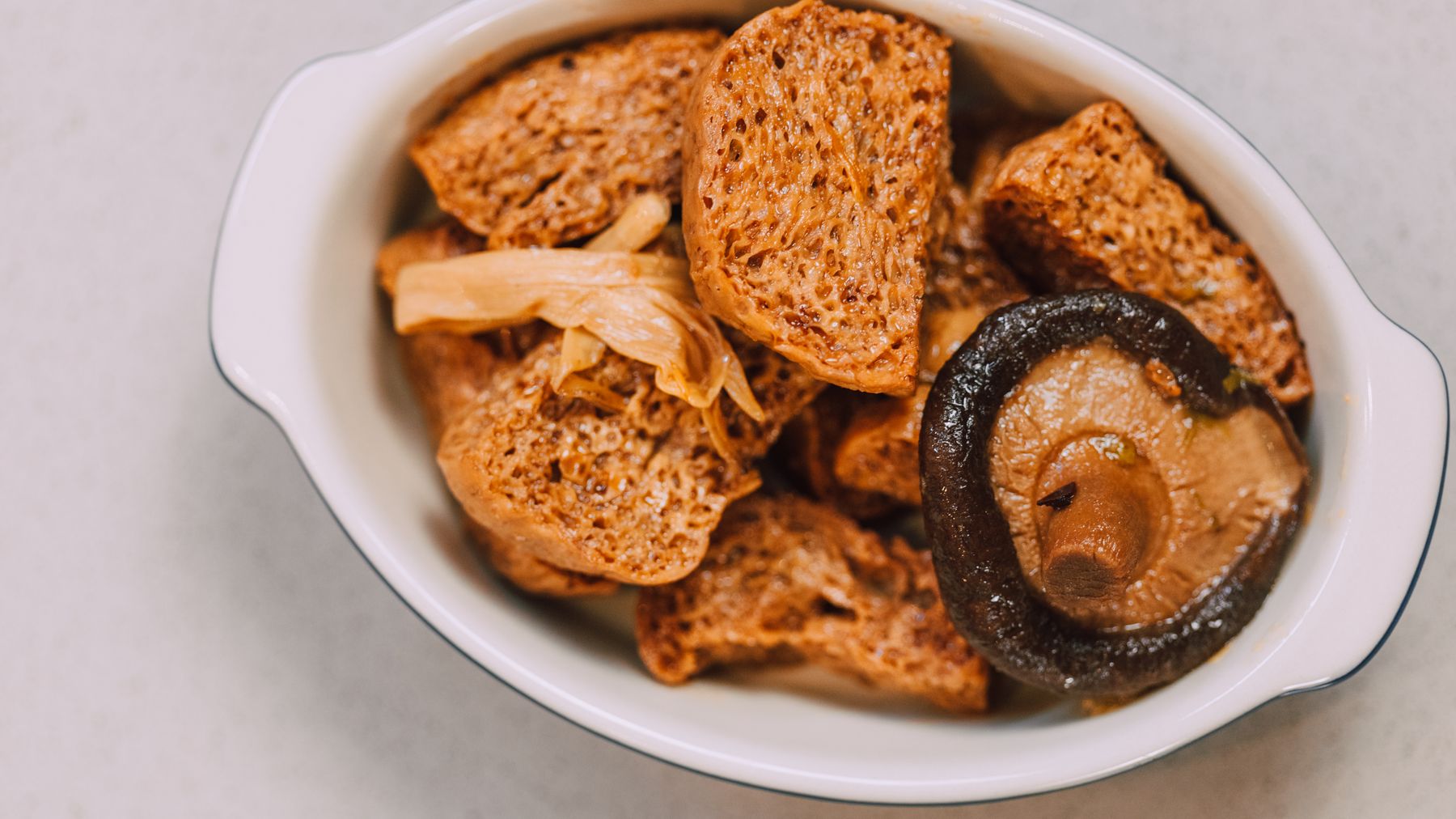
Photo by RDNE Stock project on Pexels
Pho Chay (Vegetarian Pho) Around Town
Don't overlook standalone "pho (쌀국수 / 越南河粉 / フォー) chay" stalls, especially in the Old Quarter and around pagodas. A proper vegetarian pho uses a broth made from mushrooms, dried shiitake, ginger, star anise, and cinnamon—simmered longer than usual to build flavour. The bowl is finished with tofu, vegetables, and fresh herbs. A standard bowl costs 25,000–40,000 VND. The best spots are hole-in-the-wall places with 3–4 plastic stools, not restaurants. Ask locals or your hotel for the nearest "pho chay ga tay" (vegetarian pho with special herbs).
Neighborhood Canteens and "Com Chay" Lunch Spots
Beyond the named restaurants, Hanoi runs on a network of "com chay" — vegetarian rice plate — canteens that most tourists never find. These are the places that feed Hanoi's Buddhist community daily and spike in traffic on the 1st and 15th of each lunar month.
The format is almost always the same: you walk up to a glass counter, point at 3–5 dishes from a spread of maybe 10–15 options, and they pile everything onto a plate of rice. Typical choices include braised tofu in tomato sauce, stir-fried morning glory with garlic, mock "cha gio" (fried spring rolls) made with taro and mushroom, "canh" (clear soup) with vegetables, and a simple salad of banana flower or green papaya. A full plate with rice and soup costs 25,000–40,000 VND. Some spots include a small dessert — usually "che" (sweet soup) with beans or tapioca.
The best clusters are in Dong Da district around Chua Boc street, in Ba Dinh near Quan Thanh temple, and scattered throughout the narrow alleys south of the Old Quarter. They open around 10:30 a.m. and most are done by 1:30 p.m. — this is lunch food, not dinner. No English menus, no English spoken, but pointing works perfectly. Look for signs that read "Com Chay" or "Quan Chay" in green or yellow lettering.
If you've tried com tam in Saigon — the broken rice plates with grilled pork — the "com chay" format is the vegetarian northern equivalent. Less sweet, more savory, and built around tofu and greens rather than mock meat.
What to Drink
Hanoi's drink culture pairs well with vegetarian eating. A proper Vietnamese coffee — "ca phe sua da" — is vegan by default when made with condensed coconut milk, which several cafes now offer as a standard option. Egg coffee, Hanoi's signature drink, uses egg yolk and condensed milk, so it's vegetarian but not vegan. You'll find it at Giang Cafe on Nguyen Huu Huan street (around 35,000–45,000 VND) and at dozens of copycat spots nearby.
For something lighter, fresh sugarcane juice — "nuoc mia" — is everywhere on the streets for 10,000–15,000 VND. And if you're eating at a canteen or street stall, a cup of "tra da" (iced tea) is almost always free, left in a jug on the table.
One thing to be aware of: bia hoi, the fresh draught beer served at streetside spots across the Old Quarter, is vegan — just rice, hops, and water — but the snack food served alongside it almost never is. If you're drinking bia hoi and want something to eat, bring your own tofu banh mi from Hum or stick to the roasted peanuts that some stalls keep behind the counter.
What Surprises Foreigners
Mock meat is everywhere, and it's good. Vietnamese Buddhist cuisine has centuries of practice making soy and wheat gluten taste like chicken, pork, and even fish. Visitors from countries where "plant-based" means a sad salad are genuinely surprised by the variety. You'll find mock "bun bo Hue" — the spicy noodle soup from Hue — with textured soy protein standing in for beef, and it works.
Fish sauce is in almost everything that's not labeled "chay." This is the big trap. Even dishes that look vegetarian — stir-fried greens, plain fried rice, noodle soups — almost certainly contain "nuoc mam" (fish sauce) unless you're at a dedicated vegetarian restaurant or canteen. Saying "toi an chay" ("I eat vegetarian") helps, but the safest bet is to eat at places with "chay" in the name.
Lunar calendar dates change everything. On the 1st and 15th of the lunar month, vegetarian options multiply across the city. Regular restaurants add "chay" specials, street vendors switch to tofu, and pagoda canteens are busier and better stocked. Check a lunar calendar app before your trip — landing on one of these dates means you can eat vegetarian almost anywhere.
Breakfast is harder than lunch. Hanoi's breakfast culture revolves around pho, "bun cha," and "banh cuon" — all normally made with meat or fish sauce. Dedicated vegetarian versions exist but are rarer before 10:00 a.m. Your best early morning option is a vegetarian "banh mi" from a bakery or Hum, or a bowl of "chao" (rice porridge) from a canteen if you can find one open.
Vegan is a step harder than vegetarian. "Chay" food in Vietnam often includes dairy-like condensed milk in drinks and egg in certain dishes. If you're strictly vegan, say "toi an thuan chay" ("I eat pure vegetarian / vegan") and double-check sauces. The younger restaurant scene in Hanoi — places like Hum — understands the distinction, but older canteens may not.
Quick Reference
- Key phrase: "Toi an chay" = I eat vegetarian
- Strict vegan phrase: "Toi an thuan chay" = I eat purely plant-based
- Best lunar dates for options: 1st and 15th of each lunar month
- Budget meal (canteen/street): 25,000–50,000 VND per plate
- Mid-range restaurant meal: 60,000–150,000 VND per main
- Fine dining (Aubergine tasting menu): 250,000–350,000 VND
- Peak canteen hours: 11:00 a.m.–1:30 p.m. (lunch only, most close after)
- Best neighborhoods for street-level "com chay": Dong Da (Chua Boc street area), Ba Dinh (near Quan Thanh temple), southern Old Quarter alleys
- Reliable chains: Loving Hut (multiple branches, open 9:00 a.m.–9:00 p.m.)
- Reservation needed: Aubergine only — everything else is walk-in
- Tipping: Not expected at canteens or street stalls; 5–10% appreciated at sit-down restaurants
Practical notes
Vegetarian eating is easier in Hanoi than most Vietnamese cities because the Buddhist community is large. Lunch is your best bet for finding canteens and street stalls; many close by 2 p.m. Most restaurants have English menus or speak enough English to handle dietary questions. Book ahead for Aubergine; everything else accepts walk-ins. Prices range from street-food cheap (25,000 VND) to moderate restaurant pricing (250,000+ VND), so there's something for every budget.
If you're heading south after Hanoi, the vegetarian scene shifts. Hoi An has a handful of dedicated "chay" restaurants near the ancient town, and Saigon has a much larger network of canteens spread across districts 1, 3, and 10. Da Nang is thinner on dedicated spots but has enough pagoda canteens to keep you fed. The "com chay" format works the same nationwide — point, choose, eat.
Final Note
Hanoi's vegetarian food is not an afterthought or a concession to tourists. It's a living part of the city's Buddhist culture, refined over generations and available at every price point from a 25,000 VND canteen plate to a coursed dinner at Aubergine. The key is knowing where to look: follow the "chay" signs, eat at lunch, and don't be afraid of the places with no English menu. Those are usually the best ones.
Last updated · May 29, 2026 · independently researched, never sponsored.



