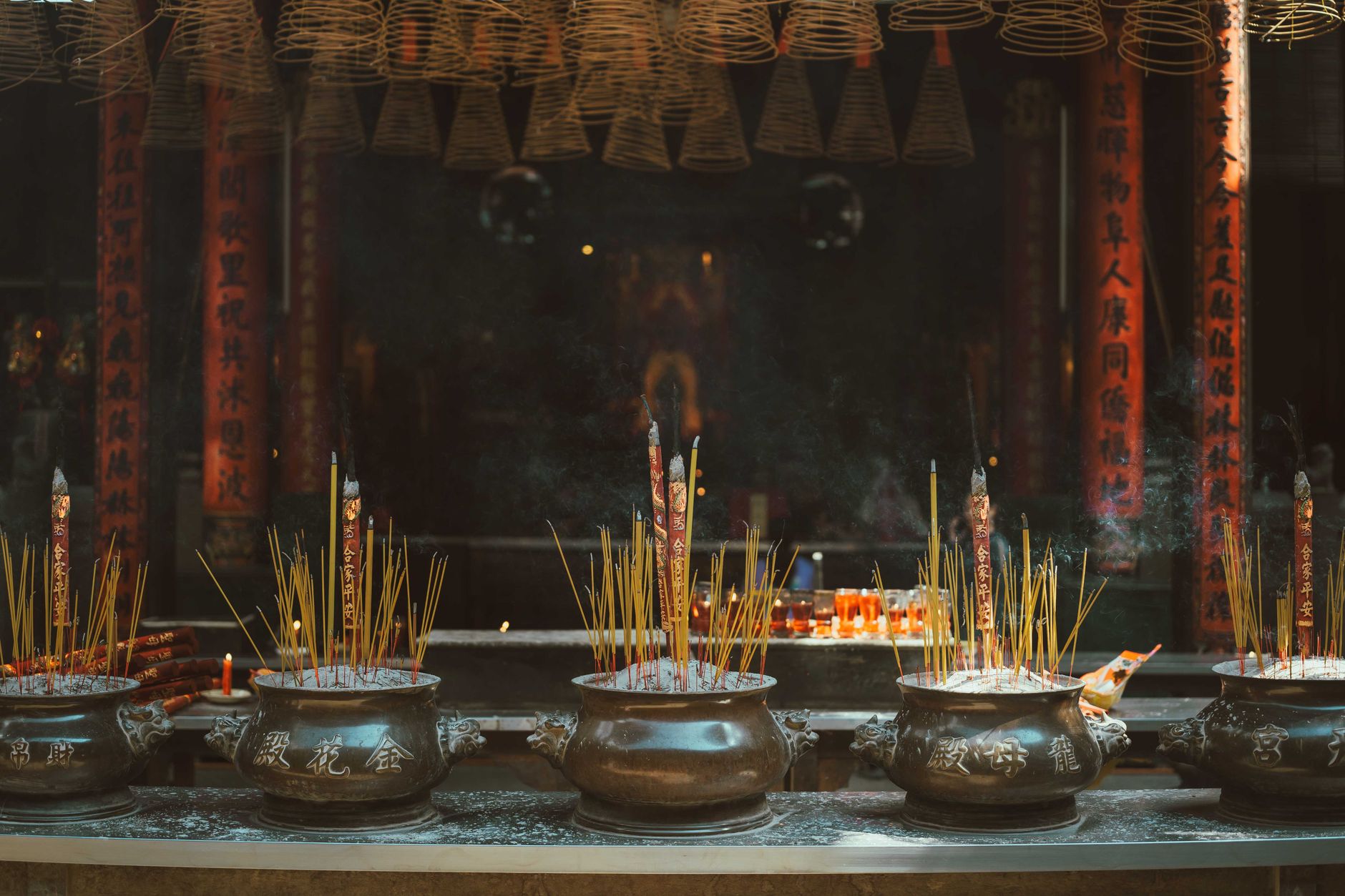
After six years of eating my way through Vietnam (베트남 / 越南 / ベトナム) — plastic stools, sticky sidewalks, and all — I still find new dishes on backstreet corners that make me rearrange my entire day. This list isn't a greatest-hits compilation pulled from guidebooks. It's 30 dishes I've ordered hundreds of times, organized by region, with real prices, real locations, and the Vietnamese phrases that get you served faster.
Use it as a checklist. Print it. Screenshot it. Eat through it.
At a Glance: 30 Dishes by Region
- The North (Hanoi (하노이 / 河内 / ハノイ) & surrounds): Pho, bun cha, bun thang, banh cuon, bun rieu, pho cuon, xoi xeo, cha gio, egg coffee, bia hoi
- The Central Coast (Hue, Da Nang, Hoi An): Bun bo Hue, cao lau, mi quang, com hen, banh khoai, banh canh cua, nem chua, banh beo
- The South): Com tam, hu tieu, banh xeo, goi cuon, banh mi, banh khot, bot chien, che
- Street Drinks & Snacks (nationwide): Ca phe sua da, ca phe trung, sinh to, bia hoi, banh trang nuong, oc
- Price range: Most dishes sit between 25,000–60,000 VND ($1–$2.50 USD). Nothing on this list exceeds 100,000 VND.
The North: Hanoi and the Subtle Art of Simplicity
Northern Vietnamese cooking is restrained. Fewer herbs on the plate, less sugar in the broth, more reliance on a single well-executed element. Hanoi is the undisputed capital of this school, and these ten dishes prove it.
1. Pho
"Pho" needs no introduction, but eating it in Hanoi needs context. Northern pho is cleaner, less sweet, and served with fewer garnishes than the southern version — just a plate of "quay" (fried dough sticks) and maybe some chili sauce on the side. The broth is the entire point.
- Where: Pho Gia Truyen, 49 Bat Dan, Hoan Kiem. Opens at 6 AM and regularly sells out by 10 AM. No sign, just a queue.
- Price: 50,000–60,000 VND
- How to order: "Cho toi mot bat pho bo" (Give me one bowl of beef pho). Add "khong rau thom" if you want no herbs, though up north they barely give you any.
2. Bun Cha
"Bun cha" is Hanoi's lunch dish — grilled pork patties and sliced pork belly served in a bowl of warm, sweet-sour fish sauce broth alongside a plate of rice noodles and a basket of fresh herbs. You dip the noodles into the broth, grab a piece of meat, and eat.
Barack Obama and Anthony Bourdain famously shared a round of bun cha at Bun Cha Huong Lien on Le Van Huu in 2016. The restaurant still serves an "Obama Combo" for 85,000 VND. But honestly, the best bun cha I've had is at a no-name stall near Dong Xuan Market where a woman grills over charcoal in a tin can — 40,000 VND, lunch only.
3. Bun Thang
"Bun thang" is Hanoi's most underrated noodle soup. A delicate chicken broth topped with shredded chicken, sliced pork, egg crepe ribbons, and Vietnamese pork roll. It's precise, layered, and nothing like the heaviness of pho. You rarely see tourists eating it.
- Where: Bun Thang Ba Duc, 48 Cau Go, Hoan Kiem
- Price: 45,000 VND
4. Banh Cuon
"Banh cuon" — steamed rice rolls filled with minced pork and wood ear mushroom, served with cha lua (Vietnamese pork sausage) and a dipping sauce. The sheets are made to order on a cloth stretched over a pot of boiling water. Watch the process: it takes about 30 seconds per sheet.
- Where: Banh Cuon Ba Hoanh, 66 To Hien Thanh, Hai Ba Trung
- Price: 30,000–40,000 VND
5. Bun Rieu
"Bun rieu" is a tomato-based crab noodle soup that hits different from every other bowl in Vietnam. The broth is tangy and rich, thickened with crab paste and topped with fried tofu, tomato chunks, and sometimes congealed pig blood (which you can skip — just say "khong tiet").
- Price: 35,000–50,000 VND at most sidewalk stalls in Hanoi's Old Quarter
6. Pho Cuon
Unstuffed pho noodle sheets rolled around stir-fried beef and herbs. Not soup — a room-temperature roll eaten with fish sauce. Ngu Xa street near Truc Bach Lake has an entire row of pho cuon restaurants.
- Price: 60,000–80,000 VND for a plate of 8–10 rolls
7. Xoi Xeo
Sticky rice dyed yellow with turmeric, topped with mung bean paste and fried shallots. Breakfast food, sold from 6 to 9 AM by women carrying shoulder-pole baskets. Look for them around the Temple of Literature area.
- Price: 15,000–25,000 VND
8. Cha Gio (Northern-Style Spring Rolls)
In the north, "cha gio" are smaller and crispier than the southern version, often wrapped in a thin rice paper skin that shatters on the first bite. They're usually served as a side with bun cha or on their own with dipping sauce.
9. Egg Coffee
"Ca phe trung" — egg yolk whipped with condensed milk and sweetened, poured over strong Vietnamese coffee. It tastes like liquid tiramisu. Invented in Hanoi in the 1940s when fresh milk was scarce.
- Where: Cafe Giang, 39 Nguyen Huu Huan. The original. Go upstairs, sit on a tiny stool, and order "ca phe trung nong" (hot egg coffee).
- Price: 35,000 VND
10. Bia Hoi
"Bia hoi" is fresh draft beer brewed daily with no preservatives. It's served from steel kegs at sidewalk joints across Hanoi, and a glass costs as little as 5,000–7,000 VND — roughly $0.25. The intersection of Ta Hien and Luong Ngoc Quyen in the Old Quarter is the famous bia hoi corner, though it's mostly tourists now. For the local version, hit any "bia hoi" sign in the Ba Dinh or Dong Da districts after 4 PM.
Central Vietnam: Hue, Da Nang, and Hoi An
Central Vietnamese food is bolder, spicier, and — fair warning — saltier than the rest of the country. Hue in particular has a distinct royal cuisine tradition, but the street food is where the real action is. Hoi An has its own micro-cuisine that exists nowhere else.
11. Bun Bo Hue
If "bun bo Hue" were more photogenic, it would be more famous than pho. A fiery, lemongrass-spiked beef and pork knuckle soup with thick round noodles and a slick of chili oil on top. The broth takes hours. This is the dish chefs fly to Hue for.
- Where: Bun Bo Hue Ba Tuyet, 47 Nguyen Cong Tru, Hue. She doesn't smile, but her broth is perfect.
- Price: 30,000–40,000 VND in Hue (60,000+ in Saigon or Hanoi)
12. Cao Lau
"Cao lau" exists only in Hoi An — or at least, the real version does. Thick, chewy noodles (made with water from a specific local well, supposedly) tossed with slices of barbecued pork, greens, croutons, and a small amount of broth. Not a soup. More like a dry noodle dish.
- Where: The central market in Hoi An (Cho Hoi An) has several stalls. 30,000–40,000 VND.
13. Mi Quang
"Mi quang" is Da Nang's pride — wide, turmeric-yellow noodles in a small amount of rich, savory broth with shrimp, pork, quail egg, peanuts, sesame crackers, and a mountain of herbs. The noodle-to-broth ratio is the opposite of pho: mostly noodle, just enough liquid to coat.
- Where: Mi Quang Ba Vi, 166 Le Dinh Duong, Da Nang
- Price: 30,000–40,000 VND
14. Com Hen
Baby clams stir-fried with lemongrass and chili, served over cold rice with peanuts, pork cracklings, banana flower, star fruit slices, and a dozen other toppings. It's a textural circus. A Hue specialty that you eat at breakfast or as a snack.
- Price: 20,000–30,000 VND
15. Banh Khoai
Hue's answer to banh xeo — a smaller, crispier stuffed pancake filled with shrimp, pork, and bean sprouts, fried in a small dedicated pan. The critical difference is the peanut dipping sauce, which is thicker and richer than the southern fish sauce dip.
- Price: 15,000–25,000 VND per pancake
16. Banh Canh Cua
"Banh canh" are thick, chewy tapioca noodles — somewhere between udon and rice noodles in texture. The crab version ("banh canh cua") comes in a starchy, crab-paste-thickened broth with chunks of crab meat and quail eggs. Heavy, rich, deeply satisfying.
- Where: Found across Hue and Da Nang. Look for the words "Banh Canh Cua" on a hand-painted sign.
- Price: 30,000–45,000 VND
17. Nem Chua
"Nem chua" — fermented pork wrapped in banana leaves. It's sour, garlicky, slightly funky, and eaten as a snack with bia hoi or as a roadside bite. Thanh Hoa and Hue are the two capitals of nem chua. Not cooked — it's cured by fermentation, so the texture stays raw-adjacent.
- Price: 5,000–10,000 VND per piece
18. Banh Beo
Tiny steamed rice cakes in saucer-shaped dishes, topped with dried shrimp, scallion oil, and crispy pork skin. You eat them with a small spoon, scraping the cake off the dish. They come in sets of 8–10 dishes.
- Price: 30,000–40,000 VND for a set in Hue
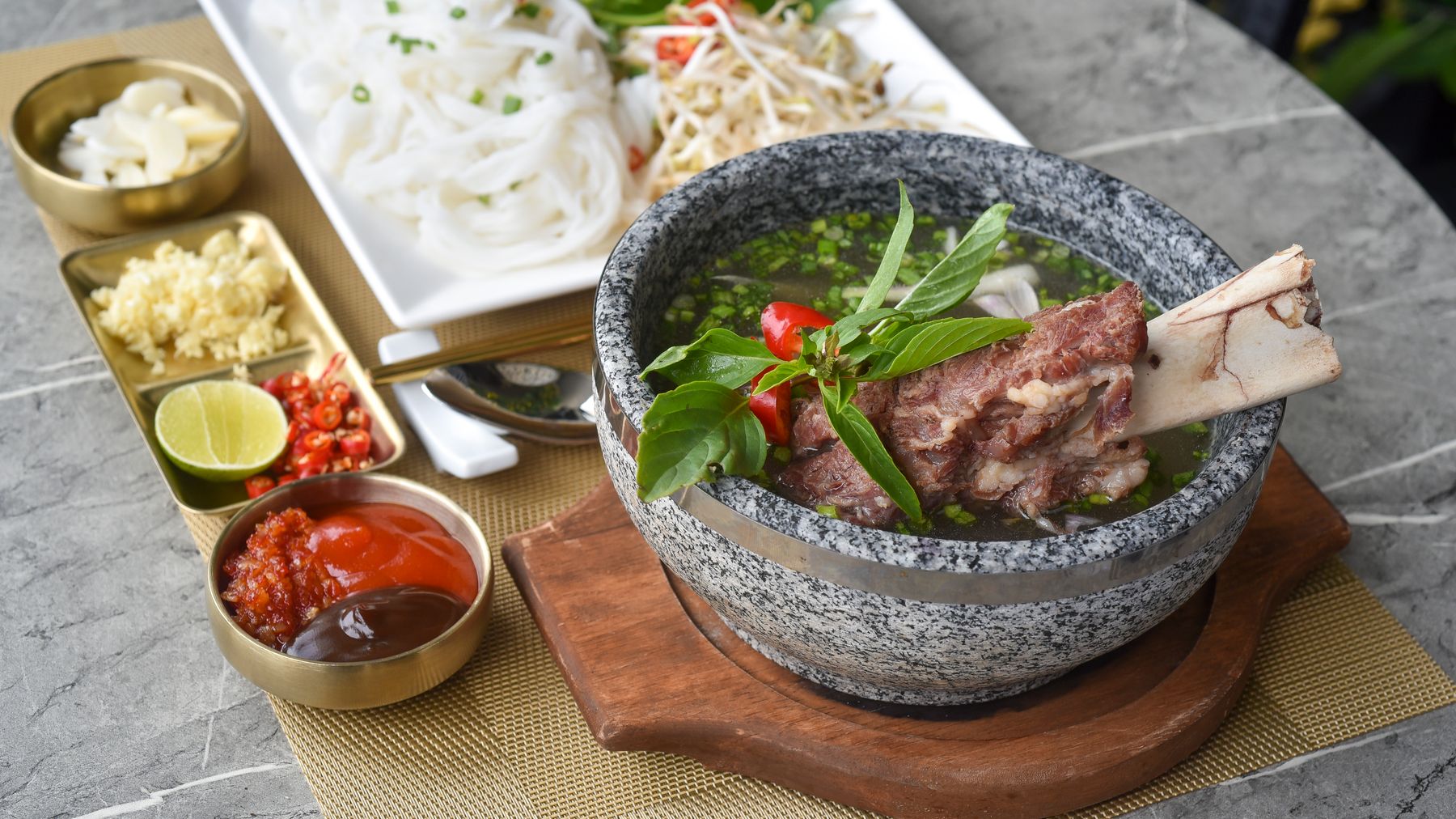
Photo by DUONG QUÁCH on Pexels
The South: Saigon and the Mekong Delta
Southern food is sweeter, bolder, and more generous with herbs than the north. Saigon is where every regional cuisine in Vietnam collides, so you can find nearly everything here — but these dishes are either southern originals or taste definitively best in the south.
19. Com Tam
"Com tam" — broken rice — is Saigon's daily bread. Served with a grilled pork chop (suon nuong), a fried egg, shredded pork skin (bi), and a steamed egg-and-pork meatloaf (cha trung). Fish sauce on the side. The glass of iced tea (tra da) is usually free. Eaten for breakfast, lunch, or dinner.
- Where: Com Tam Ba Ghien, 84 Dang Van Ngu, Phu Nhuan District. There's always a queue.
- Price: 40,000–55,000 VND
20. Hu Tieu
"Hu tieu" is the southern noodle soup — a clear, sweet pork-based broth with thin rice noodles, sliced pork, shrimp, and sometimes offal. It has Chinese-Cambodian roots and varies wildly from stall to stall. You can order it dry ("hu tieu kho") with the broth on the side.
- Where: Hu Tieu Nam Vang is the Phnom Penh style — look for it in Cholon (District 5)
- Price: 40,000–55,000 VND
21. Banh Xeo
A massive, crispy crepe filled with shrimp, pork, and bean sprouts, colored yellow with turmeric. "Banh xeo" literally translates to "sizzling cake" — named for the sound the batter makes hitting the pan. You tear off a piece, wrap it in rice paper and lettuce with herbs, and dip it in nuoc cham.
- Where: Banh Xeo 46A, 46A Dinh Cong Trang, District 1, Saigon
- Price: 50,000–70,000 VND
22. Goi Cuon
"Goi cuon" — fresh spring rolls — are the un-fried counterpart to cha gio. Translucent rice paper wrapped around shrimp, pork, vermicelli, and herbs. Dipped in hoisin-peanut sauce. Best eaten within minutes of being made, before the wrapper gets gummy.
- Price: 25,000–40,000 VND for 2–4 rolls depending on the stall
23. Banh Mi
The Vietnamese baguette sandwich: "banh mi" layered with pate, cold cuts, pickled daikon and carrot, cucumber, chili, cilantro, and mayonnaise. The bread — light, shattery crust, airy interior — is the key. In Saigon, the benchmark remains Banh Mi Huynh Hoa at 26 Le Thi Rieng (District 1), where the line wraps around the block nightly. They overstuff each sandwich to an almost structural-failure degree. 47,000 VND.
In Hoi An, Banh Mi Phuong (2B Phan Chu Trinh) got the Bourdain bump. In Hanoi, Banh Mi 25 on Hang Ca is the consistent choice.
24. Banh Khot
Miniature crispy coconut-milk pancakes cooked in a dedicated cast-iron mold, topped with shrimp and scallion oil. A southern specialty — Vung Tau claims to be the origin. Wrap in lettuce, add herbs, dip in fish sauce.
- Price: 40,000–60,000 VND for a plate of 8–12
25. Bot Chien
Fried rice-flour cakes tossed with egg, served with papaya salad and a tangy soy-based sauce. A Saigon Chinatown (Cholon) snack with Teochew Chinese origins. Eaten in the evening — find it around Nguyen Thi Minh Khai and the District 5 border.
- Price: 30,000–45,000 VND
26. Che
Vietnamese sweet dessert soup/pudding, served warm or cold. Hundreds of varieties: che ba mau (three-color), che chuoi (banana in coconut milk), che dau xanh (mung bean). In Saigon, the che stalls on Nguyen Thai Binh street in District 1 let you mix and match.
- Price: 15,000–30,000 VND
Street Drinks: What to Sip Between Meals
Vietnamese street beverages deserve their own section because they're not afterthoughts — they're rituals.
27. Ca Phe Sua Da
"Ca phe sua da" — iced coffee with condensed milk — is Vietnam's national fuel. Dark-roast robusta dripped through a "phin" filter into a glass of sweetened condensed milk, then poured over ice. It's strong enough to recalibrate your circadian rhythm.
- Where: Every other sidewalk in Vietnam. For a benchmark, try Trung Nguyen Legend Cafe in any major city, or any random "ca phe" sign in a residential alley.
- Price: 15,000–30,000 VND at street stalls, 40,000–65,000 VND at cafes
28. Sinh To
Vietnamese smoothies — "sinh to" — blend fresh tropical fruit with ice, condensed milk, and sometimes yogurt. Sinh to bo (avocado), sinh to xoai (mango), and sinh to sapoche (sapodilla) are the ones to try. Every fruit stall and juice cart makes them.
- Price: 20,000–35,000 VND
29. Tra Da
Free iced tea — "tra da" — is the default drink at most com tam, bun cha, and pho stalls. A large glass appears at your table without you ordering it. In the south it's light jasmine or diluted green tea. In the north it's usually plain.

Photo by Jordan Coleman on Pexels
Snacks: The Food Between the Food
30. Banh Trang Nuong and Oc
Two snacks that define Vietnamese after-dark eating:
-
Banh trang nuong — a "Vietnamese pizza." A rice paper round grilled over coals and topped with egg, scallion, dried shrimp, chili sauce, and sometimes cheese or pork floss. Da Lat's night market is the most famous spot, but you'll find it on sidewalks across Saigon too. 15,000–25,000 VND.
-
Oc — snails. Not the French kind. Vietnamese snail dishes involve dozens of species — from tiny "oc huong" (sweet snails) to massive "oc buou" (apple snails) — stir-fried, steamed, or grilled with lemongrass, chili, and coconut milk. Snail restaurants ("quan oc") are everywhere in Saigon, packed from 5 PM onward. A full spread for two runs 150,000–250,000 VND.
How to Order Street Food in Vietnamese
You don't need fluency. You need five phrases:
- "Cho toi mot..." — Give me one... (then point or say the dish name)
- "Bao nhieu?" — How much?
- "Khong cay" — Not spicy
- "Them nuoc mam" — More fish sauce
- "Tinh tien" — The bill, please
Most vendors understand pointing and numbers. Hold up fingers for quantity. The menu is usually on the wall — a hand-painted board or a laminated A4 sheet.

Photo by FOX ^.ᆽ.^= ∫ on Pexels
Practical Tips for Eating Street Food Safely
Street food safety in Vietnam is mostly common sense, not paranoia. The turnover is so high that the food is almost always fresh. A few guidelines:
- Eat where it's crowded. High volume means fast turnover, which means fresh ingredients. An empty stall at noon is a warning sign.
- Watch the cook. If they're making it in front of you — grilling, frying, ladling from a simmering pot — the heat is doing the safety work.
- Ice is generally fine in cities like Hanoi, Saigon, Da Nang, and Hoi An. Machine-made ice (cylindrical with a hole) is standard. Avoid crushed ice from an unknown source in rural areas.
- Avoid raw vegetables if your stomach is sensitive during the first 2–3 days. Ease into the herb plates.
- Carry cash. Street vendors don't take cards. Keep a stack of 10,000, 20,000, and 50,000 VND notes.
Building a 3-Day Street Food Crawl
If you have three days in one city, here's how I'd eat through it:
Hanoi — 3 Days:
- Day 1: Pho for breakfast (Bat Dan), banh cuon mid-morning, bun cha for lunch, egg coffee at Cafe Giang, bun rieu for dinner
- Day 2: Xoi xeo from a street vendor, bun thang for brunch, bia hoi at 4 PM on Ta Hien, pho cuon for dinner near Truc Bach Lake
- Day 3: Market breakfast at Dong Xuan, nem chua snack, banh mi for lunch, explore the Temple of Literature area, cha gio and bia hoi for dinner
Saigon — 3 Days:
- Day 1: Com tam for breakfast (Ba Ghien), ca phe sua da at a sidewalk stall, banh mi for lunch (Huynh Hoa), goi cuon for a snack, hu tieu for dinner in Cholon
- Day 2: Banh xeo for brunch, bot chien afternoon snack in District 5, oc (snails) for dinner with bia hoi
- Day 3: Banh khot for breakfast, Ben Thanh Market for grazing, che for dessert, banh trang nuong at night
Frequently Asked Questions
How much do most Vietnamese street food dishes cost for first-time visitors?
Most dishes on this list fall between 25,000 and 60,000 VND ($1–$2.50 USD), and nothing exceeds 100,000 VND. A bowl of pho at Pho Gia Truyen on Bat Dan runs 50,000–60,000 VND, banh cuon at Ba Hoanh on To Hien Thanh costs 30,000–40,000 VND, and bun cha near Dong Xuan Market is as low as 40,000 VND. Budget roughly $1–$3 per meal eating from street stalls.
What is the difference between northern and southern Vietnamese pho?
Northern pho, as served in Hanoi, uses a cleaner, less sweet broth and comes with minimal garnishes — typically fried dough sticks called quay and chili sauce. Southern versions include more herbs and toppings. Pho Gia Truyen at 49 Bat Dan, Hoan Kiem, is a reliable reference point for the northern style; it opens at 6 AM and regularly sells out by 10 AM.
When is the best time to arrive at popular Hanoi street food stalls?
Arrive early. Pho Gia Truyen on Bat Dan opens at 6 AM and sells out by 10 AM. Bun cha stalls near Dong Xuan Market operate at lunch only. Many northern Vietnamese street food spots keep short hours tied to a single daily prep batch, so mid-morning or midday visits risk finding stalls already closed for the day.
Bottom Line
Thirty dishes is a starting point, not a ceiling. Vietnam's street food scene runs deeper than any single list can capture — every province has a local noodle, every grandmother has a recipe. The best strategy is the simplest one: find the longest queue, sit on the lowest stool, and point at whatever the person next to you is eating. It hasn't failed me yet.
Last updated · May 29, 2026 · independently researched, never sponsored.