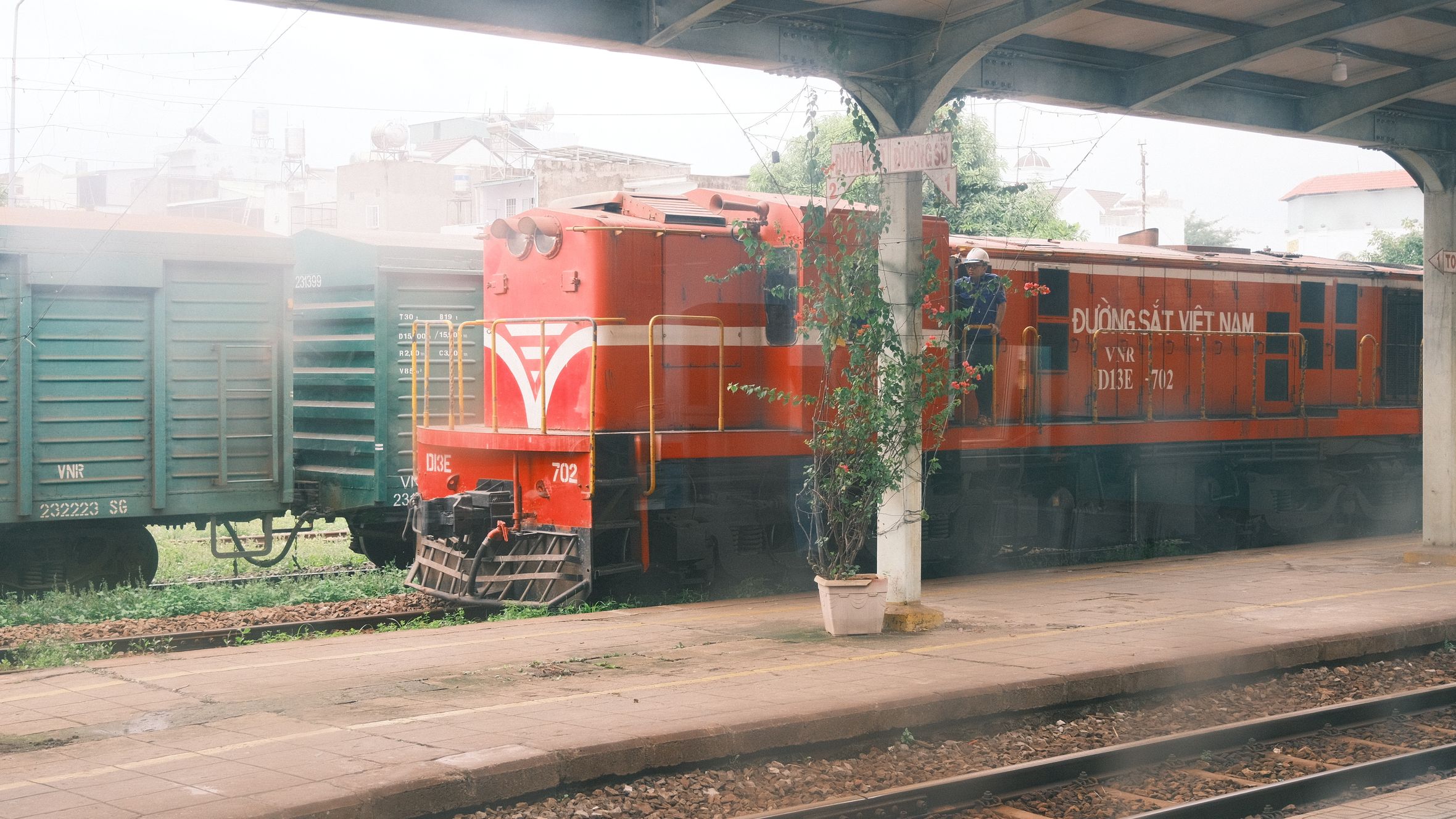
The 1,726 km rail line from Hanoi to Saigon is one of the last great train journeys in Southeast Asia — not because it's fast or luxurious, but because it threads through rice deltas, coastal cliffs, and mountain passes at a pace that lets you actually see the country. I've ridden the full north-south route twice, plus a dozen shorter segments, and the reality is both better and worse than the Instagram version: the Hai Van Pass section north of Da Nang is genuinely spectacular, the toilets at hour 28 are genuinely not, and the whole experience costs less than a decent hotel room.
At a Glance: Vietnam Rail Quick Reference
- Total route: Hanoi (Ga Ha Noi) → Ho Chi Minh City (호치민시 / 胡志明市 / ホーチミン市) (Ga Sai Gon), 1,726 km
- Fastest train: SE1/SE2, approximately 33-34 hours end to end
- Number of stops: 27+ station stops on most services
- Sleeper price range: 700,000–1,500,000 VND ($28–$60 USD) Hanoi–Saigon (사이공 / 西贡 / サイゴン), depending on berth class
- Best scenic stretch: Da Nang to Hue (2.5–3 hours), Hai Van Pass section
- Booking platforms: dsvn.vn (official), Baolau, 12go.asia
- Food on board: Basic rice plates from the dining car, 35,000–55,000 VND; instant noodles free hot water; platform vendors at major stops
- Wi-Fi: None on most cars. Bring your own 4G SIM.
- Power outlets: Available in soft sleeper compartments, unreliable in hard seat
Understanding the Reunification Express: SE Trains Explained
The name "Reunification Express" isn't an official train — it's the popular shorthand for the north-south rail service linking Hanoi and Ho Chi Minh City along the single-track Thong Nhat line. Vietnam Railways (DSVN) runs multiple daily departures in each direction, designated by SE codes.
Here's what matters:
SE1/SE2 and SE3/SE4 — The Fast Trains
- SE1 departs Hanoi southbound; SE2 departs Saigon northbound. These are the fastest services, completing the full run in roughly 33–34 hours.
- SE3 (southbound) and SE4 (northbound) are the second-fastest pair, taking about 34–35 hours.
- Both SE1/SE2 and SE3/SE4 run daily. They make fewer intermediate stops and generally have newer rolling stock.
SE5/SE6 and SE7/SE8 — The Slow Trains
- SE5/SE6 and SE7/SE8 are slower services, adding 2–4 hours to the journey with more station stops.
- The upside: they often have more ticket availability, and some travelers prefer SE5/SE6 because they pass through the Hai Van section in better daylight depending on the season. Check departure times against sunrise/sunset before booking.
TN and Local Trains
Beyond the SE services, there are TN (Thong Nhat) numbered trains and local services. These are significantly slower, older, and less comfortable. Unless you're on a tight budget and have unlimited time, stick with SE trains.
Pro tip: For the Hai Van Pass scenery between Hue and Da Nang, check which SE train passes that stretch during daylight hours. This changes seasonally. A southbound SE1 departing Hanoi in the evening typically hits the Hai Van stretch mid-morning the next day — ideal. Northbound, SE2 departing Saigon in the evening reaches the pass around dawn or early morning. Do the math with current timetables on dsvn.vn.
Soft Sleeper vs Hard Sleeper vs Hard Seat: Which Class to Book
Vietnam trains offer four main classes. Your comfort — and your sanity on anything over 10 hours — depends heavily on choosing the right one.
Soft Sleeper (Nằm mềm điều hoà — 4 berths)
This is what most foreign travelers book, and for good reason:
- 4-berth air-conditioned compartment with a sliding door that locks
- Clean sheets, pillow, and thin blanket provided
- Power outlets (usually two per compartment — bring a multi-plug)
- Lower berths are wider and easier to access; upper berths have more privacy and slightly more headroom for sitting up
- Hanoi–Saigon price: approximately 1,200,000–1,500,000 VND ($48–$60 USD) depending on berth position and train
Hard Sleeper (Nằm cứng điều hoà — 6 berths)
- 6-berth air-conditioned compartment, open or with a curtain (no door on older stock)
- Berths are narrower than soft sleeper, stacked three high
- Bottom berth doubles as a shared sitting area during the day — the middle berth is the sweet spot for privacy
- Hanoi–Saigon price: approximately 800,000–1,100,000 VND ($32–$44 USD)
- Perfectly fine for one overnight segment (Hanoi to Hue, for example). For the full 33-hour run, soft sleeper is worth the upgrade.
Hard Seat (Ngồi cứng) and Soft Seat (Ngồi mềm)
- Upright seats, either padded (soft) or lightly padded (hard)
- Fine for short daytime hops: Da Nang to Hue (2.5 hours), Nha Trang to Quy Nhon
- Not recommended for anything over 5–6 hours unless you're extremely budget-conscious
- Hard seat Hanoi–Saigon: around 700,000 VND ($28 USD) — but 33 hours in a hard seat is a punishment, not a journey
Private Cabin Upgrades
Several private operators attach carriages to DSVN trains, offering 2-berth VIP cabins with wood paneling, better bedding, and sometimes a shared lounge car. Livitrans, Violette Express, and Newman (previously Laman Express) are the main names. These run primarily on the Hanoi–Hue–Da Nang corridor. Expect 1,800,000–3,000,000 VND ($72–$120 USD) for a Hanoi–Hue soft berth in a 2-berth cabin.
They're genuinely nicer. Whether that's worth 2–3x the standard fare depends on your budget.

Photo by Quang Nguyen Vinh on Pexels
The Best Scenic Segments Worth Riding
You don't have to ride the entire Hanoi–Saigon line to get the best of Vietnam by train. Here are the segments actually worth your time:
1. Hue to Da Nang (or reverse) — The Hai Van Pass
This is the single best train ride in Vietnam, full stop. The 103 km stretch takes 2.5–3 hours, and for roughly 30 minutes of that, the train crawls along the Hai Van Pass — a narrow corridor between mountains and the South China Sea.
- Sit on the left side (sea-facing) heading southbound from Hue, or the right side heading northbound from Da Nang
- The pass section features tunnels, bridges over ravines, and views straight down to Lang Co beach and lagoon below
- Hard seat is fine for this short ride: approximately 65,000–90,000 VND ($2.60–$3.60 USD)
- This is the same pass that the Top Gear / Grand Tour crew drove, and the train view is arguably better than the road
2. Da Nang to Quy Nhon
Less famous, but the coastal stretch south of Da Nang through Quang Ngai province runs close to the shoreline with views of fishing villages, salt flats, and empty beaches. About 6–7 hours.
3. Nha Trang to Saigon
The final southbound push passes through cactus-dry coastal scrubland near Mui Ne before flattening into the Mekong-adjacent plains approaching Saigon. A decent overnight segment (7–8 hours) if you want to save a hotel night.
4. Hanoi to Hue — The Full Overnight
The classic backpacker segment. Board in the evening at Ga Ha Noi, wake up in central Vietnam. About 13–14 hours on SE1/SE3. The scenery through Thanh Hoa and Nghe An is flat and agricultural — not dramatic — but arriving in Hue at dawn with the Perfume River in mist is a proper entrance.
How to Book Vietnam Train Tickets
Booking has improved massively in the last few years. You no longer need to queue at the station, though you still can.
Option 1: dsvn.vn (Official Vietnam Railways Site)
- Go to dsvn.vn — the interface has an English-language toggle
- Select origin, destination, date, and passenger count
- Choose your train and berth class
- Pay by international Visa/Mastercard (this now works, though it occasionally rejects non-Vietnamese cards)
- Receive an e-ticket via email — show it on your phone or print it at the station
Pros: Cheapest prices (face value, no markup). Full schedule visibility. Cons: The website is slow, occasionally glitchy, and the English translation is rough. Payment sometimes fails with foreign cards.
Option 2: Baolau (baolau.com)
Baolau is a third-party booking platform built specifically for Vietnam rail and bus tickets.
- Clean English interface, reliable payment processing
- Markup of roughly 20,000–50,000 VND per ticket ($0.80–$2.00 USD) over face value
- E-tickets delivered instantly
- Also sells private cabin upgrades (Livitrans, Violette Express, etc.)
- Best option for most travelers. The small markup buys you a pain-free booking experience.
Option 3: 12go.asia
12go aggregates trains, buses, and ferries across Southeast Asia.
- Good for comparing train vs bus vs flight on the same route
- Slightly higher markup than Baolau (typically 40,000–80,000 VND over face value)
- Reliable, well-established platform
- Useful if you're booking multi-country transport in one session
Option 4: At the Station
Ga Ha Noi (Hanoi station, 120 Le Duan, Dong Da district) and Ga Sai Gon (Saigon station, 1 Nguyen Thong, District 3) both have ticket windows. Arrive at least 2–3 days before travel for popular routes.
- You'll need your passport
- Cash payment accepted; some windows take cards now
- Limited English — write your request: train number, date, class, number of tickets
- This method makes sense if the websites aren't cooperating or if you're booking a short same-day hop
Booking timing: For popular segments (Hanoi–Hue, Hue–Da Nang) during peak season (December–February, around Tet, and July–August), book at least 5–7 days ahead. Soft sleeper berths sell out first. For off-peak travel, 2–3 days is usually fine.
Food on Board: What to Expect and What to Bring
Train food in Vietnam ranges from "decent for the price" to "instant noodles at 2 AM," depending on what you choose.
The Dining Car
Most SE trains have a basic dining car or a food service cart that rolls through the aisles.
- Rice plates (com): chicken, pork, or fish with rice and greens, typically 35,000–55,000 VND ($1.40–$2.20 USD). Serviceable, not memorable.
- "Pho" is sometimes available — a simplified version with thin broth, pre-cooked noodles, and a few slices of beef. It's fine. Don't compare it to a proper bowl on Bat Dan street in Hanoi.
- Beer: Bia Saigon or Bia Ha Noi cans, 20,000–30,000 VND ($0.80–$1.20 USD). Cheaper than "bia hoi" on Hanoi's Ta Hien street, surprisingly.
- "Ca phe sua da" (iced milk coffee) is available but made from instant packets. Bring your own if you care about coffee quality.
Platform Vendors
This is where the real food is. At major station stops (Vinh, Dong Hoi, Hue, Da Nang, Dieu Tri/Quy Nhon, Nha Trang), vendors board the train or sell through the windows.
- "Banh mi" with pate, pork, and pickled vegetables: 15,000–25,000 VND
- Boiled corn, sweet potatoes, sticky rice in banana leaf
- Fresh fruit (dragon fruit, mango, rambutan depending on season)
- The stops are brief — 5 to 15 minutes — so have cash ready and move fast
What to Bring Yourself
Experienced train riders in Vietnam bring:
- Instant noodles (every car has a hot water dispenser — this is the national train snack)
- Fresh "banh mi" from a good shop before boarding (a "banh mi" from Hanoi's Banh Mi 25 on Hang Ca street holds up for 4–5 hours)
- Fruit, nuts, dried snacks
- A large water bottle (500ml bottles sell on board for 10,000 VND, but you'll want more)
- Your own tea or "vietnamese coffee" sachets if the instant stuff isn't acceptable

Photo by 🇻🇳🇻🇳 Việt Anh Nguyễn 🇻🇳🇻🇳 on Pexels
Hanoi to Sapa by Train: Still Worth It?
The Hanoi–Lao Cai rail line was once the default way to reach Sapa. The overnight train drops you in Lao Cai town, from where it's a 35 km minibus ride up to Sapa.
The Honest Assessment
- The train: Departs Hanoi around 9:30–10 PM, arrives Lao Cai around 5:30–6:30 AM. Various operators run private sleeper carriages (Sapaly Express, King Express, Chapa Express). Expect 600,000–1,200,000 VND ($24–$48 USD) for a 4-berth soft sleeper.
- The bus alternative: Modern sleeper buses now run Hanoi to Sapa directly in 5–5.5 hours via the Noi Bai–Lao Cai expressway, costing 250,000–350,000 VND ($10–$14 USD). Several departures daily from My Dinh bus station.
- The verdict: The bus is faster, cheaper, and drops you in Sapa town center instead of Lao Cai. The train is slower, more expensive, and requires a second vehicle from Lao Cai. The train wins only on romance — falling asleep to the clatter of wheels and waking up in the mountains. If efficiency matters, take the bus. If the journey is the point, take the train.
The Ha Giang loop, by comparison, has no rail option at all — it's motorbike or bus only from Hanoi.
Practical Tips for Riding Vietnam Trains
These are the things nobody tells you until you're already on board:
- Bring a power strip. Soft sleeper compartments typically have two outlets for four people. A small power strip makes you popular with your cabin-mates.
- Pack toilet paper. Onboard restrooms sometimes run out, especially past hour 12. Wet wipes are even better.
- Lock your valuables. Soft sleeper doors lock from inside, but stash your passport, phone, and cash in a money belt or under your pillow when sleeping. Petty theft is rare but documented.
- Lower berths cost more — and they're worth it for accessibility and comfort. Upper berths are cheaper and more private.
- The air conditioning runs cold. Bring a long-sleeve layer or light sleeping bag liner. The provided blanket is thin.
- Arrive at the station 30 minutes early. You need to pass through a basic ticket check and find your car (carriages are numbered and your ticket lists the car and berth number).
- Download entertainment offline. There's no Wi-Fi. Cell signal drops in tunnels and mountain sections. Load up your phone before boarding.
- Earplugs are essential. Between the horn, the rails, vendors calling through the aisles, and your cabin-mate's alarm at 4 AM, you'll want them.

Photo by DARKMODE CINEMA on Pexels
Common Routes at a Glance: Time, Cost, and Recommendation
- Hanoi → Hue: 13–14 hours, soft sleeper from ~850,000 VND ($34 USD). Take the overnight SE1/SE3. Solid choice.
- Hanoi → Da Nang: 15–17 hours, soft sleeper from ~950,000 VND ($38 USD). Overnight, arriving mid-morning. Good option if continuing to Hoi An (30 km from Da Nang station by taxi).
- Hue → Da Nang: 2.5–3 hours, hard seat from ~65,000 VND ($2.60 USD). The must-ride scenic segment. Book any class.
- Da Nang → Nha Trang: 10–11 hours, soft sleeper from ~750,000 VND ($30 USD). Decent overnight option.
- Nha Trang → Saigon: 7–8 hours, soft sleeper from ~600,000 VND ($24 USD). Good evening departure, morning arrival.
- Hanoi → Saigon (full route): 33–35 hours, soft sleeper from ~1,200,000 VND ($48 USD). An experience. Do it once. Fly the second time.
- Hanoi → Lao Cai (for Sapa): 8–9 hours, private soft sleeper from ~600,000 VND ($24 USD). Overnight. Consider the bus instead.
Is the Full Hanoi-Saigon Train Worth It?
Let's be direct: flying Hanoi to Saigon takes 2 hours and costs 800,000–1,500,000 VND ($32–$60 USD) on VietJet or Bamboo Airways. The train takes 33+ hours and costs about the same for a soft sleeper berth.
The train makes sense if:
- You want to see the countryside transition from the Red River Delta through the narrow central coast to the Mekong flatlands
- You enjoy slow travel and have the time budget for it
- You're breaking the journey with stops in Hue, Da Nang, or Nha Trang — which is really the smartest way to do it
- You want the experience of eating "banh mi" from platform vendors at 6 AM in Dong Hoi and drinking a Bia Saigon in your bunk while Ninh Binh's karsts slide past the window
The train does not make sense if you just need to get from Hanoi to Saigon efficiently. No judgment — flights exist for a reason.
The sweet spot for most travelers: ride two or three segments (Hanoi–Hue overnight, Hue–Da Nang for the scenery, maybe Da Nang or Nha Trang–Saigon), and fly the rest. You get the best train experience without the diminishing returns of hour 30 in a sleeper berth.
Bottom Line
Vietnam's rail network is slow, aging, and single-track — and riding it remains one of the most rewarding ways to travel the country. The Hue–Da Nang Hai Van Pass stretch alone justifies the detour from a flight itinerary. Book through Baolau for simplicity, bring your own "banh mi" and instant noodles, pack earplugs and a power strip, and sit by the window. The country unfolds at 50 km/h, which turns out to be exactly the right speed.
Last updated · May 29, 2026 · independently researched, never sponsored.