What makes Hue's "ca phe muoi" different
Salt coffee, or "ca phe muoi," is not an accident. It originated in the central highlands (중부 고원 / 中部高原 / 中部高原) as a way to balance the bitterness of robusta beans and mask the taste of water that wasn't always clean. In Hue, the drink evolved into something more deliberate—a mixture of dark roast, sweetened condensed milk, egg yolk, and a pinch of salt. The salt cuts through the richness and creates a savory-sweet tension that doesn't exist elsewhere in Vietnam.
Outside the city, you'll find versions in Hanoi and Saigon, but they tend to be sweeter and less pronounced. In Hue (후에 / 顺化 / フエ), the salt is intentional. You taste it first, then the sweetness arrives. Locals here take pride in that balance—too much salt is amateur, too little defeats the purpose.
Where to find it: the spots locals queue for
Ca Phe Phan Boi Chau (near Dong Ba Market)
This is the closest thing Hue has to a pilgrimage site for salt coffee. Located on Phan Boi Chau Street, a few blocks north of Dong Ba Market, it's a narrow storefront with four plastic stools and standing room only. The owner—Mr. Thanh—has been making the same drink for 18 years. He uses a medium roast robusta from Da Lat, whisks the egg and salt together with a fork until it froths, then pours the hot coffee over the mixture. The result is custard-like, almost mousse-like.
Cost: 18,000 VND (about $0.75 USD) for a small cup. He'll charge 22,000 VND if you want a larger serving.
Best time: 6:30 a.m. to 8 a.m. By 9 a.m., the coffee may be sitting. Locals drink it quickly and move on. He closes by 10 a.m.
Ca Phe Co Tram (Tran Hung Dao Street)
If you can't wake up for Phan Boi Chau, Co Tram is your backup. It's a permanent storefront—not just a cart—with actual seating for eight people. The owner, Mrs. Tram, learned the recipe from her mother-in-law decades ago and doesn't improvise. She uses a French press to brew the coffee and adds a tiny pinch of iodized salt (yes, it matters; sea salt is different). The egg yolk is always fresh, cracked on the spot.
Cost: 20,000 VND for a standard cup.
Best time: 6 a.m. to 10 a.m., but she reopens at 3 p.m. for afternoon customers. Hue has an afternoon coffee culture that other cities don't emphasize as much.
Ca Phe Tay Ho (near Hue Citadel)
This one is less a secret and more a comfortable spot where tourists and locals mix. It's air-conditioned, which matters when it's 35°C outside. The quality is solid—not as obsessive as Phan Boi Chau, but consistent. The salt coffee here is slightly sweeter than other places, which some locals say is a concession to Western palates. Still worth trying if you want context.
Cost: 25,000 VND.
Best time: Morning or late afternoon. Midday it's slammed with tourists.
Ca Phe Mot Goc (Ly Thuong Kiet Street)
A tiny cart operating since 5:30 a.m., run by an older man named Duc who doesn't speak English. He makes a lighter, airier version of salt coffee—the egg and salt are whipped longer, creating more volume. Some locals prefer this; others find it less intense. Try it for comparison.
Cost: 15,000 VND (the cheapest option in Hue).
Best time: Extremely early—6 a.m. to 7:30 a.m. The cart closes when he runs out, which is often by 8:30 a.m.
Ca Phe Voi (Khan Hung Street, near Dong Ba)
Another cart, popular with cyclo drivers and construction workers. The salt coffee here is less sweet than elsewhere, almost savory. The owner adds a small piece of salted custard on top—a variation you won't see everywhere. It's an acquired taste, but if you've had three other versions and want a fourth perspective, go here.
Cost: 16,000 VND.
Best time: 5:30 a.m. to 8 a.m.
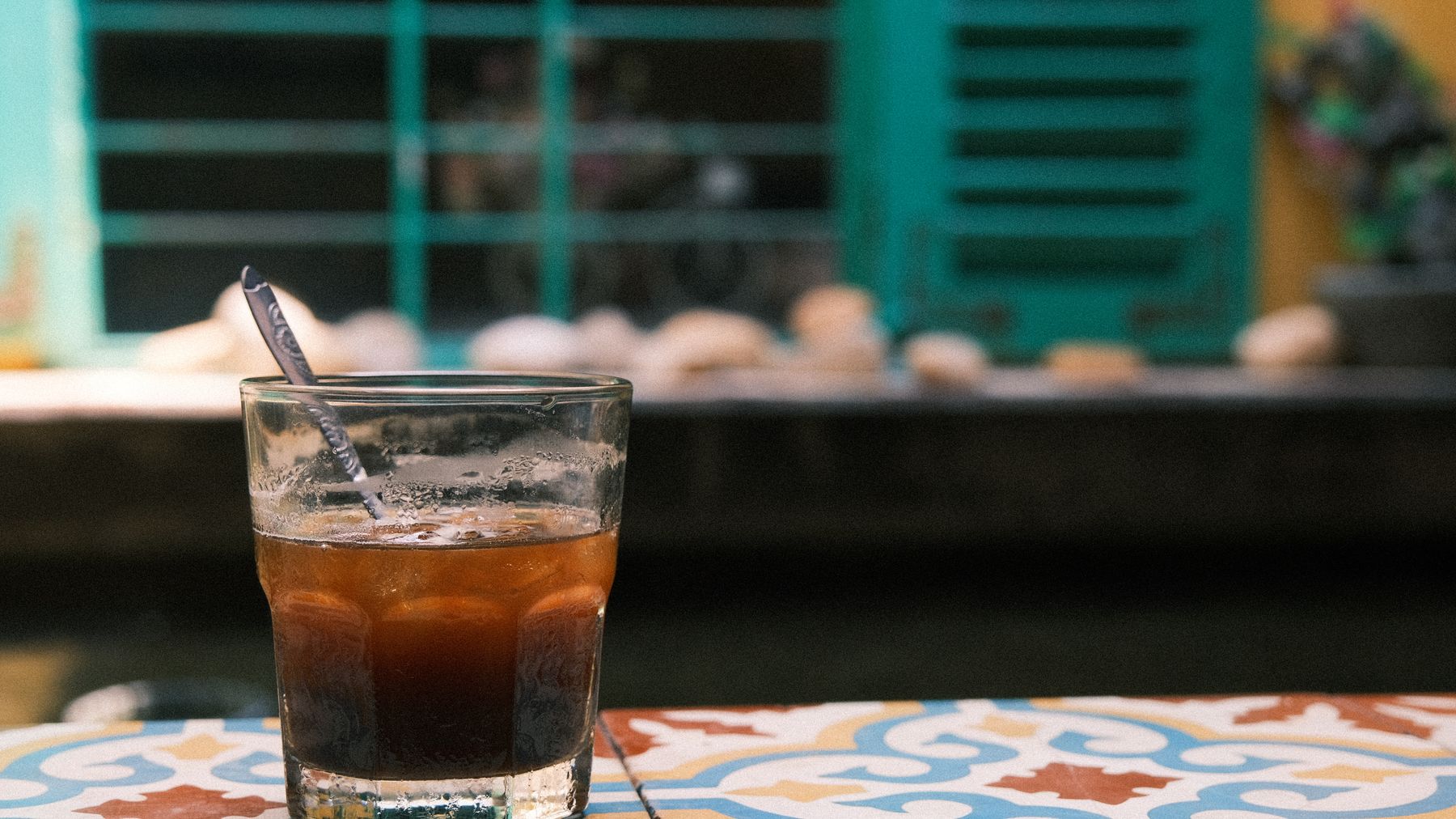
Photo by 🇻🇳🇻🇳 Việt Anh Nguyễn 🇻🇳🇻🇳 on Pexels
How to order
Walk up. Point at the coffee, or say "ca phe muoi, khong da" (salt coffee, no ice). If you want it with ice—which is rare in the morning but common at lunch—say "ca phe muoi, co da."
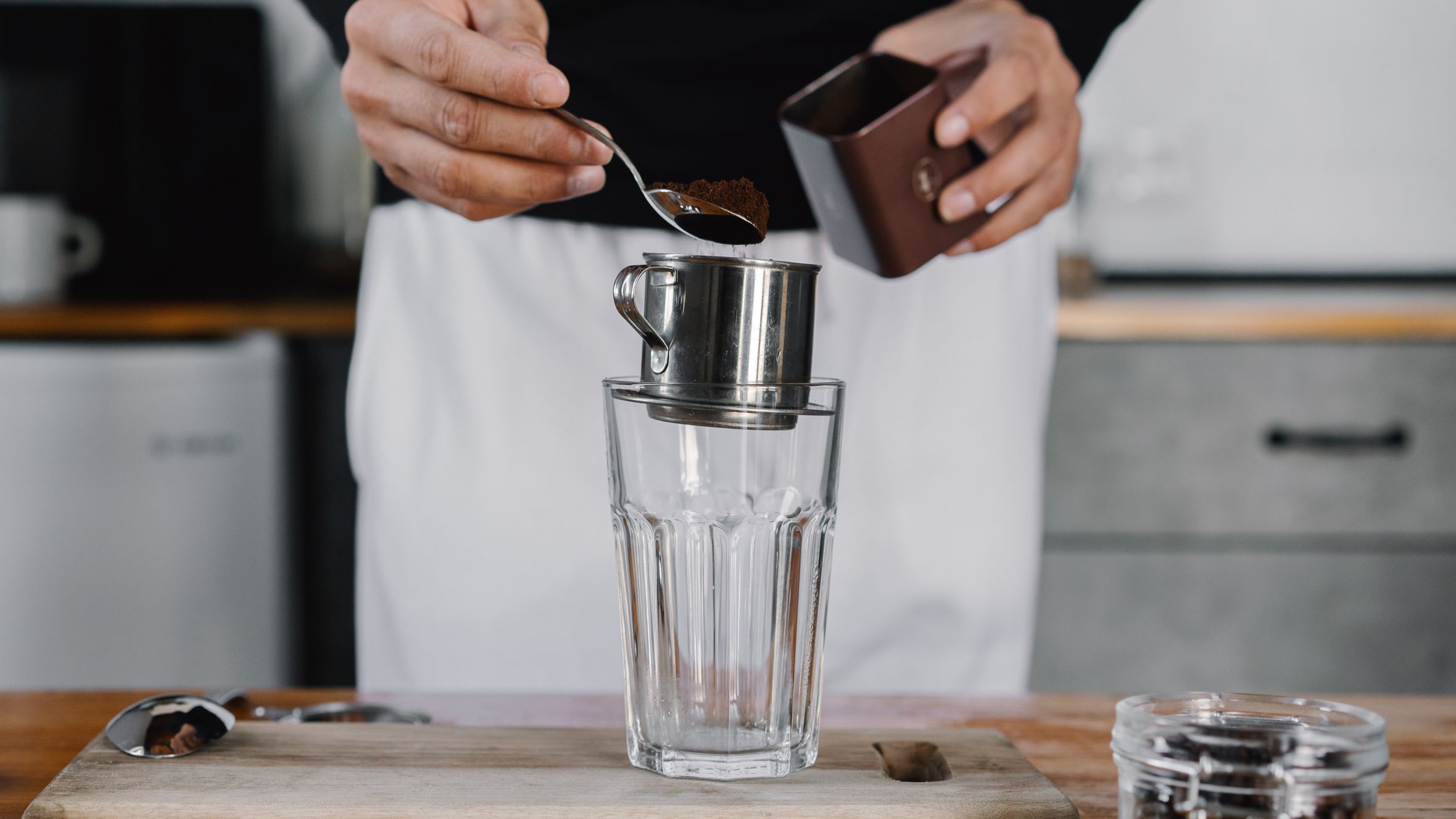
Watch the process. The best part of ca phe muoi is the ritual. You'll see the owner whisk the egg and salt, pour the hot coffee, and the mixture will rise like a soufflé. That moment—the first sip while it's still warm and foamy—is the point.
Don't ask for anything on the side. Sugar, sweetened condensed milk (which is already mixed in), or extra salt defeats the purpose. These places have one drink, made one way.
Why you should go in the morning
Morning is when salt coffee makes sense. It's thick, rich, and your stomach expects something substantial. Drinking it at 2 p.m. is fine, but it feels wrong—too dense for midday heat. Locals drink it at breakfast or late afternoon (around 4 p.m.) as a pick-me-up before dinner.
The best time is just after dawn, when the coffee is freshly brewed and the city is quiet. Hue moves slower than Hanoi or Saigon; the morning coffee ritual reflects that.

Photo by Vietnam Tri Duong Photographer on Pexels
Cost and value
You're paying 15,000–25,000 VND for a drink that took 3–4 minutes to make, with expensive ingredients (fresh eggs, good coffee, salt). It's not cheap by Vietnamese street standards, but it's significantly less than a bottled drink or juice. The cafe owners are not wealthy; they're sustaining a small ritual because the city expects it.
Practical notes
Bring cash—no places take cards. If a place claims to have salt coffee but serves something that looks like a regular iced coffee with condensed milk, keep walking. Authentic ca phe muoi should look almost custard-like, with a visible foam layer. And if you hate it the first time, try it at a different spot before giving up; the recipe varies by owner.
Last updated · May 29, 2026 · independently researched, never sponsored.