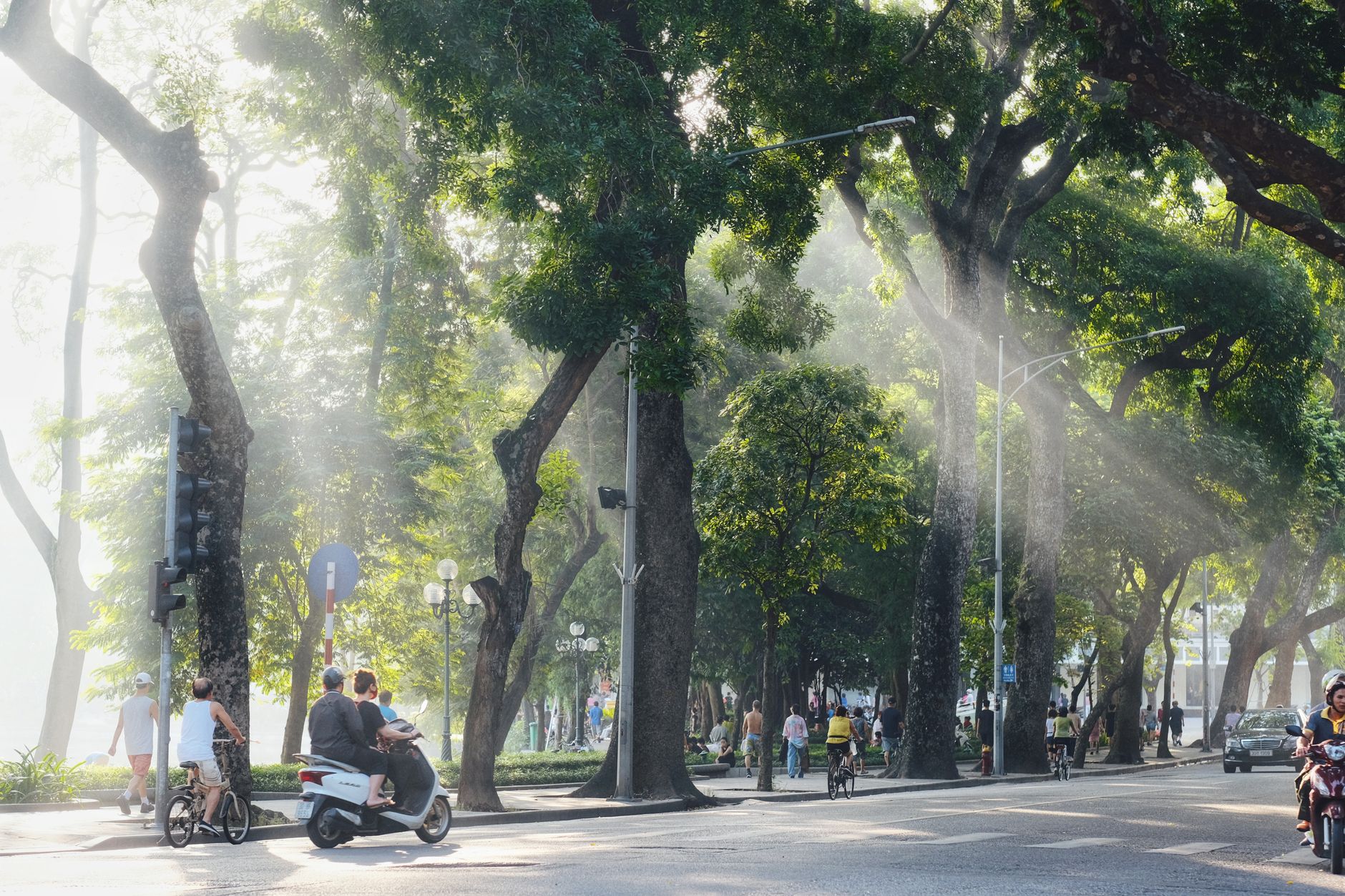
What is "banh tom ho tay"
"Banh tom" are crispy fried pancakes made from a batter of shrimp, sweet potato, and tapioca starch, pressed flat and cooked in shallow oil until the edges are lacy and brown. The name literally refers to the snack's origin — the shores of Ho Tay (West Lake), Hanoi's largest body of water, where vendors have fried these since at least the 1960s.
The pancake arrives hot, with a texture that's almost cardboard-thin in spots and slightly chewy in the center. You'll see the shrimp embedded in the fried shell, sometimes whole or broken into pieces. Sweet potato adds a subtle sweetness and crumbly body to the batter. It's not a heavy snack — more like a crispy vehicle for herbs and dipping sauce.
How it's served
You get one pancake (or sometimes two, depending on the stall) served on a plate with a small heap of fresh greens: mint, cilantro, perilla leaves, and lettuce. Alongside comes a small bowl of "nuoc cham" — fish sauce dip made from fish sauce, sugar, water, and lime, sometimes with a pinch of chili.
The eating ritual is simple: tear off a piece of pancake, wrap it in a lettuce leaf or perilla leaf, add a few herb sprigs, dip the whole thing in the fish sauce, and eat. It's meant to be interactive. The cool, crisp herbs offset the heat of the fried pancake, and the fish sauce adds depth that would otherwise be missing from something so straightforward.
Some vendors offer a version wrapped around a stick of sugarcane ("banh tom duong"), which adds a natural sweetness that pairs oddly well with the savory dip.
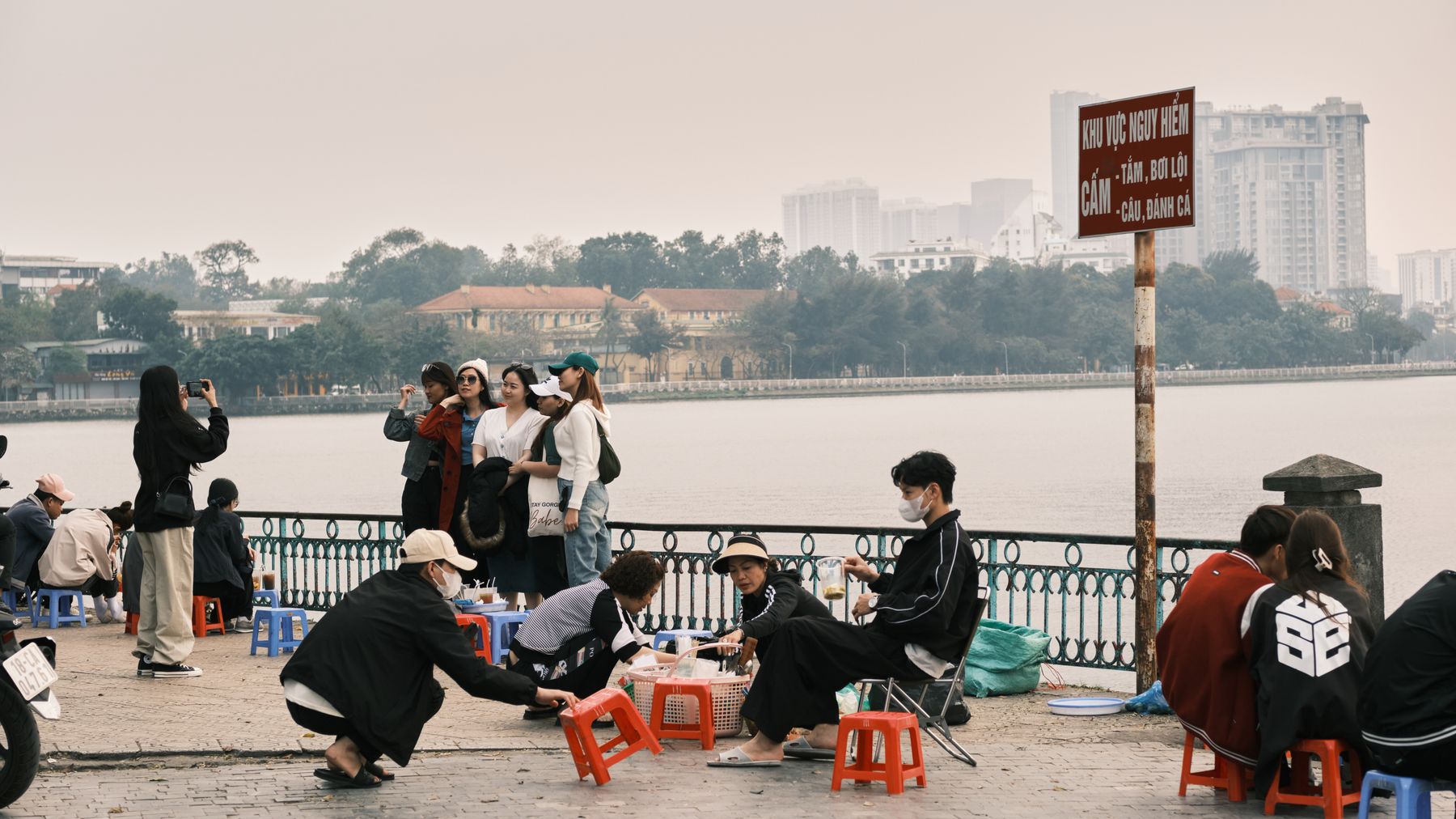
Photo by Thuan Pham on Pexels
Where to eat banh tom in Hanoi
Banh Tom Ho Tay (the namesake restaurant)
The most obvious choice is Banh Tom Ho Tay restaurant itself, located on Thao Dien Street near the water. The restaurant has been operating since the 1990s and is designed to feel casual — plastic stools, no frills, a view of the lake if you sit outside. They fry the pancakes to order, and you'll see the oil at table level, hear the sizzle. A single pancake costs around 25,000–35,000 VND ($1–$1.50 USD). Order a couple of pancakes and a Saigon beer or iced "ca phe sua da" for a simple lunch.
The quality is consistent, but it's also the tourist destination version. If you're already in the West Lake area, it's worth the stop.
Stalls around the lake
The more authentic experience is to hunt for smaller "banh tom" stalls scattered along the lake's perimeter, especially near the northern shore near [Tran Quoc Pagoda](/posts/tran-quoc-pagoda-hanoi (하노이 / 河内 / ハノイ)-west-lake) or around Yen Phu village. These aren't branded restaurants — they're push-carts or tiny shopfronts run by families who've been making banh tom for decades. You'll find them most active in the late afternoon (around 4–6 PM), when local residents walk around the lake.
Prices here are slightly cheaper: 15,000–25,000 VND per pancake. The quality varies, but the best stalls fry in very hot oil and serve them immediately, so the edges are still crackling. Look for stalls with a line of locals, not tourists.
Dong Xuan Market
If you're touring Hanoi's Old Quarter, Dong Xuan Market has a few "banh tom" vendors tucked into its food sections. It's less scenic than eating by the lake, but convenient if you're already there. Same price range: 20,000–30,000 VND.
Cost and logistics
A full "banh tom" snack — one or two pancakes, herbs, sauce, and a drink — costs between 30,000 and 60,000 VND ($1.25–$2.50 USD). It's cheap enough to eat twice in one day if you want.
Best time to eat is late afternoon, when the fritters are freshest and stalls are busy restocking. Avoid midday, when oil has been sitting all morning. If you go to a stall (not the restaurant), bring cash — most don't take cards.
The pancakes don't keep. Eat them hot or they become rubbery within an hour. If you're packing one for later, you're wasting your money.
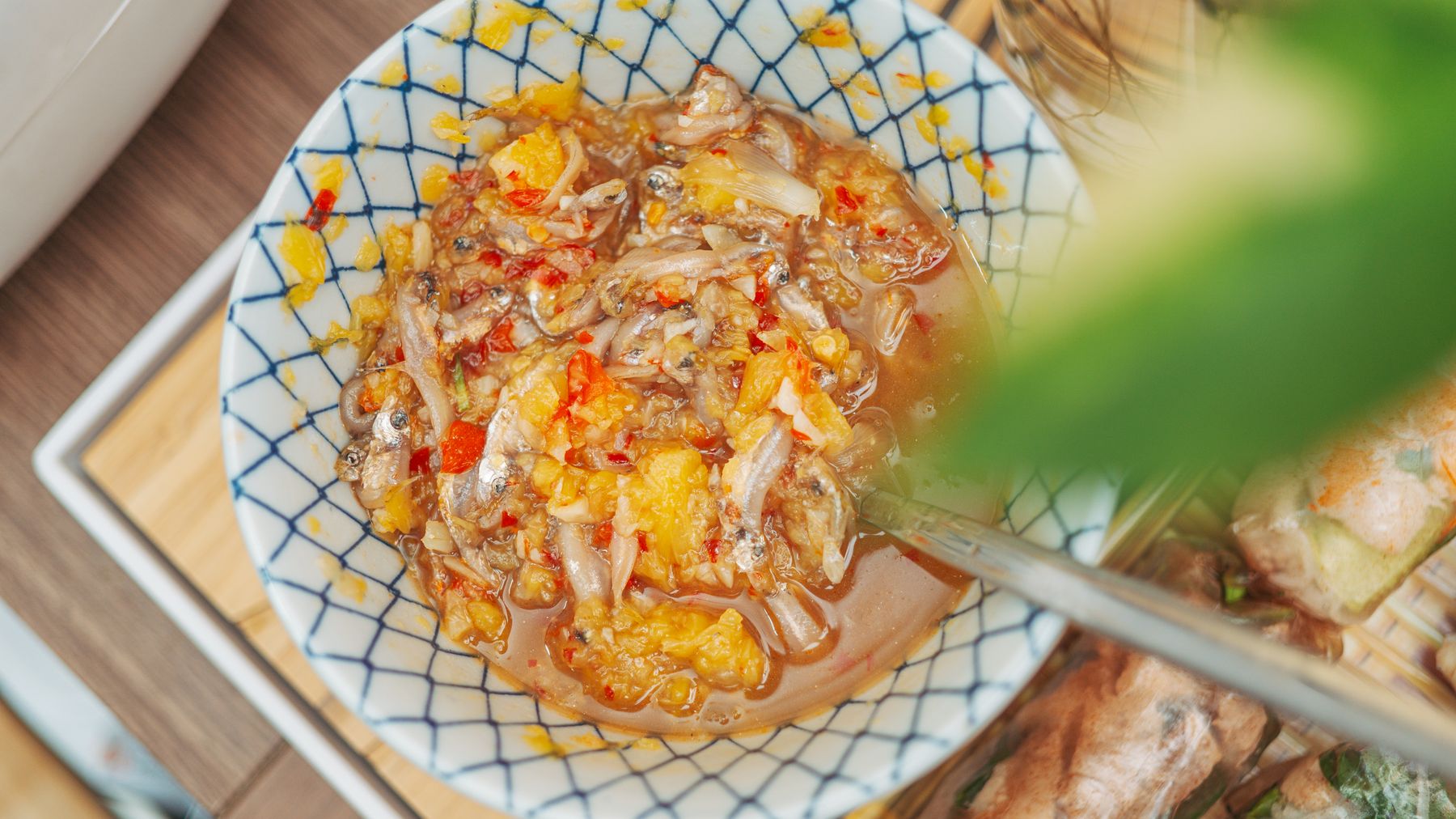
Photo by FOX ^.ᆽ.^= ∫ on Pexels
Why West Lake, why shrimp
Ho Tay was historically a source of both freshwater fish and shrimp before development, and street food vendors capitalized on the abundance. "Banh tom" became a signature Hanoi snack partly because West Lake is iconic to the city's identity — eating by the water, watching light hit the pagoda across the way, became a casual leisure activity. Food vendors followed the foot traffic, and the snack stuck.
Today, "banh tom" isn't unique to Hanoi (you'll find versions in Hai Phong and other northern cities), but the West Lake version is the most celebrated, in part because of tourism and restaurant standardization. The best stalls, though, still operate on the margins — hard to find, cash only, best experienced with a local who knows where to look.
Practical notes
West Lake is accessible by taxi or grab (search "Tran Quoc Pagoda" or "Ho Tay"). If you're staying in the Old Quarter, it's a 15-minute ride. Go in the late afternoon for the best stall activity and cooler weather. Bring small bills (10,000 or 20,000 VND notes) and be ready to eat immediately — crispy fried food waits for no one.
Last updated · Jun 28, 2026 · independently researched, never sponsored.