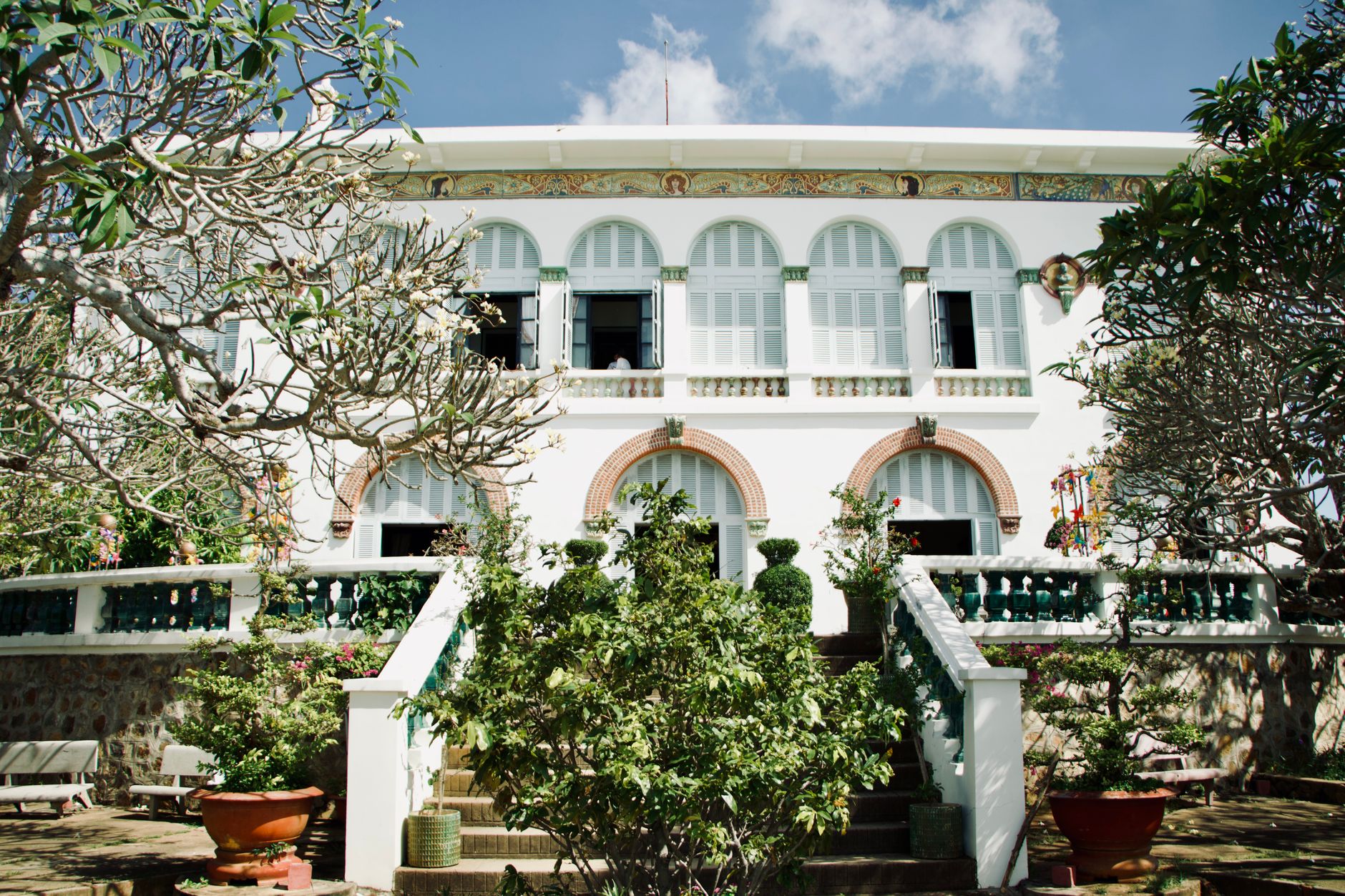
Hue eats differently depending on the hour, and "nem lui" — lemongrass-skewered pork sausage grilled over a charcoal brazier — is one of those dishes that shifts character completely based on when you order it. Same skewer, same rice paper, but a different experience at 8am versus 8pm.
What Nem Lui Actually Is
Before getting into timing: nem lui is a seasoned pork paste pressed around a lemongrass stalk and grilled until charred at the tips. You get a plate of skewers alongside a stack of banh trang (rice paper sheets), a tray of fresh herbs — mint, perilla, banana blossom, green banana — and a small bowl of peanut-and-pork dipping sauce called "tuong lui". You roll everything yourself at the table, tear the paper, wrap the skewer, then slide the meat off the lemongrass into the roll. The tuong lui is thicker and earthier than standard peanut sauce — a fermented edge to it, almost savory-sweet in a way that cheap tourist versions flatten out entirely.
One skewer at most places runs 5,000–8,000 VND. A workable order for one person is six to eight skewers plus drinks, landing you around 60,000–80,000 VND total.
Morning: Skip It
Nem lui is not a breakfast dish. Hue (후에 / 顺化 / フエ) mornings belong to "bun bo hue" — the city's spicy, lemongrass-forward beef noodle soup — and to "banh cuon", steamed rice rolls with pork and wood-ear mushroom. Vendors selling nem lui in the early hours do exist near the market fringes around Cho Dong Ba on Tran Hung Dao, but the charcoal braziers aren't at temperature yet, the herbs are wilting from overnight storage, and the tuong lui often hasn't had time to settle. You'll get a technically correct plate and a slightly joyless experience. Use mornings in Hue for soup.
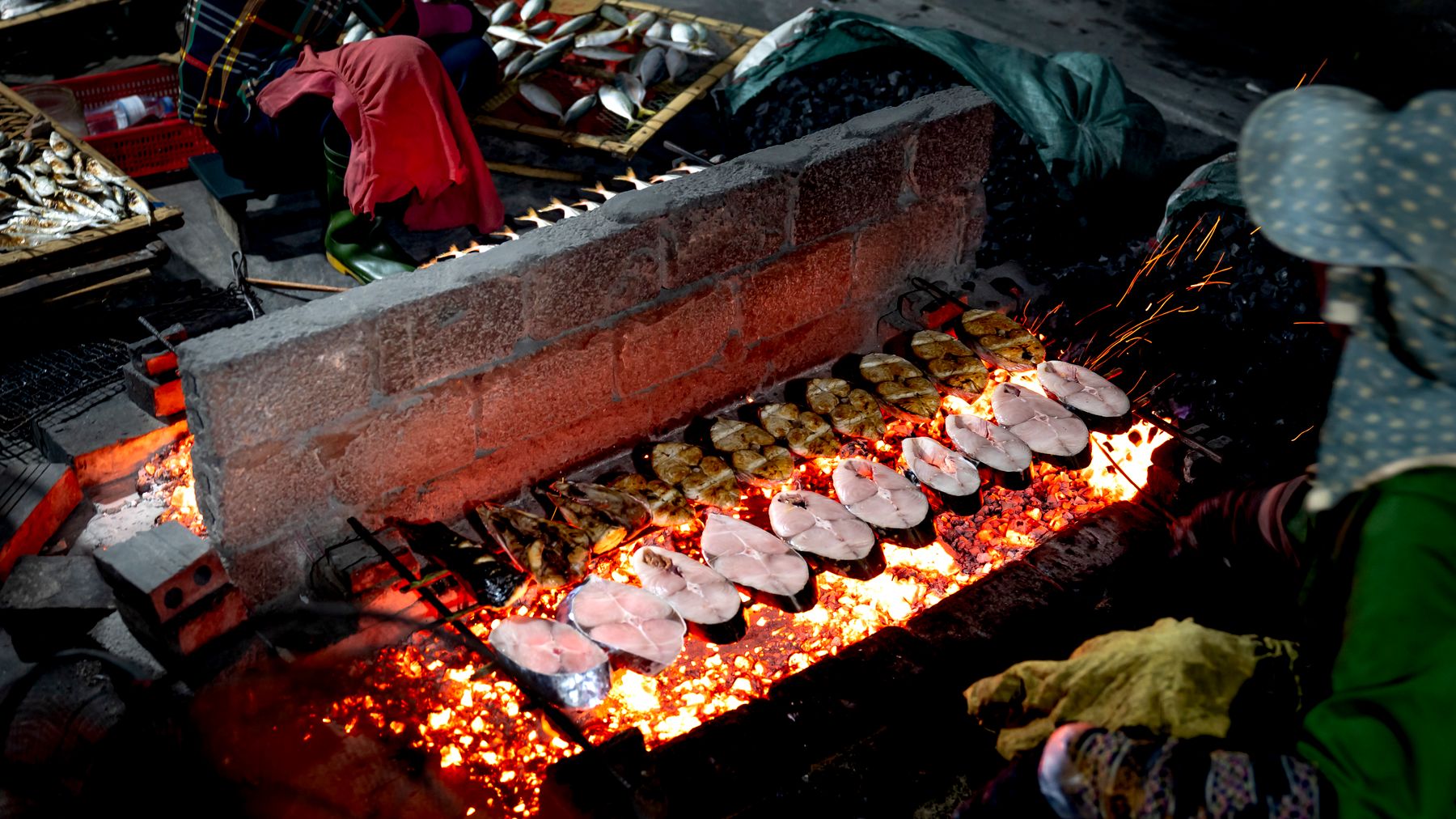
Photo by Quang Nguyen Vinh on Pexels
Lunch: The Overlooked Window
The noon-to-2pm window is underrated for nem lui and genuinely the most relaxed time to eat it. The charcoal is properly hot, the herbs are fresh from morning market, and most of the tourist foot traffic is elsewhere — usually queuing for "banh xeo" at places around Khoai street or heading toward the Imperial Citadel.
A reliable lunch spot is Nem Lui Ba Do on Nguyen Binh Khiem street, a short walk from the south bank of the Huong River. It's a narrow shophouse, three or four tables, run by a woman who's been at this for well over a decade. The tuong lui here is made in-house and noticeably less sweet than the versions near the backpacker strip on Pham Ngu Lao (the Hue one, not Saigon's). Expect to pay around 70,000 VND for eight skewers, a plate of herbs, and a glass of tra da (iced tea, usually free or 5,000 VND). She closes by 3pm, often earlier if the skewers run out.
For lunch, nem lui works well because you're eating it as a standalone meal, not as a snack. Six skewers plus rice paper is genuinely filling.
Night: The Right Call
Evening is when nem lui makes the most cultural sense in Hue. The dish is social — rolling at the table, sharing the herb tray, pouring beer — and that rhythm fits the after-dark pace of the city. Most of the dedicated nem lui stalls along Chu Van An street, which runs parallel to the south bank of the Huong River, don't fully come alive until around 6:30pm. By 7pm the braziers are properly smoky, the plastic stools are out on the pavement, and you'll have cold Huda beer (the local lager, 15,000–20,000 VND a can) within thirty seconds of sitting down.
The stall cluster around the 20–40 block of Chu Van An is the most consistent: four or five adjacent vendors with overlapping menus, all serving nem lui alongside "cha ram" (fried spring rolls, similar to what elsewhere gets called "cha gio (짜조 / 炸春卷 / チャーゾー)") and grilled pork skewers. Competition keeps quality up and prices honest. Don't let anyone quote you more than 8,000 VND per nem lui skewer at these stalls — that's the ceiling here.
If you want a slightly more settled setting, Quan Nem Lui 99 on Nguyen Dinh Chieu is a reliable fallback. Larger space, slightly higher prices (around 90,000 VND for a full order with drinks), and the tuong lui is good though more standardized. Still worth it if the Chu Van An stalls are packed on weekends.

Photo by RDNE Stock project on Pexels
One Thing to Watch
The lemongrass stalk is not edible — it's a skewer, not part of the bite. First-timers sometimes gnaw on it and wonder why nem lui has a reputation for being good. Slide the meat off cleanly before you roll.
Practical Notes
Hue is easy to navigate by xe om (motorbike taxi) or bicycle — Chu Van An is about 1.5km from Dong Ba market. Most nem lui stalls don't have English menus; pointing at a neighboring table's plate works fine. Evening stalls on Chu Van An typically run from 6pm to 10:30pm, closed on heavy rain days.
Last updated · Sep 7, 2026 · independently researched, never sponsored.