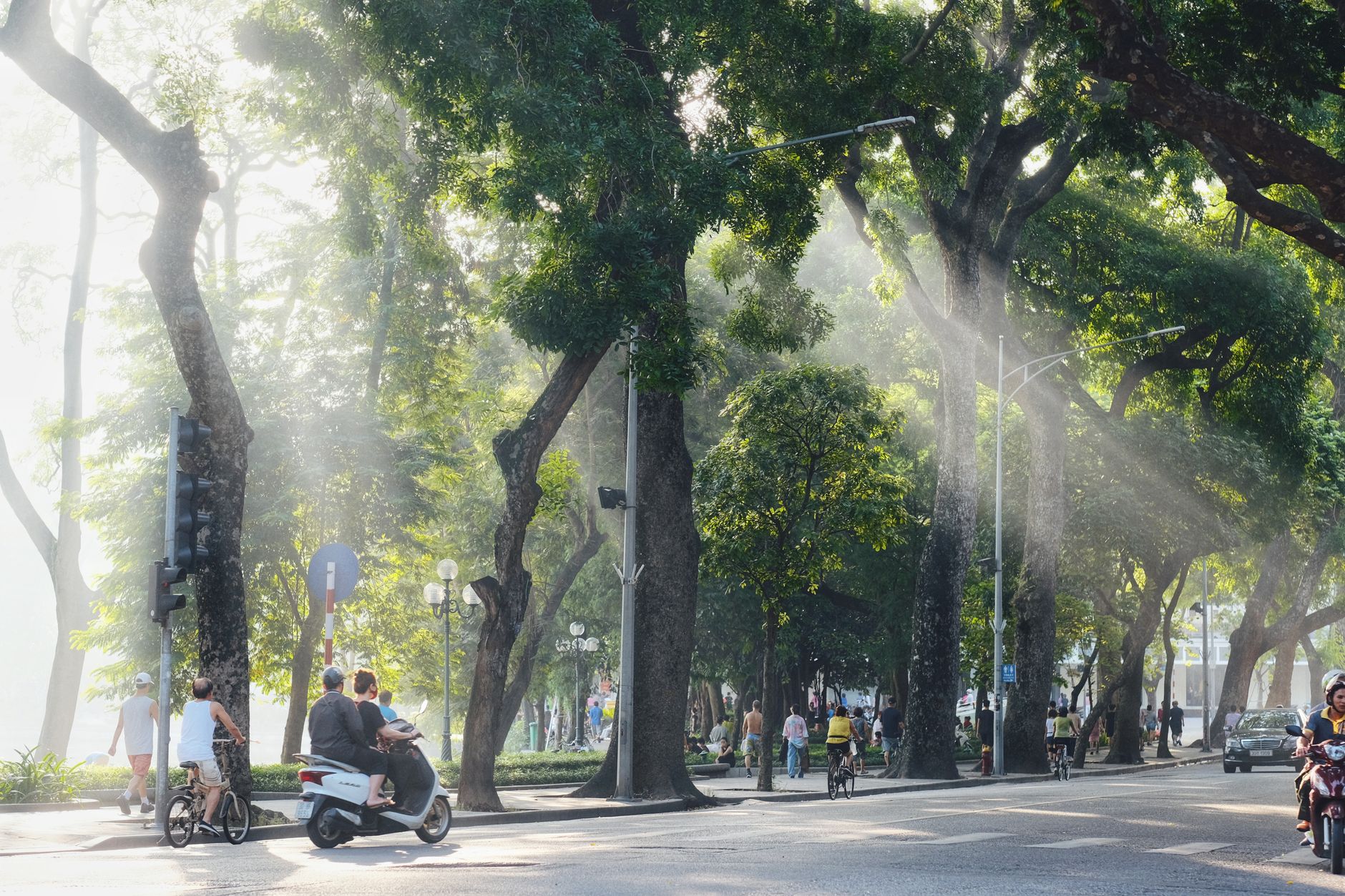
Hanoi rewards slow walking. Three days isn't much, but it's enough to eat well, see the important sites, and get a feel for how the city actually works—its rhythm, its noise, its coffee culture. This itinerary skips the Instagram-famous monuments and focuses on what makes the city livable.
Day 1 — Old Quarter, Lake, and Coffee
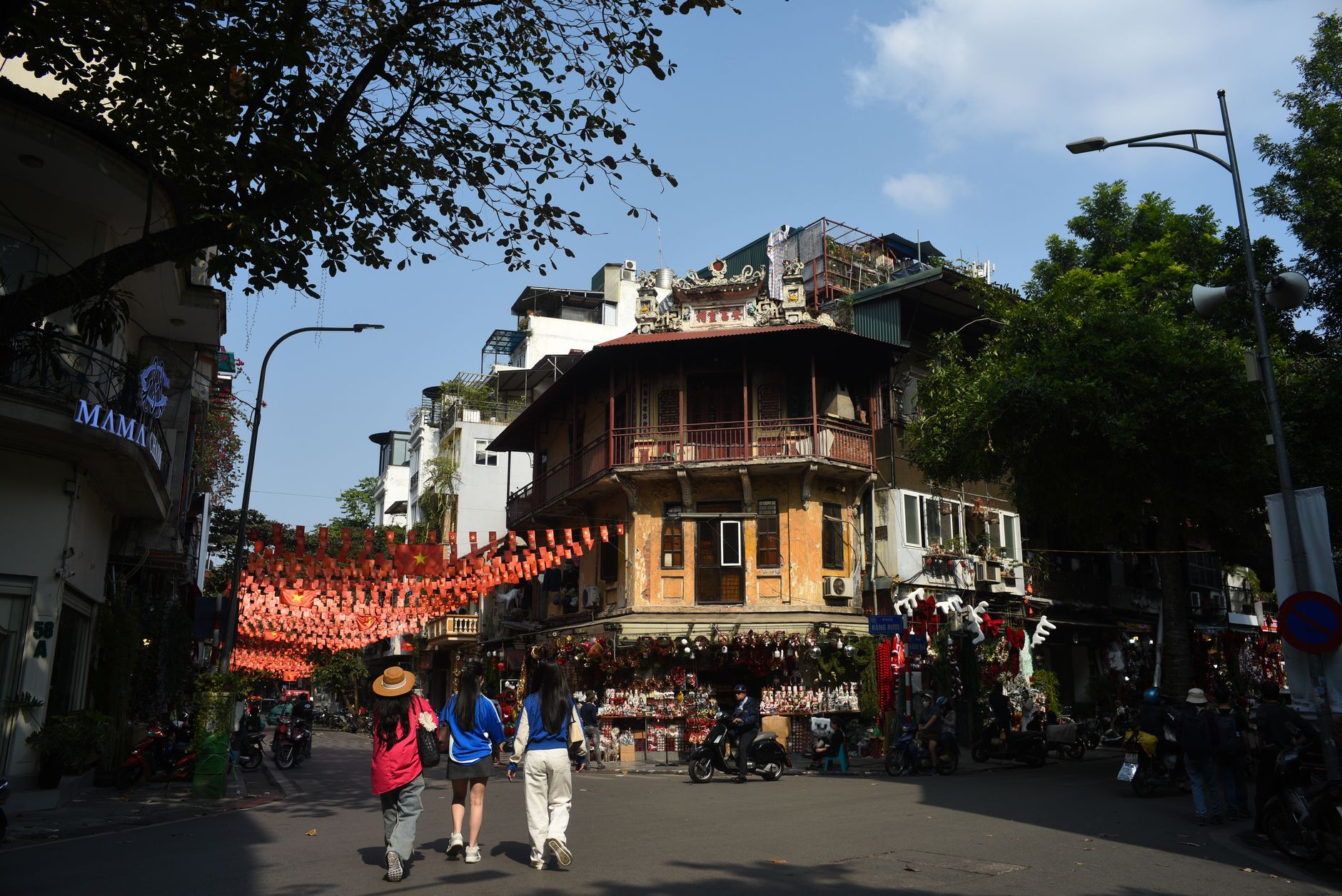
Start in the Old Quarter, the mesh of narrow streets that forms Hanoi's spiritual center. Arrive early, around 8 a.m., before the motorbike traffic peaks. Walk from Dong Xuan Market (the city's oldest market, built 1889) westward through the 36 streets, each historically devoted to a single trade: Hang Gai (silk), Hang Dao (silk again, cheaper), Hang Ngang (general goods). The street names are literal—"Hang" means "merchant row."
The geometry is chaotic. Sidewalks are narrow. Motorbikes park on them. Doors open directly onto the street. This is dense living, and it hasn't changed much in a hundred years. Stop at a corner coffee stall and order a small "ca phe sua da"—Vietnamese iced coffee with sweetened condensed milk—for about 25,000 VND. Sit on a tiny plastic stool. Watch.
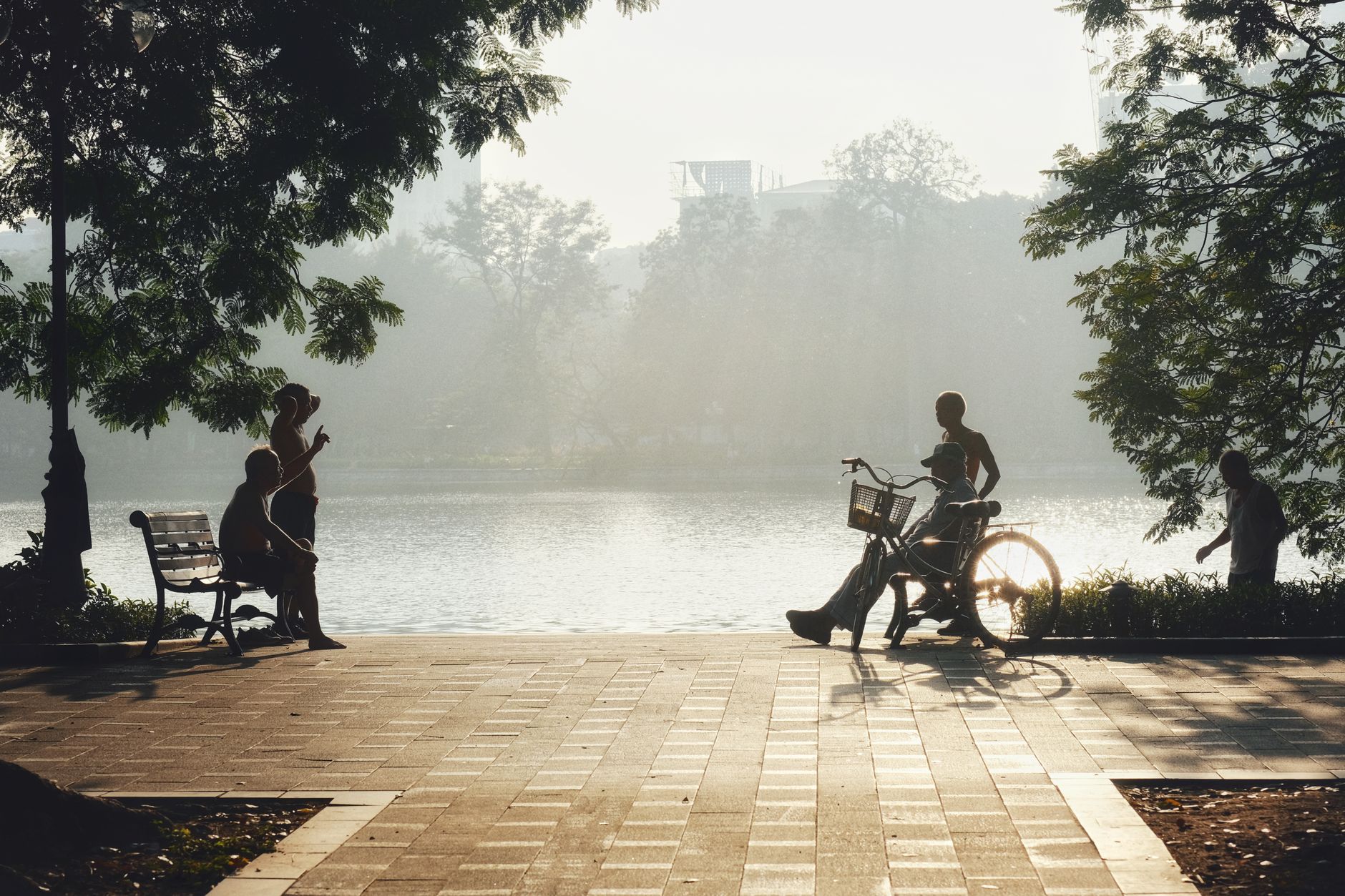
Walk toward Hoan Kiem Lake (about 1.5 km from Dong Xuan), Hanoi's most famous water body. The walk itself is the point: you pass through residential streets, past noodle sellers setting up for lunch, through the daily life of the city. Reach the lake by mid-morning. Hang out at the eastern shore near the Turtle Tower (a small 18th-century structure in the lake's center). Locals do laps around the 1.8 km perimeter; tourists sit on benches.
Lunch: find a "[bun cha](/posts/bun-cha-hanoi (하노이 / 河内 / ハノイ)-grilled-pork-noodles)" stall on a side street off the lake's south side. "Bun cha" is Hanoi's most iconic lunch—grilled pork patties (cha) served over cold vermicelli noodles (bun), with a dipping sauce of fish sauce, lime, and chilies. A full plate costs 40,000–60,000 VND. Eat standing or on a plastic chair. Wipe your chin.
Afternoon: return to the Old Quarter's western edge, near Hang Be or Hang Bong streets. Walk into Nha Tho Hang Trong (a Catholic cathedral tucked into the 19th-century architecture) or simply sit in a cafe. By 4 p.m., visit a traditional "egg coffee" shop—either Hoa Nhan, Giang, or similar on Hang Gai Street. "Egg coffee" (ca phe trung) is a Hanoi specialty: a rich espresso topped with a whipped mixture of egg yolk, condensed milk, and Rumba liqueur. It costs about 35,000 VND and tastes like a dessert. It's been served since the 1950s and remains singular to the city.
Dinner in the Old Quarter: grab a table at a street-level "pho" or "banh cuon" (rolled steamed rice cakes) spot. Pho is beef or chicken noodle soup with rice noodles and broth—ubiquitous, cheap (50,000–70,000 VND), and comforting. Sleep near the lake or in the Old Quarter so you're central.
Day 2 — Mausoleum, Literature, and Tay Ho
Day two is divided: morning for the Ho Chi Minh (호치민 / 胡志明 / ホーチミン) Mausoleum complex, afternoon for food and neighborhoods west of the city center.
Start at 8 a.m. The Mausoleum (on Hung Vuong Street, about 2 km west of Hoan Kiem Lake) opens at 8 a.m. and closes at 11 a.m., then again 1–4 p.m.—note the mid-day closure. Dress respectfully: long pants or skirts, no shorts, covered shoulders. The mausoleum itself is a large stone building where Ho Chi Minh's embalmed body lies in state. No photos inside. It's solemn, quick (10 minutes), and worth seeing for the architecture and historical gravity, not the spectacle.
After, explore the compound. The Presidential Palace (Dinh Thong Nhat) stands nearby but is only open to pre-booked groups. Instead, visit the adjacent Ho Chi Minh's House—a modest wooden structure on stilts where Ho lived 1958–1969. It's quieter than the mausoleum and offers a clearer sense of personal history. Entry is 25,000 VND.
Walk south to the Temple of Literature (Van Mieu), about 2 km away or a short taxi ride (40,000–50,000 VND). This is Vietnam's first university, founded 1070 and dedicated to Confucius. The grounds are peaceful: courtyards, stone carvings, a small lake, bonsai. It's the best-preserved classical site in Hanoi and far less crowded than the mausoleum. Entry is 30,000 VND.
Lunch near the Temple of Literature at a simple pho or "com tam" (broken-rice) stall—many dot the streets around Quoc Tu Giam Street. "Com tam" is jasmine rice, broken during milling, served with grilled pork, a fried egg, and pickled vegetables. It's a working-class lunch, filling and cheap (35,000–50,000 VND).
Afternoon: head to Tay Ho (West Lake), a neighborhood on Hanoi's northwest edge. It's 3–4 km from the Temple of Literature; take a taxi or ride-share (60,000–80,000 VND). Tay Ho is wealthier and quieter than the Old Quarter—tree-lined, with villas and cafes. Walk along the lake's eastern shore, browse the small boutiques and galleries, and sit in a waterfront cafe.
Dinner: go on a short walking food tour in Tay Ho's alleys (around Nghi Tam and Quang Ba streets). Stop at a local "mi quang" (Quang-style noodle) stall, a "banh xeo" (crispy pancake) shop, and a dessert vendor selling "banh canh" (tapioca cake). The point is to taste without committing to a full meal at each. Budget 150,000–200,000 VND for all three dishes. This is how locals eat—grazing, moving.

Image by Cheong. Original uploader was Cheong Kok Chun at en.wikipedi via Wikimedia Commons (CC BY-SA)
Day 3 — Day Trip to Bat Trang or Tam Coc
Day three gives you options. If you prefer craft and a shorter trip, go to Bat Trang. If you want limestone mountains and water, head to Tam Coc.
Option A: Bat Trang Pottery Village
Bat Trang is a village 20 km southeast of central Hanoi, famous for ceramics since the 15th century. Take a taxi (200,000 VND, 45 minutes) or arrange a private driver through your hotel. You'll see pottery kilns, workshops, and small showrooms along the main street. The ceramics aren't expensive—small bowls run 50,000–150,000 VND, larger pieces up to several million. Many tourists buy plates, teacups, and vases to take home.
Spend the morning walking through workshops, watching potters at wheels, and chatting with sellers. Eat lunch at a simple restaurant in the village—freshwater fish, "goi cuon" (fresh spring rolls), jasmine rice. Return to Hanoi by 4 p.m. It's a relaxed, cultural half-day.
Option B: Tam Coc and Trang An
Tam Coc is 95 km south of Hanoi in Ninh Binh Province. It's a limestone karst landscape carved by the Ngo Dong River—similar to Ha Long Bay but inland, less crowded, and cheaper. Arrange a driver or minibus through your hotel (about 300,000 VND round-trip for a private car, or 150,000 VND if you join a group tour).
Arrive by 9 a.m. Hire a rowboat (100,000–150,000 VND, 2–3 hours) or a motorized boat (cheaper but louder). The rivers weave through caves and past rice paddies. You'll float under natural stone arches (the "three grottoes" give Tam Coc its name). It's striking and touristy, but the landscape is genuine.
Lunch at a riverside restaurant—spring rolls, rice with grilled fish, local tea. Hike up one of the karst hills (Hang Mua or Trang An) if you have energy; the views of the valley are worth the climb. Return to Hanoi by 6 p.m.
Tam Coc is the more dramatic choice if you want mountains and water. Bat Trang is better if you prefer a cultural and craft experience without travel time.

Image by CEphoto, Uwe Aranas via Wikimedia Commons (CC BY-SA)
Frequently Asked Questions
How much does street food typically cost in Hanoi's Old Quarter?
Street food in Hanoi is inexpensive. A ca phe sua da (iced coffee with condensed milk) runs about 25,000 VND at a corner stall. Bun cha — grilled pork with vermicelli noodles — costs 40,000–60,000 VND for a full plate. Pho (beef or chicken noodle soup) is 50,000–70,000 VND. Egg coffee at a traditional shop on Hang Gai Street is around 35,000 VND.
What are the visiting hours and dress rules for the Ho Chi Minh Mausoleum?
The Ho Chi Minh Mausoleum on Hung Vuong Street, about 2 km west of Hoan Kiem Lake, opens at 8 a.m. and closes at 11 a.m., then reopens 1–4 p.m. Visitors must wear long pants or skirts, no shorts, and covered shoulders. Photography is not permitted inside. The visit itself takes roughly 10 minutes, and the mausoleum is noted for its architecture and historical significance.
When is the best time of day to walk Hanoi's Old Quarter?
Arrive around 8 a.m., before motorbike traffic peaks. The Old Quarter — a mesh of narrow streets near Dong Xuan Market, built 1889 — is densest and loudest mid-morning onward. An early start lets you walk the 36 historic trade streets, including Hang Gai (silk) and Hang Ngang (general goods), before crowds build. Sidewalks are narrow and frequently blocked by parked motorbikes, so foot traffic compounds quickly as the day progresses.
Practical notes
Get a Hanoi bus card or use Grab (ride-share app) for taxis—cheaper and logged than hailing cabs. Stay in or near the Old Quarter or Hoan Kiem Lake for walkability. Bring cash (VND); many small stalls and markets don't take cards. The city is humid and hot year-round; October–November and February–April are best for comfort.
Last updated · May 29, 2026 · independently researched, never sponsored.