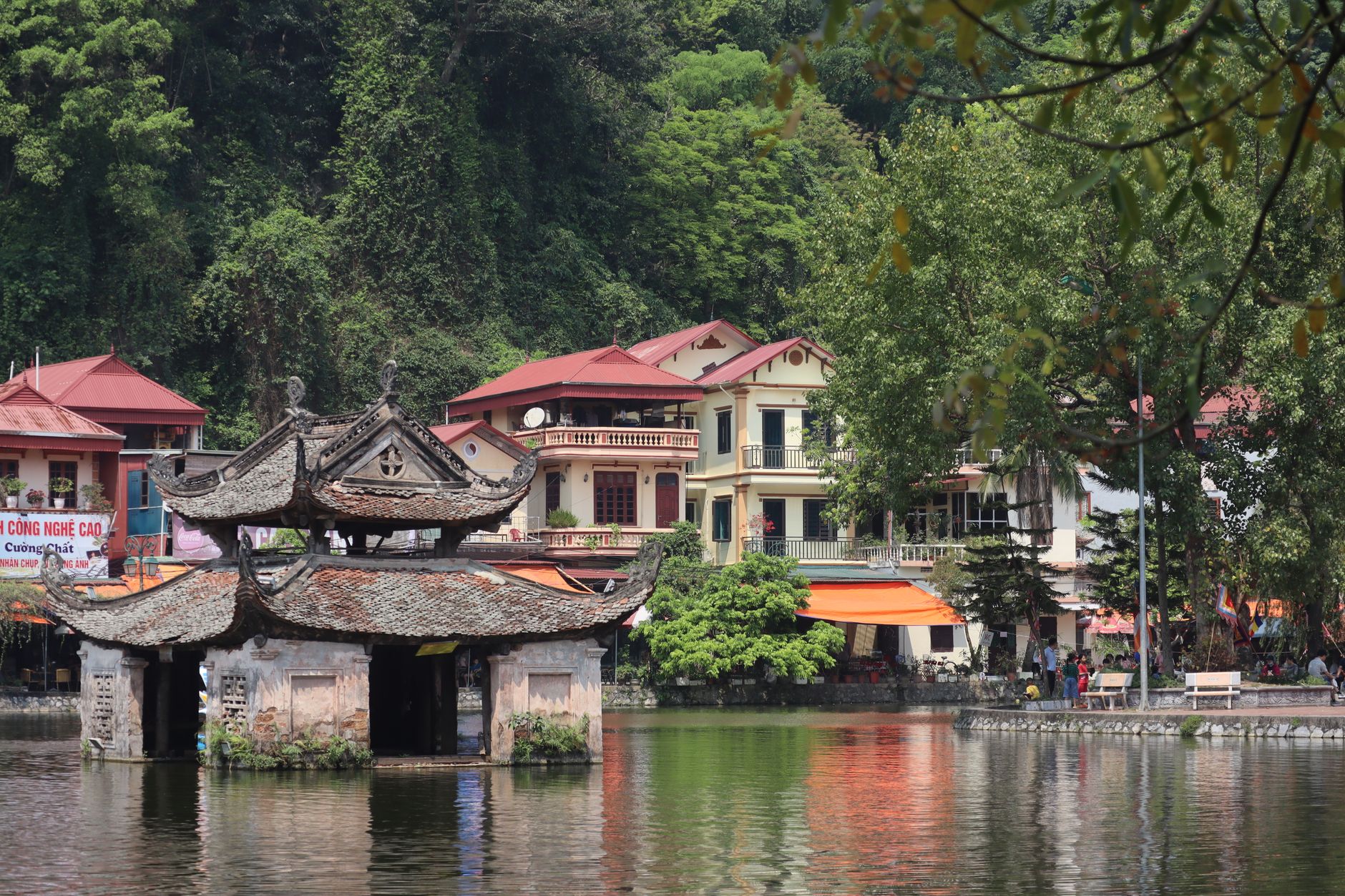
Sapa is packed. Ha Giang is getting there. If you want limestone karst views and ethnic minority villages without waiting in line for photos, the northwest loop through Mai Chau and Pu Luong is where it's at. Five days on a motorbike, mostly on quiet roads, and you'll see more rice terraces than you can count.
This route works because it sits just far enough from Hanoi to deter day-trippers, but close enough to be doable from the city in one morning ride. You're looking at roughly 500 km total, split across five days. Rent a motorbike in Hanoi, fuel it, and go.
Day 1 — Hanoi to Mai Chau
Leave Hanoi (하노이 / 河内 / ハノイ) early, around 7 a.m., heading west on Highway 6. The first 60 km is unremarkable—flat, traffic-heavy through the suburbs until you hit Hoa Binh province. The road gets quieter after Hoa Binh town. Around km 90, the landscape shifts: mountains rise, rice paddies thin out, and you'll start seeing stilt houses.
Mai Chau town is small and doesn't announce itself loudly. You're looking for the main road (QL1A) forking north. The ride from Hanoi takes roughly 4 hours with a lunch stop. Most travelers stay in stilt-house homestays in the villages around Mai Chau—Ban Lac or Ban Don—rather than in town itself. These aren't luxury; they're functional wood structures where your host cooks dinner and you sleep on a thin mat. Cost: 150,000–300,000 VND per person with meals.
Drop the bike at your homestay and walk through the village in late afternoon. You'll see women weaving "tai chi" silk on wooden looms, kids playing in the stream, and water buffalo in the paddies. No tour groups yet.
Day 2 — Pu Luong Rice Terraces
Pu Luong is a 45-minute ride northeast from Mai Chau. The road narrows significantly—this is where the motorbike becomes essential. You're on a two-lane highway that twists through a nature reserve, climbing gently into the limestone foothills.
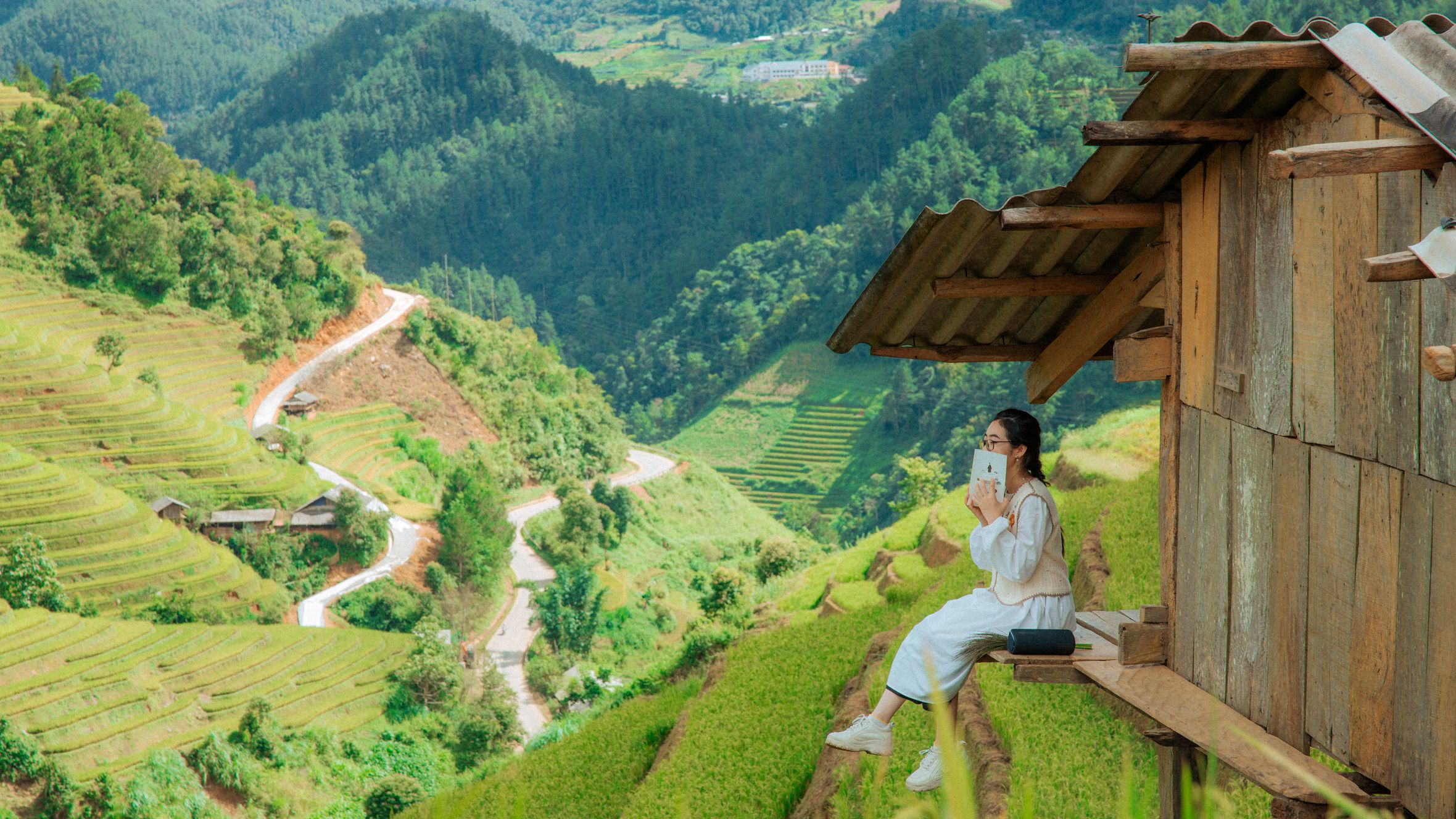
Pu Luong itself is a collection of villages (Kho Muong, Na Hang, Hang Kia) scattered across a valley of rice terraces that step up the mountainsides. This is the real draw. Unlike the famous terraces in Bali or Yuanyang, China, Pu Luong doesn't feel engineered for Instagram. People still farm here. In the right season (June–September), the rice is growing and the terraces are vivid green; in October–November, they're golden before harvest.
Good options: stop at Pu Luong Nature Reserve's main visitor center (just off the highway, free entry to look around), rent a motorbike or scooter locally to explore side roads, or hike. A simple loop on foot takes 2–3 hours and doesn't require a guide—just park your main bike and walk. Most homestays in Kho Muong village offer beds for 120,000–200,000 VND with dinner. The food is usually simple: rice, stir-fried vegetables, maybe chicken or eggs.
Day 3 — Sin Suoi Ho
Sin Suoi Ho ("Fairy Stream Valley") is a half-day trip deeper into the reserve, about 20 km southeast on smaller roads. This route is rougher—gravel, some climbing—but the motorbike handles it.
Sin Suoi Ho is less a village than a scenic waypoint: a narrow valley with a stream running through it, surrounded by steep forested slopes. It's a hiking destination. Most people do a 2-hour round trip from the park office, or hire a local guide (basic English, 100,000–150,000 VND for a group) to walk you through. The trail isn't technical; it's pretty and quiet.
End the day back in Pu Luong or push back to Mai Chau if you want a change. The roads allow it easily. Both villages have the same homestay setup.

Photo by Quang Nguyen Vinh on Pexels
Day 4 — Pha Luong Border Viewpoint
Pha Luong is less a town and more a high point on the northwestern edge of the valley. It's 60 km from Pu Luong, and the road climbs steadily—you'll gain about 600 meters over the final 20 km.
The border with Laos sits just beyond. You won't cross it without proper paperwork (tourist visas require you to exit/enter at official checkpoints; there are no border runs from here). But the viewpoint itself—a small pavilion on the ridge—offers a view into Laos across the valley. It's a dramatic landscape: more mountains, fewer roads, a clear sense of leaving the mainstream tourist zone behind.
Stay another night in Pu Luong or one of the smaller homestays near Pha Luong if you want to hike from here. Otherwise, this is a half-day excursion from wherever you're based.
Day 5 — Return to Hanoi
The ride back is straightforward. Head south out of Pu Luong on QL1A (or your route in), retrace through Mai Chau, and pick up Highway 6 for the 90 km back to Hanoi. You'll hit the city around late afternoon if you leave early morning.
The return is quicker than the outbound, and you've got a full day. Some riders break it up with a second night in Mai Chau or a lunch stop in Hoa Binh; others push straight through.

Photo by Gibson Chan on Pexels
Why This Route Beats Sapa and Ha Giang
Sapa has been a package-tour destination for 25 years. The main viewpoint (Fansipan) is cable-car accessible, and the town itself feels like a hill station theme park in high season. Ha Giang (하장 / 河江 / ハーザン) (the loop) is stunning, but it's become the "off the beaten path" destination that everyone's heard of—meaning it's increasingly beaten.
Mai Chau and Pu Luong get a fraction of that traffic. You'll see motorbikes and the occasional tour van, but you won't queue. The homestays are cheaper, the food is the actual diet of the villages (not food for tourists), and the landscape—rice terraces cut from limestone valleys—rivals either option. The trade-off is that the towns are smaller and infrastructure is more basic. There's no 5-star resort, no espresso bar in town. If you want comfort, go to Sapa. If you want landscape and quiet, go northwest.
Frequently Asked Questions
How far is the northwest loop from Hanoi and how long does it take?
The full northwest loop covers roughly 500 km total across five days. Leaving Hanoi around 7 a.m. on Highway 6, you reach Mai Chau in about 4 hours with a lunch stop — approximately 150 km. The route stays close enough to Hanoi to start in one morning ride, which is why it works as a loop rather than requiring a flight or overnight bus to reach the starting point.
What does a homestay cost in Mai Chau or Pu Luong?
Stilt-house homestays in villages like Ban Lac and Ban Don near Mai Chau run 150,000–300,000 VND per person including meals. In Kho Muong village at Pu Luong, beds with dinner cost 120,000–200,000 VND. These are functional wood structures where your host cooks dinner and you sleep on a thin mat — not guesthouses, not resorts.
When is the best time to see the rice terraces at Pu Luong?
Pu Luong has two distinct windows worth planning around. June through September, the rice is actively growing and the terraces are vivid green. October through November, the rice turns golden just before harvest. Both periods are visually strong. The villages in Kho Muong and surrounding areas still support working farms, so the terraces reflect actual agricultural cycles rather than a fixed tourist calendar.
Practical notes
Rent your motorbike from a reputable shop in Hanoi's Old Quarter (expect to pay 100,000–200,000 VND per day for an automatic scooter or 150,000–250,000 VND for a larger manual bike). Fuel costs roughly 40,000–50,000 VND per tank. Bring a helmet (it's the law), a lightweight rain jacket (mountains mean sudden downpours), and basic supplies (sunscreen, water, paracetamol). Roads are paved but narrow; ride defensively and don't rush. Most homestays accept walk-ins; you don't need to book ahead, though calling or asking your bike rental shop to arrange something is fine. Bring cash in VND—ATMs exist in Mai Chau and Hoa Binh town, but not in smaller villages.
Last updated · May 29, 2026 · independently researched, never sponsored.