Nha Trang (냐짱 / 芽庄 / ニャチャン) splits into distinct neighborhoods, each with a different vibe and price tag. Where you stay shapes your whole trip — whether you're waking up to the beach or paying for that view you'll never use.
Tran Phu Street: The Beachfront Strip
Tran Phu runs parallel to the sand and is where most tourists end up. The street has absorbed decades of tourism infrastructure, so you'll find everything from backpacker dumps at $15 a night to mid-range hotels at $60–100 and a few upmarket spots pushing $200.
The advantage is obvious: walk 30 seconds and you're on the beach. The disadvantage is equally obvious: it's loud, especially late. Bars and clubs line the street, and peak season (Dec–Feb) means groups of tourists at all hours. If you're a light sleeper, expect to negotiate.
Prices on Tran Phu cluster around $30–50 for a decent double room with air-con and a fan. You'll pay more for a sea view ($60–80) and much more if the hotel has a decent pool or restaurant. Many places are dated — tiled lobbies, tired decor — but clean and functional. Booking direct often gets you 10–20% off the posted rate.
The southern end of Tran Phu, closer to Louisiane Brewhouse and the sail-shaped Tram Huong Tower, tends to be slightly quieter than the central stretch near the Sailing Club. If nightlife noise is your main concern, aim for hotels south of Yersin Street. North of the tower, around Tran Phu 50–80 block numbers, you get the densest cluster of bars and the most foot traffic after 10 PM.
Russian tourists dominate Hung Vuong Street, which runs inland one block from Tran Phu. If you want a quieter option with lower prices ($20–40), Hung Vuong works. You lose the beach walk but keep the neighborhood buzz and proximity to restaurants and cafes. Signage along Hung Vuong is often bilingual Vietnamese-Russian, and several restaurants serve borscht alongside "pho" and "com tam" (broken rice plates). It gives the street a distinct feel compared to the more international Tran Phu corridor.
Inland: Budget & Peace
Move two or three blocks inland from Tran Phu and prices drop sharply. You'll find hostels and guesthouses at $15–30 for a dorm or basic private room. Ninh Kieu area and the streets around the train station are cheapest.
The trade-off is real: no beach access without a 10–15-minute walk, and you're in the real Nha Trang — motorbikes, markets, local restaurants. It's not romantic, but it's honest. Good for travelers who don't care about waking to ocean views and want to spend money on activities instead.
This is also where you eat best for the least money. The alleys off Phan Boi Chau and Le Thanh Ton streets are packed with local spots serving "bun cha ca" (Nha Trang's signature fish cake noodle soup) for 35,000–45,000 VND a bowl. You'll also find solid "banh canh" (thick tapioca noodle soup) and "banh xeo" (crispy stuffed crepes) stalls that don't bother with English menus. Point, smile, sit down. Cho Dam Market, the city's main wet market about 1.5 km inland from the beach, is worth a morning visit for fruit, dried seafood, and "ca phe" (coffee) at the stalls around its perimeter — expect to pay 15,000–20,000 VND for a strong iced black coffee.

Photo by Quang Nguyen Vinh on Pexels
Hon Tre Island: Vinpearl Resort
Hon Tre sits about 1 km offshore and is almost entirely occupied by Vinpearl, a sprawling Vietnamese resort chain. Rooms start around $200–250 for a standard beach bungalow and climb to $500+ for suites. The resort includes a theme park, water park, restaurants, and a cable car back to the mainland.
Honestly, it's a hermetically sealed experience. You pay for isolation and a controlled environment — manicured gardens, organized activities, no street hassle. If you have kids or want to minimize decision-making, it works. But you're insulated from Nha Trang itself. Most guests eat, swim, and sleep on the island without ever stepping into the real city.
The cable car costs extra if you're not staying overnight (150,000 VND / ~$6 USD), and the park entrance is pricier than inland attractions. It's a resort play, not a city exploration.
One thing to know: Vinpearl runs several properties on the island at different price tiers. The "Discovery" branded hotels sit at the lower end (around $150–200 in low season if you book ahead), while the "Resort & Spa" label signals the premium tier. All share the island's amenities, but food and drink prices inside the complex are resort-grade — a beer runs 80,000–100,000 VND versus 15,000–25,000 VND for a "bia hoi (비아호이 / 鲜啤 / ビアホイ)" (fresh draft beer) at a street-side place on the mainland.

Photo by Thang Nguyen on Pexels
Getting Around from Each Area
Your choice of neighborhood determines how you move through the city, and that cost adds up over a week.
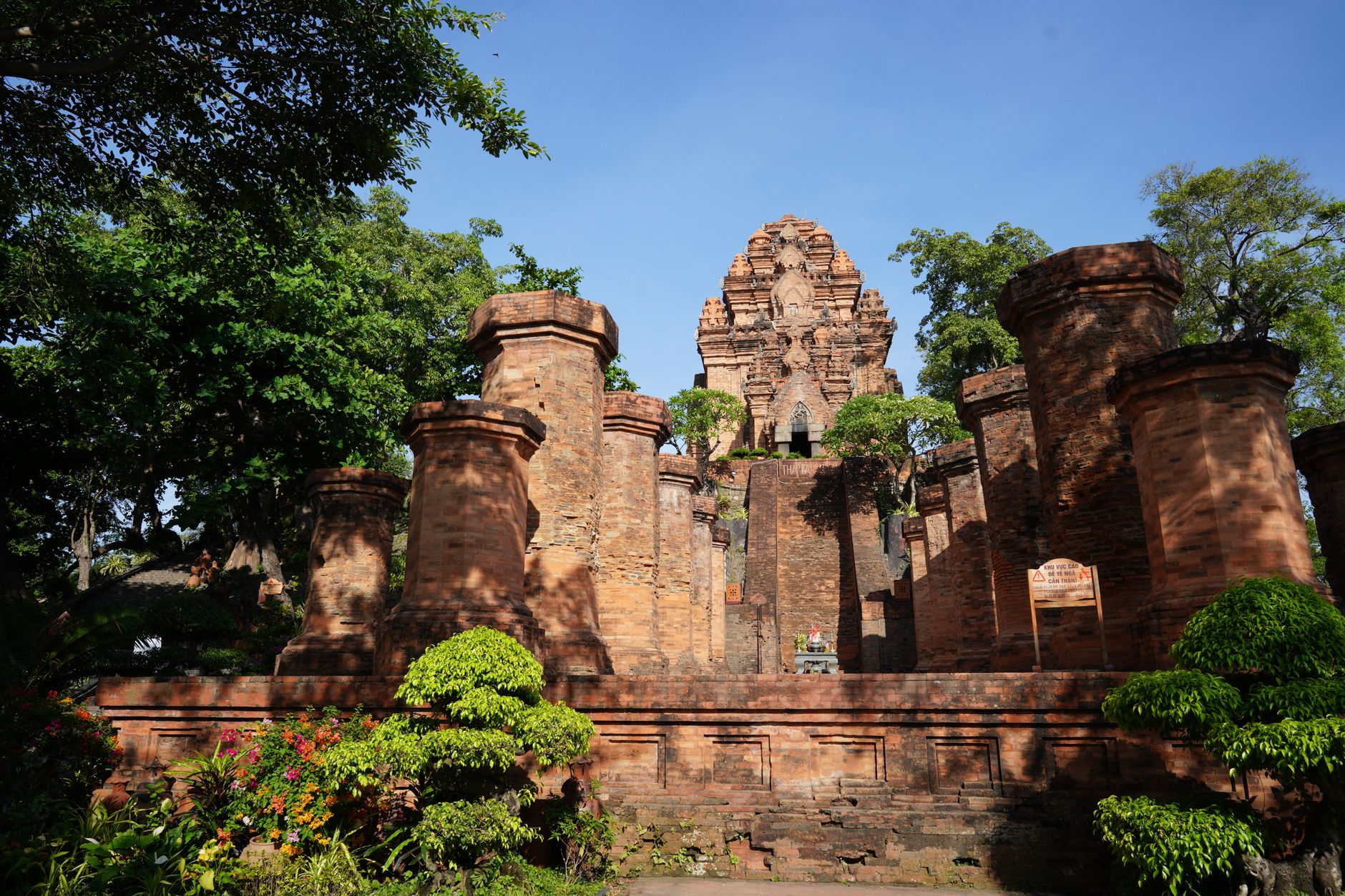
From Tran Phu, most things are walkable. The Po Nagar Cham Towers — a 9th-century Hindu temple complex — sit about 2 km north along the coast, an easy 25-minute walk or a 15,000 VND Grab bike ride. The Long Son Pagoda with its massive white Buddha statue is roughly 2 km inland, and a taxi there costs around 30,000–40,000 VND. Dive shops cluster along Tran Phu between Biet Thu Street and the Sailing Club, so you can comparison-shop on foot.
From inland hotels, you'll rely on Grab (Vietnam's ride-hailing app) more often. A Grab bike from the train station area to the beach runs about 12,000–18,000 VND, while a Grab car costs 25,000–35,000 VND. Over a five-day stay, that's still negligible compared to what you save on the room rate. Renting a motorbike (100,000–150,000 VND per day from most guesthouses) makes inland stays far more flexible, though Nha Trang traffic is chaotic and the beach road gets congested around 5–7 PM.
From Hon Tre, you're dependent on the cable car or resort boat shuttle. The cable car runs roughly 8:30 AM–9:00 PM (hours shift seasonally), and the ride takes about 12 minutes each way. If you want to eat dinner in town and return late, confirm the last departure time at the station — missing it means chartering a private boat back, which can cost 500,000 VND or more.
What Surprises Foreigners
The beach is not the main draw. Nha Trang's city beach is fine — clean enough, wide enough, swimmable most of the year — but it sits in front of a busy urban road. It's not a secluded bay. The real appeal is the offshore islands, diving, and the food scene. If you came expecting Phu Quoc-style emptiness, recalibrate. This is a working coastal city that happens to have a beach.
Russian influence is everywhere. Nha Trang has been a major destination for Russian tourists since the early 2000s. Entire blocks of restaurants serve Russian food, ATMs offer Russian-language screens, and hotel staff often speak Russian before English. This doesn't affect your trip negatively, but it explains the vibe. If you've traveled in Hoi An or Da Nang and expected the same backpacker-meets-boutique atmosphere, Nha Trang feels different.
Street food shuts down early. Unlike Hanoi or Saigon, where you can find "banh mi" and "pho" vendors past midnight, many of Nha Trang's best local spots close by 8–9 PM. The seafood restaurants along the beach stay open later, but they're priced for tourists (a grilled lobster plate runs 350,000–500,000 VND). If you want cheap, good local food, eat dinner by 7 PM.
Boat tour touts are aggressive. Around the Cau Da port area and along southern Tran Phu, you'll get pitched island-hopping day trips constantly. The standard four-island tour runs about 250,000–350,000 VND per person including lunch. It's fine for what it is — a boozy group boat trip — but it's not snorkeling in the Maldives. If you want clearer water and fewer people, book a smaller tour to Hon Mun island through a dive shop instead (600,000–900,000 VND).
Tap water is not drinkable. This applies across Vietnam, but in Nha Trang the salt air and older plumbing in budget hotels make it especially worth noting. Buy bottled water (5,000–8,000 VND for 1.5 liters at any convenience store) or carry a filtered bottle.
The Real Question: What Do You Want?
Stay on Tran Phu if you want beach access, restaurant variety, and nightlife on your doorstep — and if you can sleep through noise. The beach is functional (it's a working harbor town), and the street is touristy but lively.
Stay inland if you're budget-conscious and plan to spend days diving, island-hopping, or exploring the city. You'll save $20–40 a night and avoid the bar scene.
Hon Tre only makes sense if you're committed to the all-inclusive resort experience or traveling with family and kids. Locals rarely visit; it's a self-contained bubble.
One more thing: book a hotel with a rooftop bar or terrace if you're on Tran Phu. Many places charge nothing for guests and it's the best way to catch sunset without the street noise.
Quick Reference: Nha Trang Neighborhoods at a Glance
- Tran Phu (beachfront): $30–80/night depending on view. Walk to beach in under a minute. Loud after 10 PM. Best for short stays and first-timers.
- Hung Vuong (one block inland): $20–40/night. Russian-oriented dining and signage. Quieter than Tran Phu, still close to sand.
- Inland / train station area: $15–30/night. Best local food access. 10–15 min walk or short Grab ride to the beach. Best for budget travelers and longer stays.
- Hon Tre Island (Vinpearl): $150–500+/night. All-inclusive resort environment. Cable car to mainland. Best for families and resort-seekers.
- Beach season: October–April (driest, calmest water).
- Budget season: May–September (lower rates, occasional rain, rougher seas).
- Grab bike to beach from inland: 12,000–18,000 VND.
- Bowl of bun cha ca (local fish noodle soup): 35,000–45,000 VND.
- Useful phrase at check-in: "Co phong trong khong?" — Do you have a room available?
Practical Notes
Nha Trang's beach season runs Oct–Apr; June–Sept can be wet and rough. Prices are lowest May–Sept and spike Dec–Feb. If you're undecided, book 2–3 nights on Tran Phu first, then move inland or to Hon Tre if you realize it's not for you. Most hotels don't charge cancellation fees for walk-in bookings.
If Nha Trang ends up feeling too built-up for your taste, Da Nang offers a similar beach-city format about 530 km north with a wider range of mid-range hotels, or you could head south to Phu Quoc for something more island-oriented. Nha Trang's strength is its offshore diving and the density of its food scene — lean into those, and the neighborhood question becomes secondary.
Final Note
Nha Trang rewards people who treat it as a base, not a destination in itself. The islands, the dive sites, and the noodle soup stalls two blocks from the water are where the real value sits. Pick your neighborhood based on how you actually spend your evenings — on a rooftop with a cold beer, or asleep by nine so you can catch a 7 AM boat — and you'll be fine.
Last updated · May 29, 2026 · independently researched, never sponsored.