Why Ben Tre matters
Ben Tre is the coconut heartland of the Mekong Delta (메콩 델타 / 湄公河三角洲 / メコンデルタ)—the island province where narrow canals, riverside fruit markets, and coconut workshops define the landscape. Most travelers skip it for Can Tho or My Tho, but that's a mistake. It's quieter, cheaper, and the logistics are straightforward once you know your options.
From Saigon (Ho Chi Minh City)
This is the natural route. Saigon to Ben Tre is roughly 90 km and takes 2–2.5 hours depending on traffic and your transport choice.
Bus
Best for budget travelers. Buses leave from Mien Dong Bus Station (District 9) or Mien Tay Bus Station (An Phu, District 7) several times daily. Journey time is 2–2.5 hours. Cost: 80,000–120,000 VND (roughly USD 3–5). Buses are air-conditioned and usually half-empty, so seats are easy to find. Grab a ticket the morning you want to leave—no need to book ahead. You'll arrive at Ben Tre Bus Station on the Saigon (사이공 / 西贡 / サイゴン) side of the town, a 10-minute xe om (motorbike taxi) ride to central Ben Tre.
Operators: Saigon Coach, Thanh Buoi, Tien Giang (the provincial carrier). All are reliable and depart roughly every 30–45 minutes during daylight hours.
Motorbike or car rental
Best for flexibility and sightseeing. Rent a motorbike in Saigon (150,000–250,000 VND per day, including helmet and basic insurance) and drive south on Highway 1 toward My Tho, then branch into Ben Tre. Route is straightforward: Saigon → My Tho → Ben Tre. The road is flat, well-signed, and traffic is lighter than central Saigon once you're past District 7. Bring a physical map or download offline Google Maps—data can be patchy. Petrol costs roughly 20,000 VND per liter.
Alternatively, hire a driver or join a tour operator's minibus. Costs are 500,000–1,000,000 VND for a day trip (shared) to 2–3 million VND for private hire.
Ride-hailing (Grab)
Best for comfort and door-to-door service. Grab is available in Saigon and most Mekong towns. A Grab car (UberX equivalent) from central Saigon to Ben Tre runs 150,000–250,000 VND and takes 2–2.5 hours, depending on traffic. Prices surge during rush hours (7–9 am, 5–7 pm). Book at least 30 minutes ahead for routes outside the city.
From Hanoi
Hanoi to Ben Tre is roughly 1,700 km and impractical for a direct trip. You have two viable routes:
Fly + bus combo
Fly Hanoi to Saigon on Vietnam Airlines, VietJet, or Bamboo Airways (2 hours; 600,000–2,000,000 VND depending on booking window and airline). Then take a bus from Saigon to Ben Tre (see above). Total time: 4–5 hours travel, plus airport procedures. Total cost: 800,000–2,500,000 VND.
Overnight bus + continuing onward
Take an overnight sleeper bus from Hanoi to Saigon (12–15 hours; 300,000–600,000 VND). Arrive early morning, rest at your Saigon hotel, then catch a midday bus to Ben Tre. Not efficient for a short trip, but viable if you're doing a longer south Vietnam loop.

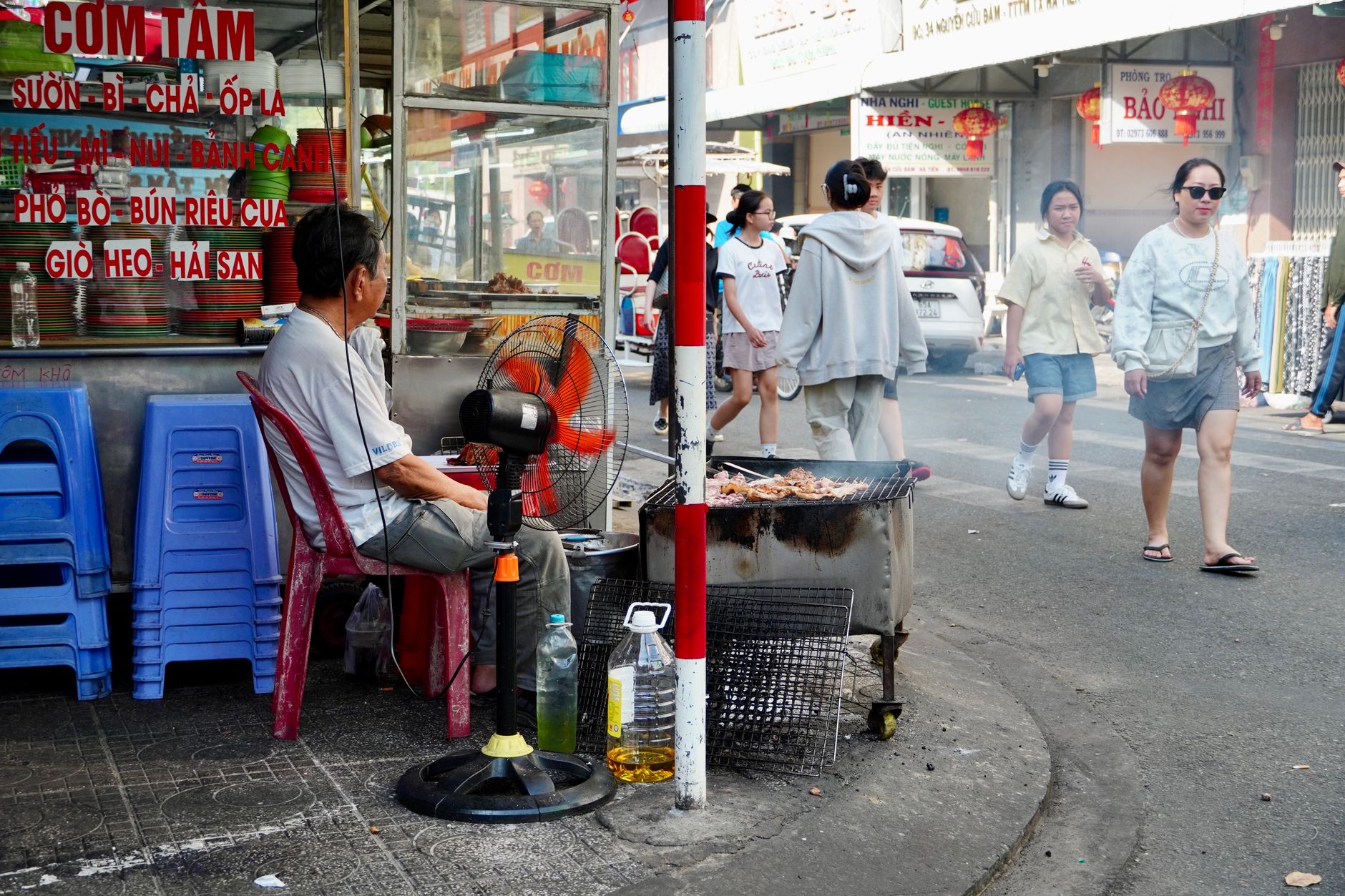
Photo by Flint Huynh on Pexels
From Da Nang
Da Nang to Ben Tre is roughly 850 km. You'll almost certainly fly or take a long bus.
Fly to Saigon, then bus to Ben Tre
Vietnam Airlines, VietJet, or Bamboo Airways from Da Nang to Saigon (1.5 hours; 500,000–1,800,000 VND). Then bus to Ben Tre (see above). Total time: 4 hours. Total cost: 700,000–2,300,000 VND.
Direct bus (overnight)
A few operators run Da Nang to Ben Tre or Da Nang to Ho Chi Minh City with onward connections. These are rare and not recommended—you're better off flying to Saigon and taking a daylight bus south.
By train
There is no direct train to Ben Tre. The nearest mainline station is My Tho, about 30 km west. Train schedules from Hanoi or Saigon to My Tho are infrequent and slower than buses. Skip this option unless you're a train enthusiast with spare time.

Photo by Lê Quốc Hùng on Pexels
Where to stay
Ben Tre town is the main commercial hub. Most travelers base themselves in central Ben Tre (Dong Khoi Street, Nguyen Hue Street) within walking distance of restaurants, markets, and motorbike-rental shops. Mid-range hotels run 300,000–600,000 VND per night. Budget guesthouses are 150,000–250,000 VND. Book ahead during Tet or weekends; otherwise, walk-ins are fine.
Alternatively, stay in My Tho (30 km north) if you prefer a slightly larger town with more dining options, or in Can Tho (75 km south) if you're doing a multi-day Mekong loop.
Practical notes
Ben Tre has no airport, so flying is not a direct option. Roads are good; motorbike rentals are cheap and straightforward. Cash is essential—ATMs are available in town, but rural villages may not have them. Motorbike rentals don't require an international license, but an International Driving Permit (IDP) or Vietnamese driving license protects you legally; travel insurance should cover motorbikes. Best to arrive early morning or midday to maximize daylight for exploring coconut orchards and waterways before dusk.
Last updated · May 29, 2026 · independently researched, never sponsored.