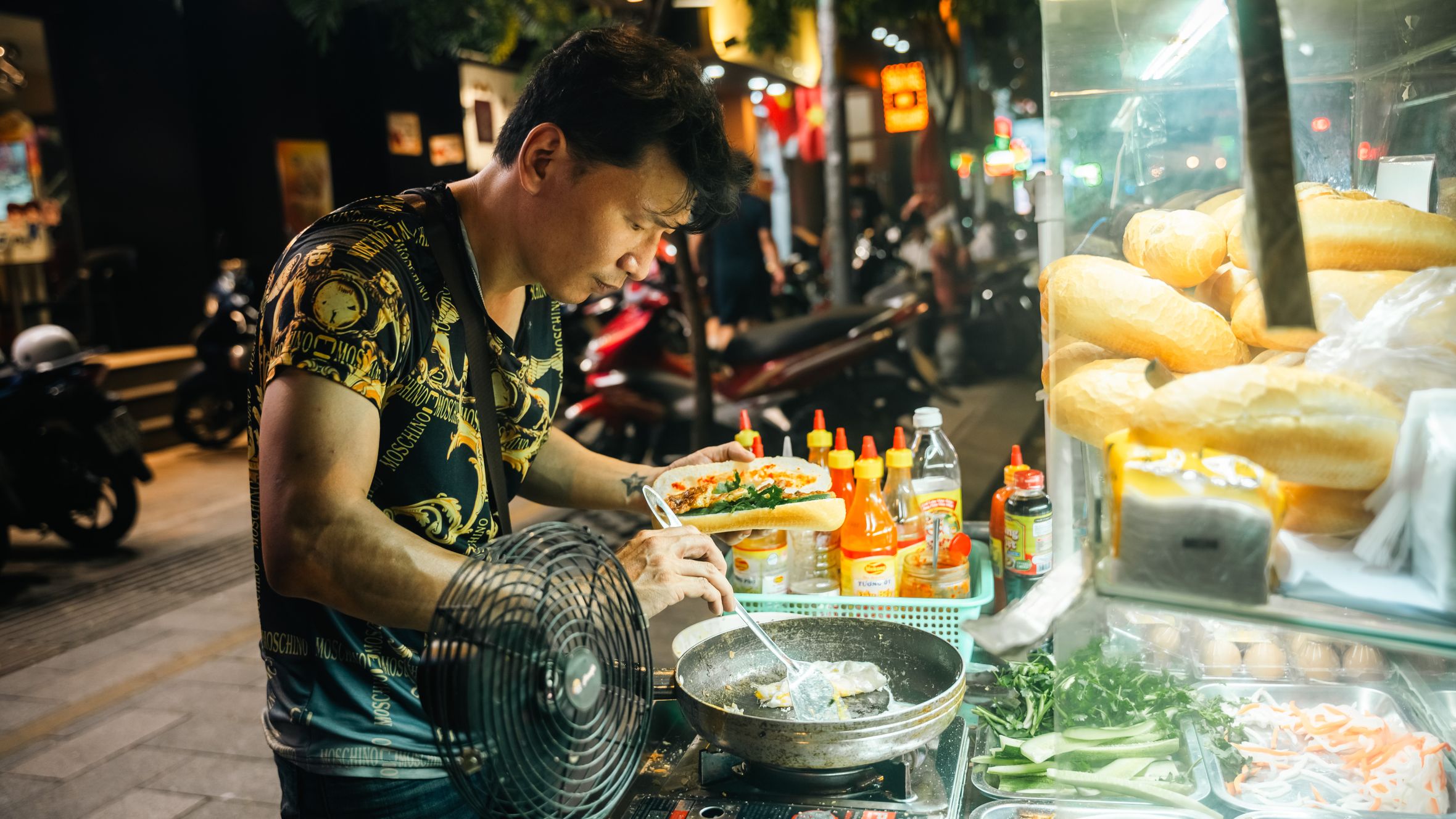
Da Nang does "banh xeo" differently from Saigon — and once you've eaten the central Vietnamese version, the comparison isn't even close. Smaller, thinner, fried harder in a scorching cast-iron pan, and eaten wrapped in rice paper with a mountain of fresh herbs: this is the banh xeo you'll keep thinking about long after you've left.
Why Da Nang Banh Xeo Is Its Own Thing
The banh xeo (반세오 / 越南煎饼 / バインセオ) you get in Saigon is large — sometimes the size of a dinner plate — and folded like an omelette, soft in the middle. Central Vietnamese banh xeo is about the size of a small bowl, cooked in individual clay or iron pans, and fried until the turmeric-yellow rice batter is fully crisp all the way through. The filling is simpler too: small shrimp, thin slices of pork, and bean sprouts. No coconut milk in the batter. No frills.
What makes it special is the eating ritual. You don't just pick up the crepe and bite it. You tear off a piece, roll it inside a sheet of "banh trang" (dried rice paper) with mustard leaf, lettuce, mint, and "dieu" herb (a bitter, grassy leaf specific to central Vietnam (베트남 / 越南 / ベトナム)), then dip the whole roll into a bowl of nuoc cham that's slightly sweeter and more garlicky than the southern version. Done right, you get crunch, freshness, heat, and acid in one bite.
Four Places Worth Going Out of Your Way For
Ba Duong — The Benchmark
Ba Duong on K7/23 Hoang Dieu is the shop Da Nang locals name first when anyone asks about banh xeo, and the reputation holds up. The pans here are the size of a rice bowl, the batter is aggressively thin, and the shrimp are fresh rather than frozen. Expect to wait for a table at lunch — it fills fast. A serve of three pieces runs about 30,000–35,000 VND. Go between 11am and 1pm for the best throughput from the kitchen.
Banh Xeo Ba Bien
On Tran Cao Van, Ba Bien draws a mostly local crowd and keeps prices lower than the spots that have started showing up in tourist guides. The herb plate here is notably generous — you'll get rau muong (water spinach tops), perilla, and the bitter dieu leaf without having to ask. Three pieces for around 25,000 VND. The fish sauce dipping broth is thinner than Ba Duong's, which some people prefer. Cash only, no menu — just sit down and they bring the food.
Quan 109
If you're staying near My Khe beach and don't want to cross the city, Quan 109 on Nguyen Van Thoai handles the craving well. The batter here has good color and the kitchen keeps the oil temperature high enough that nothing comes out greasy. It's slightly more polished than the other shops — tables have cloths, there's a chalk menu on the wall — and prices reflect that at around 40,000 VND for three pieces. They also do a decent "bun bo Hue" if you want to make a full meal of it.
Co Lien
Co Lien near the Han Market area is a good pick if you're already wandering that part of the city. It's a narrow shophouse with plastic stools and an open kitchen you can watch through the window. The fillings lean heavier on bean sprouts than some of the other spots, which cuts the richness. Prices sit around 28,000–32,000 VND per serve. They open early — around 9am — which makes this useful if you want banh xeo as a late breakfast rather than lunch.
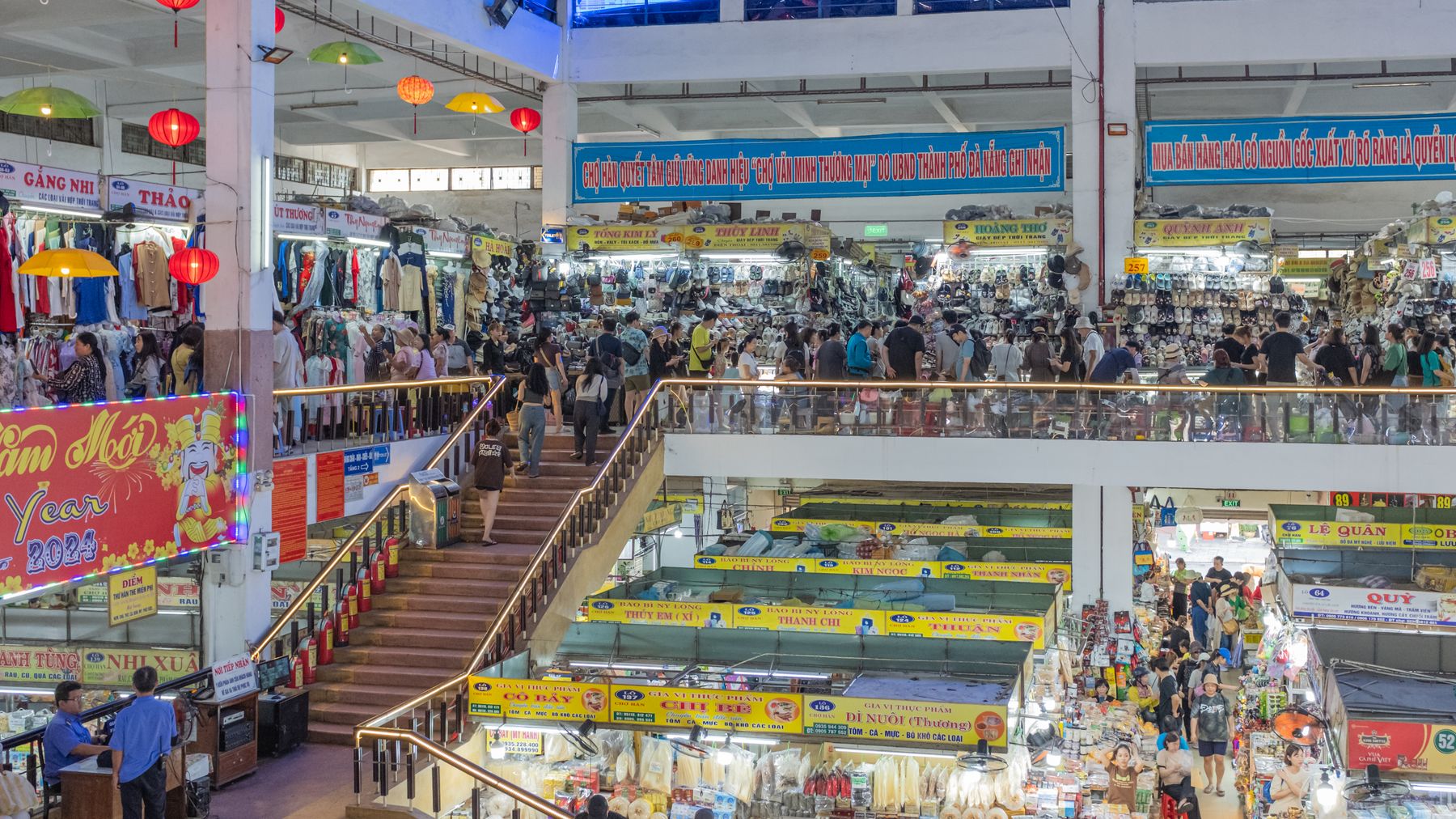
Photo by Kirandeep Singh Walia on Pexels
When to Go and What to Order
Banh xeo shops in Da Nang tend to operate in one of two windows: late morning to mid-afternoon (roughly 9am–2pm), or late afternoon into early evening (around 4pm–8pm). A few run both shifts, but most specialize in one. If you're planning a lunch run, aim to arrive before noon — the pans are freshest, the shrimp are at their best, and you won't be competing with the post-lunch lull where kitchens sometimes let the oil cool down too much.
When you sit down, you'll typically be asked how many pieces ("may cai?"). Three is a normal serve for one person as a snack; five to six if you're eating a full meal. The herb plate and dipping sauce come automatically. Some shops charge 5,000–10,000 VND extra for a refill of herbs — worth it.
One thing to clarify upfront: the rice paper for rolling ("banh trang") should come with the order. If it doesn't arrive, just ask — "cho them banh trang" (please add rice paper). Some spots have started skipping it unless prompted, especially if they see a foreign diner who might not know the eating method.

Photo by RDNE Stock project on Pexels
Practical Notes
Most banh xeo shops in Da Nang are cash only and won't have English menus — but ordering is simple enough that language isn't a real barrier. Budget 25,000–45,000 VND per serve depending on the shop and portion size. If you're combining a banh xeo run with other eating in the city, Hoi An is only about 30 km south and has its own regional variations worth comparing.
Last updated · Jun 8, 2026 · independently researched, never sponsored.