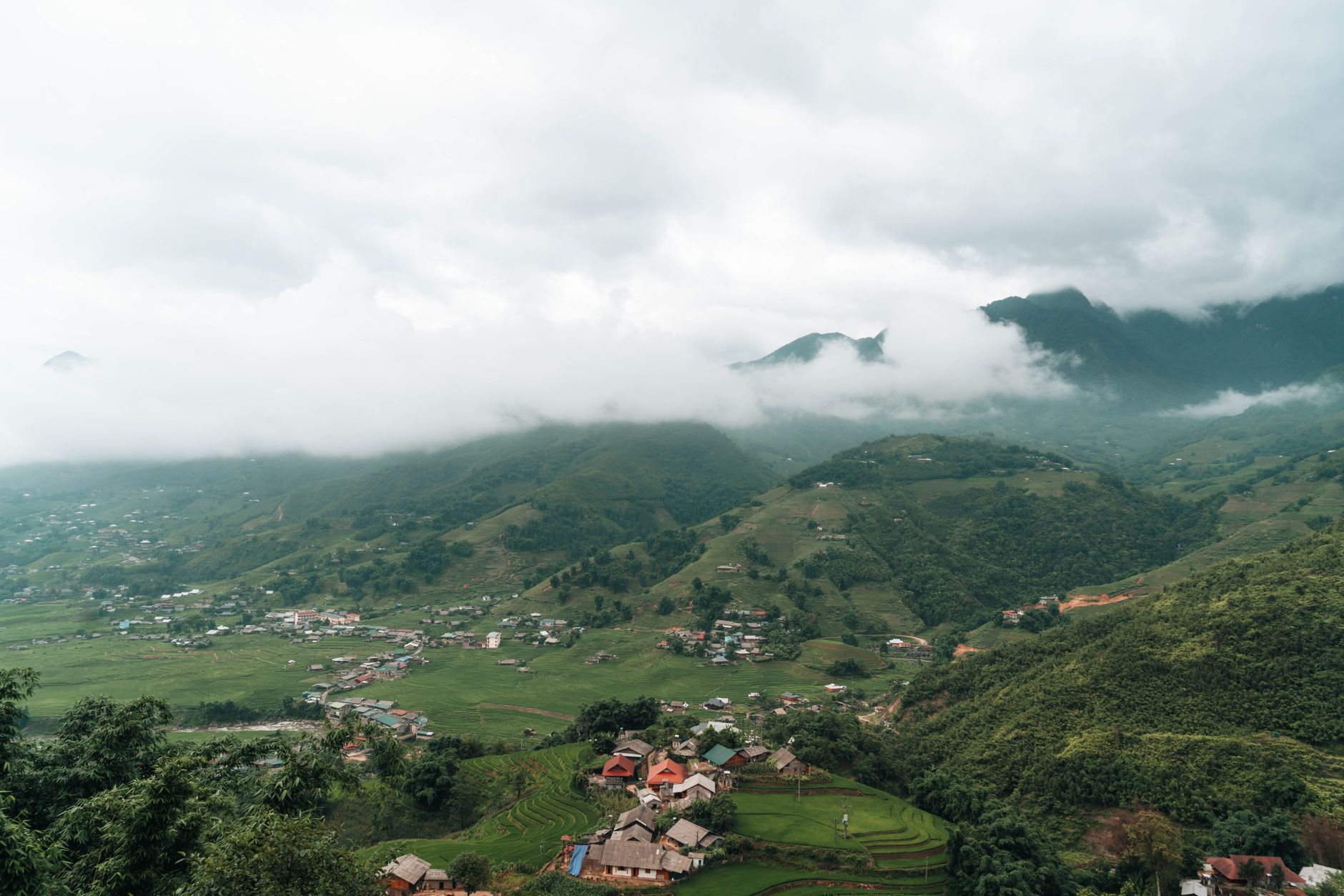
Mai Chau is easy to reach from Hanoi — about 135 km, four hours by bus or car — and the valley it sits in is genuinely lovely: flat rice paddies ringed by limestone hills, water buffalo on the road, women in indigo weaving at their louvred windows. Most visitors spend the night in a White Thai stilt house in one of two villages. The question everyone asks is which one.
Ban Lac — the one everyone means when they say "Mai Chau"
Ban Lac is the flagship. It has been receiving tour groups since the 1990s and the infrastructure shows: wide lanes between the stilt houses, a central area given over almost entirely to souvenir shops selling embroidered bags, woven scarves, and "ao dai" fabric by the meter, and homestays that can accommodate forty people under one roof. On peak weekends (October–November, late April) the main strip fills up by mid-afternoon.
That polish comes with real advantages. The homestays are comfortable. Beds are proper mattresses rather than thin mats, bathrooms are tiled, and a few places have hot water that actually works past 7 a.m. A standard bed in a shared dorm-style loft runs 120,000–180,000 VND per person; private rooms go for 350,000–500,000 VND depending on the host and season. Most packages include dinner and breakfast, which typically means a spread of White Thai dishes: grilled pork with lemongrass, sticky rice steamed in bamboo, river fish cooked in a clay pot, morning glory stir-fried with garlic. The food is straightforward and good.
The evening cultural show — a troupe of women dancing to traditional instruments in the communal space — is unapologetically touristy, but it is also one of the few remaining regular public performances of White Thai music outside of a festival context. Go in with realistic expectations and it is worth watching.
Ban Lac works best if you are traveling with a group, have limited time, or want a frictionless experience where things are pre-arranged.
Ban Pom Coong — quieter, slightly messier, more like actually being somewhere
Ban Pom Coong sits across a small footbridge from Ban Lac, roughly a 20-minute walk. It is smaller, receives fewer tour buses, and has not been as thoroughly re-oriented toward visitors. The stilt houses here are more varied in age and condition — some are new concrete-and-wood hybrids, some are genuinely old structures with blackened beams. Chickens wander. Kids cycle home from school past the rice paddies. The rhythm is slower.
Homestay prices are comparable to Ban Lac — 100,000–160,000 VND for a dorm bed, 300,000–450,000 VND for a private room — but negotiation is more common and the experience varies more between hosts. A few families here speak limited English, so if you do not have any Vietnamese or a translation app, communication takes patience.
The food situation is similar: sticky rice, grilled meats, river vegetables. One difference is that Ban Pom Coong has fewer fixed-menu tourist dinners and more households that will cook whatever they have that day, which can mean better meals or more basic ones depending on timing.
There is no nightly cultural show. What you get instead is the actual village evening: families eating together, older women finishing weaving on the porch, the occasional motorbike. Whether that feels like an authentic experience or just quiet depends entirely on what you are looking for.
Ban Pom Coong suits solo travelers, couples, or anyone who finds the Ban Lac scene a bit much.

Photo by Quang Nguyen Vinh on Pexels
How to get between them (and to Mai Chau from Hanoi)
From Hanoi (하노이 / 河内 / ハノイ), buses depart My Dinh station regularly from around 6 a.m. A direct bus to Mai Chau town takes roughly four hours and costs 120,000–150,000 VND. From the bus drop in Mai Chau town, a xe om (motorbike taxi) to either village is 30,000–50,000 VND. The two villages are connected by a footpath across the paddies — Ban Pom Coong is about 1.5 km east of Ban Lac's center — and the walk takes 20 minutes through flat farmland.
Renting a bicycle from your homestay (30,000–50,000 VND/day) and cycling between villages, and out toward the surrounding hamlets, is genuinely the best way to spend a day here. The valley is flat, the roads are quiet in the morning, and the loop around the paddies takes about two hours at a relaxed pace.

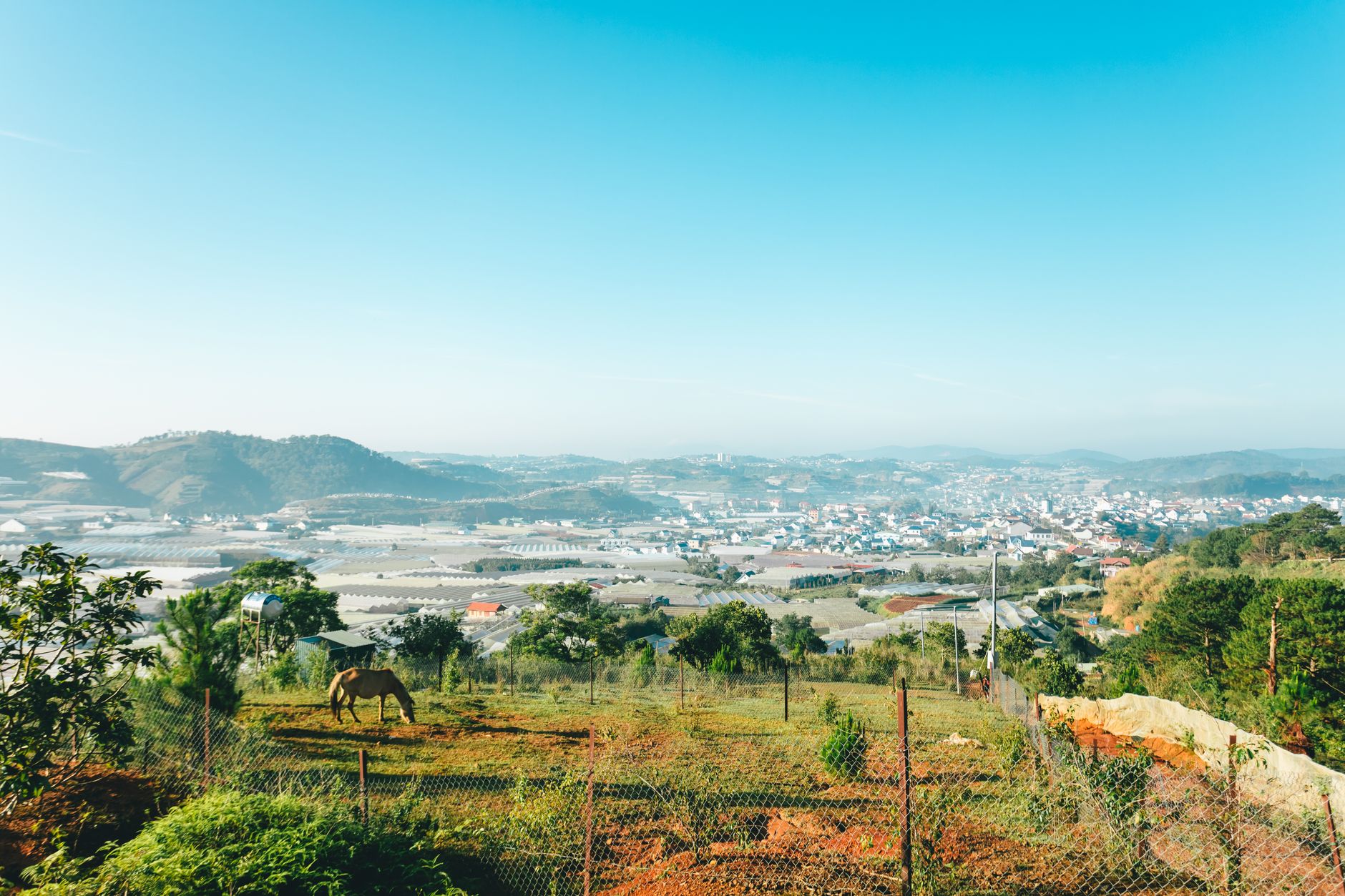
Photo by Vietnam Hidden Light on Pexels
What both villages share
Neither Ban Lac nor Ban Pom Coong is a remote, unchanged community. Both receive tourism money and both have adapted to it. The White Thai culture here — the stilt-house architecture, the weaving traditions, the sticky rice cuisine — is real, but it exists alongside souvenir stalls and phone charging cables and families who have seen ten thousand visitors come through. Treating it as a window into some untouched way of life will mislead you. Treating it as a living community that has made practical choices about how to engage with tourism is more accurate and more respectful.
If you want to go deeper into the cultural context before visiting, Mai Chau fits naturally into a broader loop that includes Ninh Binh (닌빈 / 宁平 / ニンビン) to the east or a push north toward Sapa — the contrasts between the different highland communities are worth understanding before you arrive.
Practical notes
Book homestays directly if possible — WhatsApp and Zalo numbers are often listed on guesthouses' hand-painted signs, or ask your Hanoi hotel to call ahead. Cash only in both villages; the nearest ATM is in Mai Chau town, 3 km from Ban Lac. Bring a light layer for evenings, even in April — the valley cools faster than Hanoi.
Last updated · May 27, 2026 · independently researched, never sponsored.