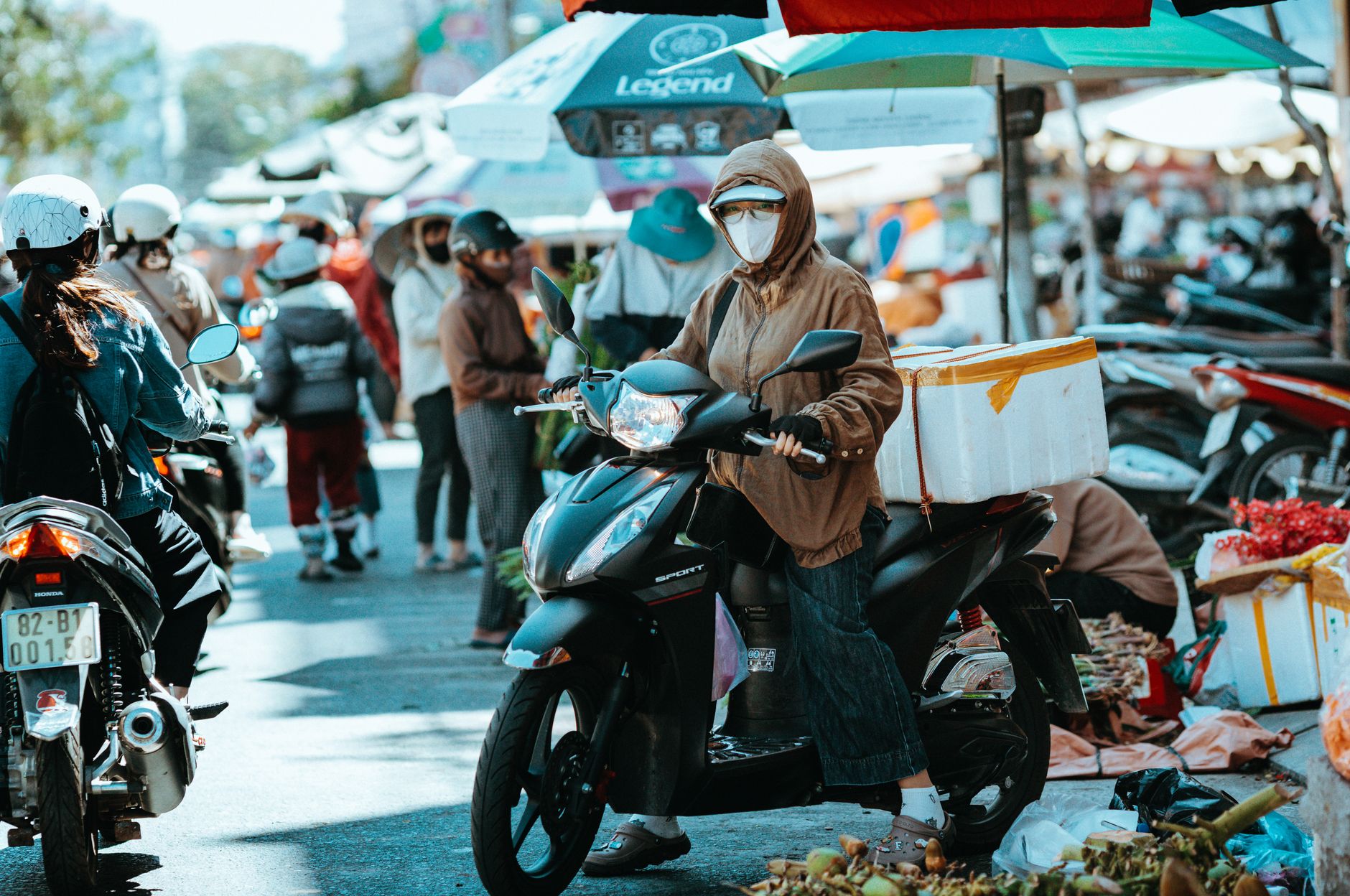
The origin: Hue's practical invention
"Ca phe muoi" — salt coffee — came out of necessity in central Vietnam (베트남 / 越南 / ベトナム), specifically Hue, during the mid-20th century. The city's cafes relied on cheap, low-grade robusta beans that were astringent and difficult to drink straight. A barista's solution: add a pinch of sea salt to the coffee grounds before brewing, which chemically reduces bitterness and rounds out harsh flavors. Condensed milk and ice followed, turning a masked problem into something people actually wanted to drink.
Unlike the rest of Vietnam, which settled on sweetened, milky coffee as the default, Hue (후에 / 顺化 / フエ) stuck with salt. The city's coffee culture became defined by this one addition — a regional signature that still sets Hue apart from Hanoi and Saigon today.
How salt actually works in coffee
The salt doesn't taste salty in your cup (if done right). Instead, it suppresses the perception of bitterness at the tongue's taste receptors, making robusta — which can taste astringent and woody — smoother and rounder. Salt also enhances sweetness perception, which amplifies the condensed milk's role in the drink.
Baristas in Hue use a quarter-teaspoon or less per serving. Too much ruins it. The salt dissolves into the hot water and coffee before ice is added, so you never notice grittiness. It's subtle enough that many first-time drinkers don't realize salt is in there until they're told.
Making it at home
You need four ingredients:
- Robusta coffee (ground medium-coarse). Hue baristas typically use Vietnamese robusta, often a blend from Da Lat or Da Nang suppliers. Arabica works but misses the point — robusta is what salt was invented to fix.
- Salt (sea salt or table salt, just a pinch).
- Condensed milk (sweetened, the canned stuff).
- Hot water and ice.
Standard method: place salt and ground coffee into a traditional metal "phin" filter. Pour a small amount of hot water to bloom the grounds for 30 seconds. Top up the phin and let it drip slowly into a glass. While dripping, add 2–3 tablespoons of condensed milk to the bottom of the glass. Once the phin finishes (usually 3–4 minutes), stir to combine, then fill the glass with ice. The drink is finished when the ice melts slightly and chills everything to drinking temperature.
Without a phin, any pour-over dripper works. The salt goes in with the grounds; the rest is identical.

Photo by 🇻🇳🇻🇳Nguyễn Tiến Thịnh 🇻🇳🇻🇳 on Pexels
Taste profile: how it compares
"Ca phe muoi" sits between two other Vietnamese coffee traditions. It's sweeter than "ca phe den" (black coffee, unsweetened) but less universally indulgent than "ca phe sua da" (iced coffee with sweetened condensed milk, no salt). The salt addition makes it less cloying — the drink has body and sweetness but also a subtle savory edge that prevents it from tasting like dessert in a glass.
Compare it to "ca phe trung" (egg coffee), Hanoi's other regional icon: both are rooted in scarcity and improvisation, but egg coffee uses whipped egg yolk and condensed milk for richness, while salt coffee strips back and relies on chemistry. Egg coffee tastes like a dessert. Salt coffee tastes like coffee.
Where to drink it in Hue
Most small coffee shops in Hue's old quarter serve it as standard. You don't need a special venue.
Cafe on Nguyen Chi Thanh Street is a strip of old colonial shophouses near Dong Ba Market where locals sit on tiny plastic stools. Order "ca phe muoi" and the barista will know exactly what you mean. A glass costs 25,000–30,000 VND. No English menu, no WiFi. Pure morning ritual.
Hue Coffee Tours occasionally feature salt coffee as part of longer coffee walks through the city, though these lean tourist. If you're staying in a guesthouse or hotel, the staff can point you to the nearest working cafe.
Gia Ngu Coffee, on Chu Van An, is a slightly more polished version — wooden decor, local pastries — but still makes it the traditional way. 30,000–35,000 VND.

Photo by NGUYỄN THÀNH NHƠN on Pexels
In Hanoi and Saigon
Salt coffee is less common outside Hue, though it's not extinct. Hanoi has a few specialty coffee shops that offer it as a curiosity or regional feature (often labeled "ca phe muoi Hue"). Saigon has even fewer — coffee culture there skews toward iced "ca phe sua da" or third-wave espresso bars.
If you want salt coffee in Hanoi or Saigon, your best bet is a cafe run by someone from Hue, or a "coffee tour" operator who features regional Vietnamese coffee styles. Otherwise, you're better off drinking it in its home city.
Cost and practicality
A glass of salt coffee in Hue runs 25,000–40,000 VND depending on location. Old Quarter street cafes trend toward the lower end; slightly fancier spots near the citadel go higher. It's cheaper than specialty espresso drinks in international chains but slightly pricier than standard "ca phe sua da."
The drink is best consumed slowly, over 20–30 minutes, as you watch the ice melt and the flavors evolve. It's not meant to be rushed.
Practical notes
If you visit Hue, salt coffee is worth a morning. It's not a gimmick — it's genuinely tasty and tells you something about Vietnamese regional food logic: solving a real problem (bad coffee) with an unexpected tool (salt) and making something memorable from it. Bring it home as a habit, not a souvenir.
Last updated · May 29, 2026 · independently researched, never sponsored.