Cai Mon sits on a fertile wedge of land between the Ham Luong and Co Chien rivers, about 85 km southwest of Saigon. For over 150 years, families here have grown ornamental plants, fruit trees, and flowers for markets across southern Vietnam (베트남 / 越南 / ベトナム). It's not a tourist attraction in the theme-park sense — it's a living village where horticulture is the economy, and that's exactly what makes it worth visiting.
What Cai Mon actually is
Cai Mon (formally Lang hoa kieng Cai Mon) is a horticultural village in Cho Lach district. Until the 2025 provincial merger, this area belonged to Ben Tre province — if you're looking at older maps or guidebooks, that's the name you'll see. It now falls under the expanded Vinh Long province.
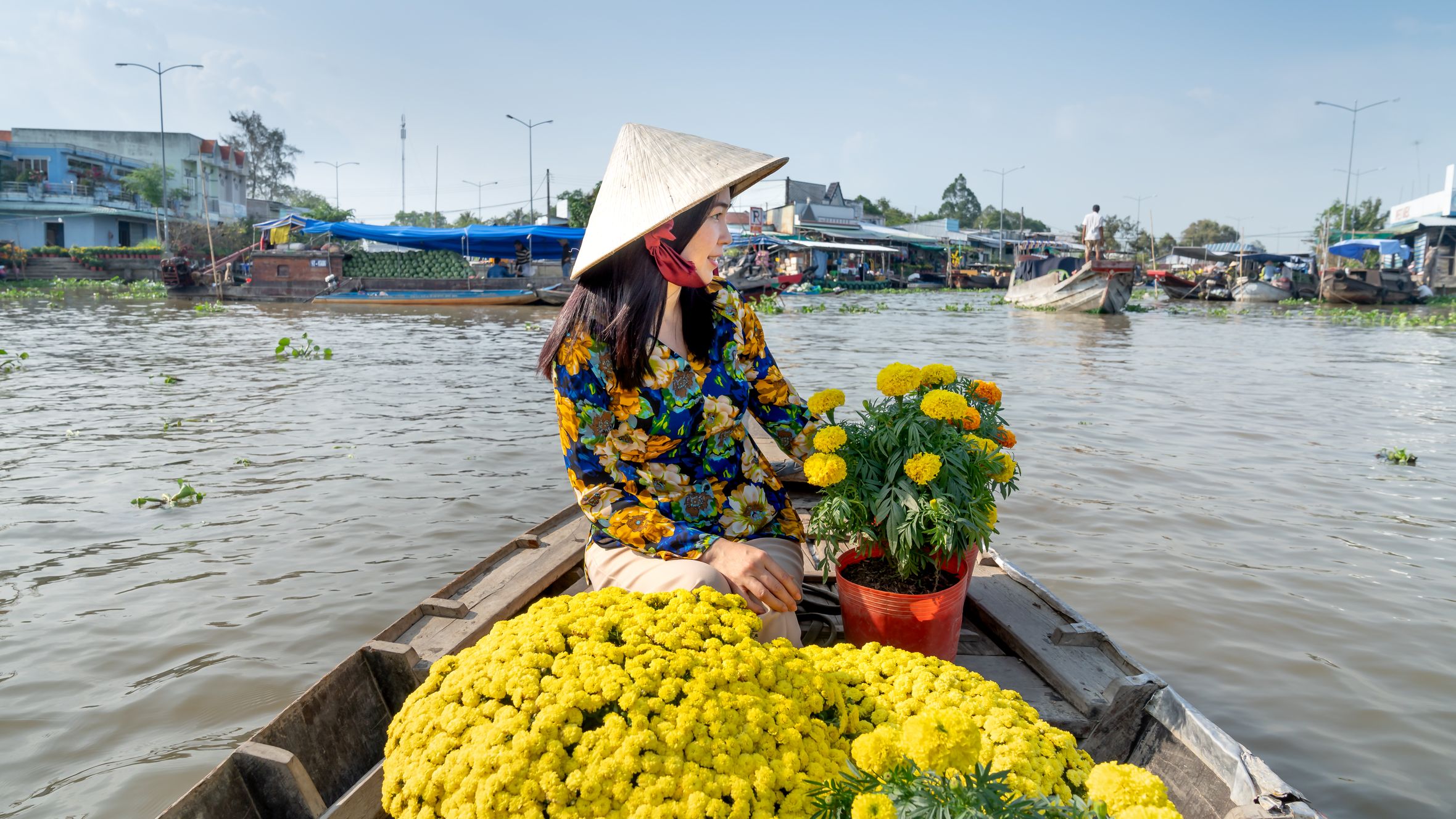
The village has been growing ornamental plants since the late 19th century. French colonial records mention Cai Mon's fruit orchards, and Catholic missionaries who settled here helped introduce grafting techniques that locals adapted and refined. Today, the village covers several hundred hectares of nurseries specializing in bonsai, ornamental trees, roses, orchids, and fruit saplings. The weeks before Tet are the busiest season, when trucks line the roads hauling "mai vang" (apricot blossom trees) and kumquat plants to Saigon (사이공 / 西贡 / サイゴン) and beyond.
Why travelers go
Cai Mon appeals to a specific kind of traveler — someone who prefers working landscapes over packaged experiences. You walk along narrow concrete paths between nurseries, watch families wire and prune bonsai that have been shaped over decades, and talk to growers who are genuinely happy to explain their craft. There are no ticket counters, no souvenir shops, no guided tour scripts.
It also pairs well with a broader Mekong Delta loop. If you're already spending time around Vinh Long or Can Tho, Cai Mon adds texture to the trip without requiring a full extra day.
Best time to visit
The sweet spot is late December through mid-January, when growers are preparing plants for the Tet / 越南春节 / テト) market. The nurseries are at peak color, activity is high, and the energy is infectious. Visiting in the final two weeks before Tet itself (usually late January or early February) means roads are clogged with delivery trucks and some growers are too busy to chat — still visually interesting, but less relaxed.
The dry season months of November through April are generally comfortable. Avoid June through September if you can; afternoon downpours turn the village paths slippery, and some nurseries cover their stock with tarps, limiting what you can see.
How to get there
From Saigon, the most practical route is to drive or take a bus to Vinh Long city (about 2 hours, 130 km via the My Thuan expressway), then continue south toward Cho Lach district. Cai Mon is roughly 30 km from Vinh Long city center — a 45-minute drive including a ferry crossing at Dinh Khao.
By bus: Coaches from Saigon's Mien Tay bus station run to Cho Lach town (around 100,000–130,000 VND, 3 hours with stops). From Cho Lach market, a "xe om" (motorbike taxi) to the village center costs 20,000–30,000 VND.
By motorbike: This is the best option if you're comfortable on two wheels. The ride from Vinh Long city through fruit orchards and along the river is one of the better stretches of rural road in the delta. Google Maps handles the route fine.
Day trip from Saigon: Doable but long. You're looking at 5–6 hours of total driving. Better to combine it with a night in Vinh Long or Can Tho.

Photo by Luan Nguyen Luca on Pexels
What to do
Walk the nursery lanes
The village doesn't have a single entrance or defined route. Start near the Cai Mon church (a large Catholic church that's a local landmark) and walk in any direction along the paths between properties. Most nurseries are open and unfenced. If a gate is closed, just move to the next one. Growers will often wave you in.
Watch bonsai shaping
Cai Mon is particularly known for "bon sai" and shaped ornamental trees — some specimens are decades old and worth tens of millions of VND. If you find a grower mid-work, stop and watch. The wiring and pruning techniques are precise and meditative. Asking "Cay nay bao nhieu tuoi?" (How old is this tree?) is a reliable conversation starter.
Visit a fruit orchard
Several families maintain orchards alongside their ornamental nurseries. Depending on the season, you can taste "vu sua" (star apple, January–March), longan (July–August), or mangosteen (May–July) straight from the tree. Some orchards charge a small entry fee of 20,000–40,000 VND that includes fruit tasting.
See the Cai Mon church
The village's Catholic heritage is visible in the large church near the center. It's not a major architectural landmark, but it adds historical context and helps explain how European horticultural techniques arrived here in the 1800s.
Browse the plant market
If you visit in Tet season, the temporary market near the main road is worth an hour. Prices are surprisingly reasonable — small ornamental plants start at 50,000 VND. Shipping larger items to Saigon is possible; growers arrange transport regularly.
Where to eat nearby
Cai Mon itself has limited dining options — a few "quan com" (rice shops) near the church and along the main road. For something more memorable, head to Cho Lach town (10 minutes by motorbike) where you'll find "hu tieu" — the Mekong Delta's signature noodle soup, served with pork and shrimp in a clear, slightly sweet broth. A bowl runs 30,000–45,000 VND. The riverside "quan" (restaurants) near the Cho Lach ferry landing also serve decent grilled "ca tai tuong" (elephant ear fish), a delta specialty wrapped in rice paper with herbs — expect 150,000–250,000 VND for a whole fish.
Where to stay
Cai Mon has no hotels. Your options:
- Vinh Long city (30 km north): Budget guesthouses from 200,000–350,000 VND/night; mid-range hotels like Phuong Hoang or Cuu Long around 500,000–800,000 VND.
- Homestays along the river: A few families in the broader Cho Lach area offer homestay rooms (300,000–500,000 VND including breakfast). Ask at the Cho Lach tourist office or search on Booking.com — listings appear and disappear seasonally.
- Can Tho (60 km southwest): More hotel variety if you're continuing deeper into the delta.
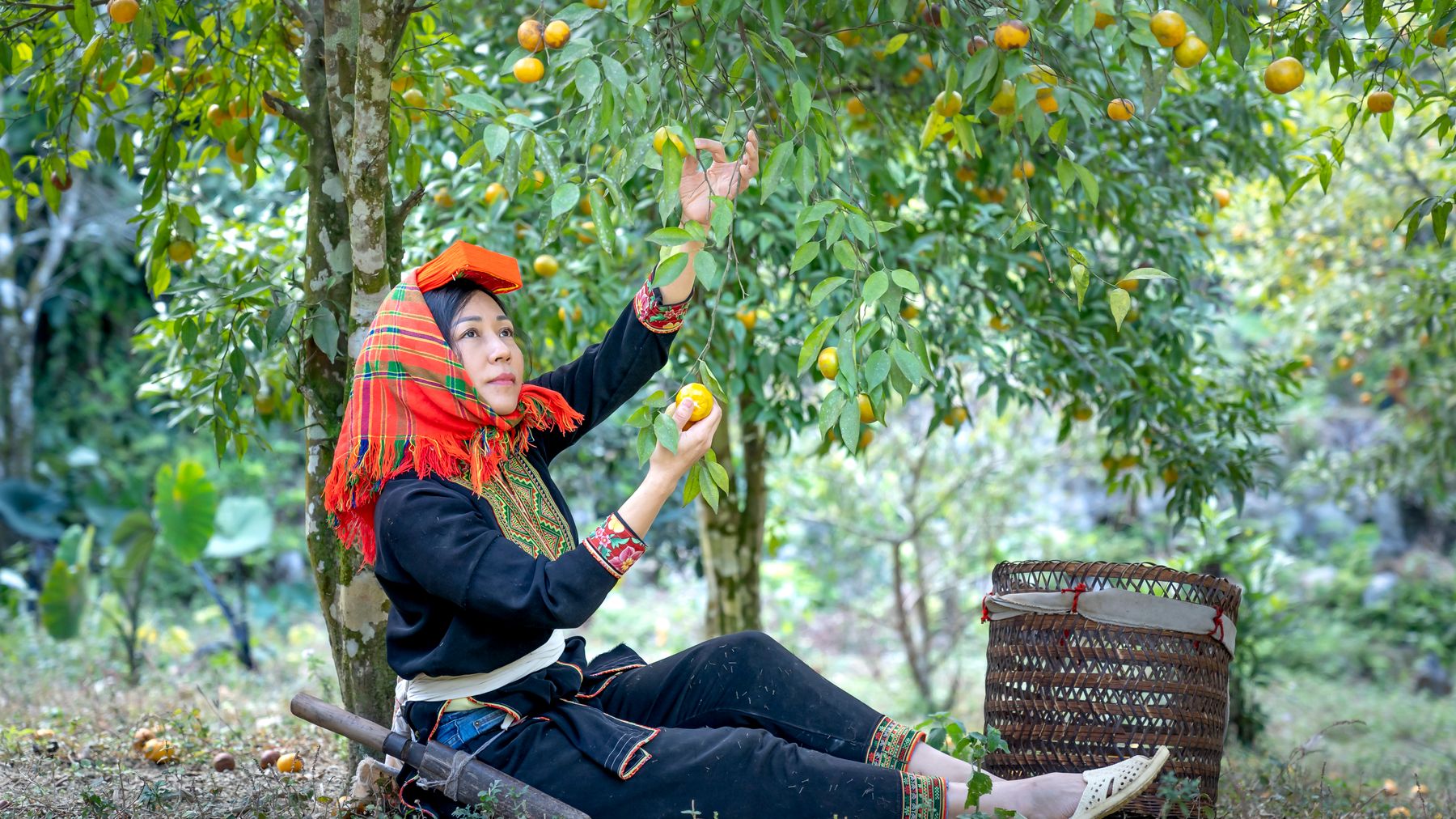
Photo by Quang Nguyen Vinh on Pexels
Practical tips locals would tell you
- Bring cash. There are no ATMs in the village and no one takes cards.
- Wear shoes you don't mind getting dirty. The paths between nurseries are narrow and often muddy, even in dry season.
- Go early. Growers start work at dawn and wind down by mid-afternoon. Arriving by 8:00 AM gets you the best light and the most activity.
- Don't touch plants without asking. Some bonsai specimens represent years of work and significant value. A snapped branch is a real loss.
- Bring a hat and water. There's almost no shade between nurseries, and the delta sun is relentless.
Common mistakes to avoid
- Treating it like a photo op and leaving after 30 minutes. The village rewards slow exploration. Budget at least 2–3 hours.
- Coming on a random weekday in the wet season and wondering why it's quiet. Timing matters here more than most destinations.
- Expecting English. Almost no one speaks it. Basic Vietnamese phrases or a translation app go a long way.
- Driving in during peak Tet rush without a plan. The roads get genuinely gridlocked with trucks. If visiting in the last week before Tet, arrive before 7:00 AM.
Practical notes
Cai Mon works best as part of a longer Mekong Delta trip — combine it with a night in Vinh Long, a morning in Can Tho's floating market, or a loop through the quieter backroads toward Ben Tre town. It's not a destination that demands its own trip, but it's one that sticks with you longer than places that try harder to impress.
Last updated · May 29, 2026 · independently researched, never sponsored.