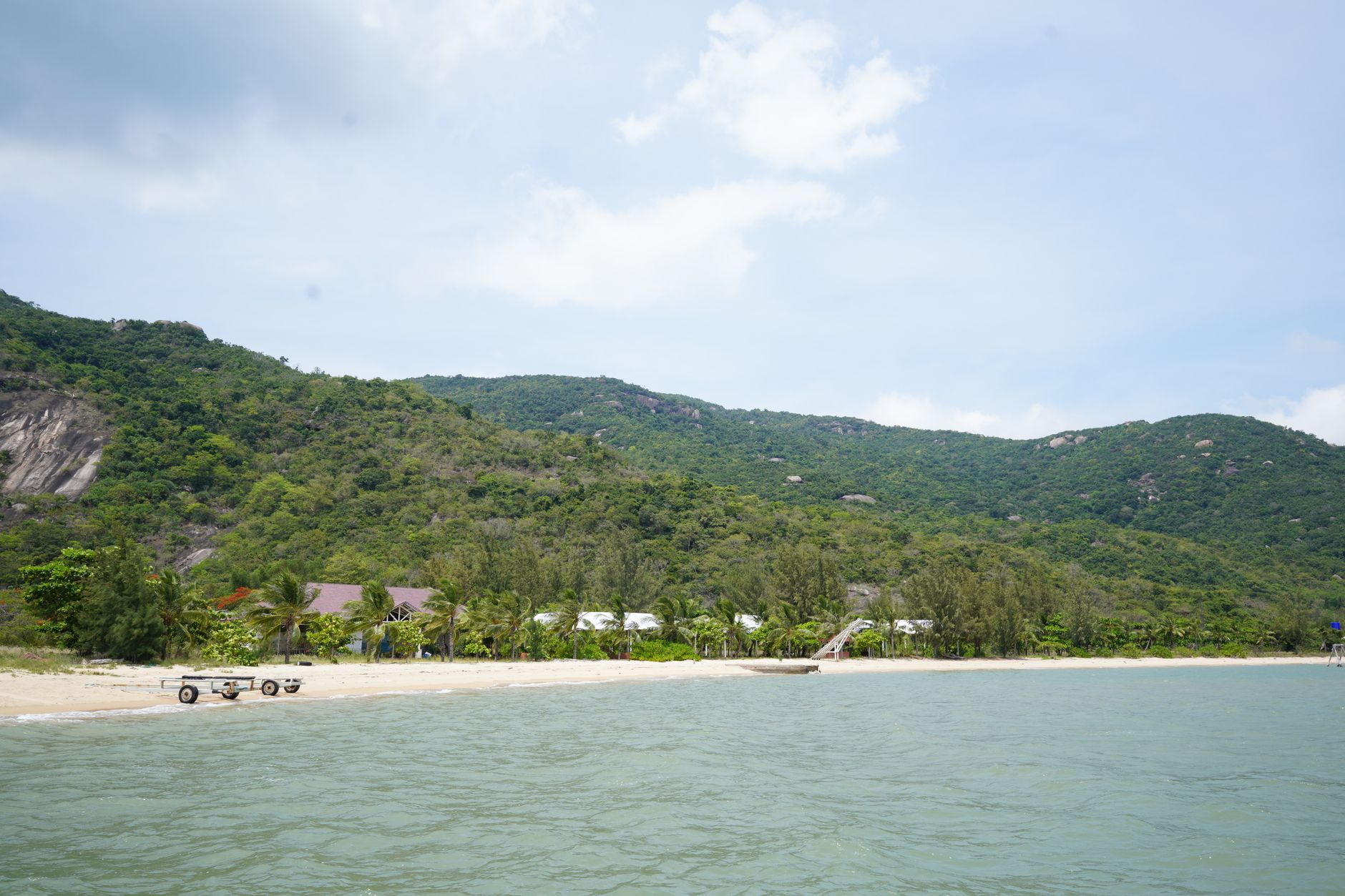
Cu Lao An Binh sits in the Co Chien River just south of Vinh Long city, a flat green island where most of the economy still runs on fruit trees and fishing nets. If you want to understand the Mekong Delta (메콩 델타 / 湄公河三角洲 / メコンデルタ) without fighting through tourist traffic, this is one of the more honest places to do it.
What It Is
Cu Lao An Binh is a river island — technically a cluster of smaller islets connected by monkey bridges and narrow concrete lanes — in what has long been Vinh Long province in the Mekong Delta. The island has been inhabited for centuries, originally settled by farmers who worked the alluvial soil deposited by the Mekong's branches. That soil is the reason everything here grows so aggressively: longan, rambutan, mangosteen, jackfruit, and coconut palms crowd every sightline.
There's no single landmark or attraction that draws people. The island itself is the point. Narrow canals thread between orchards. Wooden sampans still function as actual transport, not props. Old houses with French-influenced tile floors sit behind fruit gardens. It's the Mekong Delta at a pace that Saigon day-trip buses rarely allow.
Why Travelers Go
Most visitors to the Mekong Delta end up on a packaged boat tour out of Saigon (사이공 / 西贡 / サイゴン) that hits Can Tho or the more commercialized islands near My Tho. Cu Lao An Binh gets a fraction of that traffic, which is exactly the appeal. You can cycle the island's lanes in a morning, stop at orchards where the owner actually lives there (not a ticketed tourism operation), eat lunch at a riverside home, and hear nothing louder than a rooster for hours.
It's also a practical base for exploring the wider Vinh Long area. The ferry ride from Vinh Long city takes about five minutes, so you're not stranded — you can dip into town for supplies or an ATM and be back on the island before your hammock gets cold.
Best Time to Visit
The dry season from December through April is the most comfortable window. Humidity drops to something almost bearable, rain is rare, and the fruit harvest peaks between May and July if you time the tail end right. March and April hit a sweet spot: dry weather, fewer domestic tourists than Tet season, and longan trees heavy with fruit.
Avoid September and October if you can. The Mekong's water level rises, some low-lying paths flood, and mosquitoes multiply. The island doesn't become inaccessible, but cycling gets muddy and less pleasant.
How to Get There
From Saigon, catch a bus from Mien Tay bus station to Vinh Long city. Phuong Trang and Thanh Buoi both run this route frequently — about 2.5 to 3 hours, tickets around 100,000–130,000 VND. From Vinh Long city, head to the An Binh ferry terminal (Ben Pha An Binh) on Phan Boi Chau street near the riverfront. The ferry crosses the Co Chien River in roughly five minutes and costs under 5,000 VND for a pedestrian, around 15,000–20,000 VND with a motorbike.
If you're coming from Can Tho (about 70 km), buses and minivans run to Vinh Long in under two hours for around 60,000–80,000 VND.
You can also hire a private car from Saigon for around 1,500,000–2,000,000 VND one way, which makes sense if you're splitting costs with a group.

Photo by Quang Nguyen Vinh on Pexels
What to Do
Cycle the Island's Canal Roads
Rent a bicycle from your homestay (most provide them free or for 30,000–50,000 VND per day) and ride the network of narrow concrete paths that follow the canals. The island is flat and small — maybe 10 km end to end — so you don't need athletic ambitions. Stop when something looks interesting. A woman selling coconut candy from her kitchen. A longan orchard with a hand-painted sign. A wooden bridge you're not entirely sure will hold your weight. That's the whole idea.
Visit a Fruit Orchard
Several family-run orchards welcome visitors, especially during harvest months. Expect to pay around 30,000–50,000 VND for entry and all the fruit you can eat on-site. Vuon Trai Cay Ba Hanh is one of the better-known spots, but honestly, you can knock on most gates and someone will wave you in.
Take a Sampan Through the Canals
Homestays and local boatmen offer sampan trips along the smaller canals that cut through the island's interior. These narrow waterways, shaded by water coconut palms, are where the delta's texture really shows. A one-hour trip runs about 100,000–200,000 VND per boat. Go early in the morning when the light is low and the canal traffic is fishermen, not tourists.
Stop at Vinh Long Market
Back on the mainland, Vinh Long's central market is worth a morning wander. The riverside section sells fish pulled from the Mekong that morning. It's not a curated experience — it's a working market — but that's why it's worth your time. This is also where you'll find the best selection of "hu tieu" in the area.
Walk to the Old Temple
Tien Chau Pagoda on the island dates back over a century and sits quietly among the trees. It won't take more than twenty minutes of your day, but the woodwork and ceramic details are worth seeing if you're passing by.
Where to Eat
Mekong Delta food leans on freshwater fish, coconut, and whatever fruit is in season. On the island, most homestays cook meals for guests — this is often the best food you'll find. Expect dishes like "ca tai tuong" (elephant ear fish) grilled whole and wrapped in rice paper with herbs, and "hu tieu" noodle soup for breakfast.
Back in Vinh Long city, look for "banh xeo" — the southern delta version is larger and crispier than what you'll get in Saigon, stuffed with shrimp and bean sprouts. Stalls near the market serve them for 15,000–25,000 VND each.
Where to Stay
Homestays are the default here, and they're the right call. Most are family-run houses with a few guest rooms, a shared garden, and meals included.
- Budget: Basic homestays with fan rooms and shared bathrooms run 200,000–350,000 VND per night, meals often included.
- Mid-range: Places like Ut Trinh Homestay or Bay Thoi Homestay offer air-conditioned rooms, private bathrooms, and garden settings for 400,000–700,000 VND.
- Upper range: A few properties have upgraded to resort-adjacent comfort with pools and polished decor — expect 800,000–1,500,000 VND. Mekong Homestay is one of the better-known options in this bracket.
Booking through Vietnamese platforms like Traveloka sometimes gets better rates than international sites.

Photo by Flint Huynh on Pexels
Practical Tips
- Bring cash. There are no ATMs on the island. The nearest machines are in Vinh Long city.
- Mosquito repellent is not optional, especially near the canals at dusk.
- If you're visiting during fruit season (May–July), wear clothes you don't mind staining. Mangosteen juice is permanent.
- Learn the phrase "bao nhieu" (how much) — it'll get used constantly at orchard stalls and market stops.
Common Mistakes
- Day-tripping from Saigon and rushing back. The island rewards an overnight stay. The mornings and evenings are when it feels most itself.
- Expecting polished tourism infrastructure. This isn't Phu Quoc. English signage is minimal, menus may not exist, and some paths are unmarked. That's the point.
- Skipping the ferry and booking a packaged boat tour. The group tours that loop through rarely spend enough time on An Binh to get past the surface. Take the public ferry, rent a bike, and set your own pace.
Practical Notes
Cu Lao An Binh works best as a one- or two-night stop on a longer Mekong Delta route — pair it with Can Tho for floating markets or loop south toward the coast. It's not a place with a checklist of sights. It's a place where slowing down is the whole activity, and the delta rewards you for it.
Last updated · May 29, 2026 · independently researched, never sponsored.