
Nui Mau Son sits at 1,541 meters above sea level in Lang Son province, about 30 km east of Lang Son city. It's one of the coldest spots in northern Vietnam (베트남 / 越南 / ベトナム), occasionally dusted with frost or even snow in winter — a genuine anomaly in a tropical country, and the main reason Vietnamese travelers make the trip.
What it is and why it matters
Mau Son is a massif, not a single peak. The summit area spreads across several ridges with pine forests, tea plantations, and small Dao and Nung ethnic minority villages. The French built a hill station here in the 1930s — a handful of stone ruins from that era still dot the upper slopes, though most are overgrown and unsigned. The mountain never became another Sapa or Da Lat in terms of colonial development; it stayed quiet, which is part of its appeal now.
For Vietnamese visitors, Mau Son is famous for two things: cold weather and "ruou Mau Son" (Mau Son wine), a rice liquor infused with local herbs. For foreign travelers, the draw is simpler — it's a northern mountain with actual solitude, no tourist buses, and views over a landscape that feels nothing like the rest of the delta lowlands.
Best time to visit
Mau Son has two distinct seasons worth considering:
December to February is peak season. Temperatures at the summit drop to 0–5°C, and on rare occasions (a few days per year, usually late December or January), frost or ice crystals form on the grass and trees. Vietnamese media covers these events heavily, and the mountain gets crowded on those specific days. If you want the cold experience without the weekend rush, aim for a weekday in January.
September to November is quieter and still comfortable — daytime temperatures hover around 15–20°C, fog rolls through the valleys in the mornings, and the terraced fields below turn gold before harvest. You won't get frost, but you also won't share the road with convoys of selfie-seekers.
Avoid April to August unless you enjoy riding a motorbike through hot rain. The mountain loses its atmospheric edge in summer.
How to get there
The gateway is Lang Son city, which sits about 155 km northeast of Hanoi.
Hanoi (하노이 / 河内 / ハノイ) to Lang Son: Buses run from My Dinh and Gia Lam bus stations every 30–45 minutes throughout the day. The ride takes roughly 3–3.5 hours via the Hanoi–Lang Son expressway and costs 120,000–150,000 VND. If you're riding your own motorbike from Hanoi, budget 4–5 hours depending on traffic out of the city.
Lang Son city to Mau Son summit: The mountain road starts from the town and climbs 30 km to the top. There's no public bus. Your options are:
- Motorbike (your own or rented in Lang Son for about 150,000–200,000 VND/day) — the most common choice. The road is paved but narrow with tight switchbacks. Confident riders only, especially in fog.
- Taxi or private car — negotiate in Lang Son; expect 400,000–600,000 VND round trip with waiting time.
- "Xe om" (motorbike taxi) — local drivers near the market know the route. Around 200,000–300,000 VND one way.
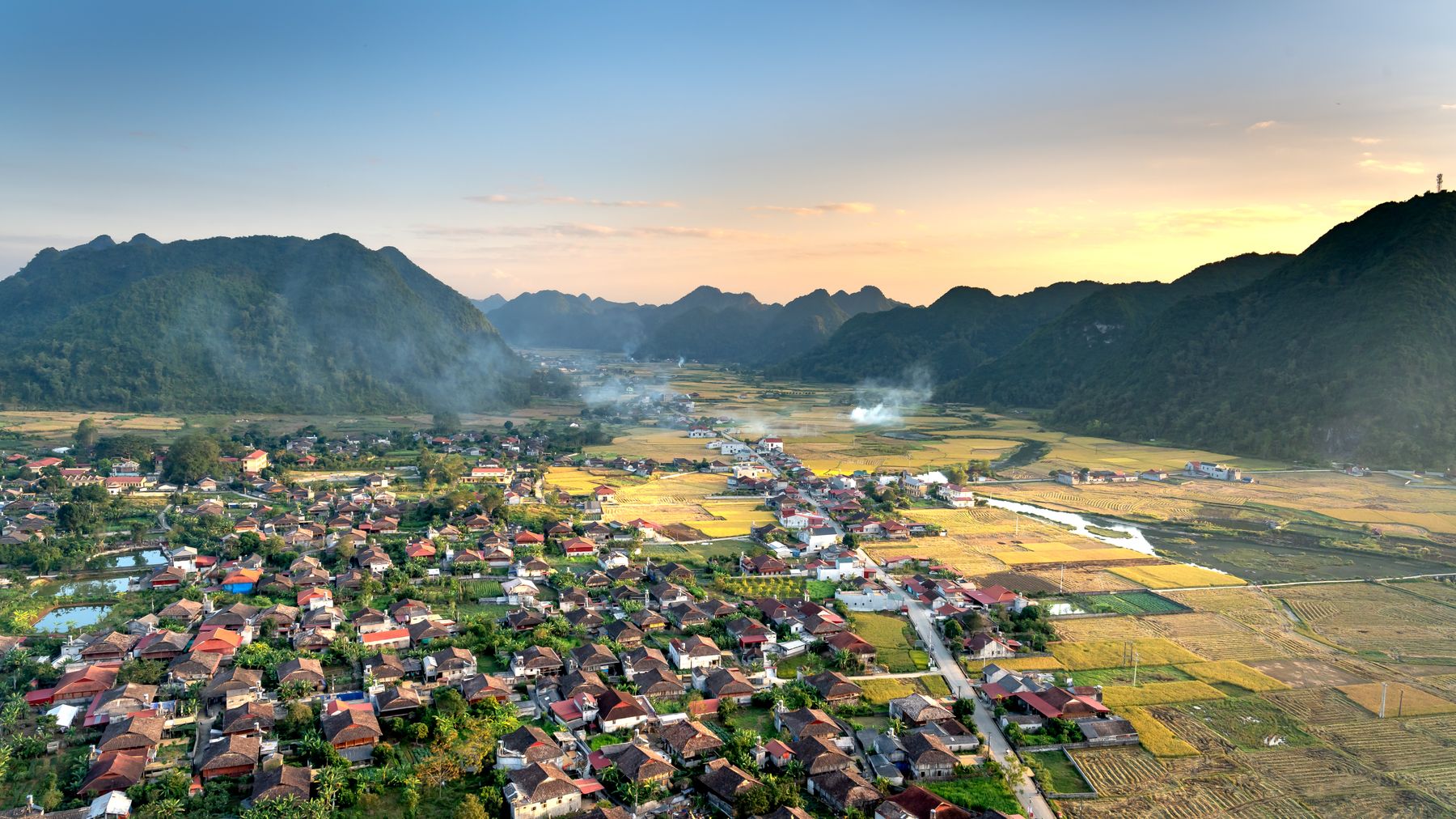
Photo by Quang Nguyen Vinh on Pexels
What to do
Walk the summit loop
From the main parking area near the top, a network of concrete paths and dirt trails connects the summit marker, a small pagoda, and several viewpoints. The full loop takes about 1.5–2 hours at a relaxed pace. On clear days you can see across the karst valleys toward the Chinese border. On foggy days — which is most days — the visibility drops to 20 meters, which has its own strange appeal.
Visit the French ruins
Scattered across the upper slopes are the remains of roughly a dozen French-era villas and a small garrison. None are restored or signposted, so you'll need to poke around off the main paths. The largest ruin sits about 500 meters south of the summit — stone walls, empty window frames, pine trees growing through the floor. Bring sturdy shoes; the terrain is uneven.
Stop at a Dao village
Several small Dao hamlets line the road between the 20 km and 25 km markers. The villages aren't set up for tourism in any formal way — no ticket booths, no guided tours. But if you stop, walk around respectfully, and buy something (honey, dried herbs, rice wine), people are generally welcoming. A few households sell handwoven textiles directly.
Try the herb bath
Some homestays and small guesthouses on the mountain offer herbal baths — large wooden tubs filled with hot water steeped in local medicinal leaves. It's a Dao tradition, and after a cold morning on the summit, soaking in one for 30 minutes at 50,000–80,000 VND is time well spent.
Drink the wine at the source
Mau Son rice wine is sold all over Lang Son, but the stuff made in the mountain villages tastes different — sharper, more herbal, less sweet than the commercial versions sold in Hanoi. Look for households with large clay jars outside. A liter runs 80,000–150,000 VND depending on the infusion.
Where to eat
The summit area has a handful of small restaurants attached to guesthouses, all serving similar menus: grilled chicken, wild boar, bamboo shoot soup, and mountain vegetables stir-fried with garlic. The food is rustic and portions are generous — a full meal for two runs 200,000–350,000 VND.
Two local dishes to seek out:
- "Lon quay" (roasted suckling pig) — Lang Son province's signature dish. Crispy skin, tender meat, served with rice paper and herbs. Better at the restaurants in Lang Son city than on the mountain itself.
- "Pho chua" — a cold rice noodle dish mixed with roasted pork, peanuts, and a sweet-sour sauce. It looks like a salad and tastes nothing like regular pho. Found at street stalls in Lang Son city's Ky Lua market area.
Where to stay
Accommodation on Mau Son is basic. Options fall into three tiers:
- Homestays and guesthouses (300,000–500,000 VND/night): Simple rooms, shared or private bathrooms, thick blankets, sometimes electric heaters. Book ahead on winter weekends.
- Mau Son tourism area hotels (600,000–1,200,000 VND/night): A cluster of concrete hotel buildings near the summit with private rooms, hot water, and restaurant service. Functional, not charming.
- Camping: Some travelers pitch tents near the summit. No formal campground, no facilities. Temperatures drop fast after sunset — bring a proper sleeping bag rated for near-freezing.
Alternatively, sleep in Lang Son city (plenty of hotels in the 250,000–500,000 VND range) and do Mau Son as a day trip.

Photo by Dongdilac on Pexels
Practical tips
- Layer up. Even if Lang Son city feels mild, the summit is 10–15°C colder. Wind chill makes it worse. Bring a proper jacket, not just a hoodie.
- Fill your fuel tank in Lang Son. There are no gas stations on the mountain road.
- Carry cash. No ATMs on the mountain, and card payment doesn't exist up there.
- Start early. The road gets foggy by mid-morning in winter. Visibility is best before 8 AM.
- Phone signal is spotty above the 20 km mark. Download offline maps before you leave Lang Son.
Common mistakes
- Coming only for the snow — genuine snowfall on Mau Son happens maybe once every few years, despite what social media suggests. Most "snow" photos are actually frost or ice on vegetation. Enjoy the cold and the scenery on their own terms.
- Riding up in flip-flops — the road has loose gravel patches and your feet will freeze. Closed shoes, ideally with ankle support.
- Skipping Lang Son city entirely — the city itself has good food, a lively market at Ky Lua, and Tam Thanh Cave right at the edge of town. Worth at least a half-day before or after the mountain.
Practical notes
Mau Son works well as a two-day side trip from Hanoi — bus up to Lang Son on day one, ride to the summit and back on day two, bus home by evening. It pairs naturally with a longer northern loop through Ha Giang or Cao Bang if you have your own wheels. Come for the cold, stay for the quiet.
Last updated · May 26, 2026 · independently researched, never sponsored.






